foreign-affairs
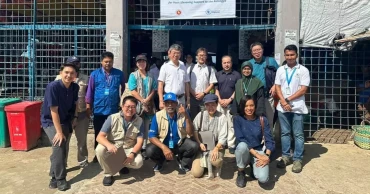
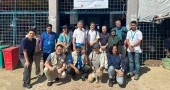
Japanese Deputy Chief of Mission, JCIAD members visit Rohingya facilities in Bhasan Char
Japan has reiterated that they will continue to work toward the resolution of the Rohingya humanitarian crisis, stressing that it is essential to keep raising awareness among the international community.
Together with members of the Japanese Commerce and Industry Association (JCIAD) in Dhaka, Deputy Chief of Mission of the Embassy of Japan, Takahashi Naoki, visited the Rohingya facilities in Bhasan Char from November 9 to 12, where over 35,000 Rohingya Refugees reside.
Through a visit program arranged by the WFP, the delegation had exchanges of views with the Camp-in-Charge from the Government of Bangladesh, the Navy, as well as UN agencies.
They visited an e-voucher outlet, a fresh food market, the Integrated Health and Nutrition Facility, the NGO Production Center, waste management and recycling facilities.
They attended a handover ceremony at a school run by UNICEF Integrated Education Program and WFP School Feeding Program, where the JCIAD donated school supplies.
Since the large influx of Rohingya refugees into Bangladesh in August 2017, Japan has contributed over 220 million USD to various interventions in Cox's Bazar as well as in Bhasan Char through international organizations and NGOs, providing assistance such as food, healthcare, WASH, shelter, protection, and gender mainstreaming.
Witnessing ongoing activities in the field, Takahashi said, "With our visit this time, Japan has become the first country to dispatch a delegation composed jointly of business people and government officials to Bhasan Char."
The diplomat said the visit program arranged by WFP offered a meaningful opportunity for to deepen understanding of the situation on the ground and the various challenges that Rohingya refugees are facing there. "I hope that Japanese assistance will continue to contribute to improving the humanitarian situation in Bhasan Char."
1 year ago

Foreign Secretary and experts emphasize urgent need to uphold International Humanitarian Law
Foreign Secretary Md Jashim Uddin on Wednesday called on the international community to step up its support and work towards a sustainable solution to the Rohingya crisis.
In a landmark event marking the 75th anniversary of the Geneva Conventions, government representatives, diplomats, and humanitarian experts convened in Dhaka for a commemorative discussion under the theme "Preserving our shared humanity: Making International Humanitarian Law (IHL) a national and international priority."
Organized by the International Committee of the Red Cross (ICRC), the event honored the Geneva Conventions’ legacy and underscored the urgent need to renew global political commitment to safeguarding human dignity in conflict zones worldwide.
Speaking as the chief guest, the Foreign Secretary highlighted Bangladesh’s achievements in aligning national frameworks with IHL.
“This milestone anniversary is a reminder that protecting civilians and upholding humane treatment in warfare are responsibilities we all share. Now, we must go beyond rhetoric and ensure that IHL becomes a global standard honored without exception," he said.
Agnès Dhur, Head of Delegation of the ICRC in Bangladesh, opened the event with an address on the sad realities of modern warfare, where adherence to IHL is more critical than ever.
She said, “As armed conflicts and humanitarian crises intensify globally, the Conventions remain our beacon of hope for restraining violence. If we do not prioritize IHL now, when will we?”
She called on states to reaffirm their commitment to IHL, stressing, “Without political will, compliance to IHL cannot be ensured and these norms remain words on paper.”
In his keynote, Professor Nazmuzzaman Bhuiyan of Dhaka University traced the Conventions' evolution, demonstrating their continued relevance amidst new and complex conflicts.
He emphasized, “The Geneva Conventions have adapted to modern realities, yet their core purpose remains unshaken.
They are as essential now as they were in 1949, serving as a moral and legal compass in an increasingly polarized world.”
“Ongoing conflicts and global volatility do not render the international humanitarian law and the Geneva Conventions obsolete; these laws are all the more relevant today than ever before,” said Reto Renggli, Ambassador of Switzerland to Bangladesh.
While speaking at the event, the envoy said, “Protecting civilians in armed conflicts has been a top priority for Switzerland during its 2023-2024 mandate as a non-permanent member of the UN Security Council”.
The participants discussed how Bangladesh and the international community can overcome barriers to IHL implementation.
Attendees also visited a photo exhibition that highlighted the historical significance of the Geneva Conventions and the ICRC’s work in Bangladesh.
1 year ago
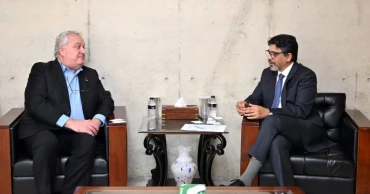
WFP highlights importance of collecting biometric data for newly arrived Rohingyas
Representative of the World Food Programme (WFP) Domenico Scalpelli has highlighted the importance of collecting biometric data for newly arrived Rohingyas, saying it would help improve the food distribution system.
He noted the challenges posed by the dwindling funding scenario that impacted food rations in the past and can threaten future support levels.
Scalpelli met Foreign Secretary Md Jashim Uddin at his office on Tuesday and expressed appreciation for Bangladesh’s ongoing support to the Rohingya people and thanked the Government for facilitating WFP’s operations in Cox’s Bazar and Bashan Char.
Humanitarian response to the Forcibly Displaced Myanmar Nationals (FDMNs), impacts on the host communities, food security, micro-nutrient issues, disaster responses and the need assessment of the disaster victims at the national context, midday school meal projects featured in the discussions, said the Ministry of Foreign Affairs on Wednesday.
The Foreign Secretary commended WFP’s well-coordinated efforts in the camps, assuring continued Government support for WFP’s humanitarian and disaster response initiatives.
Drawing from his recent visit to Rohingya camps, he stressed the significant negative impacts on Bangladesh’s local communities and reiterated the importance of focusing on repatriating Forcibly Displaced Myanmar Nationals (FDMNs) to their homeland.
1 year ago

France advocates for political dialogues in Myanmar with inclusion of Rohingya issue
French Special Envoy for Myanmar Ambassador Christian Lechervy has stressed the importance of addressing the escalating conflicts across the border, particularly in Rakhine State, and advocated for political dialogues in Myanmar and the inclusion of the Rohingya issue in such dialogues.
He also underscored the necessity to know the specificity of the fresh arrivals to assess their needs and status.
Ambassador Lechervy expressed France's appreciation for Bangladesh's ongoing humanitarian assistance to the Rohingya people and reaffirmed France’s commitment to supporting Bangladesh on the Rohingya issue.
He met Foreign Secretary Md Jashim Uddin on Tuesday at the Ministry of Foreign Affairs and discussed the protracted Rohingya crisis and the escalating situation in Myanmar.
The two sides also discussed the complexity of the Rohingya crisis, complex root of armed conflicts in Myanmar, roles of the regional and international partners and the need for accountability for the atrocities committed against the Rohingya people, according to the Ministry of Foreign Affairs.
The Foreign Secretary stressed the urgency of an early resolution to the Rohingya crisis expressing Bangladesh’s frustration over the lack of any progress in repatriating the Forcibly Displaced Myanmar Nationals (FDMNs) to their homeland.
He also expressed deep concern at the ongoing armed conflicts in Myanmar, particularly in the Rakhine State, which risks triggering further displacement of Myanmar nationals into Bangladesh, with fresh arrivals in recent months.
Highlighting the huge burden on the host communities, he raised concerns over the dwindling humanitarian support from international partners and donors, which threatens to exacerbate the challenges faced by both the Rohingya and the local populations.
Referring to the recent call from Chief Adviser Prof Muhammad Yunus to the UN Secretary-General to organize an International Conference on the Rohingya crisis, he sought support from the international community including the French Government to focus on the root causes and the sustainable resolutions of the crisis.
1 year ago
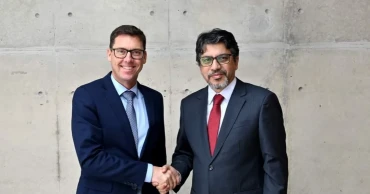
Norway sees “great potential” in Bangladesh
Newly appointed Ambassador of Norway to Bangladesh Hakon Arald Gulbransen on Wednesday said his country sees “great potential” in Bangladesh, with a huge consumer base, as a key market for trade and investment.
The ambassador met Foreign Secretary Md Jashim Uddin at the Ministry of Foreign Affairs and discussed several key areas of cooperation including trade and investment, Interim Government’s priorities, Rohingya issues, and climate change.
Both sides expressed satisfaction over the shift of Bangladesh-Norway relations from development cooperation to trade-centric partnership.
The Foreign Secretary thanked Norway for its support, particularly in renewable energy, shipbuilding and ship recycling.
He made a special request for support in the smooth transition of Bangladesh to a developing country, according to the Ministry of Foreign Affairs.
The Ambassador said that Norway sees great potential in Bangladesh, with a huge consumer base, as a key market for trade and investment.
Both sides reaffirmed their commitment to work together for enhanced bilateral relations.
The Foreign Secretary highlighted the interim government’s reform initiatives and sought cooperation for technical expertise, experience sharing, and support for the treatment and rehabilitation of the students injured during the mass uprising in July-August.
The Ambassador expressed support for these reform initiatives and committed to exploring broad areas where Norway could assist.
Appreciating Bangladesh’s efforts for hosting the Rohingyas, the Ambassador reaffirmed Norway's commitment to extend humanitarian assistance.
The Foreign Secretary thanked Norway for their assistance to the Rohingyas, highlighted the negative impacts on the host community and urged for a safe and sustainable return of the Rohingyas to their homeland in Myanmar.
1 year ago
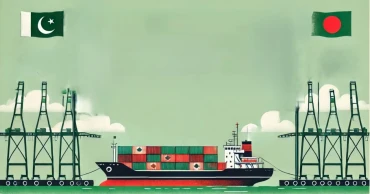
Cargo vessel from Karachi arrives at Chittagong port for first time
A cargo vessel from Pakistan’s Karachi has arrived at Chittagong Port, the first-ever direct maritime link between the two countries.
Carrying a diverse array of goods with an estimated 2,300 TEUs of capacity, the vessel’s voyage highlights growing demand for direct trade between the two countries, said a press release on Wednesday.
Pakistan High Commissioner to Bangladesh Syed Ahmed Maroof termed the direct shipping route a major step forward in enhancing bilateral trade and business ties between Pakistan and Bangladesh besides boosting a more integrated and trade network across the region.
He said that the initiative will not only accelerate the existing trade flows but also promote new opportunities for businesses on both sides.
1 year ago
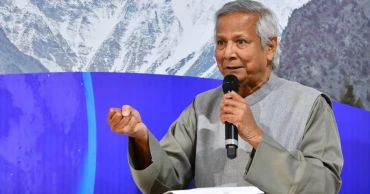
We need new economic framework that serves planet, people: Prof Yunus
Seeking a new approach to climate negotiations, Chief Adviser Prof Muhammad Yunus on Wednesday said the world needs a new economic framework in an effort to tackle the climate crisis and create a new civilisation that works for the planet and people.
"We need a new economic framework that serves the planet and the people," he said, adding that he backs the UN-sponsored Summit for the Future to create an economic order for the world's young people.
Prof Yunus calls for mobilising "intellectual, financial, youth power" for a new civilisation
Speaking at a LDC high-level meeting with UN Secretary General Antonio Guterres on the sidelines of the COP29, Prof Yunus said they have created an economic framework based on consume, consume and consume, and it only generates waste, waste and waste. “We need to create a world of zero waste.”
Leaders of five major climate-vulnerable least developed countries—Nepal, Malawi, Gambia, Liberia, and Bangladesh—joined the close-door meeting.
The Chief Adviser said the climate conference should not be held every year. "We know what the world needs, and we should make a long-term plan for that. It should be country by country. And we have to make a plan for long-term mitigation," Prof Yunus said.
"We don’t need to meet here every year. Meeting every year to negotiate is time-consuming, wasteful, and humiliating,” he said.
The Chief Adviser also called for a new approach to climate negotiations, as the current approach has largely failed to meet the needs of much of the world.
UN Secretary General Antonio Guterres said the LDCs faced the greatest injustice as far as climate change is concerned.
"We want to tell you that we care about you," Guterres said, adding that the LDCs need to do hard negotiations and "serious mechanism” to secure a bigger fund for climate adaptation and mitigation.
A Farmer Can be an Entrepreneur with Access to Credit
Earlier on Tuesday evening, Prof Yunus said the countries should redesign the banking system by following the Grameen Bank model to make credit accessible to farmers, a considerable number of whom are women.
“Every country should have a social business banking law,” he said, while appreciating that currently at least 110 universities across the globe are teaching social business as a course.
Prof Yunus said credit is a human right as it relates to the livelihood of people.
“You cannot establish the right of livelihood without ensuring the right to credit,” said the Chief Adviser while speaking to a side event at the COP29 in Azerbaijan capital Baku.
Bangladesh and the Netherlands jointly hosted the event titled A Global Conversation: Access to Finance for Small Scale Farmers at the Bangladesh Pavilion of the conference.
Additional Foreign Secretary Riaz Hamidullah moderated the event, which was also attended by Dutch Prince Jaime Bernardo of Bourbon-Parma, also the climate envoy of the Netherlands.
The Dutch prince highlighted how credit, insurance, investment, research, and finance increased agricultural output while insisting that millions of farmers across the globe now needed this support.
Speaking at the event, Yvonne Pinto, the Director General of the International Rice Research Institute, said that rice production grew globally ever since credit was made accessible to farmers.
Jorim Schraven, a director of the Dutch entrepreneurial development bank FMO, hailed Prof Yunus for the moral support he extended on debt rights, adding it was related to people’s rights to know.
Farhana Haque Rahman, Senior Vice President of Inter Press Service and Executive Director IPS Noram, said that currently, 550 million small household farmers feed two billion people around the world.
Dr Yunus said a farmer can be an entrepreneur if he or she is given access to credit.
“Every business needs money and investment,” he said, adding that a farmer not only grows crops but also sells them to market.
If he was given access to credit, he could buy crops from other farmers and sell them to improve his life, said Professor Yunus, who is hailed globally as a microcredit pioneer.
1 year ago

UK calls for democratic, inclusive future for Bangladesh
British High Commissioner to Bangladesh Sarah Cooke on Wednesday said her visit to the National Institute of Traumatology and Orthopaedic Rehabilitation (NITOR) with Health Adviser Nurjahan Begum was “another reminder” of the horrific violence that happened during the Jul-Aug protests.
“The UK recognises the bravery of the young Bangladeshi people whilst calling for a democratic and inclusive future for Bangladesh,” said the High Commissioner.
Environment Adviser seeks UK support in NAP implementation
“Speaking to the patients I met today, it was clear that the UK Emergency Medical Team has provided much-needed specialised treatment working together with the hospital team,” she said.
The British High Commissioner visited the NITOR where the UK Emergency Medical Team is providing medical treatment to students injured during Jul-Aug protests.
The highly experienced team has consulted dozens of injured students, starting from November 5.
They are also carrying out two to three complex surgeries every day and providing physiotherapy and rehabilitation support.
1 year ago
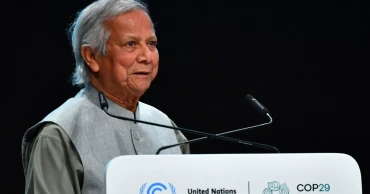
Prof Yunus calls for mobilising "intellectual, financial, youth power" for a new civilisation
Chief Adviser Prof Muhammad Yunus on Wednesday highlighted the importance of mobilising intellectual, financial and youth power to lay the foundation for a new civilisation—a self-preserving and self-reinforcing civilisation.
"The climate crisis is intensifying. Our civilisation is at grave risk as we continue to promote self-destructive values," he said while speaking at the COP29.
President of the Republic of Azerbaijan Ilham Aliyev invited heads of states and governments to participate in the two-day World Leaders Climate Action Summit (WLCAS).
The 29th Conference of the Parties to the UN Framework Convention on Climate Change (COP29) is taking place from November 11 to 22.
Presenting the "climate catastrophe" in a different perspective, Prof Yunus said safety of the environment needs a new lifestyle which would not be imposed but it will be a choice.
"Young people love that lifestyle as a choice. Each young person will grow up as a three zero person—zero net carbon emissions, zero wealth concentration, through building social businesses only, and zero unemployment by turning themselves into entrepreneurs," he said.
The Nobel Peace Laureate said each person will grow up as a three zero person, and remain a three zero person all his/her life, and that will create the new civilisation.
"It can be done. All we need to do is to accept a new lifestyle consistent with the safety of the planet and all who live on it. Today’s generation of youth will do the rest. They love their planet," Prof Yunus said, hoping that others will join him in this dream.
"If we dream together, it will happen," he said, sharing his longstanding dream of creating a new world of three zeroes.
Stressing that this perspective will take them from fixing climate destruction to stopping further carnage, Prof Yunus said the human inhabitants of this planet are the cause of the destruction of the planet.
"We are doing it deliberately. We have chosen a lifestyle which works against the environment. We justify this with an economic framework which is considered as natural as the planetary system," he said.
The interim government chief said that the economic framework thrives on limitless consumption.
"The more you consume the more you grow. The more you grow, the more money you make," he said, adding that maximisation of profit is treated as the force of gravity which lets everything in the system play its role according to our desire.
In order to survive, Prof Yunus said, the world needs to create another culture—a counter-culture which is based on a different lifestyle.
"It is based on zero waste. It will limit consumption to essential needs, leaving no residual waste. This lifestyle will also be based on zero carbon. No fossil fuel. Only renewables," he said.
Prof Yunus said this will be an economy based primarily on zero personal profit—social business.
This business is defined as a non-dividend business addressed to solve social and environmental problems.
"A vast part of social businesses will focus on protecting the environment and mankind," he said, adding that human lives will not only be protected but qualitatively enhanced through affordable healthcare and education.
It will facilitate entrepreneurship for the youth.
"Young people will get prepared through a new education of entrepreneurship. Education for creating” job seekers will be replaced by entrepreneurship-focused education," Prof Yunus said.
The invitation to the WLCAS in the Republic of Azerbaijan during COP29 signifies the importance for world leaders to engage and enhance ambition and enable action to reduce emissions, adapt to climate change, and address loss and damage, to implement and transform key climate related decisions into concrete actions and credible plans to tackle climate change, said the organizers.
The Summit aims to build consensus and momentum around the COP29 plan to enhance ambition and enable action and demonstrate to all stakeholders a clear political will to deliver.
It will address raising ambition for mitigation and adaptation through nationally determined contributions (NDCs), National Adaptation Plans (NAPs), and long-term low-emission development strategies (LT-LEDS), enabling action with the New Collective Quantified Goal on Climate (NCQG), and other means of implementation and support.
Prof Yunus joined a closed door Climate Leaders Meeting hosted by Germany and Chile.
He also joined a roundtable on "Access to Finance for Small Scale Farmers" to be co-hosted by Bangladesh and the Netherlands.
The Chief Adviser arrived in Baku on Monday evening to attend the UN's biggest climate conference, COP29, which is seen as a "pivotal opportunity" to accelerate action to tackle the climate crisis.
Bangladesh Ambassador to Turkey Amanul Haq, among others, was present at the airport to receive the Chief Adviser upon his arrival at 5:15pm (Baku time) on Monday.
Prof Yunus is leading a small delegation and will return home on November 14, a senior official at the CA's office told UNB.
Global leaders and diplomats from across the world are joining the annual climate summit to discuss how to avoid increasing threats from climate change in a place that was one of the birthplaces of the oil industry.
1 year ago

Bangladesh, India, Nepal, Bhutan should think of creating a South Asian grid: Prof Yunus
Sharing an idea of greater electricity connectivity in the region, Chief Adviser Prof Muhammad Yunus on Wednesday called for creating a South Asian grid to share the hydroelectricity generated by Nepal and Bhutan.
"Bangladesh can easily bring hydroelectricity from Nepal as it is only 40 miles from Bangladesh. Nepalese hydroelectricity will also be cheap," Professor Yunus said, adding Bangladesh, India, Nepal, and Bhutan should think of creating a South Asian grid.
In a meeting with the Social Business Group on the sidelines of the climate conference in Baku, he said much of the hydroelectricity potentials of the Himalayan nations remain untapped due to a lack of electricity grids connecting Bangladesh, India, Nepal, and Bhutan.
Nepal officials have said the country has the potential to generate 40,000 megawatts of hydroelectricity, which can help lessen the reliance on fossil fuels in bigger countries such as India and Bangladesh.
The Chief Adviser, who has joined the COP29 climate conference in the Azerbaijan capital, said Bangladesh has put the highest priority on water management to prevent floods and to make the best use of water to boost the country's economic growth.
"Water is our main environmental issue. We have to do water management in a way that it supports nature," Prof Yunus said.
1 year ago