foreign-affairs
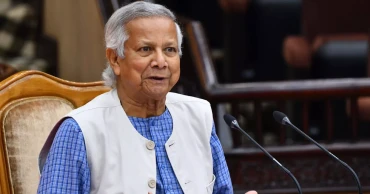
Prof Yunus calls for collaborative approach, peace globally
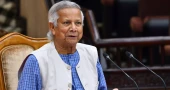
Chief Adviser Prof Muhammad Yunus on Sunday said they want peace inside the country, among the countries and globally, stressing that all dedication should be on peace not on war.
Prof Yunus said every government in the world has a defense ministry, which is actually a war ministry, but there is no peace ministry.
“If your aim is peace, should not you have a peace ministry?,” the 2006 Nobel Peace Laureate posed a question highlighting the importance of having both ministries - peace ministry and war ministry - in governments of the world.
The chief adviser was addressing the members of NDC and AFWC course at his office in Tejgaon and observed that most of the time; people kill one another in the name of peace. He greeted the members of NDC and AFWC courses and wished them success.
Chief Adviser seeks Indonesia's support for ASEAN membership
Prof Yunus said the military is fundamental to protect democracy and national interest; and hoped that they (course members) will serve their country through promoting justice and emancipation for all.
“I would like to request you to continue your quest for knowledge and I am confident that through your leadership you will provide fresh impetus to our quest for development," he said.
Prof Yunus said they are going through an extraordinary time in Bangladesh and such significant times require extraordinary people to rise above despite all obstacles and deliver.
“I hope our Bangladesh course members upon return to their places of duty will use their newly found knowledge to rebuild Bangladesh as a nation of zero poverty, zero carbon emission and zero unemployment,” he said, adding that there is a need for a collaborative approach.
Prof Yunus urged the young people to make up their mind and dream to bring a positive change in the country.
"I particularly encourage the young people to make up their mind, figure out and dream. Dream is the beginning of change. If you dream, it will happen. If you do not dream, it will never happen," he said.
Foreign Adviser to attend Kuwait conference on strengthening counter-terrorism cooperation
"Ask yourself - 'what can I do for the world?' Once you figure out what you want to do, you can get it done because you have that power," Prof Yunus told the youths.
He said the young generation on the planet at present is the most powerful generation in the entire human history. "Not because they are smart enough but because they have enormous technology in their hands," he said.
"If you look at the student revolution, it is all about technology. They (students) could communicate with each other very quickly. They did not have any command structure," the chief adviser said, adding that the technology is the Aladin's lamp.
Prof Yunus said the young people of the country want to see a new Bangladesh and young people are not politicians and not pursuing some political goals but they wanted to have a new country for themselves, he said.
The chief adviser said it is a self-destructive planet as "we have done everything to just prepare to kill ourselves".
Citing an example, he said people are destroying the environment to destroy the planet.
"We have created a wrong civilization - self destructive civilization," he said, adding that every day people are destroying the planet.
The technology that is growing and expanding and deepening will make the younger generation more powerful than ever, said the chief adviser.
1 year ago
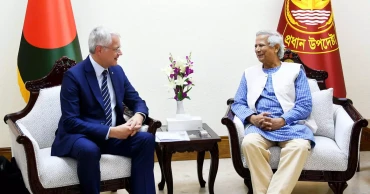
Finland keen to contribute to Bangladesh’s reforms, Ambassador tells CA
Non-resident Ambassador of Finland to Bangladesh Kimmo Lähdevirta expressed his government’s full support to the Professor Yunus-led interim government and desire to contribute to the country's reforms.
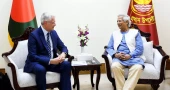
The Ambassador expressed the keenness when he called on Chief Adviser Professor Muhammad Yunus at his office on Sunday.
The meeting discussed the student-led mass revolution, the interim government's reform initiatives, trade, investment, and regional geopolitical issues.
Chief Adviser seeks Indonesia's support for ASEAN membership
Ambassador Lähdevirta said that the Finnish government would grant one million euro for the Rohingyas in Bangladesh, and another one million euro would be channeled through the civil society.
Professor Yunus spoke about the student revolution and the work of the Reform Commissions and people's aspirations from his government.
He said that the economy of Bangladesh was in shambles when the dictator fled the country, but quick and tough reform measures have already helped stabilise the situation.
"Reserves are growing," and the government has started making international payments without digging into the foreign currency reserves, he added.
He mentioned that he has made a move to revive the SAARC in an effort to boost regional cooperation.
The Ambassador informed that more Finnish businessmen are keen to visit Bangladesh with investment and called for faster processing of FDI by BIDA.
Bangladesh, Algeria collaboration crucial in today’s complex international landscape: Envoy
A Finnish plastic recycling company is interested to recycle single use plastics in Cox's Bazar to turn them into plastic sheets, which can be used in the shelters in the Rohingya camps.
The Ambassador also shared the interest of the Finnish side in recruiting Bangladeshi students and the skilled workforce in their country and capacity building in the fields of AI, cyber security, and quantum computing sectors.
The Chief Adviser assured the Ambassador of all possible cooperation of the Bangladesh government in discharging his duties.
1 year ago
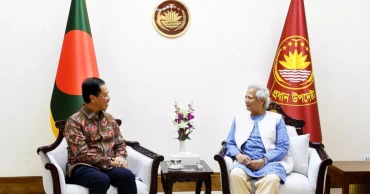
Chief Adviser seeks Indonesia's support for ASEAN membership
Chief Adviser Prof Muhammad Yunus on Sunday sought Indonesia’s support for Bangladesh’s membership in ASEAN and also urged the Southeast Asian country to create more opportunities for Bangladeshi businesses.
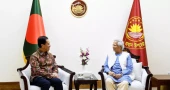
The Chief Adviser made the call when the Indonesian Ambassador to Bangladesh, Heru Hartanto Subolo, paid him a farewell visit at his office in Tejgaon, Dhaka.
“I hope Indonesia will help us get the membership of ASEAN. This is very important for us,” Prof Yunus told the ambassador.
The Chief Adviser said that he also discussed the issue with Malaysian Prime Minister Anwar Ibrahim during the latter’s recent visit to Bangladesh, as the country is set to assume the chair of ASEAN in January.
Ambassador Subolo conveyed his country’s support for Bangladesh’s Interim Government and said that Indonesia would closely follow Bangladesh’s application to become an ASEAN member.
Bangladesh's success under Prof Yunus is in India's best interest: American-Indian businessman Khosla
“Indonesia stands ready to support Bangladesh in all possible ways. Hopefully it will be beneficial for both countries,” he said.
The Chief Adviser recalled his multiple visits to Indonesia to promote microcredit and said that from his experience he found very thin presence of Bangladeshi businesses in Indonesia.
“One thing is regrettable that there are not many Bangladeshis in Indonesia. They are everywhere but not in Indonesia,” said the Chief Adviser.
“Indonesia is the largest Muslim country. But people of the country are not much aware of Bangladesh. Somehow we are not interacting much,” he noted.
“We must find a way to bring us closer,” he said.
He also urged Indonesia to enroll more Bangladeshi students in their universities, hire more Bangladeshi doctors, and import pharmaceutical items from Bangladesh.
Ambassador Subolo promised to work on increasing business cooperation between Bangladesh and Indonesia.
He expressed satisfaction with the signing of the MoU between Pertamina Power Indonesia and Coal Generation Company Bangladesh Limited concerning the Solar PV investment project in Matarbari and other areas in July 2024.
The Chief Adviser congratulated new Indonesian President Prabowo Subianto on assuming office and invited him to visit Bangladesh at a convenient time.
1 year ago

7 injured Bangladeshis to receive advanced treatment in Turkey
The Turkish government will provide free advanced treatment to seven Bangladeshis injured in the July-August mass uprising.
The Turkish government took this decision in response to the request of the Ministry of Foreign Affairs for better treatment of those injured in the student-led movement.
Foreign Affairs Adviser Md Touhid Hossain and Foreign Secretary Md Jashim Uddin conveyed Bangladesh's request to Turkish Ambassador to Bangladesh Ramis Sen during their separate meetings, said the Ministry of Foreign Affairs on Sunday.
They requested to provide better treatment to those injured in the mass uprising.
Turkish President Recep Tayyip Erdogan and Chief Advisor Prof Muhammad Yunus on August 27 had telephone conversations, and President Erdogan expressed his interest in cooperating with the interim government's reform efforts.
Turkey to submit request to join genocide case against Israel in UN court
In this context, a Turkish government delegation visited Bangladesh from October 13 to 15.
The delegation had meetings with the relevant ministries and agencies of Bangladesh regarding possible cooperation in the reform activities undertaken by the interim government in various fields, including the electoral system and the financial sector.
1 year ago

Japan Visa Application Centre opens in Dhaka
Japan Visa Application Centre (VAC) in Dhaka started its operations on Sunday, according to VFS Global.
It is offering applicants "efficient and streamlined" application submission service.
US for upholding freedom of expression, assembly in Bangladesh
Appointments booked through the Embassy of Japan in Dhaka will be honoured for those already scheduled until December 26, said the VFS Global.
"We’re excited to announce that our Japan visa service is now available in Bangladesh! Applicants can visit our state-of-the-art Visa Application Centre in Dhaka for a seamless start to their journey," VFS Global said in a statement.
1 year ago
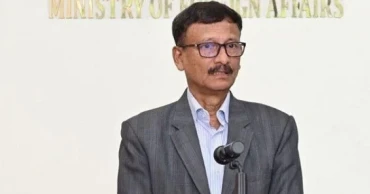
Foreign Adviser to attend Kuwait conference on strengthening counter-terrorism cooperation
Foreign Affairs Adviser Md Touhid Hossain will represent Bangladesh at the high-level conference on “Strengthening International Counter-Terrorism Cooperation and Building Agile Border Security Mechanisms – The Kuwait Phase of the Dushanbe Process” which will be held in Kuwait City on November 4, 5.
The conference is important as it will broaden the scope and impact of the Dushanbe Process beyond Central Asia, said the United Nations, noting that this represents a new and significant development in counterterrorism cooperation around the world.
Adviser Hossain left for Kuwait on Sunday morning, said a senior official at the Ministry of Foreign Affairs. He is scheduled to return home on November 6.
The conference will jointly be organized by the State of Kuwait, the Republic of Tajikistan and the United Nations Office of Counter-Terrorism (UNOCT).
The event will bring together Ministers of Foreign Affairs, and/or ministers with responsibility for counter-terrorism, senior officials and counter-terrorism experts primarily from the League of Arab States, Central Asia, Africa, and the Association of Southeast Asian Nations (ASEAN), as well as member states of the UN Security Council, United Nations entities, international and regional organizations, academia, and representatives from academia, civil society, and the private sector, including youth, women and human rights actors.
This joint Kuwait-Tajikistan-UNOCT event will focus on preventing the movement of terrorists, enhancing collaboration, and building stronger partnerships to support more effective and agile border security and counter-terrorism measures.
The outcomes of the event will be reflected in the Kuwait Declaration that will be issued at the end of the Conference, according to the UN.
The conference is due to be sponsored by Amir Sheikh Meshal Al-Ahmad Al-Jaber Al-Sabah who has deputized Crown prince Sheikh Sabah Khaled Al-Hamad Al-Sabah to represent him at the event.
It is scheduled to conclude on November 5 with the adoption of "Kuwait Declaration" on border security.
1 year ago

Bangladeshi expat killed in Israeli air strike in Lebanon: Embassy
A Bangladeshi expatriate was killed in an Israeli airstrike in war-torn Lebanon on his way to work, said the Bangladesh Embassy on Sunday.
The fatality occurred in the Grazmiye area of Beirut on Saturday afternoon (local time), they said.
The deceased was identified as Mohammad Nizam Uddin, son of Mohammad Abdul Quddus of Khaira area of Kasba Upazila in Brahmanbaria. He aged around 31bearing the passport No- EF0620043.
Nizam's wife is in Lebanon now, and officials at the Embassy have already spoken to her.
"They are in contact with her. She has been informed that it will not be possible to bring back the body to Bangladesh due to the lack of flights amid war situation," said a senior official at the Ministry of Foreign Affairs.
Bangladesh Ambassador to Lebanon, Air Vice Marshal Javed Tanveer Khan expressed grief over the death of the remittance fighter and sought forgiveness for his departed soul and extended condolences to the bereaved family members.
1 year ago

London lawyer files complaint against Hasina with ICC at The Hague for crimes against humanity
Asraful Arafin, a lawyer of London's 3 Bolt Court Chambers, has filed a complaint with the International Criminal Court (ICC) at The Hague accusing former prime minister Sheikh Hasina, the ministers of her government and its associated state actors of crimes against humanity.
The complaint was filed in the International Criminal Court (ICC) on 28th October 2024 under Article 15 of the Rome Statute.
This seeks an independent investigation into alleged crimes against humanity by Sheikh Hasina, her cabinet, and associated state actors, supported by detailed accounts, various reports, and video evidence.
"The ICC has also been requested to issue arrest warrants for key suspects, aiming to prevent further impunity. We are committed to update the media on subsequent developments about this case in due course," said a media note received here on Sunday.
Member states of the UN Security Council have veto power over the ICC.
1 year ago
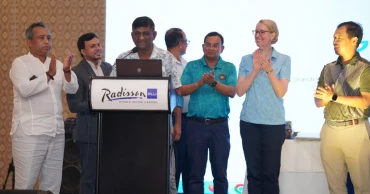
Tiger Golf Club bids farewell to outgoing Indonesian ambassador
Tiger Golf Club (TGC) held a farewell event asHeru H. Subolo, the Indonesian Ambassador in Dhaka and the club’s president, prepares to conclude his tenure.
The event took place at the Radisson Blu Dhaka Water Garden Hotel, coinciding with a prize distribution ceremony for a tournament on Saturday among club members.
Lieutenant General (retd) Abdul Hafiz, Special Assistant (Defence and national unity) to the Chief Adviser Professor Muhammad Yunus, served as the chief guest.
1 year ago
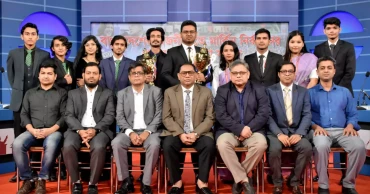
US elections outcome won't affect Dhaka-Washington ties: CA's press secretary
Chief Adviser's Press Secretary Shafiqul Alam on Saturday said the results of the US election will not pose any challenge for the relations that the two countries maintain as Prof Muhammad Yunus as a global leader has very good ties with senior leaders of the both parties.
"He (CA Prof Yunus) has friends in both parties. The relationship depends a lot on personal attachment. Prof Yunus is a global leader. So, whether Kamala Harris or Donald Trump wins the US election, there will be no challenge for our relationship," Alam said while speaking as the chief at a debate competition in Dhaka.
“End impunity for crimes against journalists, protect media workers”: UN Rights Chief
The electoral system in the US is called a two-party system. That means that two parties dominate the political field in all three levels of government.
In the US, these two parties are the Republican Party and the Democratic Party.
Other parties, often generally termed “third parties”, in the US include The Green Party, Libertarians, Constitution Party and Natural Law Party.
The Press Secretary said Donald Trump's statement on minorities in Bangladesh is a completely domestic political issue and lobbyists may have influenced this issue.
Trump, on Thursday, strongly condemned the “barbaric violence” against Hindus, Christians and other minorities who are “getting attacked and looted by mobs in Bangladesh, which remains in a total state of chaos.”
Press Secretary Shafiqul Alam on Friday said what Republican Donald Trump, who is running again for the White House, thinks about the events in Bangladesh “does obviously matter”, but stressed that their task in the government is to tell the truth.
Trump condemns “attacks on minorities” in Bangladesh
“He (Trump) may soon become the leader of the free world. But our task is to tell our truth in the most transparent and compelling way possible,” he said.
Alam said Bangladesh's relations with India are good and Bangladesh wants to continue this good relationship with them.
"We received support from all over the world in the unprecedented mass uprising that took place in Bangladesh. No evil force can survive when the people wake up," he said.
Kamala Harris and Donald Trump held duelling rallies within miles of each other in swing state Wisconsin’s largest city, Milwaukee, on Friday night.
Milwaukee is home to the most Democratic votes in Wisconsin, but its conservative Republican suburbs are a critical area for Trump as he tries to reclaim the state he narrowly won in 2016 but lost in 2020.
The shadow parliament was organised by Debate for Democracy on the impact of the US elections at the FDC in the capital.
Debate for Democracy Chairman Hassan Ahmed Chowdhury Kiron presided over the event.
Kiron said that since Donald Trump mentioned his friendly relations with Indian Prime Minister Narendra Modi just before the US elections, the "fallen" government thinks it will be easy for them to return to Bangladeshi politics.
"If Trump is elected, they can try to rehabilitate themselves in politics by capitalising on Modi's relationship with him. But the students and people of this country will no longer accept the fallen dictatorship accused of genocide in Bangladeshi politics," he said.
A few days before the US election, some are trying to find a mystery about Donald Trump's sudden condemnation of attacks on Hindus, Buddhists, Christians and other minorities in Bangladesh, Kiron said.
He also said that no matter who wins the US election, their foreign policy does not change much.
State University of Bangladesh emerged victorious in the debate competition against the Green University of Bangladesh.
The judges of the competition were Professor Dr Tajul Islam Chowdhury Tuhin, Professor Dr AKM Mazharul Islam, DCAB President Nurul Islam Hasib, DCAB General Secretary Ashiqur Rahman Apu and Journalist Md. Atiqur Rahman.
1 year ago