foreign-affairs
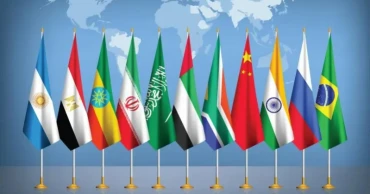
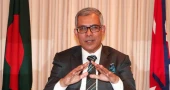
Foreign Secretary to lead Bangladesh delegation at BRICS Summit in Kazan
Bangladesh will attend the BRICS Summit, a bloc of developing economies, in the city of Kazan, Russia, from Tuesday to Thursday this week.
Foreign Secretary Md Jashim Uddin is scheduled to lead the Bangladesh delegation at the Summit, a senior official at the Ministry of Foreign Affairs told UNB on Sunday.
The Foreign Secretary is also expected to hold some bilateral meetings with his counterparts from BRICS member countries and invited leaders in Kazan, Russia, he said.
Foreign Secretary Jashim will leave Russia for home on October 25.
Meanwhile, Brazil’s President Luiz Inácio Lula da Silva, on Sunday, canceled his trip to Russia for the BRICS Summit after an accident at home that left him with a cut in the neck, his office said.
The 78-year-old leader was scheduled to attend the Summit.
On the other hand, Indian Prime Minister Narendra Modi will visit Russia from October 22-23 at the invitation of Russian President Vladimir Putin to attend the 16th BRICS Summit, to be held in Kazan, under the Chairmanship of Russia.
The Summit, themed "Strengthening Multilateralism for Just Global Development and Security," will provide an important platform for leaders to discuss key global issues.
The Summit will offer a valuable opportunity to assess the progress of initiatives launched by BRICS and to identify potential areas for future collaboration.
1 year ago
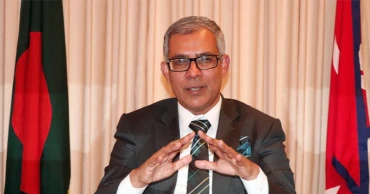
Govt appoints new permanent representative to UN Mission in New York
The government has appointed Salahuddin Noman Chowdhury as the new Ambassador and Permanent Representative of Bangladesh to the United Nations in New York.
An order was issued in this regard on Sunday.
Current Ambassador and Permanent Representative of Bangladesh to the United Nations (UN) in New York Muhammad Abdul Muhith is set to go on retirement December, this year.
Ambassador Chowdhury joined the Bangladesh Embassy in Kathmandu on 11 November 2020.
Belarus to work with Bangladesh for enhanced bilateral relations
After graduating from the Bangladesh University of Engineering and Technology in 1993, he worked in the private sector for five years until joining the Bangladesh Foreign Service in 1998.
In his diplomatic career, he worked in the Bangladesh Embassies in New Delhi, Islamabad and New York in various capacities.
In the headquarters, he held positions in departments like Administration, External Publicity, Multilateral Economic Affairs, Protocol, United Nations, South East Asia and Foreign Service Academy.
1 year ago
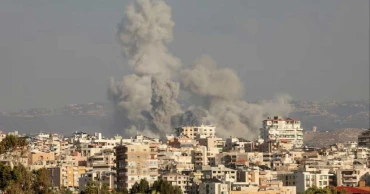
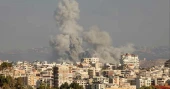
119 Bangladeshis expected to return from Lebanon this week
A total of 119 Bangladeshis, including children, are scheduled to return home from Lebanon in two groups on Monday and Wednesday evening.
According to the Bangladesh Embassy in Beirut, they will come from Beirut through Jeddah, the capital of Saudi Arabia.
Earlier on Thursday, Foreign Affairs Md Touhid Hossain announced that the government would bring back documented Bangladeshis first from Lebanon who want to return voluntarily.
There are some Bangladeshis who are not willing to return despite knowing the danger as they are thinking of income sources once they return.
There are some Bangladeshis who are not willing to return as they are working in safe areas.
Govt to bring back willing expats in Lebanon first: Foreign Adviser
The government is exploring both air and sea routes to ensure the safe return of Bangladeshis in phases, who got stuck in troubled Lebanon.
Bangladesh also sought cooperation from the International Organisation of Migration (IOM) in this regard.
There are 70,000 to 1 lakh Bangladeshis in Lebanon and around 1800 got enrolled to return to Bangladesh.
The Ministry of Foreign Affairs, Ministry of Expatriates’ Welfare and Overseas Employment are working together for the return of Bangladeshis trapped in war-torn Lebanon.
1 year ago
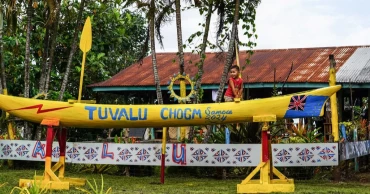
Commonwealth meeting begins in Samoa Monday; Foreign Adviser to represent Bangladesh
Foreign Affairs Adviser Md Touhid Hossain will represent Bangladesh at the Commonwealth Heads of Government Meeting 2024 (CHOGM), which will take place from October 21-26 in Apia, Samoa.
Adviser Hossain left Dhaka on Saturday night and is scheduled to return home on October 29, a senior official at the Ministry of Foreign Affairs told UNB.
He is likely to hold a few bilateral meetings on the sidelines of the CHOGM-2024 apart from representing Bangladesh at the Commonwealth meeting.
It is the first CHOGM to be held in a Pacific Small Island Developing State.
While briefing reporters at the Ministry of Foreign Affairs, the Foreign Adviser said Chief Adviser Prof Muhammad Yunus will not attend the meeting.
The Chief Adviser will, however, attend the Bimstec Summit in Bangkok, Thailand. But the Summit date is yet to be announced.
Building on progress since CHOGM 2022, leaders will deliberate on global economic, environmental and security challenges and discuss how Commonwealth countries can work together to build resilience, boost trade, innovation, growth and empower the Commonwealth’s 1.5 billion young people for a more peaceful and sustainable future.
1 year ago
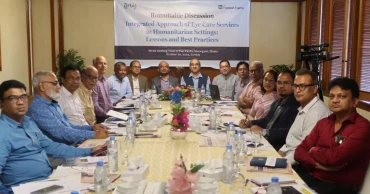
Foreign aid for Rohingya programmes drops: Roundtable
Foreign assistance for the Rohingya community taking shelter in Cox’s Bazar has dwindled and Bangladesh is struggling to sustain its programmes for them as the Rohingya crisis has dragged on and the attention of the international community shifted elsewhere.
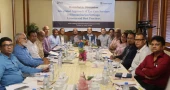
Mohammed Mizanur Rahman, Refugee Relief and Repatriation Commissioner (RRRC) disclosed the information at a roundtable discussion held at a hotel in the capital on Sunday.
Speaking as the chief guest at a discussion titled "Integrated Approach to Eye Care Services in Humanitarian Settings: Lessons and Best Practices," organised by Orbis International and The Financial Express, he said looking after the Rohingya community is not the responsibility of Bangladesh alone.
“We’ve shouldered the responsibility of the international community, including the United Nations. We’re working on behalf of them. Now they are forgetting us,” Orbis International quoted him as saying.
Mizanur said health facilities in Rohingya camps has decreased from 160 to 120 now and components in the facilities also cut significantly due to fund shortage.
Dhaka voices “deep concern” over recent influx of 40,000 Rohingyas
He said the international agencies now working for the Rohingya community are also experiencing fund constraints.
Professor Dr AHM Enayet Hussain, President of the Ophthalmological Society of Bangladesh (OSB) and Country Chair of the International Agency for the Prevention of Blindness (IAPB) Bangladesh Chapter, while chairing the event said eye care is no more a health issue, it is now a development issue.
He said with better eye care, one can perform better for society.
Prof Enayet highlighted the lack of coordination among different agencies for prioritizing eye care in the government health facilities.
Prof Khair Ahmed Choudhury, Director of the National Institute of Ophthalmology and Hospital (NIO&H), disclosed at the discussion that Bangladesh is bringing cornea from Nepal for the victims of the July movement.
He said the corneas for two patients were supposed to reach Dhaka by Sunday (October 20) afternoon on a Biman Bangladesh flight.
Khair Ahmed said many people suffered eye issues due to gunshots and other injuries during the movement.
Dhaka seeks Beijing's more active role to resolve Rohingya crisis
Additional Refugee Relief and Repatriation Commissioner Md Shamsud Douza urged actions for health literacy, including eye care, so that people understand their health problems and seek treatment.
He stressed the need of cornea donation to restore eyesight of many and said awareness can encourage people to donate corneas.
Representatives from Orbis’s partners in Rohingya response program, local and international non-government organizations working for the Rohingya community and relevant government bodies participated in the event.
The participants discussed the challenges and opportunities in eye health and the ways to overcome the challenges and tap the opportunities, made different suggestions that may help make Rohingya-related programs integrated and comprehensive.
The Fred Hollows Foundation Country Manager Musabbir Alam, Cox’s Bazar Baitush Sharaf Hospital (CBBSH) Manager Shahid Uddin Mahmood, Alliance for Cooperation and Legal Aid Bangladesh (ACLAB) official Moniruzzman, journalists Nurul Islam Hasib and Sarwar Azam Manik , among others, also spoke at the roundtable.
1 year ago
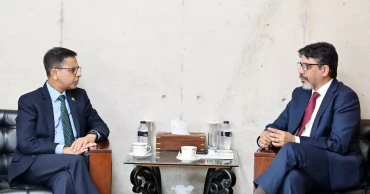
Dhaka, Delhi discuss consular access for Indian fishermen, repatriation of Bangladeshi fishermen
Bangladesh and India on Sunday discussed early consular access for Indian fishermen who were detained in Bangladesh last week and repatriation of Bangladeshi fishermen who were detained by the Indian authorities in mid-September.
Issue related to the status of return of the Indian workforce to Bangladesh who had been engaged in a few Line of Credit (LoC) projects; status of Indian visa operations and renewal of Revised Travel Arrangement (RTA) were also highlighted.
The two sides also laid emphasis on holding of meetings of regular bilateral mechanisms including the Foreign Office Consultations (FOC).
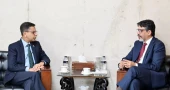
Indian High Commissioner to Bangladesh Pranay Verma met Foreign Secretary Md Jashim Uddin and discussed how the two countries can take forward the relations in the coming days on all fronts.
Bangladesh turns down India’s baseless allegations
During the meeting at the Ministry of Foreign Affairs, they also discussed the shared aspirations of the people for peace, security and development.
“No, no specific…it was more in terms of how we will take forward the relations in the coming days,” the Indian envoy said when a reporter wanted to know whether they have any discussion on issues relating to former Prime Minister Sheikh Hasina.
The two sides underscored the importance of activating the regular bilateral mechanisms between the two countries.
Asked about the next Foreign Office Consultations (FOC) between India-Bangladesh, he said this is what they were discussing.
The last FOC between the two countries was held in New Delhi on November 23 last year.
The High Commissioner on October 2 met Foreign Affairs Adviser Md Touhid Hossain at the Ministry of Foreign Affairs.
During the meeting, various bilateral issues were discussed and it was emphasized that the two countries need to work together to promote bilateral relations.
Bangladesh and India in recent days discussed cooperation in the areas of trade, projects and people-to-people contacts.
The importance of resuming regular visa processing by the Indian High Commission also came up for discussion.
1 year ago
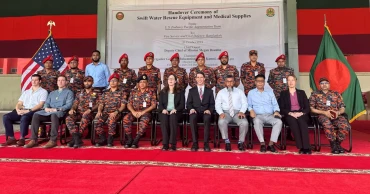
US donates first responder equipment to Bangladesh
The US Embassy’s Pacific Augmentation Team (PAT) has donated vital Swift Water Rescue and Hazardous Materials (HAZMAT) protection equipment to Bangladesh's Fire Service and Civil Defence (FSCD).
The US Embassy donated eight boats, 110 life vests, and other essential rescue tools designed to enhance FSCD's capabilities in responding to natural disasters, which is seen as a "significant demonstration" of commitment to its partnership.
Additionally, medical and HAZMAT items, including 120 disposable coveralls and 100 medical bags, were provided that will help first responders respond to emergencies where substances could pose a risk to health, safety, or the environment.
UN HR chief Volker Turk to visit Bangladesh this month
The US Embassy continues to find opportunities to build resilience and invest in disaster response in Bangladesh.
Deputy Chief of Mission at the US Embassy Megan Bouldin said this donation underscores their enduring partnership and shared commitment to enhancing disaster response and saving lives.
1 year ago

UN HR chief Volker Turk to visit Bangladesh this month
UN High Commissioner for Human Rights Volker Türk is scheduled to pay a three-day official visit to Bangladesh in the last week of October.
"We are working on this," a senior official told UNB.
The UN Human Rights chief is expected to meet Chief Adviser Prof Muhammad Yunus and other stakeholders to have broad discussions on rights issues, including the establishment of an office in Dhaka, said the official.
UN peacekeepers in southern Lebanon staying put despite Israeli warnings to move
Earlier, he received an official invitation from the Chief Adviser to conduct an impartial and independent fact-finding mission into human rights violations committed from July 1 to August 15.
The office deployed a fact-finding team to Bangladesh, with a view to reporting on violations and abuses perpetrated during the protests, analysing root causes and making recommendations to advance justice and accountability and for longer-term reforms.
Bangladesh is witnessing a number of visits from the United Nations for two reasons-new interim government in place and Bangladesh's 50 years of UN membership.
Volker Türk made a phone call to Bangladesh interim government Chief Adviser Prof Muhammad Yunus in August.
During his recent visit to New York, Chief Adviser Prof Yunus sought support from foreign friends for Bangladesh's new journey towards a happy and prosperous future, stressing that they do not want to miss the opportunity to build a new Bangladesh.
On September 17, 1974, Bangladesh became a full member of the United Nations.
As part of an ongoing engagement with the interim government, an advance team of the UN rights body visited Bangladesh from August 22-29 and met student leaders of the recent protests, as well as a wide range of advisers in the Interim Government, the Chief Justice, senior officers of the police and armed forces, lawyers, journalists and human rights defenders, representatives of political parties, and minority and indigenous communities.
1 year ago

Embassy in The Hague organises discussion on living with rivers
Experts at a discussion have said the increasing frequency and intensity of floods have led to widespread displacement, economic loss, and significant challenges to sustainable development.
As climate change continues to intensify, flood management and water governance have become paramount concerns, they said.
Innovative and collaborative approaches are necessary to address these issues and turn water management into a vehicle for resilience, economic growth, and sustainable development, they observed.
The Embassy of Bangladesh to the Netherlands organized the roundtable discussion on “Water and Bangladesh: Challenges and opportunities” in the Hague on October 18.
Bangladeshi water experts working in the Netherlands, the Dutch Ambassador to Bangladesh, Dutch Foreign Ministry officials, university professors, and water experts attended the discussion.
The experts explore innovative solutions to harness opportunities and address the challenges posed by water and flooding in Bangladesh.
Water and Environmental Expert, Dr. Ruknul Ferdous said that to mitigate flood risks, flood forecasting and early warning systems are extremely important.
Bangladesh Water Development Board’s Flood Forecasting and Warning Centre (FFWC) provides daily forecasts during the flood season, there are critical gaps in the dissemination of this information, especially at the local level.
Flood forecasting has to be made more effective through enhanced dissemination strategies, community engagement, and clearer communication of risks.
Kifayath Chowdhury, a PhD Candidate at Delft University of Technology stressed that mitigation requires interdisciplinary collaboration across various sectors, including government agencies, scientists, engineers, urban planners, and community leaders. Better coordination among stakeholders can lead to the design and implementation of more resilient flood protection measures.
Mohammad Saidee Hasan, PhD Candidate at TU Delft said that we can turn flood risks into economic opportunities. Instead of viewing floods as purely destructive, sustainable flood management techniques can enhance local economies and promote long-term growth.
He emphasized the use of natural infrastructure, such as wetlands and green spaces, to improve water retention and flood control while simultaneously supporting sectors like agriculture, tourism, and fisheries.
Md Feroz Islam a Researcher at Wageningen University and Research (WUR) urged that the climatic shifts will have far-reaching effects on water security, food security, and overall socio-economic stability.
Bangladesh Ambassador Tareque Muhammad mentioned that Bangladesh and the Netherlands are trusted partners in water management collaboration.
He hopes to continue this partnership in the second phase of Bangladesh Delta Plan 2100 and beyond.
The experts also underlined that we cannot fight with the river, but we can manage our rivers. Here, integrating local knowledge and community people in formulating water management plans is crucial.
Professor Chris Zevenbergen of the Water Engineering Department of IHE Delft said that Bangladesh is a very dynamic delta; it needs dynamic plans as well.
However, most of the bigger projects on water management in Bangladesh are not working well.
"We need to rethink new solutions from time to time. There are many water experts in Bangladesh who can contribute to making sustainable water management plans."
1 year ago
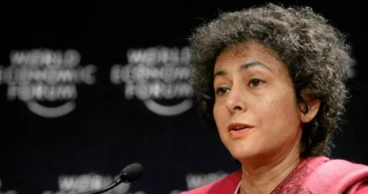
UN expert Irene Khan sees "global crisis" of freedom of expression
Deadly attacks on journalists in Gaza and double standards and discrimination against those advocating for Palestinian rights have created a global crisis of freedom of expression, a UN expert said.
Presenting her report to the General Assembly, Irene Khan, Special Rapporteur on freedom of opinion and expression, highlighted the widespread violations of freedom of expression arising from the conflict in Gaza, including the killing of journalists in Gaza, the crushing of protests worldwide against the carnage, the muzzling of Palestinian advocacy and the upsurge of disinformation, misinformation and hate speech online and offline.
“No war in recent times has affected freedom of opinion and expression so seriously or so far beyond its borders,” the expert said.
“Rarely have we seen such extensive patterns of unlawful, discriminatory and disproportionate restrictions on freedom of expression by States and private actors, especially in western democracies,” she said.
When the best universities and cultural institutions in western countries collude with their States to intimidate, isolate and silence dissenting voices on the Palestinian situation, they undermine their own artistic and academic freedoms and diminish the vibrancy of their own democracies, Khan said.
“The targeted killings and arbitrary detention of journalists, destruction of press facilities and equipment in Gaza, the denial of access to independent media, the banning of Al Jazeera appear to indicate a deliberate strategy by Israeli authorities to silence critical reporting and obstruct documentation of possible international crimes,” the expert said.
Why have States that promote themselves as media freedom champions remained silent in the face of such unprecedented attacks on journalists in the occupied Palestinian Territory?, she asked.
“The repression of media in Gaza and the West Bank is an attack on the right to information of people around the world who want to know what is happening there,” Khan said.
“While Jews, Jewish Israelis and Palestinians have all been targeted by disinformation, misinformation and hate speech on social media, the companies have tended in their content moderation to show a bias against Palestinian expression,” she said.
“Online and offline, international standards are being distorted and misinterpreted to equate criticism of Israeli Government policies and Zionism with antisemitism, which is racial and religious hatred of Jews and must be unequivocally condemned,” the expert said.
“Israel is a State. Zionism is a political ideology. Under international human rights law on freedom of expression, no State or political ideology can be shielded from criticism.”
The Special Rapporteur urged all States, companies and private institutions to refrain from discrimination and uphold freedom of expression equally for all persons, in line with international standards. She called on all States to act on the concrete recommendations in her report.
“Freedom of opinion and expression enjoyed on an equal basis by all sides is an invaluable tool for fighting hate, encouraging mutual respect and dialogue, for preserving democracy at home and promoting peace abroad,” Khan said.
1 year ago