foreign-affairs

Bangladesh Mission in KSA inaugurates e-passport services for expatriates
The e-passport services for Bangladeshi expatriates in Saudi Arabia have been inaugurated at the Bangladesh Embassy in Riyadh.
SM Rakibullah, Charge d'Affaires of the Embassy, presided over the inaugural ceremony.
Besides, officials and the technical team of the e-passport project from Dhaka were present at the ceremony.
The e-passport program was inaugurated with the participation of expatriate dignitaries, professionals, media personnel, and a large number of expatriate Bangladeshis who joined with huge enthusiasm at the Embassy auditorium.
Assistant Project Director Major Sumiriar Sadeekin gave an idea to the Bangladeshis present about the process of applying for an e-passport in Bangladesh and Bangladesh embassies abroad.
He said applicants can apply for five years or 10 years of validity, and it will be possible to provide an e-passport within one month of receiving the application.
Later, the technical team answered various questions of the expatriates about e-passports.
1 year ago

Climate change does not recognize borders, we cannot build a wall to keep crisis out: ILO
International Labour Organization (ILO) Director General Gilbert F. Houngbo has said climate change does not recognize borders, and we cannot build a wall to keep the crisis out.
“The climate crisis affects us all and represents the single, gravest, threat to social justice today,” said ILO Director-General, adding that many of the countries experiencing the most brutal consequences of this crisis are particularly ill-equipped to handle its environmental and livelihood consequences. “We must recognize that what happens to impacted communities will affect us all... Universal social protection is top of the list of tools that we have at our disposal to help us ensure that the climate crisis does not deepen existing inequalities and exclusion in affected communities.” Bangladesh ranks 10th in the World Risk Index published by the World Economic Forum. The country is affected by both rapid and slow-onset disasters. Storms and floods collectively account for most of the disasters experienced in Bangladesh. The most impacted households are unable to cope with the adverse effects of floods and cyclones, including destruction of homes and livelihood assets such as crops and livestock. While Bangladesh has a strong framework for social protection in the 2015 National Social Security Strategy (NSSS), the current system is undermined by lack of coordination and targeting so that available resources can be directed at the most in need. “Promoting social insurance and a gradual transition towards a universal social protection system in Bangladesh is an important way to cope with the adverse impacts of natural disasters” said Tuomo Poutiainen, the Country Director of ILO in Bangladesh. “ILO is committed to work with the Government and social partners to develop a universal social protection system especially focussing on the most vulnerable segments of society.” Social protection can help people adapt to and cope with climate-related shocks by providing social protection benefits, such as income security and access to healthcare. Moreover, social protection can cushion families, workers, and enterprises during the green transition and enable more sustainable economic practices. This includes supporting workers with training and upskilling so that they are equipped with knowledge and skills for employment in green and low carbon sectors. Social protection also ensures that all jobs are decent, with adequate protection and benefits.“Social protection is essential to ensure that the ongoing green and low-carbon energy transition leaves no one behind. And the imperative to make social protection universal is not only ethical, but also practical: by supporting and protecting workers everywhere, we can help to alleviate fears about the transition, which is essential to mobilize popular support for a sustainable and just transition,” added the Director-General. Yet, despite its role as a catalyst and an enabler of positive climate action, governments are failing to make the most of social protection’s potential, largely because of persistent coverage gaps and significant underinvestment.Governments are failing to make full use of the powerful potential of social protection to counter the effects of the climate crisis and support a just transition, according to a new International Labour Organization (ILO) report. The report also finds that those countries most vulnerable to the effects of climate change have the lowest levels of social protection.The World Social Protection Report 2024-26: Universal Social Protection for Climate Action and a Just Transition finds that, for the first time, more than half of the global population (52.4 per cent) has some form of social protection coverage. This is up from 42.8 per cent in 2015, the year when the Sustainable Development Goals (SDGs) were adopted.However, in the 20 countries most vulnerable to the climate crisis, 91.3 per cent of people (364 million) still lack any form of social protection. Looking more broadly, in the 50 most climate-vulnerable countries, 75 per cent of the population (2.1 billion people) lack any social protection coverage. Globally, most children (76.1 per cent) still have no effective social protection coverage. There is also a substantial gender gap, with women’s effective coverage lagging behind men’s coverage (50.1 and 54.6 per cent, respectively).These gaps are especially significant, given the potential role of social protection in softening the impact of climate change, helping people and societies adapt to a new climate-volatile reality, and facilitating a just transition to a sustainable future. On average, countries spend 12.9 per cent of their gross domestic product (GDP) on social protection (excluding health). However, while high-income countries spend an average of 16.2 per cent, low-income countries allocate only 0.8 per cent of their GDP to social protection.Low-income countries – which include states most vulnerable to the impacts of climate change – need an additional US$308.5 billion per year (52.3 per cent of their GDP) to guarantee at least basic social protection. International support will be needed to reach this goal.The report calls for decisive and integrated policy action to close protection gaps, arguing that, “it is time to up the ante” and invest significantly in social protection. The report offers important recommendations to help guide policy and ensure effective and sustainable outcomes, including:- Preparing for both ‘routine’ life cycle risks, as well as climate-related shocks by having social protection systems in place ex-ante by ensuring everyone enjoys adequate social protection.- Using social protection to support climate change mitigation and adaptation efforts and secure public acceptance of those measures. - Prioritizing investment in social protection, including external support for countries with limited fiscal space.
1 year ago
Dhaka calls for addressing root causes of Rohingya crisis to ensure lasting resolution
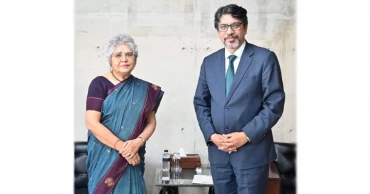
Foreign Secretary Md Jashim Uddin has stressed the importance of addressing the root causes of the Rohingya crisis to ensure a lasting and peaceful resolution.
He further called for renewed engagement and proactive role from the international community in facilitating a safe and dignified return of the displaced Rohingyas to their homeland, Myanmar.
The Foreign Secretary raised the issue when Country Representative of the United Nations High Commissioner for Refugees (UNHCR) Sumbul Rizvi paid a courtesy call on him at the Ministry of Foreign Affairs on Thursday.
During the meeting, Rizvi congratulated the Foreign Secretary on his recent assumption of office and provided an update on UNHCR's ongoing operations in Bangladesh, particularly in the Rohingya camps in Cox’s Bazar and Bhasan Char.
Rizvi has reiterated UNHCR’s steadfast commitment to providing humanitarian assistance to the forcibly displaced Rohingya population until a sustainable solution through voluntary repatriation is achieved, said the Ministry of Foreign Affairs.
She emphasized the agency's ongoing support to ensure the welfare of the Rohingya population during their stay in Bangladesh.
Foreign Secretary expressed his appreciation for UNHCR’s continued efforts and support in managing the humanitarian crisis.
1 year ago

5 Chinese companies invest USD 8 million in last one month: Yao Wen
Chinese Ambassador to Bangladesh Yao Wen has said five Chinese companies have invested USD 8 million in the last one month since the interim government assumed its duties.
During a courtesy meeting, Foreign Secretary Md Jashim Uddin thanked China for its recent decision of giving the zero-tariff facility for 100 percent tariff lines of all LDCs having diplomatic relations with China, including Bangladesh.
Ambassador Yao made his maiden call on the newly appointed Foreign Secretary Jashim at the Ministry of Foreign Affairs on September 12.
He congratulated the Foreign Secretary on his appointment and handed over a letter of the Vice Foreign Minister of China Sun Weidong acknowledging the Foreign Secretary’s past contributions as Ambassador of Bangladesh to China.
Ambassador Yao reiterated China’s commitment of good neighborliness and friendship with Bangladesh.
He stated that the friendship between China and Bangladesh is historically deep and China stands ready to work with Bangladesh to promote bilateral exchanges and cooperation in various areas and further advance the ‘comprehensive strategic cooperative partnership’.
Ambassador Yao referred to the trade issues and mentioned China had already completed necessary formalities to import mangoes from Bangladesh next year, according to the Ministry of Foreign Affairs.
The Foreign Secretary requested the Ambassador to import a few other agricultural items including jackfruit and guava.
He stressed the importance of increasing people-to-people contacts between Bangladesh and China especially in connection with the celebration of the 50th anniversary of the establishment of diplomatic relations between Bangladesh and China.
Ambassador Yao expressed China’s readiness to extend medical treatment to the persons who were injured during the student-led mass upsurge in Bangladesh.
China also wants to provide equipment such as boats, power generators, and life jackets to be used for rescue operations for the flood victims, the Ambassador added. Foreign Secretary Jashim appreciated the Chinese initiatives.
Both sides also discussed preparing a list of functions to be organized in celebration of the 50 years of establishing diplomatic relations in a befitting manner in 2025.
Regional and multilateral issues of common interests and support for each other’s candidatures at the international fora also featured in their discussions. Among others Director General Toufique Hasan of the Ministry of Foreign Affairs and officials of the Chinese Embassy in Dhaka were present in the meeting.
1 year ago

US Delegation’s Visit: Dhaka, Washington to have “multi-dimensional” discussion
Bangladesh looks forward to have a “multi-dimensional” discussion as it prepares to welcome the first US delegation after the formation of interim government led by Chief Adviser Prof Muhammad Yunus on August 8.
“The arrival of the first team of the United States (during this tenure) is a great reflection of the importance they attach to the relationship with Bangladesh. This implies that this discussion will be multi-dimensional; it will not be limited to just one topic,” said Foreign Secretary Md Jashim Uddin ahead of the visit.
The US delegation will meet Chief Adviser Prof Muhammad Yunus on Sunday morning. They will also meet Foreign Affairs Adviser Md Touhid Hossain and Finance Adviser Dr Salehuddin Ahmed apart from their other engagement.
Foreign Secretary Jashim will host a working lunch where representatives from the relevant ministries will attend.
“US and Bangladeshi officials will discuss how the United States can support Bangladesh’s economic growth, financial stability and development needs,” a Spokesperson at the US Department of State said.
“I don't want to make any kind of comments before the discussion starts, which would undermine the normality of the discussion,” said the Foreign Secretary when asked about the specific agenda.
US Assistant Secretary of State for the Bureau of South and Central Asian Affairs Donald Lu, who is now visiting New Delhi, will travel to Bangladesh as part of the delegation.
Responding to a question, Foreign Secretary Jashim said the government wants to move to a mutually beneficial relationship with everyone.
The people of Bangladesh have historically had an interest in international affairs, he added.
Throughout his trip, Assistant Secretary Lu will reaffirm the United States’ commitment to supporting "our partners’ economic growth and promoting stability throughout the Indo-Pacific region."
In Dhaka, Lu will join an interagency delegation for meetings with the Bangladeshi interim government.
The delegation, scheduled to arrive on Saturday, will include representatives from the US Department of the Treasury, USAID, and Office of the US Trade Representative.
The senior-level US delegation will discuss ways with the interim government to take forward the relations between the two countries in a changed political scenario.
Any visit by the US delegation is always important, Foreign Affairs Adviser Md Touhid Hossain told reporters at the Ministry of Foreign Affairs.
US Deputy Under Secretary/Assistant Secretary for International Finance Brent Neiman will join the US delegation.
Neiman serves as the Deputy Under Secretary for International Finance at the U.S Department of the Treasury.
The foreign affairs adviser said they will discuss issues which are achievable and stressed that US visa policy will not affect the relations between the two countries.
Meanwhile, the United States has lowered its travel advisory for Bangladesh from Level 4 to Level 3, urging its citizens to reconsider travel rather than avoiding it entirely. This adjustment signals a perceived reduction in immediate threats to US nationals.
The revised advisory was issued shortly before a US delegation's scheduled visit to Bangladesh.
The level was raised to 4, the highest level, when the US asked its nationals not to travel to Bangladesh amid student protests in July and August.
“Reconsider travel to Bangladesh due to civil unrest, crime, and terrorism. Some areas have increased risk,” reads the latest travel advisory. In its country summary, the US said since July 2024 “civil unrest, violent clashes” have largely ended, but conditions may change on short notice.
US citizens are reminded to avoid all gatherings, even peaceful ones, that could turn violent with little or no warning.
Bangladesh and the United States will discuss how the US can support Bangladesh’s economic growth, financial stability and development needs as Dhaka will welcome a delegation from the US within a couple of days.
1 year ago
150 more Bangladeshis repatriated from Libya
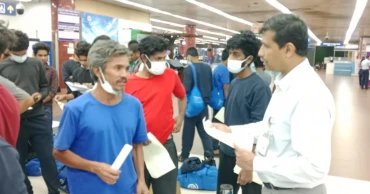
A fresh batch of 150 irregular Bangladeshi migrants, who were detained in Libya's Ganfuda Detention Centre, returned home on Friday.
A Buraq Air chartered flight carrying the Bangladeshi nationals landed at the Hazrat Shahjalal International Airport in Dhaka around 9:15am, according to a press release.
The repatriation was facilitated by the Ministry of Foreign Affairs, the Bangladesh Embassy in Tripoli, and the International Organization for Migration (IOM).
On arrival at the Hazrat Shahjalal International Airport in Dhaka, the repatriated Bangladeshi citizens were welcomed by the officials of the Ministry of Foreign Affairs and the International Organization for Migration (IOM).
Each repatriate has received financial assistance of Tk 6,000, along with food items, medical care, and temporary accommodation as needed.
Earlier on September 5, four Bangladeshis were repatriated from Tunisia, followed by 18 more the next day.
On 6 September, 154 Bangladeshi citizens who were detained in a detention centre in Libya's Tripoli were also brought back home, according to the press release.
1 year ago
Japan providing assistance worth USD 1 million to flood-affected areas through UNHCR, UNICEF
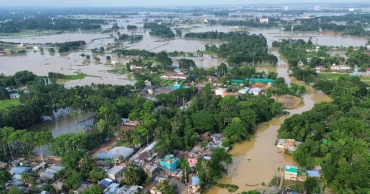
The government of Japan has decided to provide the United Nations High Commissioner for Refugees (UNHCR) and United Nations Children's Fund (UNICEF) with assistance worth USD 1 million in response to the flash floods in northern and south-eastern Bangladesh.
Severe flooding began on August 17, 2024, due to active monsoons, causing significant rainfall and rising river levels in 11 districts. Approximately 4.71 million people have been affected.
Many are still stranded without food and relief, with reportedly 71 deaths and 207,191 people seeking refuge, according to the Ministry of Disaster Management and Relief (as of 7th September).
With this Japanese emergency assistance, UNHCR will shelter 2,000 households, providing non-food items, water, sanitation, and hygiene support in affected areas. UNICEF, for its part, will provide water, sanitation, and hygiene support to 375,000 people in Noakhali, Cumilla, Lakshmipur, Feni, Chattogram, and Moulvibazar.
The Interim Government is now faced with its first large-scale natural disaster since its swearing-in almost one month ago. Japan wishes to stand firmly with Bangladeshi people. "I hope that through UNHCR and UNICEF, relief supplies such as shelters, water, sanitation, and non-food items will be delivered swiftly to those in need,” said IWAMA Kiminori, Ambassador of Japan to Bangladesh.
“Japan demonstrates, time and again, its steadfast support to the Rohingya refugee response. This generous contribution to support Bangladesh as it faced devastating floods, will also support UNHCR in swiftly providing emergency assistance to Rohingya refugees in Cox’s Bazar whose shelter were destroyed or severely damaged in recent floods and mudslides brought by heavy rains and monsoon,” said Sumbul Rizvi, UNHCR Representative in Bangladesh.
“Bangladesh and the refugee camps it hosts are on the frontline of climate change, and both communities are the first responders when disaster strikes. Such support illustrates not just the solidarity of the people of Japan, but also the commitment to stand together with affected communities,” she added.
“The recent tragic floods in Bangladesh have left thousands of households, schools and health facilities without safe drinking water and adequate hygiene and sanitation. Children and their families are at high risk of deadly diseases such as dengue, as well as diarrhea and other water-borne diseases,” said Rana Flowers, Representative to UNICEF in Bangladesh.
“UNICEF is honoured to collaborate with the Government of Japan to urgently respond to these critical challenges, implement cutting-edge vector control measures and restore damaged water and sanitation facilities, thereby preventing future disease outbreaks and safeguarding the health and well-being of the most vulnerable children and families.”
In addition to the above mentioned commitment, the Government of Japan already provided emergency humanitarian aid worth USD 2 million to the Japan Platform, a platform of Japanese NGOs, to launch a program to provide emergency relief in eastern Bangladesh.
Under this program, seven Japanese NGOs are currently delivering on the ground various relief materials including emergency medical care, food, water supply, and daily necessities.
Furthermore, the Japanese Commerce & Industry Association in Dhaka and the Japanese Association in Dhaka donated a total of 200,000 Bangladesh Taka to Bangladesh Red Crescent Society to support individuals and families affected by the floods.
"Sincerely hoping that this ‘all-Japan’ assistance from the government, businesses, NGOs, and others will help Bangladeshi people to ‘build back better’. Japan remains committed, under the strategic partnership between the two countries, to supporting the Government of Bangladesh as well as the people of Bangladesh in recovering from this natural disaster and in setting a pathway towards a more prosperous Bangladesh," said the Japanese Embassy in Dhaka.
1 year ago

Russian world traveler Iurii Artemovich Volkov shares adventures in Dhaka
Russian world traveler, photographer, and publicist Iurii Artemovich Volkov shared his global adventures during a recent event in Dhaka.
The Russian House in Dhaka organised a meeting session with the Russian blogger and traveler, Iurii Artemovich Volkov, accoredin
Volkov is a member of the Russian Geographical Society and a candidate for Master of Sports. He is also a member of the motorcycle club "Night Wolves," a sports motorcyclist with the Federation of Motorcycle Tourism of Russia, and the president of the public organization All Worlds. He has participated in more than 65 expeditions and three round-the-world trips, covering 145 countries, Antarctica, and the North Pole.
He has been recognized ten times in the Russian Book of Records for setting eighteen world records in travel. He has organized several photo exhibitions titled "All Worlds," focusing on the Friendship of Peoples, and has conducted a series of lectures on public diplomacy.
During the meeting, Iurii Volkov recounted his travels across Russia and the globe, highlighting the patriotic project "All the Elements." This project involved displaying the Russian tricolor at various legendary locations worldwide, including Lake Baikal (symbolizing water), a drifting ice floe at the North Pole, and the Kamchatka volcano (representing fire), as well as in Antarctica.
The Russian flag, measuring nearly 1,500 square meters, was also showcased on Mount Elbrus, in Moscow, and Crimea. Volkov also shared his life experiences from his travels and answered numerous questions from attendees about Russia.
The event was held in a warm and friendly atmosphere.
1 year ago

India will continue to work with Bangladesh to fulfill shared aspirations: MEA Spokesperson
India has conveyed that it will continue to work with Bangladesh to fulfill the shared aspirations of the people of both countries for prosperity, security and development.
Indian High Commissioner to Bangladesh Pranay Verma had gone to call on Chief Adviser Professor Muhammad Yunusand he had conveyed that, said Randhir Jaiswal, Official Spokesperson at the Ministry of External Affairs, on Thursday.
The High Commissioner had also conveyed India's commitment to taking forward the relationship in accordance with their respective national priorities. "So that is how approach to our ties with Bangladesh are at present," said the MEA Spokesperson while responding to a question in a weekly briefing in New Delhi.
Responding to a separate question, the Spokesperson said US Assistant Secretary Donald Lu is visiting India and he has several engagements.
He is attending the Ideas Summit Conference, which is being organized by the US-India Business Council.
Trade and Commerce
Jaiswal said trade and commerce have started with Bangladesh.
Trucks are plying between the two countries carrying essential commodities and whatever else that is being traded between India and Bangladesh, he said.
On the projects part, he said several of the projects have been impacted because of the situation in Bangladesh.
"Right now, they have been disrupted and these projects will recommence when the security situation in Bangladesh permits our personnel, who are working on those projects, and they can return and they can resume work," said the Spokesperson.
The project between India’s Numaligarh and Parbatipur in Bangladesh through which they are supplying high-speed diesel is in operation since March of 2023.
"There are some added issues in regard to this friendship project, extension of the pipeline on which we have made some proposal to Bangladesh and we await their comeback on it," he mentioned.
Adani Project
About the Adani project, the Spokesperson said, "What you are referring to is a private project. It is bound by a buyer-seller agreement between two parties. One party happens to be an Indian party and the other party happens to be a Bangladeshi party."
He said it is for both these parties to decide what they want out of this arrangement.
"It is a buyer-seller…it is a private engagement. So they will have to sit and sort out issues if they have in this particular engagement," said the MEA Spokesperson.
1 year ago
US eases travel advisory for Bangladesh ahead of delegation’s visit
The United States has lowered its travel advisory for Bangladesh from Level 4 to Level 3, urging its citizens to reconsider travel rather than avoiding it entirely. This adjustment signals a perceived reduction in immediate threats to US nationals.
The revised advisory was issued shortly before a US delegation's scheduled visit to Bangladesh.
The level was raised to 4, the highest level, when the US asked its nationals not to travel to Bangladesh amid student protests in July and August.
“Reconsider travel to Bangladesh due to civil unrest, crime, and terrorism. Some areas have increased risk,” reads the latest travel advisory. In its country summary, the US said since the July 2024 “civil unrest, violent clashes” have largely ended, but conditions may change on short notice.
US citizens are reminded to avoid all gatherings, even peaceful ones, that could turn violent with little or no warning.
Bangladesh and the United States will discuss how the US can support Bangladesh’s economic growth, financial stability and development needs as Dhaka will welcome a delegation from the US within a couple of days.
US Assistant Secretary of State for the Bureau of South and Central Asian Affairs, Donald Lu, as part of the US delegation, will travel to Bangladesh.
1 year ago