foreign-affairs

Eager to work with Prof Yunus-led interim government: US
The United States has trashed the speculation on US involvement in the recent student-led anti-government protests in Bangladesh, stressing that they are eager to work with the interim government.
"We continue to be ready and eager to work with interim government that’s led by Dr Muhammad Yunus as it charts its democratic future for the people of Bangladesh," Principal Deputy Spokesperson Vedant Patel told reporters at a regular briefing in Washington on Monday( September 9).
He said they are continuing to monitor the developments in Bangladesh closely.
Drawing his attention, one of the reporters said there have been claims about Chinese influence in Bangladeshi recent student protests.
In reply, Patel said he is just not going to speculate.
Bangladesh seeks US assistance for Buriganga cleaning, mapping its major polluting sources: Adviser
The reporter said some Indian media outlets have suggested U.S. involvement in the anti-government protest in Bangladesh while India has historically been a close ally of the ousted government.
Patel said he has not seen those reports. "But what I can unequivocally say is that they are not true. That’s probably why I’ve not seen them," he added.
Nobel laureate and globally acclaimed economist Prof Muhammad Yunus was sworn-in as the chief adviser of the interim government on August 8 bringing hope for a new journey towards Bangladesh’s democratic future.
The US said they would support the interim government of Bangladesh and strengthen ties with Dhaka on a range of issues.
China announces joint naval, air drills with Russia
The US would work closely with Bangladesh on health, education, labour, governance, and the Rohingya issues.
Earlier, the US government congratulated the chief adviser and said it was looking forward to working together.
1 year ago

World Trade Report 2024 highlights trade’s role in supporting inclusiveness
The 2024 edition of the WTO’s World Trade Report presents strong evidence that trade has played a crucial role in narrowing the income gap between economies since the WTO was established 30 years ago.
The flagship publication also analyses trends in the distribution of the gains of trade among people within economies, and emphasizes the need for a comprehensive strategy that integrates open trade with supportive domestic policies.
“Perhaps the biggest takeaway from the report is its reaffirmation of trade's transformative role in reducing poverty and creating shared prosperity — contrary to the currently fashionable notion that trade, and institutions like the WTO, have not been good for poverty or for poor countries, and are creating a more unequal world,” WTO Director-General Ngozi Okonjo-Iweala says in her foreword to the report.
“But the second biggest takeaway is that there is much more we can do to make trade and the WTO work better for economies and people left behind during the past 30 years of globalization,” DG Okonjo-Iweala says.
Examining how international trade has contributed to making the global economy more inclusive, the report showcases data establishing a strong link between trade participation and the narrowing of income disparities among economies.
From 1996 to 2021, a high trade share in GDP is significantly correlated to faster growth in low- and middle-income economies, converging to the level of GDP per capita in high-income economies.
Moreover, membership in the WTO and its predecessor the General Agreement on Tariffs and Trade (GATT) has boosted trade between members by an average of 140 per cent, while economies that undergo rigorous WTO accession negotiations are shown to grow 1.5 percentage points faster during their accession period.
Analysis further suggests that trade cost reductions between 1995 and 2020 led to a 20 to 35 per cent faster income convergence of low- and middle-income economies with high-income economies.
Contrary to common belief, the report found weak correlation between trade openness and within-country income inequality, based on a comparison of the 2021 Gini inequality index and trade openness index of 157 economies. While income inequality remains high it is not systematically linked to trade and import competition.
The report also highlights challenges, noting that many economies with weak trade participation and high commodity dependence have been left behind.
Between 1996 and 2021, low- and middle-income economies that grew slower than the average high-income economy in income-per-capita terms represented 13 per cent of the global population and were mainly in Africa, Latin America and the Middle East.
Low- and middle-income economies that have lagged behind generally tend to engage less in international trade, receive less foreign direct investment, rely more on commodities, export less complex products, and trade with fewer partners.
“Less trade will not promote inclusiveness, nor will trade alone,” WTO Chief Economist Ralph Ossa said.
“True inclusiveness demands a comprehensive strategy — one that integrates open trade with supportive domestic policies and robust international cooperation.”
The report emphasizes the need for a comprehensive strategy that integrates open trade with supportive domestic policies to make trade more inclusive such as vocational training, unemployment benefits, education for a more skilled and mobile workforce, competition policy to ensure consumers benefit from lower prices, reliable infrastructure, and well-functioning financial markets.
Reducing trade costs, bridging the digital divide, and updating the WTO rulebook to reflect the growing importance of trade in services, digital, and green sectors are essential. Greater international trade cooperation is also necessary to address evolving challenges in areas crucial to the future of trade.
Better coordination among international organizations could help to leverage synergies between trade policies and complementary policies, and reinforce their impactsm on inclusiveness across and within economies.
1 year ago
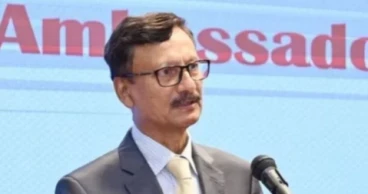
Repatriation not possible now; 2500 availed of resettlement opportunity: Adviser
Foreign Affairs Adviser Md Touhid Hossain on Monday said there is still a hope that the United States will take around 2 lakh Rohingyas as part of a third country resettlement plan with 20,000 Rohingyas per year.
“It is a very small number. The number is 2 lakh. We can try that. It is still at a trial stage. Around 200-400 are going while the total number is so far 2500,” he told reporters at the Ministry of Foreign Affairs.
Chief Adviser Prof Muhammad Yunus on Sunday underscored the need for expediting third country resettlement of the Rohingya people who have been living in Bangladesh.
The chief adviser made the call after he met officials of the International Organisation for Migration (IOM) at his office in Dhaka.
The IOM chief of mission in Bangladesh Abdusattor Esoev gave an overview of the resettlement of the Rohingya to developed countries including in the United States.
Washington DC has reaffirmed its commitment to resettle thousands of Rohingyas in the United States, but the process hasn't been accelerated. The chief adviser asked the officials to fast-track the process.
"It should be the easiest of the process," he told the officials of IOM and the Bangladesh government.
The IOM Bangladesh chief said the resettlement of the Rohingya resumed in 2022 after a gap of 12 years, but only this year the process gathered some pace.
Responding to a question on Rohingya repatriation, the foreign affairs adviser said he personally believes that repatriation of the Rohingyas is not possible at this moment. “It could be possible to start if a kind of stability is restored there (Myanmar).”
He said Bangladesh needs the international community’s support so that the Rohingyas can return to their place of origin safely.
Earlier, he said the government would prevent any fresh entry of the Rohingyas, noting that around 8,000 Rohingyas recently entered Bangladesh, fleeing armed conflict in Myanmar’s Rakhine state.
Earlier, interim government Chief Adviser Prof Yunus sought United Nations High Commissioner for Refugees Filippo Grandi’s support for the “dignified and voluntary” return of more than one million Rohingya people, who live in camps in Bangladesh, to their homeland in Myanmar.
High Commissioner Grandi had a conversation with Chief Adviser Prof Yunus over the phone on Monday to congratulate him on his assumption of the leadership of the interim government of Bangladesh.
The UNHCR chief requested the chief adviser to attend a meeting on the Rohingya crisis on the sidelines of the upcoming UN General Assembly meeting in New York.
Grandi informed the chief adviser that he plans to visit Bangladesh in October this year.
Seven years ago, on 25 August 2017, some 700,000 Rohingya men, women and children were forced to flee Myanmar and seek protection in Bangladesh.
1 year ago
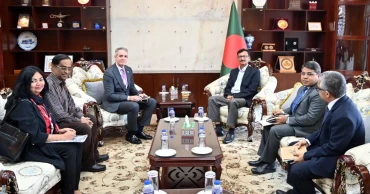
Foreign Adviser shares Bangladesh’s current challenges with IFRC
Foreign Affairs Adviser Md Touhid Hossain on Monday said that Bangladesh is “deeply concerned” with the current challenges faced by the country in terms of security, human-trafficking, environment and various socio-economic aspects for hosting the Rohingya people for over seven years now.
During a meeting with the IFRC delegation chief, he reiterated that the Rohingya people will have to return to Myanmar; and sought support from the international community, according to the Ministry of Foreign Affairs.
The Adviser received the letter of credence of Alberto Bocanegra Vidal, Head of Delegation of the International Federation of Red Cross and Red Crescent Societies (IFRC) to Bangladesh, at the Ministry.
He welcomed the IFRC Head of Delegation to Bangladesh and assured of all-out support of the government in discharge of his responsibilities.
Alberto briefed the Adviser about IFRC activities in Bangladesh, particularly about their early warning system, role during the recent floods in Bangladesh and for the temporarily sheltered Rohingya people in Bangladesh as well as the host community.
The Adviser appreciated the activities of IFRC, ICRC and BDRCS in Bangladesh, their contribution during the COVID-19 pandemic and timely response to the floods.
He said that the government is extending support to the flood affected people and would welcome voluntary assistance from the partners and friends of Bangladesh.
1 year ago
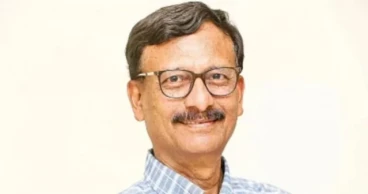
Border killings barrier to good relations with India: Adviser
Describing border killings unacceptable, Foreign Affairs Adviser Md Touhid Hossain on Monday said such killing is a barrier to creating good relations between Bangladesh and India.
Talking to reporters at the Ministry of Foreign Affairs, Hossain said border killings were reported when the two neighboring countries were reportedly going through a golden chapter. “There has been no change in this trend.”
The Adviser said the issue of maintaining friendly relations is not limited to two governments but it is a matter of peoples from both sides.
“There is a repercussion across the country when an individual is killed along the border. That is a negative repercussion which we do not want,” he said.
Within a span of eight days, Indian Border Security Force (BSF) personnel gunned down another Bangladeshi teen and injured two others including the teen’s father along Baliadangi border in Thakurgaon early Monday, said police.
The deceased was identified as Joyanta Kumar Singha, 15, while the injured were Joyanta’s father Mahadev Kumar Singha, and Bangdu Mohammad, of Fakir Bhita village in the upazila.
Baliadangi Police Station’s Officer-in-Charge Firoz Kabir said one person died and two others sustained bullet injuries in the BSF firing while they were trying to cross the border.
The injured are undergoing treatment at Rangpur Medical College Hospital, he said, adding that the BSF troops took away the body.
Lt Col Tanjir Ahmed, commandant of Border Guard Bangladesh (BGB)-50 Battalion in Thakurgaon, said they are in touch with the BSF to bring back the body.
On September 1, 13-year-old Shwarna Das, of Juri upazila of Moulvibazar district, was shot dead by the BSF troops.
Around 45 hours after the incident, the BSF returned the body to Bangladesh after a flag meeting with the BGB.
In the protest note sent to the Indian High Commission in Dhaka on Thursday, Bangladesh strongly protested and condemned such ruthless acts and expressed deep concern over the incidents.
Bangladesh reminded that such incidents of border killing are undesirable and unwarranted and such actions are in violation of the provisions of the Joint Indo-Bangladesh Guidelines for Border Authorities, 1975.
The government called upon the government of India to stop repetition of such heinous acts and conduct enquiries into all border killings, identify the responsible persons and bring them to justice.
Bangladesh strongly protested and condemned such ruthless acts and expressed deep concern over the incident.
1 year ago
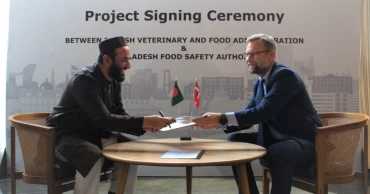
Bangladesh, Denmark sign project to promote safer, more sustainable food production
Bangladesh and Denmark have further strengthened cooperation on food and agriculture to support a safe and sustainable food production in Bangladesh.
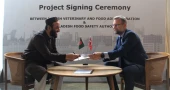
Bangladesh Food Safety Authority (BFSA) and the Danish Embassy on behalf of the Danish Veterinary and Food Administration signed a Strategic Sector Cooperation (SSC) project on food safety and green transition of the dairy value chain on Monday.
This new project between Denmark and Bangladesh will work to address several challenges in relation to food safety in Bangladesh, including antimicrobial resistance and misuse of antibiotics in food production.
Zakaria, Chairman of BFSA underlined the importance of ensuring safe food for all to ensure health and development.
He said, “This collaboration will help to further develop and ensure safe food in Bangladesh. By increasing the food safety measures, Bangladesh will also have more access to the international food market.”
Danish Ambassador to Bangladesh Christian Brix Moller said Denmark and Bangladesh have been trusted partners for more than five decades now.
“We are very happy to have entered this partnership to strengthen our cooperation on food safety, mainly antimicrobial resistance and sustainable food production to support health and the development towards a prosperous Bangladesh.”
The signing has solidified the commitment of both nations to continue close cooperation in the food and agricultural sector and collaborate on vital matters related to food safety management and sustainable food production.
This SSC-project is a government-to-government project between Denmark and Bangladesh.
The Danish partner to this project is the Danish Veterinary and Food Administration (DVFA), while the Bangladeshi partners are BFSA, Bangladesh Standards and Testing Institution (BSTI), Directorate General Drug Administration (DGDA), and Department of Livestock Services (DLS).
The project is a three-year government to gov-ernment project, bringing Danish and Bangladeshi experts together.
The three core objectives of this project are: i) Improving food safety in the dairy value chain through strengthening the regulatory framework and capacity building, ii) preventing antimi-crobial resistance in the livestock sector through strengthening the regulatory framework and capacity building, and iii) supporting efficient and sustainable dairy production through strengthening the capacity of the competent authority working with extension service for dairy farmers.
1 year ago
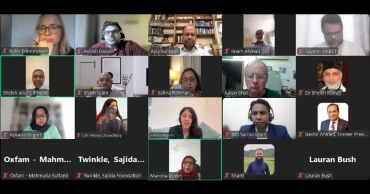
Bangladeshi diaspora in UK join hands, urge to support flood response
Speakers at a webinar have highlighted the urgent need for a unified approach in addressing the severe flooding crisis in Bangladesh.
It was emphasized that through coordinated efforts between Oxfam and the UK’s Bangladeshi diaspora, significant and tangible impacts can be made in supporting the affected communities.
Historically, they said, the diaspora has been a reliable force in humanitarian causes, but the current crisis demands more organized efforts to fully leverage their financial contributions, skills, and resources.
The recent floods in Bangladesh have left nearly 6 million people facing devastation and uncertainty, according to Oxfam Bangladesh.
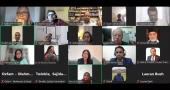
In collaboration with crucial Bangladeshi diaspora members in the UK, Oxfam hosted the webinar recently that underscored the diaspora's immense potential to support affected communities.
Participants at the webinar called for collective action, stressing the need for financial contributions and sharing skills and resources.
The recent webinar brought together prominent members of the diaspora, community leaders, businesspeople, and other representatives to focus on urgent responses to the floods.
The discussion highlighted the critical need for immediate aid and long-term recovery efforts, with a clear message to the diaspora to contribute their financial resources, skills, and expertise.
Oxfam has been on the ground since the start of the floods, delivering life-saving aid, including clean water, sanitation facilities, food supplies, and medical care. But the needs remain enormous. The webinar clarified that the diaspora's involvement is vital in scaling these efforts.
Rafique Haider, President of the British Bangladesh Chamber of Commerce and Industry (BBCCI); Bashir Ahmed, former President BBCCI; Sheikh Aliur Rahman OBE, Group Chairman, London Tea Exchange; Baroness Manzila Pola Uddin, Member of the House of Lords of the United Kingdom; Apsana Begum, MP for Poplar and Limehouse; former mayor Cllr Jyotsna & Cllr Sams Islam; Dr Sheikh Ramzy, chair oxford Islamic center; Julian Francis, development practitioner; Rohima Miah, Director of international trade affairs, UKBCCI; Mahmud Hasan MBE, CEO Apasen and Ashish Damle, Oxfam's Country Director in Bangladesh sparked the discussions.
During the webinar, Aziz ur Rahman, Patron of Oxfam GB, the webinar facilitator, urged participants to act swiftly and leverage the diaspora's potential in financial contributions and sharing skills and resources to support disaster relief.
He highlighted the consistent generosity of the UK's Bangladeshi community, which has historically rallied for humanitarian causes, but stressed the need for more structured and sustained engagement.
Halima Begum, CEO of Oxfam GB, said, "As a British Bangladeshi myself, I know our community's generosity. Oxfam's work is vital, and working with the diaspora we will help support the long-term effort that is so desperately required to sustainably future-proof Bangladesh from climate change, and rebuild the areas and lives so terribly affected by this latest wave of floods.”
With 2.4 million Bangladeshi diaspora members worldwide, including 700,000-800,000 in the UK, their collective action holds great potential for supporting Bangladesh.
Along with these insights, the webinar began with a briefing on the scale of the disaster. Due to floods, homes, infrastructure, and livelihoods have been destroyed, leaving millions without access to necessities like food, clean water, and shelter.
The scale of the recovery needed is immense, with rebuilding homes, restoring infrastructure, and providing access to safe sanitation being central challenges.
Aziz ur Rahman, Oxfam GB's Patron and Md Sariful Islam, Head of Influencing, Communications, Advocacy, and Media of Oxfam in Bangladesh, moderated the session.
The webinar also featured discussions from community leaders, including Dr Wali Taser Uddin MBE, President of European Bangladesh Federation; Dr. Hasnan M. Husain, MBE; Imam Ahmed, President of the Midlands Region UKBCCI; Mohammed Emdadul Haque Chowdhry, Editor of Weekly Potrika & Former President of London Press Club, Chair of the Federation of Asian Catering Associations; and Hean Chowdhry, former Mayor and Counselor.
1 year ago

Bangladesh now has an opportunity to chart a new future: Volker Turk
United Nations High Commissioner for Human Rights Volker Türk has said Bangladesh now has an opportunity to chart a new future, with the interim government making publicly clear its commitment to a peaceful and inclusive process grounded in human rights and the rule of law.
“My office is supporting the authorities, including by conducting an independent fact-finding mission into recent alleged human rights violations, and on accountability, processes of reconciliation and healing, and other essential, long-delayed reforms,” he said in a statement on Monday.
Recently in Bangladesh, the student movement carried human rights as its torch, Turk added.
While giving a global update to the UN Human Rights Council, he said his office will continue to work tirelessly in support of victims everywhere.
“I urge you all to make use of this institution to the fullest, because a strong UN Human Rights Office and a healthy, well-resourced human rights ecosystem are of global interest and benefit. And represent an extraordinary return on investment at a tiny fraction of the resources so readily devoted elsewhere,” said the UN rights chief.
Collectively, he said, they should make the choice of rejecting the ‘new normal’ and the dystopian future it would present.
“Let us embrace and trust the full power of human rights as the path to the world we want — more peaceful, just, fair, and sustainable,” Turk said.
Earlier, Turk received an official invitation from Bangladesh interim government Chief Adviser Prof Muhammad Yunus to conduct an impartial and independent fact-finding mission into human rights violations committed from July 1 to August 15.
The office will deploy a fact-finding team to Bangladesh in the coming weeks, with a view to reporting on violations and abuses perpetrated during the protests, analysing root causes and, and making recommendations to advance justice and accountability and for longer-term reforms, Spokesperson for the UN High Commissioner for Human Rights Ravina Shamdasani said.
The team received commitments from the Interim Government and security forces for full cooperation in this work.
An advance team visited Bangladesh from August 22-29 and met with student leaders of the recent protests, many of whom have been detained or injured in recent weeks.
The team also had meetings with a wide range of advisors in the Interim Government, the Chief Justice, senior officers of the police and armed forces, lawyers, journalists and human rights defenders, representatives of political parties, and minority and indigenous communities.
In its meetings, the team discussed the modalities for an investigation into human rights violations and abuses in the context of the recent violence and unrest, as requested by the Interim Government.
It also discussed wider areas – including civic space, the need for truth, justice, healing, reparation and reconciliation, and other human rights approaches to the reform process – in which their office could provide sustained support, Shamdasani said.
1 year ago

Denmark willing to support for democracy, rehabilitation of victims of torture
Ambassador of Denmark to Bangladesh Christian Brix Moller has expressed willingness to extend Danish support for good governance, democracy, human rights, institutional capacity building, as well as for rehabilitation of the victims of torture.
The Danish Ambassador acknowledged the existing cooperation between the two countries as comprehensive.
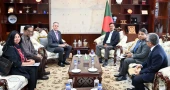
He congratulated Foreign Affairs Adviser Md Touhid Hossain on his new assignment and handed over the original congratulatory message from the Danish Minister for Foreign Affairs Lars Lokke Rasmussen while paying a courtesy call on him on Monday at the Ministry of Foreign Affairs.
The Adviser underlined the priorities of the Interim Government, including restoring law and order and reforms in statecraft.
He highlighted that Bangladesh highly values and attaches great importance to its longstanding relations with Denmark.
The Adviser particularly referred to the aspirations of the youth that necessitates undertaking essential reforms in many sectors including political and electoral system, and economy.
The Ambassador shared Denmark’s priorities of engagements with Bangladesh, particularly in green transition and updated the Adviser on the two priority projects of Denmark - construction and operation of Laldia Container Terminal in Chattogram by APM Terminals and production of 500 MW offshore wind energy.
The Adviser welcomed increasing interests of Danish companies for business with and investments in Bangladesh.
Both sides also expressed the desire to engage more in multilateral fora leveraging the Danish non-permanent membership of the UNSC for 2025-2026.
1 year ago
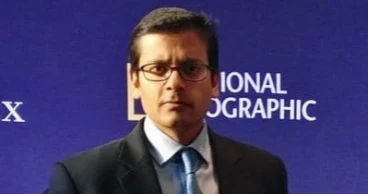
Will promote inward investments, help shape economic reform agenda: Lutfey Siddiqi
Chief Adviser’s Special Envoy for International Affairs Lutfey Siddiqi has said beyond economic diplomacy with the private sector and in economic forums, he will also be speaking to his fellow advisers to see if he can assist with any of their priorities by utilising his international network.
“It’s wonderful to be part of the team and have the opportunity to play mid-fielder, striker or defender when it comes to international affairs, depending on what the team needs at any point in time,” he said upon his arrival in Dhaka from abroad.
Siddiqi, also an Adviser, said he is very excited to be here and receive his brief from the Chief Adviser in person this morning.
“In order to foster inward investments, nurture a program of relationships with foreign investors at the highest level, promote what we offer, and help shape our economic reform agenda from that perspective, I need to do a lot of listening,” said the special envoy.
He said he is grateful for the warm welcome from everyone from all walks of life - including on social media - and their enthusiasm to work together in the spirit of forward-looking positivity, inclusivity and delivery.
“I look forward to engaging with a lot of people in the next few weeks to listen to their views and brainstorm some ideas,” chief adviser’s press wing quoted him as saying.
On September 4, the interim government appointed Siddiqui as chief adviser’s special envoy on international affairs.
Siddiqi is an Adjunct Professor at National University of Singapore and a visiting Professor-in-Practice at the London School of Economics.
He was previously Global Head of Emerging Markets for FX, Rates & Credit at UBS Investment bank and a Managing Director at Barclays bank.
He was recognised as a Young Global Leader by the World Economic Forum in 2012 where he’s served on councils and steering groups on capital markets, infrastructure investment, inclusive growth and global risks.
1 year ago