foreign-affairs
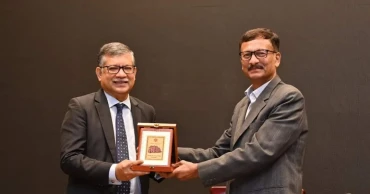
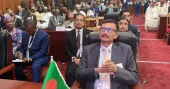
Foreign Ministry bids farewell to Masud Bin Momen
The Ministry of Foreign Affairs on Sunday bid farewell to Foreign Secretary Masud Bin Momen, though his contractual appointment was scheduled to end in December this year.
Foreign Affairs Adviser Md Touhid Hossan and senior officials of the ministry were present at the ceremony.
Masud Momen will be on the post retirement leave (PRL) from Monday for one year.
Conflicting parties taking advantage of geopolitical rivalries: Masud Bin Momen at MSc '24
The previous government extended the tenure of Foreign Secretary Masud Bin Momen by two more years under a contractual appointment effective from December 6, 2022 or from the date of his joining.
The Public Administration Ministry is likely to issue a gazette notification tonight or Monday, a foreign ministry source told UNB.
On August 20, UNB reported that Md. Jashim Uddin, Bangladesh Ambassador to China, is going to be the next Foreign Secretary.
Masud joined as Foreign Secretary on December 31, 2019. As a career diplomat, he has long been serving in different capacities at the MoFA headquarters and Bangladesh missions abroad.
US Ambassador Peter Haas holding meeting with Foreign Secretary Masud Bin Momen
Prior to his appointment as the Foreign Secretary, he had been Bangladesh’s Ambassador and Permanent Representative to the United Nations since 2015.
Before that, he served as Bangladesh’s Ambassador to Japan from 2012 to 2015.
He also served as Ambassador to Italy and as Permanent Representative to the Food and Agriculture Organization (FAO), World Food Programme (WFP) and International Fund for Agricultural Development from 2008 to 2012.
US Ambassador-at-Large for International Religious Freedom meets Foreign Secretary Masud Bin Momen in New York
Masud served at the MoFA Headquarters in different capacities. From 2006 to 2008, he was the Director-General at the Ministry of Foreign Affairs, Dhaka and was responsible for matters related to South Asia, the South Asian Association for Regional Cooperation (SAARC), Non-Aligned Movement (NAM), ASEAN Regional Forum (ARF), Human Rights and the United Nations.
1 year ago

‘If legal system wants, we’ll definitely try to bring Hasina back’: Foreign Adviser
Foreign Affairs Adviser Md Touhid Hossain on Sunday reiterated that the government will definitely try to bring back ousted Prime Minister Sheikh Hasina from India if the legal system wants.
Murder case filed against Hasina, Quader in Kishoreganj
“It is better not to speculate. There are legal processes. If our legal system wants, we will definitely try (to bring her back),” he told reporters at the Ministry of Foreign Affairs.
Asked about the current status of Sheikh Hasina in India, the Foreign Affairs Adviser said it would be better to ask India about it.
After the interim government revoked all diplomatic passports, questions have now arisen as to how long Sheikh Hasina can stay in India and whether she will face a possible extradition.
The approval for former Prime Minister Sheikh Hasina to go to India was granted at short notice, according to the Indian Ministry of External Affairs.
Complaint lodged against 53 including Hasina, 28 journalists for inciting genocide
Adviser Hossain said it is up to India whether they will hand her over or not, but noted that there is an agreement.
He said if a question comes from a legal process and if the laws and court tell them, they can seek her back.
Among the SAARC member countries, India has extradition treaties with Nepal, Bhutan and Bangladesh. India has an extradition arrangement with Sri Lanka.
On 28 July 2016, Bangladesh and India signed an agreement to amend Article 10 (3) of the bilateral Extradition Treaty to facilitate expeditious extradition of fugitive criminals between the two countries.
Sheikh Hasina is facing a number of cases including over murders since the formation of an interim government on August 8 after her resignation on August 5.
Hasina, 155 others sued in 3 murder cases
On signed MoUs with India, including the MoU on the railway sector, the Foreign Affairs Adviser said that MoUs are not legally binding, and there are always scopes for reviewing to ensure interests. He said MoUs are not agreements and they can see whether Bangladesh’s interests are protected.
1 year ago
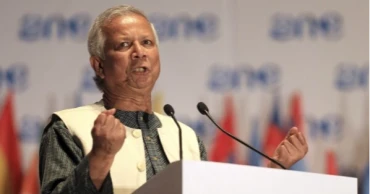
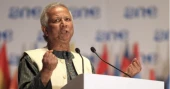
Chief Adviser Yunus will attend 79th UNGA this month, Foreign Affairs Adviser confirms
Foreign Affairs Adviser Md Touhid Hossain on Sunday confirmed that Chief Adviser Professor Muhammad Yunus will attend the 79th United Nations General Assembly (UNGA) this month, but his stay would be brief.
While talking to reporters at the Ministry of Foreign Affairs, Hossain also said he would have a discussion with the Chief Adviser regarding his engagement in the UNGA.
He, however, said the date of Chief Adviser’s departure is not finalised yet.
The Foreign Affairs Adviser also said there might be some meetings on the sidelines, but due to his limited stay in New York, the scope will also be limited.
Regarding bringing back former Prime Minister Sheikh Hasina to Bangladesh, the Adviser reiterated that they will work towards this if the legal process demands.
On signed MoUs with India, including the MoU on the railway sector, the Foreign Affairs Adviser said that MoUs are not legally binding, and there are always scopes for reviewing to ensure interests.
Asked about the status of Sheikh Hasina in India, the Foreign Adviser suggested journalists to ask India.
Speaking on the Chief Adviser’s participation at the 79th UNGA, South Asian affairs expert Michael Kugelman earlier said it will be a big opportunity for him to share his government’s economic plans, including what areas specifically the international community can be helpful in strengthening and stabilizing Bangladesh’s economy.
“And if he does, he would be speaking in New York on the biggest global platform since he took over the role of adviser leading the interim government,” Kugelman, Director of the South Asia Institute at Wilson Center in Washington, D.C. said in a webinar hosted by Right to Freedom - R2F.
Kugelman said there are several things that Prof Yunus could do, several things that he could say.
“I think that above all he should lay out a vision for governance, the goals of the interim government, his plans for reforms and his efforts to push for the restoration of democracy.”
1 year ago

Vietnamese envoy wants to explore untapped potential in ties
Ambassador of Vietnam to Bangladesh Nguyen Manh Cuong on Saturday said there are still many untapped potentials that both countries should further cooperate to explore in the coming time.
"It is certain that Vietnam – Bangladesh traditional friendship is flourishing and Vietnam will always be a good friend of Bangladesh," he said.
The Ambassador said the government and people of Vietnam always keep in their hearts and greatly value the invaluable support that the government and people of Bangladesh have extended to Vietnam from the past to the present.
Adviser of the Ministry of Fisheries and Livestock Farida Akhter joined the reception as the chief guest.
Vietnam and Bangladesh share many things in common in the cause of national building and development that both countries can mutually learn, promote and support each other, said the envoy.
"Throughout the long history with ups and downs, our good sentiment has remained unchanged," he said.
Over the past 51 years of traditional friendship, the two countries have been closely cooperating in multiple areas and became good partners, the envoy said.
The delegation exchanges between Vietnam and Bangladesh are frequently held.
Since the beginning of 2024, ministerial-level delegation visits have been organized in order to explore the untapped potentials in rail transport, labor protection and social security assurance.
Moreover, the envoy said, both countries have close cooperation at regional and international forums. We extend mutual support in favor of each country’s candidature at international forums.
In terms of economics and trade, the two countries witness gradual growth year by year.
Last year, the bilateral trade volume reached 1.05 billion USD.
"In the first 7 months of 2024, our trade volume reached 651 million USD. The two economies are on the right track to pursue the target of 2 billion USD in trade volume as committed by the highest leaders of both countries," said the Ambassador.
In August this year, the 42-member business delegation of the Dhaka Chamber of Commerce and Industry paid a working visit to Vietnam and enjoyed a number of fruitful B2B programs in Thai Binh Province and Ho Chi Minh City with the support of the Embassy and Ministry of Industry and Trade of Vietnam.
1 year ago
Bangladesh can't afford to lose India; needs workable relations: Kugelman
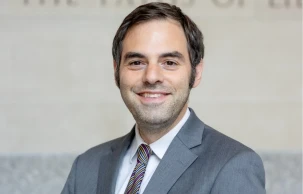
Highlighting the importance of a workable relations with India, South Asian affairs expert Michael Kugelman has said the interim government in Bangladesh will need to be “very careful” about how it pursues its relations with New Delhi.
“I think that we need to be very clear. At least in my view, Bangladesh cannot afford to lose India. It needs that partnership for reasons of trade, border security and geopolitics,” Kugelman, Director of the South Asia Institute at Wilson Center in Washington, D.C. said in a webinar hosted by Right to Freedom - R2F.
He thinks it really needs to maintain “workable relations” with India, not necessarily “super warm” relations.
Kugelman also thinks India's own interests dictate a workable relationship with Bangladesh.
1 year ago

79th UNGA big opportunity for Prof Yunus to share his govt's broader plans: Kugelman
South Asian affairs expert Michael Kugelman has said Chief Adviser Prof Muhammad Yunus’ participation at the 79th UN General Assembly (UNGA) in September will be a big opportunity for him to share his government’s economic plans, including what areas specifically the international community can be helpful in strengthening and stabilizing Bangladesh's economy.
“And if he does, he would be speaking in New York on the biggest global platform since he took over the role of adviser leading the interim government,” Kugelman, Director of the South Asia Institute at Wilson Center in Washington, D.C. said in a webinar hosted by Right to Freedom - R2F.
Kugelman said there are several things that Prof Yunus could do, several things that he could say.
“I think that above all he should lay out a vision for governance, the goals of the interim government, his plans for reforms and his efforts to push for the restoration of democracy.”
Right to Freedom Board Member Jon Danilowicz moderated the webinar while Right to Freedom Executive Director Mushfiqul Fazal Ansarey gave a brief introduction of the panel of speakers and Ambassador (retd.) William B. Milam, Board President of the R2F, offered opening remarks.
Executive Director, Centre for Policy Dialogue (CPD) Dr Fahmida Khatun, Secretary, Citizens for Good Governance, Dr. Badiul Alam Mazumdar spoke at the webinar which aimed to foster conversations on critical aspects of Bangladesh’s new journey under the leadership of Nobel Laureate Professor Muhammad Yunus.
Kugelman said he thinks that Prof Yunus’ platform at the UNGA would give him an opportunity to weigh in on what is arguably Bangladesh's biggest humanitarian challenge, the Rohingya refugee issue.
“I think that it would be useful for him to make a pitch for international assistance or more international assistance for Rohingya refugees, which would be an especially important pitch for two reasons,” he said.
One - the war in Myanmar is intensifying in a big way, and it was seen in recent weeks’ fresh inflows of Rohingya refugees coming into Bangladesh.
Second - international donor attention has been drawn elsewhere, due to the wars in Gaza and Ukraine, among other places.
“And so I think there is a risk that the Rohingya crisis, which has received significant levels of international attention and donor support in recent years, but there still is a risk that it could be overlooked. So I think that the UNGA would be a really good opportunity for Prof Yunus to reorient attention around that challenge,” said the expert.
Kugelman said foreign policy will not be the uppermost priority for the interim government in the next few weeks.
The biggest priorities will be issues of law and order, economic stabilization and reform, among other things, he said, adding that, “That's not to say that there are no urgent foreign policy priorities right now.
"There are. And in particular, the relationship with India," he said.
He thinks it is very important to talk about how the interim government in Bangladesh should approach its international relations.
He said the government has both advantages and disadvantages as it approaches its foreign policy.
In terms of the advantages, what it has in its favor - "the Yunus factor." "I think it is something that we really need to underscore here. He is a star abroad. He's a household name. He's deeply respected. And he really will not have to work very hard at all to get the world's attention or the world's respect."
Also, he said, Bangladesh is a significant global economic player and a nonaligned state, a geo-strategically important country in an era of great power competition.
“And this means that much of the world will want to engage with the interim government,” Kugelman said.
Bangladesh still has a significant degree of political uncertainty right now and this is something that has made and will continue to make a number of world leaders and capitals a bit nervous.
“And also the law and order situation, which may be more stable now than it was several weeks ago, but remains tenuous. This is something that will have impacts on global investors, among others, in terms of how they perceive Bangladesh right now,” Kugelman said.
Above all, he said, it would be very useful to reach out to and reassert the importance of ties with Bangladesh with its wide range of commercial economic partners.
Kugelman said Bangladesh is a country that has a significant role in the global economy and it has a wide range of partners across the board.
This includes sponsors of infrastructure projects in Bangladesh, like China and Japan. It includes key trade partners like the EU and of course the US. And it includes energy suppliers in the Middle East, among other things.
“And I think that diplomatic outreach is especially important now, given that the economic situation in Bangladesh is quite precarious,” he said. Bangladesh, for example, will need to show in very concrete ways that it is taking the right steps on restoring law and order and security, Kugelman said.
Prof Yunus, with his reputation in the West as a fervent supporter of democracy, can be an asset in this regard.
“But Bangladesh's government, I think, will really need to show that it is truly committed to restoring democracy and human rights. And speaking of Dr Yunus, he will have a big opportunity very soon in the next few weeks, at the UNGA meetings, which I understand he will be attending,” he said.
1 year ago

CNN report on Bangladesh flood misleading: India
India has said they have seen the CNN report on the flood situation in Bangladesh, and its narrative is “misleading”, suggesting that India is somehow responsible for the floods.
“It is factually not correct and ignores the facts mentioned in the press releases issued by the Government of India clarifying the situation. They also have ignored that we have regular and timely exchange of data and critical information between the two countries through existing joint mechanisms for water resources management,” said official spokesperson at the Indian Ministry of Exteral Affairs Randhir Jaiswal while responding to a question.
Feni flooding: People struggling to stand on foot after flood
During a regular media briefig in New Delhi on Friday, Jaiswal said there are established procedures between India and Bangladesh for several years now.
The two countries have 54 rivers that they share, and this mechanism and institutional mechanisms that they have been in existence for quite some time.
“As part of the established procedure, we have been exchanging data on a timely and regular basis with Bangladesh,” said the spkespers.
2 million children at risk as worst floods hit Bangladesh: UNICEF
On the question of flood in eastern Bangladesh and floods in Tripura, he said, they had issued two press releases, giving the factual position as to why they have happened.
Flooding in eastern Tripura and eastern Bangladesh happened essentially because of incessant and excessive rain.
“And thereafter, we have explained in the two press releases exactly what the situation was. So, these mechanisms to help both countries deal with flood issues and water management issues are there,” Jaiswal said.
He said if there are any new mechanisms that can help further in controlling or helping the sufferings of the people or helping deal with its natural disasters, this is a matter that they can take forward with Bangladesh.
On the issue of visa, the spokesperson said they are issuing visas in a limited manner for medical and emergency purposes.
Once the situation becomes normal, law and order is restored, then they will begin their full-fledged operations of visa, he said.
Present Engagement with Bangladesh
Jaiswal said their High Commissioner in Dhaka Pranay Verma had an introductory meeting with Chief Adviser Prof Muhammad Yunus, where he discussed several aspects of their relationship.
He also talked about how India would like to continue to work with Bangladesh to fulfil the shared aspirations of people of both countries for prosperity, security, and development.
High Commissioner Verma had conveyed that their commitment to taking forward the relationship in accordance with their respective national priorities.
“He stressed on this fact. They also discussed other issues, including the safety of Hindus and minorities there,” Jaiswal said.
The High Commissioner also informed Chief Adviser that the flooding in eastern Bangladesh was caused due to excessive rain.
“There are other aspects that you have highlighted. We have taken note of that, and hopefully, we will have more engagement on such issues later,” Jaiswal said.
Responding to a question, the MEA spokesperson said they have stated earlier that former Prime Minister of Bangladesh Sheikh Hasina came to India at a very short notice for safety reasons. “We have nothing further to add on that matter.”
Impacts on Projects
Jaiswal said that because of the turmoil in Bangladesh, their projects have been impacted. “Let me tell you that our development cooperation activities with Bangladesh are aimed at the welfare of the people of Bangladesh.”
“You would have seen that the Prime Minister in his Independence Day speech as well had stated that India will always be a well-wisher of Bangladesh in its development journey,” he added.
Jaiswal said the work on some of the projects has stalled and has been affected because of the law and order situation I Bagladesh.
“Once the situation stabilizes, normalcy is restored, then we will talk to, we will engage in consultations with the interim government about our development initiatives and then see how best to take those forward and what sort of understanding we can reach on them,” Jaiswal said.
On security issue, he said security during the turmoil was a problem not just for them but for everybody. “You saw what happened to the Indian Cultural Centre. It was in the news all over.”
Jaiswal said the Bangladesh authorities tried their best for the security. “Hopefully normalcy returns soon that we can begin our engagement in the right earnest.”
India’s development projects in Bangladesh have been temporarily halted due to the current situation as many people working on various development projects there had to return.
“Due to several reasons, these projects have been paused. Once the situation improves and law and order are restored, we will discuss with their government how to proceed further,” Jaiswal said.
1 year ago
UN receives instrument of accession of Int'l Convention on Enforced Disappearance
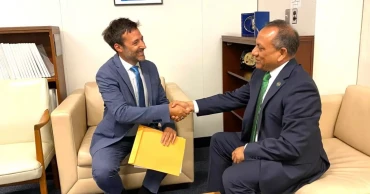
The Instrument of Accession to the International Convention for Protection of All Persons from Enforced Disappearance (ICPPED) has been officially deposited to the Secretary General of the United Nations, who is the depository of all multilateral treaties.
Ambassador Muhammad A Muhith, the Permanent Representative of Bangladesh to the United Nations handed over the copy of the instrument to the Chief of the Treaty Section David K Nanopoulos, who received the copy on behalf of the Secretary General on August 30.
According to the provision of the Convention, it will enter into force for Bangladesh on 29 September 2024, on the thirtieth day after the date of the deposit of the instrument of accession.
During the hand-over, Ambassador Muhith said the current interim government in Bangladesh led by Dr. Muhammad Yunus is deeply committed to upholding all human rights and fundamental freedoms for our people.
Fakhrul calls for UN-led investigation into cases of enforced disappearance in Bangladesh
“The Government’s commitment is aptly demonstrated in the fact that, within 20 days of installation, the Government completed all internal procedures for accession to this important human rights treaty,” he said.
Nanopoulos congratulated Bangladesh on this historic occasion and appreciated the commitment of Bangladesh to the multilateral treaty framework.
He informed that the United Nations will immediately issue all necessary notifications on Bangladesh’s accession to the International Convention for Protection of All Persons from Enforced Disappearance.
“The Instrument has been deposited on a very special day, on 30th August, which is observed globally as the International Day for Victims of Enforced Disappearance. Our action today manifests our solidarity to the countless victims who have been subjected to such heinous crimes and their families,” added Ambassador Muhith while handing over the instrument to the United Nations.
Issue of enforced disappearances has a long, painful history in Bangladesh: UN rights body
With the handover of the Instrument of Accession, Bangladesh has now completed all procedures for becoming the 76th party to International Convention for Protection of All Persons from Enforced Disappearance, according to Bangladesh Mission in New York.
1 year ago

India says absence of an aspect in one press release or the other is not evidence of its absence in the conversation
Referring to the recent telephone conversation between Indian Prime Miister Narendra Modi and US President Joe Biden, India has said the absence of an aspect in one press release or the other is not evidence of its absence in the conversation itself.
“I am very much aware of the contents of the conversation between the Prime Minister and the President of the United States and I can tell you that our press release is an accurate and faithful record of what transpired in the conversation,” said official spokesperson at the Indian Ministry of External Affairs Randhir Jaiswal while responding to a question.
The MEA spokesperson made the remarks when a journalist drew his attention, noting that they saw the conversation between Prime Minister Modi and the US President Biden; but they also saw "discrepancies" in the readout and absence of certain topics in their readout during a regular briefing in New Delhi on Friday.
470 kms of rivers to be dredged with BD-India joint financing
Firstly, he said, press releases issued after conversations between leaders are not like joint statements where every word is negotiated and mutually agreed upon.
Secondly, the spokesperson said such press releases are not meant to be comprehensive readouts of such conversations.
Finally, he said it is not unusual for two sides to emphasize different aspects of the same conversation in their respective readouts.
“The subject of Bangladesh, which has been highlighted, as you pointed out, by certain quarters, was very much discussed substantially by both the leaders,” said the MEA spokesperson.
He said they have seen that there have been some comments in that regard. “Let me tell you, these claims are uninformed, tendentious, and motivated and betray a total lack of familiarity with the process of how such contacts between leaders are organized and then followed upon.”
According to the Indian Prime Minister’s office, US President Joe Biden and Indian Prime Minister Narendra Modi on Monday discussed the situation in Bangladesh. The two leaders stressed the need for early restoration of normalcy and ensuring the safety and security of minorities, especially Hindus, in Bangladesh.
BD-India joint venture can benefit both nations in COVID-19 reality: FBCCI President
"I reiterated India’s full support for early return of peace and stability," Modi said. The two leaders expressed their shared concern over the situation in Bangladesh.
The White House, however, avoided Bangladesh issues in its readout, though the Indian side, through their Prime Minister’s Office, had said Biden and Modi discussed the situation in Bangladesh as well as other issues.
1 year ago
CFM: Dhaka reiterates its commitment for an impartial, internationally credible probe into recent massacre
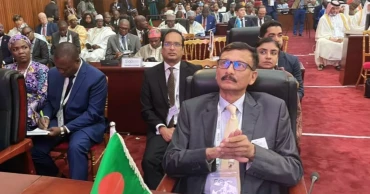
Foreign Adviser Md. Touhid Hossain has led a two-member delegation to the 50th Council of Foreign Ministers (CFM) held in Yaoundé, Cameroon from August 29-30 and highlighted the events leading to the second revolution through a mass uprising of people led by the valiant students in Bangladesh.
He reiterated the resolution of the government led by Dr. Muhammad Yunus for an impartial and internationally credible investigation into the massacre and subsequent due judicial processes.
He informed the meeting on Bangladesh’s accession to the UN Convention on Protection for all persons from enforced disappearance.
He reiterated Bangladesh’s continued engagements with the OIC and strong commitment to establish peace process for Palestine, denounce Islamophobia, hate-crimes against Muslims, and engage in further trade and investment by strengthening the transportation and communication infrastructure.
Bangladesh’s Envoy to Algeria and Senior Official of the Ministry of Foreign Affairs joined the meeting.
This year, the CFM was held with the theme “Intra OIC transportation and communication infrastructure” where several political, economic, social, cultural, and security issues were discussed.
A resolution, namely ‘Situation of the Rohingya Muslim Community in Myanmar’ has been adopted unanimously to keep the momentum in exerting continuous pressure on Myanmar authorities.
Foreign Adviser Mr. Hossain also had call-on with his counterparts of the Kingdom of Bahrain, Saudi Arabia, Türkiye and Pakistan at the sideline of the CFM.
Meanwhile, on August 29, an open-ended meeting of the OIC Ad Hoc Ministerial Committee on Accountability for Human Rights Violations against the Rohingyas was also held on the margin of the CFM.
The Foreign Adviser highlighted the current situation in the Rakhine State and urged all to maintain international pressure on Myanmar for quick solution to the problem.
1 year ago