foreign-affairs
CFM: Dhaka reiterates its commitment for an impartial, internationally credible probe into recent massacre
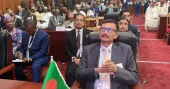
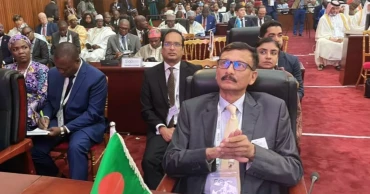
Foreign Adviser Md. Touhid Hossain has led a two-member delegation to the 50th Council of Foreign Ministers (CFM) held in Yaoundé, Cameroon from August 29-30 and highlighted the events leading to the second revolution through a mass uprising of people led by the valiant students in Bangladesh.
He reiterated the resolution of the government led by Dr. Muhammad Yunus for an impartial and internationally credible investigation into the massacre and subsequent due judicial processes.
He informed the meeting on Bangladesh’s accession to the UN Convention on Protection for all persons from enforced disappearance.
He reiterated Bangladesh’s continued engagements with the OIC and strong commitment to establish peace process for Palestine, denounce Islamophobia, hate-crimes against Muslims, and engage in further trade and investment by strengthening the transportation and communication infrastructure.
Bangladesh’s Envoy to Algeria and Senior Official of the Ministry of Foreign Affairs joined the meeting.
This year, the CFM was held with the theme “Intra OIC transportation and communication infrastructure” where several political, economic, social, cultural, and security issues were discussed.
A resolution, namely ‘Situation of the Rohingya Muslim Community in Myanmar’ has been adopted unanimously to keep the momentum in exerting continuous pressure on Myanmar authorities.
Foreign Adviser Mr. Hossain also had call-on with his counterparts of the Kingdom of Bahrain, Saudi Arabia, Türkiye and Pakistan at the sideline of the CFM.
Meanwhile, on August 29, an open-ended meeting of the OIC Ad Hoc Ministerial Committee on Accountability for Human Rights Violations against the Rohingyas was also held on the margin of the CFM.
The Foreign Adviser highlighted the current situation in the Rakhine State and urged all to maintain international pressure on Myanmar for quick solution to the problem.
1 year ago
Global community must hold Bangladesh accountable, protect rights of its citizens: JMBF
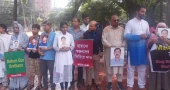
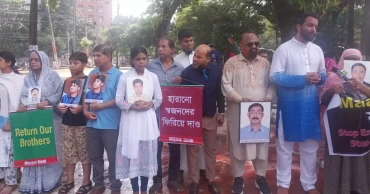
On the International Day of the Victims of Enforced Disappearances, JusticeMakers Bangladesh in France (JMBF) has said the global community must hold Bangladesh accountable and protect the rights of its citizens.
Chief Adviser of JMBF Robert Simon emphasised the importance of global cooperation in addressing this crisis.
"Enforced disappearances are an affront to humanity. We must collaborate internationally to ensure that every missing person is found and that those responsible for these crimes are brought to justice,” Simon said in a statement issued from Paris on Friday.
JMBF stands in unwavering solidarity with the victims and families affected by enforced disappearances in Bangladesh.
It said this day serves as a crucial reminder of the need to protect the fundamental rights of all citizens and to ensure justice for those who have been forcibly taken from their families.
Enforced disappearances in Bangladesh remain a severe issue, leaving countless families in distress and uncertainty, JMBF said, adding that they are committed to advocating for the rights of these victims, ensuring they receive the justice and rehabilitation they deserve.
Founder President of JMBF Advocate Shahanur Islam stressed the urgency of accountability and support for the affected families.
"In Bangladesh, families live in constant agony, unaware of the fate of their loved ones. It is our collective responsibility to provide these families with the necessary psychological, legal, and financial support. We must also advocate for robust legal frameworks in Bangladesh to prevent such tragedies and to hold those responsible fully accountable."
JMBF urged the government of Bangladesh to take immediate and decisive action to end enforced disappearances, secure justice for victims and their families, and restore the rule of law in the country.
Key Points of JMBF's Call to Action:
Protection from Disappearances: Urging the enactment and implementation of strong legal frameworks and proactive measures to prevent enforced disappearances and protect every citizen.
Justice and Rehabilitation: Ensuring victims and their families receive appropriate rehabilitation, including psychological, legal, and financial support, while holding perpetrators accountable through transparent legal processes.
Prompt Tracing and Return: Strengthening efforts to swiftly locate missing persons, return them to their families, and provide comprehensive support during these challenging times.
Accountability: Identifying and punishing those responsible for enforced disappearances, ensuring that such actions do not go unpunished, and setting a precedent to prevent future occurrences.
We also call upon the international community to remain vigilant and to continue pressing for accountability in Bangladesh.
On this day, JMBF honors the victims of enforced disappearances and reaffirms its commitment to fighting for justice, truth, and the protection of human rights for all.
1 year ago

UN fact-finding mission to look into rights violations committed from July 1 to Aug 15
UN High Commissioner for Human Rights Volker Türk has received an official invitation from Bangladesh interim government Chief Adviser Prof Muhammad Yunus to conduct an impartial and independent fact-finding mission into human rights violations committed from July 1 to August 15.
Spokesperson for the UN High Commissioner for Human Rights Ravina Shamdasani confirmed it on Friday.
The Office will deploy a fact-finding team to Bangladesh in the coming weeks, with a view to reporting on violations and abuses perpetrated during the protests, analysing root causes and, and making recommendations to advance justice and accountability and for longer-term reforms, she said.
Issue of enforced disappearances has a long, painful history in Bangladesh: UN rights body
The team received commitments from the Interim Government and security forces for full cooperation in this work.
Earlier, the International Crimes Strategy Forum (ICSF) urged the UN rights body to investigate events which took place both before and after August 5.
The ICSF has written a letter to UN High Commissioner for Human Rights Volker Turk seeking his initiative in this regard.
"Given the UN's intention to help Bangladesh with the transition, we believe that the investigations should look into the events which took place both before and after August 5. We learnt from media reports that the Law Advisor of the Interim Government Dr Asif Nazrul wants the UN to look into events only up to August 5, 2024," the letter reads.
An advance team has been in Bangladesh over the last week (from August 22-29) meeting with student leaders of the recent protests, many of whom have been detained or injured in recent weeks.
2 million children at risk as worst floods hit Bangladesh: UNICEF
The team also had meetings with a wide range of advisors in the Interim Government, the Chief Justice, senior officers of the police and armed forces, lawyers, journalists and human rights defenders, representatives of political parties, and minority and indigenous communities.
In its meetings, the team discussed the modalities for an investigation into human rights violations and abuses in the context of the recent violence and unrest, as requested by the Interim Government.
It also discussed wider areas – including civic space, the need for truth, justice, healing, reparation and reconciliation, and other human rights approaches to the reform process – in which our Office could provide sustained support, Shamdasani said.
1 year ago
Issue of enforced disappearances has a long, painful history in Bangladesh: UN rights body
The United Nations has said the issue of enforced disappearances has a long and painful history in Bangladesh, on which the UN Human Rights Office and UN human rights mechanisms have advocated robustly.
"We stand ready to support the Commission in its work, which should be in close consultation with victims and their families and in line with international human rights standards, including the guiding principles for the search for disappeared persons," Spokesperson for the UN High Commissioner for Human Rights Ravina Shamdasani said on Friday.
The UN Human Rights Office looks forward to supporting the Interim government and people of Bangladesh at this pivotal moment to revitalise democracy, seek accountability and reconciliation, and advance human rights for all the people in Bangladesh.
The High Commissioner for Human Rights warmly welcomed the announcement of Bangladesh’s accession to the International Convention for the Protection of All Persons from Enforced Disappearance, and the establishment of a five-member national commission of inquiry to determine the whereabouts of individuals forcibly disappeared allegedly by law enforcement agencies
Earlier, UN High Commissioner for Human Rights Volker Türk received an official invitation from the Chief Advisor, Prof Muhammad Yunus, to conduct an impartial and independent fact-finding mission into human rights violations committed from 1 July to 15 August.
The Office will deploy a fact-finding team to Bangladesh in the coming weeks, with a view to reporting on violations and abuses perpetrated during the protests, analysing root causes and, and making recommendations to advance justice and accountability and for longer-term reforms, said the Spokesperson.
The team received commitments from the Interim Government and security forces for full cooperation in this work.
An advance team has been in the country over the last week (from 22-29 August) meeting with student leaders of the recent protests, many of whom have been detained or injured in recent weeks, as well as a wide range of advisors in the Interim Government, the Chief Justice, senior officers of the police and armed forces, lawyers, journalists and human rights defenders, representatives of political parties, and minority and indigenous communities.
In its meetings, the team discussed the modalities for an investigation into human rights violations and abuses in the context of the recent violence and unrest, as requested by the Interim Government.
It also discussed wider areas – including civic space, the need for truth, justice, healing, reparation and reconciliation, and other human rights approaches to the reform process – in which their Office could provide sustained support, said the Spokesperson for the UN High Commissioner for Human Rights.
1 year ago

2 million children at risk as worst floods hit Bangladesh: UNICEF
Over two million children in eastern Bangladesh are at risk as floods sweep through homes, schools and villages, UNICEF has warned.
In all, these floods, the worst in eastern Bangladesh in 34 years, have affected 5.6 million people.
Major rivers in the southeast are overflowing due to unprecedented monsoon rains.
As a result, more than 52 people have been reported dead. Over 500,000 people are seeking shelter, after rising waters from swollen rivers submerged homes, streets and fields in Chattogram and Sylhet Divisions.
Millions of children and families are stranded without food and emergency relief supplies. Government personnel and volunteers are conducting rescue operations, though access remains difficult in some areas. In the coming days, more people will be affected as the monsoon season continues.
“The devastating floods in the eastern parts of Bangladesh are a tragic reminder of the relentless impact of extreme weather events and the climate crisis on children. Far too many children have lost loved ones, their homes, schools, and now are completely destitute,” said Emma Brigham, Deputy Representative of UNICEF Bangladesh.
“UNICEF is on the frontlines providing water purification tablets, oral rehydration salts and other essential supplies, but more funds are needed to reach these children and prevent an even more devastating impact on their futures.”
UNICEF has been on the ground since the onset of the disaster. Having joined an initial assessment mission with the Advisor to the Ministry of Local Government, Rural Development and Cooperatives, Hasan Arif, UNICEF with its partners has reached over 338,000 people, including 130,000 children, with life-saving supplies such as 3.6 million water purification tablets, 25,000 jerry-cans to store water and over 250,000 oral rehydration salt sachets.
But much more is needed. People and children urgently require cash assistance, safe drinking water, hygiene kits, emergency latrines, sanitary pads, oral rehydration salts and emergency life-saving medicines.
Primary healthcare services to treat sick newborns and children and help pregnant women to give birth must be restored immediately.
The recent floods come close on the heels of the floods in north Bangladesh and Cyclone Remal in May. Jointly, the three emergencies have impacted over 13 million people across Bangladesh, including 5 million children.
In response to these three emergencies, UNICEF urgently requires up to US$35.3 million for critical, life-saving, and multi-sectoral interventions for children, as well as pregnant and lactating women.
Climate change increases the frequency, severity and unpredictability of cyclones, floods and other extreme weather events affecting Bangladesh, underscoring that the climate crisis is fundamentally a child rights crisis.
According to the UNICEF Children’s Climate Risk Index, children in Bangladesh are the most exposed in the world to climate and environmental hazards.
Globally, UNICEF addresses the climate crisis to:
a) protect the lives, health and well-being of children;
b) empower every child to become a champion for the environment; and
c) reduce the emissions and environmental footprint.
“Year on year, the lives of millions of children in Bangladesh are being ravaged by floods, heatwaves and cyclones. Climate change is clearly changing children’s lives,” adds Brigham. “We call on global leaders to act urgently, and take strong measures to mitigate the effects of climate change, before it is too late for children.”
1 year ago

Pak PM calls Prof Yunus; eyes expanding economic cooperation with Bangladesh
Pakistan Prime Minister Muhammad Shehbaz Sharif had a telephone conversation with Chief Adviser Prof Muhammad Yunus on Friday and emphasised the need to revitalise relations between the two nations.
"There remains immense potential in expanding bilateral trade and economic cooperation," Pakistan Prime Minister told Prof Yunus, congratulating him on his assumption of the leadership of the Interim Government of Bangladesh.
The Pakistan PM expressed his best wishes to the chief adviser and hoped that the goodwill between the two South Asian countries would be translated into substantial cooperation for the benefit of their peoples.
Prof Yunus thanked Sharif for the phone call and the congratulatory message received from him following his swearing-in as the Bangladesh chief adviser after a student-led revolution.
The chief adviser also thanked the Pakistan prime minister for sending a message conveying sympathy and solidarity of the people of Pakistan for the flood victims of Bangladesh.
Sharif expressed his willingness to provide support to the people affected by the floods in southern and southeastern parts of Bangladesh.
He underscored the necessity to resume mechanisms like foreign secretary-level consultations and the Joint Economic Commission between Dhaka and Islamabad. He also stressed the need to reinvigorate the SAARC process.
The chief adviser said he is committed to revitalising SAARC as a top regional forum to boost ties among the South Asian nations.
He highlighted the necessity of holding regular SAARC summits and stressed holding even a brief meeting among the heads of state and governments of the SAARC states at the earliest convenience.
Prof Yunus also called for strengthening economic ties and people-to-people connections between the two nations.
1 year ago
Bangladesh: Delhi will deal with government of the day
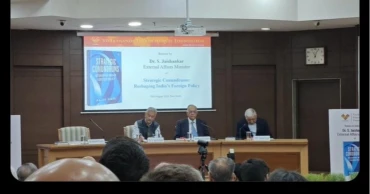
Referring to changes in Bangladesh, Indian External Affairs Minister S Jaishankar on Friday said they will deal with the government of the day.
"It is natural that we will deal with the government of the day," he said.
He said they have to recognise that there are political changes, and political changes can be disruptive.
"And clearly here, we have to look for mutuality of interest," Jaishankar said.
He spoke at the Book release of "Strategic Conundrums: Reshaping India’s Foreign Policy authored by Rajiv Sikri.
Jaishankar said everyone is aware that since Bangladesh's independencr, the relationship between the two countries have gone up and down.
1 year ago
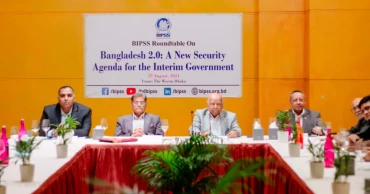
Bangladesh needs “comprehensive, forward-thinking” security agenda: Roundtable
Bangladesh Institute of Peace and Security Studies (BIPSS) President Maj Gen (retd) ANM Muniruzzaman has said a “comprehensive and forward-thinking security agenda” is crucial to effectively address these challenges that Bangladesh faces now.
He said Bangladesh stands at a critical juncture in its political and social history and the interim government faces unique challenges in maintaining national security during this period.
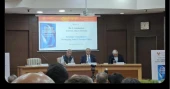
“Politically, as it transitions from fascism to an aspirational democratic order, the interim government must play a pivotal role to ensure a smooth and peaceful transition to democracy,” Muniruzzaman said while addressing a roundtable on “Bangladesh 2.0: A New Security Agenda for The Interim Government” on Thursday.
He added that one of the first tasks that needs to be undertaken is comprehensive security sector reform which will include the military, the intelligence services, and the police.
Maj Gen (Retd) Md Shahidul Haque, former Defense Attache to Myanmar & Former Ambassador to Libya; Shafqat Munir, Senior Research Fellow, BIPSS; and Brig Gen (Retd) Shahedul Anam Khan, former Associate Editor and Editor of Defense & Strategic Affairs, The Daily Star, were the speakers who shared their knowledge regarding the discussion topic.
Shahidul Haque shared his viewpoints on the security threats faced by Bangladesh as well as gave his views on what policies the interim government should adopt with regards to the issue.
He explicitly stated that Bangladesh needs to implement a policy that dictates how to communicate with non-state actors such as the Arakan Army which controls the Bangladesh-Myanmar border and trade routes.
Shahidul Haque also talked about how Bangladesh should handle the Myanmar crisis through a geo-strategic lens and not be biased with regards to the Rohingya refugees.
He discussed how the interim government should constantly keep Bangladesh’s sovereignty and national interest in mind while negotiating with all countries.
Shafqat Munir emphasized the need for a full-time National Security Advisor (NSA) and a fully empowered national security coordination secretariat. He also stated that such a secretariat needs to have domain and subject matter experts.
Munir highlighted the need to address new and emerging threats such as cyber security, climate security, and a continued focus on countering terrorism and violent extremism.
He urged that it is now high time to review Bangladesh’s security threats and challenges and formulate a national security strategy.
He stated that the aspirations of the “Monsoon Revolution” will not be fully realized unless Bangladesh has a rejuvenated security agenda. He called attention to the worldwide support Bangladesh 2.0 has garnered.
Munir emphasised the need for greater politico-military coordination especially at the Ministry of Foreign Affairs in view of Bangladesh’s widespread overseas operations especially peacekeeping operations.
He also talked about revamping and revitalizing military education and training in Bangladesh. Munir also reiterated the need for complete depoliticisation of the Security sector.
In his own remarks, Shahedul Anam Khan first asked the audience why the revolution needed to happen.
He highlighted the need to first identify security threats, both internal and external before talking about a security agenda. He said, “Unless the people of Bangladesh are secured, the nation cannot be".
Emphasizing the people’s security over all else, he passionately mentioned how without good governance, security cannot be maintained.
He added that the Hasina regime had none of the characteristics of good governance.
Brig Gen Anam then went on to say that the elected representatives of our country are servants, not masters and that they must govern and not rule. He underlined that the security forces and intelligence services had been misused and politicised and there must be complete de-politization stressing that the fault lies not with the agencies but with the corrupt politicians of the Hasina regime who have misused them for their own gains.
Lt Gen Abdul Hafiz (Retd), special assistant to the Chief Advisor of the interim government of Bangladesh for Defence and National Solidarity was present at the roundtable and shared his valuable thoughts on the subject.
Moderator Muniruzzaman stressed on the need to revitalise parliamentary oversight on defence and security. He particularly stressed the need for democratic oversight of the country’s intelligence services so that never again we revisit the horrors of the past such as Aynaghor.
He also mentioned that the Bangladesh armed forces must prepare for the new and emerging threats such as hybrid warfare and capacities to fight in the ‘grey zone’. He also emphasised the need for modernisation of armed forces.
During the interactive session, issues like the future of the Rohingya people, border security, importance of defense and security strategies, how we will deal with the enormous debt the nation has accrued, etc. were raised and discussed.
Former Chief of the Army Staff, ambassadors, senior diplomats, representatives of various ministries and government agencies, members of civil society, media personnel and academics as well as several coordinators of the Student against Discrimination movement among others were present.
1 year ago
Contractual appointments of two press ministers in UK and US terminated: Public Administration Ministry
The contract-based appointments of two Bangladeshi ministers (press) in the United Kingdom and the United States have been terminated.
A notification issued by the Ministry of Public Administration on Thursday confirmed the cancellation of contracts for Md Ashequn Nabi Chowdhury, minister (press) of the Press Wing at the Bangladesh High Commission in London, UK, and AZM Sajjad Hossain, minister (press) of the Press Wing at the Bangladesh Embassy in Washington, USA.
Ashequn Nabi was the longest-serving Minister (Press) at the Bangladesh High Commission in London.
His contract was renewed three times: in September 2020, November 2022, and March 2024.
His existing contract was supposed to end on March 31, 2025.
1 year ago
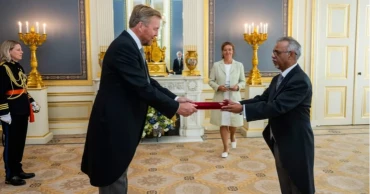
Bangladesh Ambassador to Netherlands presents credentials to Dutch king in The Hague
Bangladesh Ambassador to the Netherlands, Tareque Muhammad, presented his letter of credence to King Willem-Alexander at a formal ceremony held at Noordeinde Palace in The Hague on Wednesday.
During their meeting, the king expressed his satisfaction with the growing bilateral relations between the Netherlands and Bangladesh, noting the continuous and expanding engagements between the two nations. He voiced hope that the interim government in Bangladesh would swiftly restore normalcy and complete the transition through upcoming elections.
Ambassador Tareque highlighted the priorities of the interim government, which included establishing security and a stable environment, initiating reforms, and organising elections. The King also mentioned Queen Máxima's personal acquaintance with Nobel Laureate Professor Muhammad Yunus, given her role as the UN Secretary-General's Special Envoy for Inclusive Finance for Development since 2009.
Further, the King emphasized the strong synergetic relations between the Netherlands and Bangladesh, particularly in flood management and post-flood rehabilitation. The Ambassador expressed gratitude for the Netherlands' cooperation in Bangladesh's socio-economic development and informed the King of the robust investment opportunities available in the country, supported by sound policies aimed at developing a strong private sector.
In conclusion, King Willem-Alexander expressed his desire to strengthen bilateral ties across various fields and assured the Ambassador of the Netherlands' readiness to provide all possible support in this regard.
1 year ago