tech-news

Former White House teleprompter operator ordered to surrender profits, pay fine over insider trading
A former White House teleprompter operator accused of using confidential information to place bets on prediction market Kalshi has agreed to hand over more than $100,000 in profits and pay a $65,000 fine under a settlement with US federal authorities.
The Commodity Futures Trading Commission announced the settlement on Friday. It also barred Gabriel Perez from trading for three years.
Perez was placed on unpaid leave from his White House job after reports emerged that he allegedly used advance knowledge of President Donald Trump's speeches to bet on the words and phrases he would use.
The White House did not immediately comment on the settlement. A White House official said in July that Perez was no longer working in his previous position but did not clarify whether he had been fired or resigned.
According to the commission, Perez earned $107,500 by placing bets on prediction markets involving words and phrases that would appear in Trump's speeches between December 2025 and February 2026.
The CFTC said Perez had access to presidential speeches before they were delivered and improperly used that nonpublic information for personal financial gain, violating his duty of trust and confidence.
Under the settlement, Perez must repay the full $107,500 in profits and pay a $65,000 civil penalty. The commission said the fine was reduced because of his “exemplary cooperation” with the investigation.
After the allegations became public on July 16, White House press secretary Karoline Leavitt described the matter as “unfortunate” and “a disgrace.”
6 hours ago
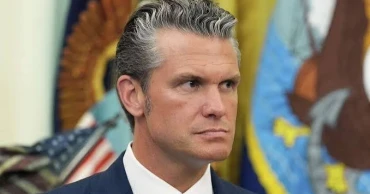
Judge rules Pentagon's actions against Anthropic were illegal and baseless
A US federal judge has ruled in favour of artificial intelligence company Anthropic in its legal battle with the Pentagon, saying the government acted illegally when it labeled the company a supply chain risk.
US District Judge Rita Lin issued the ruling on Thursday, finding that the Pentagon had punished Anthropic over its criticism of the government's approach to the use of artificial intelligence.
The dispute began in February when President Donald Trump and Defense Secretary Pete Hegseth accused Anthropic of posing a threat to national security and designated the company a supply chain risk.
Anthropic CEO Dario Amodei had objected to unrestricted military use of the company's AI technology, raising concerns that its products could be used for mass surveillance and autonomous weapons, including armed drones.
In her written ruling, Lin said the government's actions appeared to be aimed at making a public example of Anthropic because of its criticism of the administration, rather than being based on evidence that the company posed a genuine security risk.
Anthropic welcomed the ruling, saying it remained committed to working with the government to use AI technology in ways that strengthen national security.
The White House did not immediately comment on the decision.
In the 59-page ruling, Lin said neither the Constitution nor the federal law cited by the government allowed authorities to impose broad penalties mainly because Anthropic disagreed with the administration's views.
Anthropic sued the Pentagon in March, calling the supply chain risk designation an unlawful act of retaliation after the company refused to allow unrestricted military use of its technology.
The case has drawn attention to the growing debate over the use of artificial intelligence in warfare, surveillance and national security.
Earlier in the case, Lin temporarily blocked the Pentagon from enforcing the supply chain risk designation. She also stopped the enforcement of Trump's directive ordering federal agencies to stop using Anthropic and its AI chatbot, Claude.
During a hearing on July 30, Lin said the government's position raised serious concerns and appeared to conflict with First Amendment protections.
Justice Department lawyers argued that AI systems are extremely complex and difficult to assess in the same way as traditional physical equipment.
Anthropic lawyer Michael Mongan argued that the government's actions had seriously harmed the company and could also discourage open debate on the important issue of how AI should be used.
Anthropic has also filed a separate and narrower legal challenge, which is still pending before a federal appeals court in Washington, DC. That case concerns another rule the Pentagon is seeking to use to classify the company as a supply chain risk.
1 day ago

Zelenskyy awards Elon Musk for Starlink's role in Ukraine
Ukrainian President Volodymyr Zelenskyy on Wednesday awarded Elon Musk the country's Order of Freedom, one of Ukraine's highest state honors, for his "outstanding personal merits" in protecting human life and freedom and strengthening ties with the United States.
Musk, founder of aerospace company SpaceX, has become one of the most influential and controversial private-sector figures in Ukraine's war effort. His decision to provide Ukraine with access to Starlink, SpaceX's satellite internet service, was crucial after Russia launched its full-scale invasion in 2022 and remains important to the country.
Starlink is now deeply integrated into Ukraine's military operations, with troops relying on the satellite network to communicate and coordinate missions.
Musk's decisions could also affect Ukraine's future military capabilities. While Starlink is available to Ukrainian forces in their own territory, including Russian-occupied areas, its use inside Russia has been restricted.
Zelenskyy wants Musk to reconsider the restriction, saying it would help Ukrainian forces keep satellite links during longer-range drone attacks on Russian military and economic targets.
Musk made no immediate comment on the award, which was announced through a presidential decree.
Musk restricts Starlink use in Russia
Starlink has been incorporated into Ukraine's drone operations, allowing operators to maintain connections with drones and guide them over longer distances.
Ukraine's access to the service has been a key factor behind the early success of its medium-range drone campaign, which surprised Russian forces and disrupted their logistics earlier this year.
The attacks have increased pressure on Russian supply routes in Crimea and helped give Ukrainian forces some battlefield momentum that they had not seen since their successful counteroffensives around Kherson and Kharkiv in late 2022.
Earlier this year, SpaceX blocked unauthorized Starlink terminals used by Russian forces in occupied Ukrainian territory, further strengthening Ukraine's position.
Musk's growing influence over Ukraine
Musk is both an important partner for Kyiv and a potential source of vulnerability. As Starlink has become a key part of Ukraine's wartime communications, Musk and SpaceX have considerable influence over how the technology can be used.
Zelenskyy has sought US assistance in persuading Musk to allow Ukraine to expand its use of Starlink beyond its borders. Zelenskyy said last week that Musk considers such a move a major and dangerous escalation.
Musk's influence spills into politics
A reported misunderstanding over whether SpaceX had approved Ukraine's use of Starlink for operations inside Russia contributed to tensions between Zelenskyy and then-Defense Minister Mykhailo Fedorov, who was the government's main contact with Musk.
Fedorov was dismissed in July as part of a wider government reshuffle.
Zelenskyy said incorrect information from the Defense Ministry that SpaceX had approved the request contributed to an awkward exchange with US President Donald Trump, who accused the Ukrainian leader of misleading him. Zelenskyy did not say when the incident took place.
He said last week that the incident contributed to "some of the steps" taken against Fedorov, without directly accusing him of deliberately giving false information.
Fedorov's dismissal also underscored the growing political importance of Musk's role in Ukraine's war effort.
1 day ago
Meta settles major US child-safety lawsuits for up to $18b
A settlement announced Wednesday between Meta and dozens of US states has ended one of the company’s biggest legal battles, but the Facebook and Instagram owner still faces lawsuits over the impact of social media on children’s mental health.
The deal ended a federal trial in Oakland, California, where Meta was accused of designing addictive features. Meta will pay up to $18 billion and introduce stronger child-safety measures. It also resolves a separate Tennessee case.
California, Colorado, Kentucky and New Jersey were among 48 states suing Meta. The remaining 25 states had planned trials, which are also halted by the settlement.
New Mexico, which was not part of the deal, won a case alleging Meta harmed children and concealed child sexual exploitation. A jury found thousands of violations, leading to a $375 million penalty. A judge later ordered another $567 million and imposed measures including a 90-hour monthly limit for under-18 users, AI chatbot restrictions and warnings. Florida also stayed out, saying the settlement was insufficient.
Hundreds of US school districts have sued Meta, TikTok, Snap and YouTube. One Kentucky case, selected as a test case among 1,200 lawsuits, was settled before trial.
A Los Angeles jury awarded $6 million to a young plaintiff and found Meta and YouTube liable. Both appealed; TikTok and Snapchat settled earlier.
Thousands of individual cases also allege addiction, mental-health harm, suicide and overdose deaths linked to social media.
2 days ago

11-year-old twins join bdapps as youngest app developers
Eleven-year-old twin brothers Tanvir Hasan and Tafsir Hasan have officially joined "bdapps," the country's largest app store and developer platform, as its youngest developers.
The sixth-grade students from Shariatpur learned coding and app development over the past three years primarily by utilising free YouTube and internet resources without any formal institutional training.
Lacking a laptop or computer, the brothers practised coding on their mother's smartphone and successfully developed three applications.
Upon learning about their achievement through media reports, bdapps invited the twins to the corporate office of Robi Axiata PLC on August 13. During the visit, the brothers presented their apps, discussed their coding experiences, and shared their future goals with the bdapps team, leading to their official onboarding as the platform's youngest developers.
On August 19, a delegation from bdapps visited the twins' home in Shariatpur to conduct an interactive training session. The bdapps engineers provided guidance on app development, coding practices, and basic concepts of artificial intelligence (AI) and AI-powered app creation.
To support their learning journey, bdapps presented the brothers with a new laptop, branded merchandise, and a full scholarship for an advanced app development course to receive formal coding education.
Tanvir and Tafsir, who previously earned merit scholarships in primary school, aspire to become software engineers. They aim to work with global technology and research organisations such as Microsoft or NASA, alongside plans to build an advanced AI-powered robot.
Commenting on the initiative, Robi Axiata Head of Marketing Mohammad Showkat Kader Chowdhury stated, "Limited resources are no barrier to talent development; all that is needed is proper guidance. We want youngsters like Tanvir and Tafsir to build their futures not only in app development but also in AI and emerging technologies."
The bdapps, a digital initiative of Robi Axiata PLC, currently hosts over 100,000 developers—nearly 25 percent of whom are women—and features a portfolio of more than 100,000 published applications.
3 days ago

From button phones to smartphones: Can 7 crore users make the switch?
A button phone in one hand, a smartphone in the other — two devices representing two very different eras of mobile communication.
Bangladesh is now preparing for a major shift as the government plans to bring around 7 crore feature-phone users under mobile data services within the next six to 12 months.
But can millions of people who still rely on simple button phones make the leap to smartphones?
Prime Minister’s Adviser on Posts, Telecommunications and Information Technology Rehan Asif Asad has said initiatives will be taken to bring users of 2G and feature phones under mobile data networks.
3 days ago

Taiwan Charges 9 Over Illegal AI Server Exports to China
Taiwanese prosecutors have charged nine people, including an Nvidia employee and two former Super Micro employees, over the alleged illegal export of high-end artificial intelligence servers to mainland China.
The case adds to growing tensions surrounding the global AI technology race between the United States and China.
Taiwan is a major supplier of advanced semiconductors used in AI systems, making its technology sector a key part of the US-China competition. Washington has imposed restrictions on Nvidia’s sales of advanced AI chips to China since 2022 and has tightened those controls in recent years.
According to the Keelung District Prosecutors’ Office, sales of high-end AI servers by Nvidia require strict checks under export rules. Companies must also inspect customers on site when more than eight such servers are purchased.
Prosecutors said the servers involved in the case contained B300 graphics processing units (GPUs), which are banned from being sold to China.
Nvidia spokesperson Patrick Rutherford said the company would work with Taiwanese authorities to resolve the allegations as quickly as possible.
Super Micro said two of its former employees were arrested after the company cooperated with Taiwanese authorities. It added that it would continue strengthening its export compliance measures.
Prosecutors said 74 servers were successfully sent to China. Of these, 50 were routed through Indonesia, 16 were shipped directly to China and eight were sent to Japan and then Hong Kong before reaching the mainland.
Another shipment involving 56 servers failed, and those machines remain in Taiwan.
Prosecutors are seeking maximum five-year prison terms for four of the nine defendants. One of them, an Nvidia manager identified only by his surname Chang, was described as a key figure who authorized the release of the B300 GPUs.
Prosecutors also alleged that some defendants set up a company in Japan and created fake websites and documents to bypass export restrictions.
4 days ago

Chinese workers turn to AI as fears of job losses grow
As artificial intelligence rapidly changes China's job market, workers are increasingly worried about being replaced, while others are learning to use AI to find new opportunities.
Computer programmer Fei Zhaojun experienced the change firsthand. His boss recently asked whether AI could soon replace human programmers. Two weeks later, Fei and about 160 colleagues lost their jobs at a Beijing company.
The 40-year-old had once doubted that AI could handle programming properly. But he now believes many mid-level coding jobs can be replaced.
"Even if it is a disaster that leads to replacing all humans, at this stage, you just have to use it as everyone else is using it," Fei said.
He is currently taking a career break and making short vlog-style videos about ordinary people's lives while deciding what to do next.
China is among the world's leading adopters of AI, with strong government support encouraging businesses and workers to use AI tools and robots.
Shujing He, a Beijing-based senior analyst at research and advisory firm Plenum, said there appears to be less opposition to AI in China than in some other countries.
"Individuals who worry about being replaced, as well as those who have already left traditional workplaces, are often eager to experiment with AI-enabled businesses and independent ventures," she said.
AI changes traditional jobsPart-time translator Du Qinchun in Chengdu has been helping train an AI translation model. The work has temporarily brought him more opportunities, but he said wages in the translation industry have fallen by more than half compared with several years ago.
The spread of AI translation tools has also reduced interest in foreign-language university programs.
According to market research firm IDC, the share of Chinese industrial companies using AI models and AI "agents" rose to 47.5% last year from 9.6% in 2024.
AI and robotics are also moving into physical jobs. Humanoid robots are being tested for tasks such as sorting parcels, directing traffic and making coffee. Food delivery robots are spreading in some parts of the country, raising concerns about the future of millions of delivery workers.
Generative AI is also increasingly being used in China's short-drama industry for writing, production and distribution. Chinese media reports said the number of live-action short and vertical video series fell by about 75% in the first quarter of this year compared with the same period last year.
Plenum analyst He said jobs requiring specialized training are becoming easier to perform with AI, particularly in software development and multimedia production.
The International Labour Organization has also warned that women may face greater job risks from AI because they are more likely to work in roles that can be automated and remain underrepresented in science and technology.
AI brings both risks and opportunitiesChina's government is promoting its "AI Plus" initiative and a five-year plan through 2030 to expand AI across industries as the country competes with the United States in technology.
Zilan Qian, a research associate at Oxford China Policy Lab, said China's strong government support could allow AI to spread across different sectors faster than in many other countries.
The rapid adoption comes as China's economy faces other challenges. Consumer spending has remained weak partly because people are worried about job security, while a long-running housing downturn has reduced household wealth.
Cornell University economics professor Eswar Prasad said China's technology sector could increase productivity but may not create enough new jobs.
"AI is likely to lift productivity across the board but could have a severe disruptive effect on employment," he said, warning that this could worsen employment problems and affect social stability.
China's overall urban unemployment rate is around 5%, while unemployment among people aged 16 to 24, excluding students, is about three times higher.
However, some experts believe AI could become useful as China's workforce shrinks. The country's population is aging rapidly, and by 2050 there are expected to be fewer than two working-age adults for every retiree.
"Automation could partially offset a shrinking workforce rather than being purely a threat to it," said Xuenan Cao, a professor at San Francisco Bay University.
Workers find new ways to adaptSome Chinese workers are already using AI to build new careers.
Wang Zhicheng, 32, previously worked as a scriptwriter for a company producing 3D educational videos for children. He regularly used AI for brainstorming and fact-checking.
After the company laid off about half of its 13 scriptwriters, Wang resigned and began working independently, producing illustrated children's books.
He said AI can save time but its output is sometimes repetitive, formulaic and inconsistent.
"You can treat AI as a tool just like (Microsoft) Word," Wang said. "Humans are still the decision makers on which one to pick or pursue among all that AI generates."
For high school chemistry teacher Yang Zheng, AI is less of a threat and more of a useful classroom tool.
The 29-year-old said students can use AI to get immediate answers and ask follow-up questions, although the technology sometimes makes mistakes.
"It is a good thing for students as it generates in real-time so that students can ask follow-up questions," Yang said. "It often gets things wrong, but it improves over time."
5 days ago

Chinese humanoid robots break human records at Beijing robot games
Chinese humanoid robots broke several human sporting records, including Jamaican sprint legend Usain Bolt’s 100-metre world record, at the opening of the World Humanoid Robot Games in Beijing on Saturday.
More than 2,000 humanoid robots are taking part in the five-day event, which features 51 disciplines and more than 1,000 competitions, including athletics, table tennis, soccer, weightlifting and tug-of-war.
The games, now in their second year, are being held at the National Speed Skating Oval, a venue built for the 2022 Winter Olympics. The event is showcasing China’s rapid advances in humanoid robotics as competition in the sector intensifies between China and the United States.
At the opening ceremony, hundreds of humanoid robots marched onto the field in synchronized formations, highlighting their increasingly sophisticated coordination.
A humanoid robot developed by Beijing-based X-Humanoid completed the 100-metre sprint in 9.39 seconds, beating Bolt’s human world record of 9.58 seconds set in 2009.
Another X-Humanoid robot cleared 2.88 metres in the standing high jump, far exceeding the 0.95-metre mark recorded by a humanoid robot at last year’s inaugural games. The performance also surpassed the human world record of 2.45 metres set by Cuban athlete Javier Sotomayor in 1993.
A humanoid robot developed by Chinese smartphone maker Honor had earlier completed a 100-metre trial in 9.32 seconds, reaching a top speed of 14.5 metres per second, according to the company.
The games are being held alongside the 2026 World Robot Conference in Beijing, where companies displayed around 3,000 robotic products.
China currently accounts for a large share of global humanoid robot production. The rapid development has also raised concerns in the United States, which has increased scrutiny of Chinese robotics companies on national security grounds.
Despite the impressive performances, experts say humanoid robots remain largely limited to demonstrations, entertainment and research, with widespread real-world use still some way off.
The event has nevertheless attracted strong public interest. Spectators expressed amazement at the robots’ rapidly improving abilities, while some said they were curious to see the latest technology developed by Chinese companies.
Organisers said robots and teams from 16 countries, including Germany, Japan and the United States, are participating in this year’s games.
6 days ago

TikTok agrees to $400 million settlement with US over children’s privacy
TikTok has agreed to pay $400 million to resolve a lawsuit brought by the U.S. Department of Justice over alleged violations of federal laws protecting children’s online privacy.
Under the agreement announced Friday, TikTok will provide $300 million upfront, while the remaining $100 million will be paid after an earlier consent order involving the company’s predecessor, Musical.ly, is formally withdrawn.
U.S. Associate Attorney General Stanley E. Woodward Jr. described the agreement as an important achievement for children and their parents. He said the settlement reinforces the government’s efforts to ensure that companies handling children’s personal information comply with federal requirements.
The case dates back to a 2024 DOJ lawsuit. Since then, TikTok has experienced significant changes, particularly concerning the ownership of its U.S. operations. In January, the company reached agreements with investors including Oracle, Silver Lake and Abu Dhabi-based MGX to establish a new joint venture for TikTok’s American business.
TikTok did not immediately respond to requests for comment on Friday.
The lawsuit alleged that TikTok and its Chinese parent company, ByteDance, breached the Children’s Online Privacy Protection Act (COPPA). The federal law requires websites and apps aimed at children to obtain parental permission before collecting personal information from users younger than 13.
Federal officials also accused the companies of failing to properly respond when parents asked for their children’s accounts to be removed. In some cases, the government alleged, TikTok continued maintaining accounts even after learning that they belonged to children under 13.
The settlement comes amid increasing scrutiny of social media companies over the safety and privacy of young users. Governments in several countries are introducing restrictions on children and teenagers accessing social media platforms, while technology companies face a growing wave of legal challenges.
Meta Platforms, the parent company of Instagram, is also facing a federal trial in Oakland, California. That case involves allegations that Meta violated COPPA and several state laws related to children’s privacy.
7 days ago