Foreign-Affairs
Climate shocks becoming intense in Bangladesh making early action more important than ever: WFP
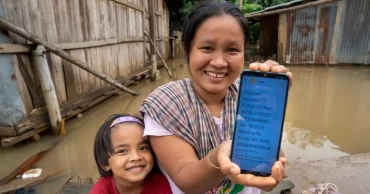
United Nations World Food Programme (WFP) Representative and Country Director in Bangladesh Coco Ushiyama on Saturday said climate shocks are becoming more frequent and more intense in Bangladesh, making early action more important than ever.
"By delivering assistance before families are hit by the worst impacts of flooding, we help them protect their food security, livelihoods and assets. At the same time, by strengthening and leveraging national social protection systems, we can support vulnerable people at scale when crises strike," Ushiyama said.
Bangladesh is among the countries most vulnerable to climate change, said the WFP.
Increasingly frequent and severe floods threaten lives, livelihoods and food security, particularly in disaster-prone areas such as the Chittagong Hill Tracts.
23 days ago
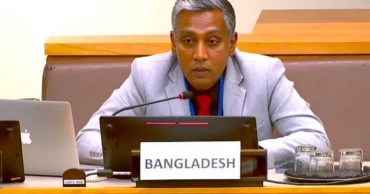
Bangladesh highlights Teesta, skills and innovation at UN SDG forum
Bangladesh has highlighted the importance of climate resilience, water security, skills development and innovation-driven industrialisation in accelerating progress towards the Sustainable Development Goals (SDGs) at the High-level Political Forum on Sustainable Development at the UN Headquarters in New York.
Speaking at the forum, Principal Coordinator (SDG Affairs) at the Prime Minister’s Office Professor Dr S M Abdul Awal said Bangladesh has long prioritised climate adaptation and sustainable water management.
He referred to the government’s plan to excavate 20,000 kilometres of canals over the next five years to strengthen irrigation networks, improve rainwater retention, raise groundwater levels and enhance drinking water security for both rural and urban communities.
Dr Awal also stressed the importance of international cooperation on transboundary water sharing including support for the Teesta Barrage Project in northern Bangladesh, said a press release of Permanent Mission of Bangladesh to the United Nations, New York on Saturday.
In a separate intervention on SDG 9, he said resilient infrastructure, sustainable industrialisation and innovation remain central to Bangladesh’s development strategy as the country works towards graduating from the least developed country (LDC) category.
He emphasised investments in skilled and knowledge-based education, technical and vocational education and training (TVET), science, technology, engineering and mathematics (STEM), digital infrastructure and entrepreneurship to equip young people for future jobs and build a knowledge-based economy.
Dr Awal also called on the international community to invest in Bangladesh’s agriculture, biotechnology, pharmaceutical, leather, digital and creative industries, saying the country now offers a favourable environment for foreign investment following the democratic election.
He said these efforts would help safeguard development gains, generate employment and support a resilient, inclusive and sustainable future.
23 days ago

Bangladesh Christian Association condemns ‘attacks’ on churches in West Bengal, demands investigation
The Bangladesh Christian Association (BCA) has strongly condemned a series of reported attacks on churches and alleged acts of intimidation against Christians in the Indian state of West Bengal, urging Indian authorities to conduct a prompt, impartial investigation and bring those responsible to justice.
In a joint statement, BCA President Nirmal Rozario and Secretary General Hemanta Corraya expressed deep concern over reports of attacks on churches, disruption of Christian worship, intimidation of believers, and pressure to convert from Christianity.
They described the incidents as a serious challenge to religious freedom and the rights of minority communities.
The association said in a secular and democratic country, allegations of repeated attacks targeting places of worship and religious minorities are deeply troubling.
It stressed that safeguarding every citizen's right to practise their faith freely is both a constitutional obligation and a fundamental responsibility of the state.
According to the statement, a group of extremists allegedly stormed a church in Subhas village of South 24 Parganas district, chanting "Jai Shri Ram" and vandalising the church's cross. Another church in Sonapur, also in South 24 Parganas, was reportedly attacked.
The statement further alleged that in Murshidabad district, a Christian widow was threatened with forced religious conversion and pressured to surrender her land for the construction of a temple.
In Bankura district, Christian worshippers were reportedly prevented from holding prayer services, Bibles were confiscated, and members of the congregation were temporarily detained.
The Bangladesh Christian Association said the reported incidents should not be viewed as isolated events but as part of a disturbing pattern raising serious concerns about the safety, religious freedom, and equal rights of Christians and other minority communities.
It called for a full, transparent, and independent investigation into all reported incidents, the arrest of those responsible, and exemplary legal action against the perpetrators.
The organisation also urged the government of India to ensure the safety of Christian communities, protect churches and private property, and uphold every citizen's constitutional right to freely practice their religion without fear, intimidation, or discrimination.
25 days ago
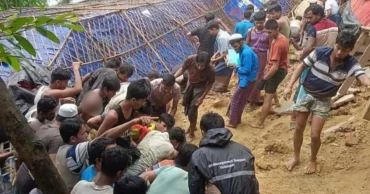
UNHCR mourns Rohingya camp deaths, urges stronger disaster preparedness
UNHCR Representative in Bangladesh Ivo Freijsen on Thursday described the loss of lives in landslides and floods in Rohingya camps in Cox’s Bazar as a heartbreaking reminder of how vulnerable these camps are to natural disasters and the risks Rohingya families face each monsoon season.
"UNHCR extends our heartfelt condolences to the families who lost loved ones in the collapse of the madrasah in the Rohingya refugee camps in Bangladesh, as well as those who perished in the deadly landslides and flash floods earlier this week,” he said in a statement.
With more than 12 lakh refugees living in one of the world's most densely populated refugee settlements, far too many people remain exposed to landslides, flooding, cyclones, fires, and other environmental hazards.
“Many of the dangers facing Rohingya refugees are neither unforeseen nor unavoidable, with adequate opportunities and resources for sustained disaster risk reduction,” said the UN official.
In the face of enduring funding constraints, however, investments in strong long-term disaster preparedness and resilience measures are increasingly underfunded, while a lack of allocated land further limits opportunities to decongest even the most overcrowded and hazardous locations and to plan for safer infrastructure, he said.
Ivo Freijsen said rather than implementing the strategic interventions they know can reduce risks before they become emergencies, humanitarian agencies are often forced to adopt short-term solutions, and the consequences of these constraints were tragically illustrated this week.
He said UNHCR continues to advocate for the necessary resources, land and planning opportunities to improve safety and protect the lives of refugees living in these camps, in conjunction with the continued pursuit of durable solutions.
25 days ago
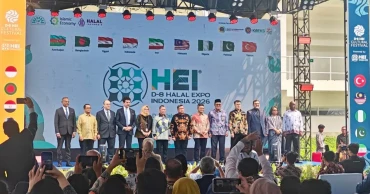
Bangladesh, Indonesia eye stronger economic relations
The Embassy of Indonesia in Dhaka, in collaboration with the Indonesia-Bangladesh Chamber of Commerce and Industry (IBCCI), facilitated the participation of Bangladeshi businesses in the D-8 Halal Expo 2026 in Jakarta as the two countries eye strengthening economic relations.
A total of 22 companies and institutions from Bangladesh, with a delegation of approximately 40 business representatives, are taking part in the five-day expo beginning on Wednesday, said the Indonesian Embassy on Thursday.
The D-8 Halal Expo 2026 is one of the flagship programmes organised under Indonesia's Chairmanship, aimed at strengthening economic cooperation, promoting the halal industry, and fostering greater trade and investment among D-8 member countries.
Their participation reflects the strong interest of the Bangladeshi private sector in expanding business networks and exploring cooperation opportunities with Indonesian partners and other D-8 member countries, it said.
IBCCI also facilitated the establishment of the Bangladesh Pavilion, showcasing products from Bangladeshi companies and SMEs supported by the Export Promotion Bureau (EPB) of Bangladesh.
25 days ago
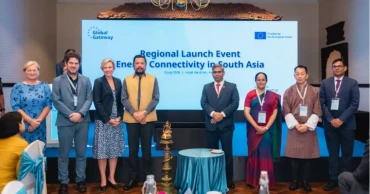
EU launches new project on regional energy connectivity in South Asia
The European Union (EU), together with its partners, on Thursday launched a regional energy connectivity project in South Asia.
The €5 million EU-funded initiative aims to support a more connected regional power market that delivers affordable, clean, and reliable electricity to people in Bangladesh, Bhutan, India, Nepal, and Sri Lanka.
High-level government representatives, development partners, energy sector leaders, regulators, investors, and technical experts from Bangladesh, Bhutan, India, Nepal, and Sri Lanka gathered in Kathmandu for the regional launch of the Energy Connectivity in South Asia (ECSA) project.
Funded by the European Union and implemented by Expertise France, the project seeks to advance regional energy cooperation and cross-border electricity trade across South Asia.
The event, titled "Powering South Asia's Energy Future: Advancing Cross-Border Electricity Trade, Investments and Energy Security," marked the official launch of the four-year regional programme aimed at supporting increased cross-border electricity trade (CBET), enabling large-scale renewable energy integration, enhancing energy security and economic resilience, and catalysing greater investment in renewable energy infrastructure, including from Europe.
Enhanced regional energy connectivity will strengthen energy security, create jobs, and boost economic growth across the region, in line with the EU's Global Gateway investment strategy, the EU said.
Nepal's Minister of Energy, Water Resources and Irrigation, Biraj Bhakta Shrestha, welcomed the initiative and underscored the importance of regional collaboration.
"South Asia possesses vast renewable energy resources and growing electricity demand. Enhanced cross-border electricity trade can help countries meet their development goals while improving energy reliability, affordability, and sustainability. Nepal looks forward to strengthening regional partnerships through initiatives such as ECSA," said the Nepalese minister while speaking as the chief guest.
European Commissioner for International Partnerships Jozef Síkela said energy connectivity powers economies and daily lives, and that, with the launch of this Global Gateway flagship initiative, the European Union is investing in cheaper, cleaner, and more reliable electricity that will strengthen resilience and unlock opportunities for communities and businesses across South Asia.
"It shows that the partnership between the European Union and South Asian countries is growing stronger."
EU Ambassador to Nepal Véronique Lorenzo highlighted the importance of regional cooperation in addressing shared energy challenges.
"Europe's experience in building an integrated electricity market has demonstrated that stronger energy connectivity creates more resilient, affordable, and sustainable energy systems. Through the Energy Connectivity in South Asia project, the European Union is proud to work in partnership with South Asian countries to help unlock the tremendous benefits of regional energy cooperation and clean energy integration."
Director of the Sustainable Development Department at Expertise France Nicolas Chenet noted the project's role in fostering dialogue and technical cooperation between Europe and South Asia by supporting stakeholder engagement among the participating countries.
"ECSA will serve as a platform for knowledge exchange, capacity building, and collaborative problem-solving. By combining European and South Asian experience, expertise, and priorities, the project seeks to support practical pathways towards a more integrated regional electricity market."
A keynote presentation on "Energy Connectivity in Europe - Governance, Experience and Lessons Learned" highlighted how Europe has developed interconnected electricity markets through coordinated transmission planning, common regulatory frameworks, market coupling mechanisms, and strong institutional cooperation.
Participants discussed how key lessons, including transparent market rules, independent regulation, regional planning, and coordinated grid investments, could be contextualised to South Asia's unique circumstances.
The first panel discussion, "Enabling Policy and Regulatory Environment - How Can the ECSA Project Complement Ongoing Initiatives," addressed how the ECSA project can add value to ongoing regional processes.
The discussion identified opportunities to further deepen regulatory cooperation, advance the harmonisation of technical and market frameworks, strengthen institutional capacity, and enhance coordination among national stakeholders and development partners.
The second panel discussion, "Cross-Border Electricity Trade – Investment and Energy Security Opportunities," focused on how regional power trade can stimulate investment in renewable energy generation, transmission infrastructure, and modern power systems while enhancing energy security across South Asia.
Participants highlighted the importance of predictable regulatory environments, bankable project pipelines, and regional cooperation in attracting public and private investment.
Participants agreed on several priority areas for the project, including strengthening regional policy dialogue, supporting evidence-based planning and technical studies, enhancing institutional and regulatory capacities, facilitating investment discussions, and promoting knowledge exchange on cross-border electricity trade and renewable energy integration.
The ECSA project covers Bangladesh, Bhutan, India, Nepal, and Sri Lanka and seeks to increase regional electricity trade, reduce greenhouse gas emissions, improve energy security, and promote greater integration of renewable energy resources across South Asia.
25 days ago
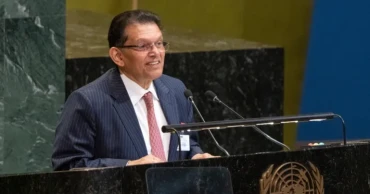
FM Khalilur Rahman to visit New York July 10-29 ahead of UNGA 81 Presidency
Foreign Minister Dr. Khalilur Rahman will pay an official visit to New York from July 10 to 29 as part of a series of preparatory engagements ahead of assuming the presidency of the 81st session of the United Nations General Assembly.
Dr Khalilur Rahman was elected President of the United Nations General Assembly (UNGA) for the 81st session on June 2, defeating Cyprus in what Dhaka described as a "historic and landmark" victory.
He is likely to depart New York for Dhaka on July 30, a senior official at the Ministry of Foreign Affairs told UNB, noting that there are some preparatory engagements before the next session.
The 81st session of the UN General Assembly (UNGA 81) will open on September 8, 2026.
The first day of the high-level general debate will be September 22.
Prime Minister Tarique Rahman is scheduled to lead the Bangladesh delegation to attend the UNGA's high-level general debate.
Bangladesh said the "landmark" victory (UNGA Presidency) was a strong testament to the confidence and trust that the international community places in Bangladesh, as well as to the country's growing diplomatic stature and constructive engagement within the multilateral system.
Dhaka said this achievement is not only the election of a Bangladeshi candidate to one of the most distinguished positions within the United Nations, but it also constitutes significant international recognition of Bangladesh's longstanding commitment to multilateral diplomacy, international peace and security, sustainable development, and global cooperation.
The UN General Assembly (UNGA) is the main policy-making organ of the organization.
Comprising all Member States, it provides a unique forum for multilateral discussion of the full spectrum of international issues covered by the Charter of the United Nations. Each of the 193 Member States of the United Nations has an equal vote.
The Assembly meets in regular sessions from September to December each year and thereafter as required.
It discusses specific issues through dedicated agenda items or sub-items, which lead to the adoption of resolutions.
25 days ago

Govt appointments based on qualification, efficiency, sincerity: Shama Obaed
State Minister for Foreign Affairs Shama Obaed Islam on Thursday described changes and the introduction of new faces in any ministry as part of an ongoing process, stressing that the government attaches importance to efficiency, qualifications, dedication, sincerity, and commitment to the country.
“If you follow the Prime Minister’s (Tarique Rahman’s) activities and his decisions in each ministry, I think he gives importance to work and efficiency. First and foremost, he values qualification,” she said.
The State Minister made the remarks while talking to reporters at the Ministry of Foreign Affairs when her attention was drawn to some decisions at her ministry, including the appointment of newly appointed Bangladesh Permanent Representative to the United Nations in New York Irene Khan, an internationally renowned human rights activist.
Shama Obaed said it is natural that there will be changes and new faces, adding that this is nothing new but part of an ongoing process.
She said it is important to see who is capable of what and how sincerely he or she wants to work for the country.
The government has granted the status of a state minister to Irene Khan and she will enjoy related facilities during her tenure.
The government has decided to appoint Ambassador Salahuddin Noman Chowdhury, the current Permanent Representative of Bangladesh to the United Nations in New York, as the next Foreign Secretary, officials in Dhaka told UNB.
Under the proposed reshuffle, current Foreign Secretary Asad Alam Siam is expected to be posted to New Delhi as Bangladesh's next High Commissioner to India, one of the country's most significant diplomatic assignments. He is likely to replace incumbent High Commissioner Riaz Hamidullah.
The post of Bangladesh's High Commissioner to the United Kingdom has remained vacant since March.
Besides, Mohammad Abdul Muhith, the current Rector of the Foreign Service Academy and former Permanent Representative of Bangladesh to the United Nations, is likely to be as Bangladesh's next High Commissioner to the United Kingdom.
Meanwhile, BNP Information and Technology Secretary AKM Wahiduzzaman is likely to be appointed Deputy Permanent Representative of Bangladesh to the United Nations in New York.
The government is also likely to appoint M. Farhadul Islam, Secretary (Intergovernmental Organizations) at the Ministry of Foreign Affairs, as Bangladesh's next Ambassador to Mauritius.
On the other hand, Md Abul Hasan Mridha (Director General) has been appointed as new Bangladesh Ambassador to Indonesia, an official told UNB.
25 days ago

Hasina’s extradition: Dhaka finds no lack of diplomatic efforts
State Minister for Foreign Affairs Shama Obaed Islam on Thursday said there is no lack of diplomatic efforts to bring back former prime minister Sheikh Hasina to the country to face trial but acknowledged that it takes time.
"What she (Hasina) is saying is not relevant at all. Our efforts are underway to bring her back," she told reporters at the Ministry of Foreign Affairs.
The State Minister said the Home and Law Ministries will look into whether there are any complexities on legal grounds.
She said the three ministries including the Ministry of Foreign Affairs are working afresh since the formation of the new government in February this year, though the initial process began during the interim government.
The State Minister said the people of Bangladesh want former prime minister Sheikh Hasina extradited.
Reiterating its desire to engage constructively, India on April 17 said it is examining the request for Hasina's extradition as part of ongoing judicial and internal legal processes.
"There is a request.....the request is being examined as part of ongoing judicial and internal legal processes," Indian Ministry of External Affairs (MEA) spokesperson Randhir Jaiswal told reporters in New Delhi, noting that India will continue to engage constructively on the issue with all the stakeholders.
Bangladesh, on April 8, reiterated its request to extradite Hasina and former Home Minister Asaduzzaman Khan Kamal to Bangladesh, both of whom have been awarded the death penalty by the International Crimes Tribunal.
"We will continue to seek her extradition through a transparent judicial process. It (the extradition request) has been discussed. It will be dealt with through a transparent judicial process," Prime Minister's Foreign Affairs Adviser Humaiun Kobir told reporters recently in Dhaka.
25 days ago
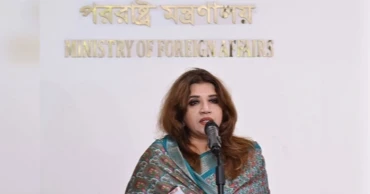
Dhaka hopes India will come forward understanding importance of Ganges Water Treaty
State Minister for Foreign Affairs Shama Obaed Islam on Thursday said the issue related to the renewal of the Bangladesh-India Ganges Water Treaty is moving in a positive direction.
"I think it is moving in a positive direction. I hope India will understand its importance and come forward accordingly," she told reporters when her attention was drawn to the renewal of the treaty.
The Bangladesh-India Ganges Water Treaty, which is expiring in December this year, needs to be "reviewed and reformed comprehensively" before going for a renewed treaty by engaging economists, urban planners, sociologists, and environmentalists in the planning, as Dhaka shares the "risk" of not sharing it appropriately, experts said.
Officials said Bangladesh's agriculture and food availability will be badly affected, while climate vulnerability will increase substantially if the treaty is allowed to expire with no new sharing agreement in place.
The Ganges Water Treaty was signed on December 12, 1996, for a period of 30 years, which makes this the last year covered by it.
Bangladesh and India share 54 rivers including the Ganges.
To discuss all relevant issues that form part of this cooperation, the two countries have a bilateral mechanism in place, the Joint Rivers Commission.
Given the willingness and interest of both sides to reset the relationship, an arrangement for sharing the Ganges waters in an "equitable and climate-proof manner" will be one of the first tests of the reset.
Former Bangladesh High Commissioner to India Tariq A. Karim said the 1996 Ganges Water Sharing Treaty between Bangladesh and India showed that cooperation is possible even on sensitive issues.
"But the treaty is due to expire in December 2026, and its renewal will test whether the region can adapt old agreements to new hydrological and climatic realities," he said while speaking at a seminar recently.
The former diplomat, who also served as Bangladesh Ambassador to the USA, said, "Across the wider region, water, food, energy, health, disaster management, and climate resilience are regional public goods. No country can secure them alone."
The former diplomat said the compulsions of ecological integrity may therefore be South Asia's strongest argument for renewed cooperation.
He said the region should consider shared river-basin management, early-warning systems, climate adaptation financing, joint research, and a regional ecological security dialogue.
"Such cooperation would not require states to surrender sovereignty. It would require them to recognise that sovereignty in an age of climate stress is strengthened - not weakened - by cooperation achieved through its pooling," said the foreign affairs expert.
"MoFA (Ministry of Foreign Affairs) has to do a lot of homework, and data sharing is key. We need to keep in mind that the situation in 1996 and 2026 is not the same. This can't be seen only from engineering or diplomatic prisms; they should include economists, urban planners, and sociologists in the planning," international affairs expert Prof. Shahab Enam Khan told UNB recently.
25 days ago