Displaced Rohingya communities in Cox’s Bazar are witnessing significant improvements in sexual and reproductive health (SRH), driven by increased facility-based deliveries and wider adoption of family planning services, according to research findings unveiled on Thursday.
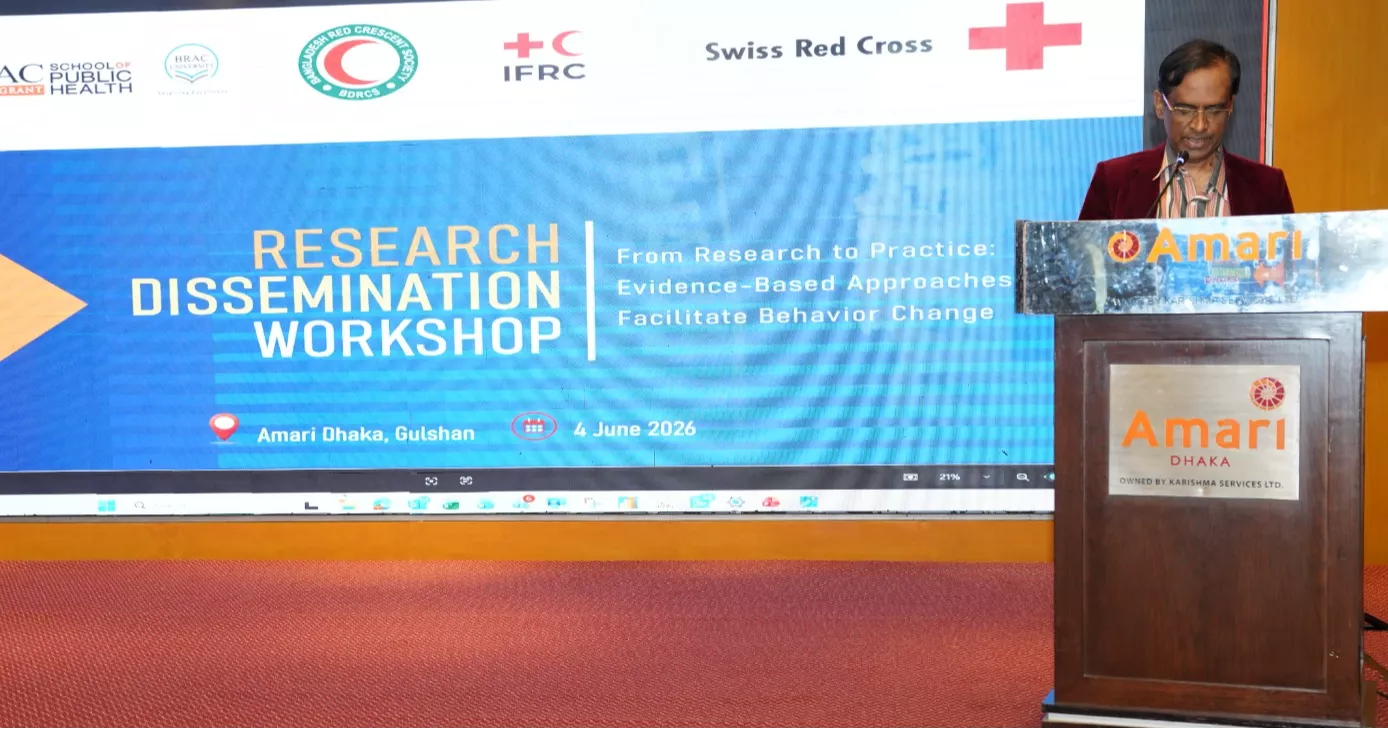
The findings were presented at a research dissemination workshop titled “From Research to Practice: Evidence-Based Approaches to Facilitate Behaviour Change” held at a hotel in Dhaka.
Speaker Hafiz Uddin asks US to play greater role in resolving Rohingya crisis
The study was conducted by the BRAC James P. Grant School of Public Health (JPGSPH) at BRAC University in collaboration with the Bangladesh Red Crescent Society (BDRCS), with support from the Swiss Red Cross (SRC).
Researchers found that targeted community interventions in Rohingya camps significantly increased institutional deliveries, improved contraceptive use, and positively influenced health-seeking behaviours among community members.
The study, carried out in Camp 2-East and Camp 13, used a quasi-experimental before-and-after design and was guided by the Capability, Opportunity, Motivation-Behaviour (COM-B) framework.
According to the findings, awareness of skilled birth attendants increased considerably in intervention areas, while the perception that home was the safest place for childbirth declined. As a result, more women chose to deliver in health facilities and reported having greater influence over decisions regarding their place of delivery.
The research also recorded a rise in contraceptive use in intervention areas, contrasting with a decline in comparison areas. Researchers attributed the improvement to increased awareness among men, stronger community advocacy, and the influential role of Community Health Volunteers (CHVs), who were identified as the most trusted source of family planning information.
Despite the progress, the study highlighted several challenges that continue to hinder service utilisation. These include religious concerns regarding family planning, socio-cultural norms such as purdah practices, community perceptions, reluctance to interact with male healthcare providers during childbirth, and infrastructure constraints including inadequate lighting, transportation difficulties, overcrowded facilities, medicine shortages, language barriers and provider attitudes.
Researchers identified CHVs and religious leaders as key agents of behavioural change. Community engagement initiatives involving husbands, imams and local leaders, along with household visits, maternal support packages, transportation support for pregnant women and the sharing of positive childbirth experiences, were found to contribute significantly to improved outcomes.
Speaking at the event, BDRCS Secretary General Dr. Kabir M. Ashraf Alam said healthcare-seeking behaviour in humanitarian settings is influenced by a complex mix of social norms, cultural beliefs, religious values, family dynamics, trust and access-related factors.
He said BDRCS remains committed to evidence-based programming and community-centred learning, stressing that research findings should directly inform policies and programmes to improve people's lives.
Swiss Red Cross Country Representative in Bangladesh Paul Drossou said the application of the COM-B model in Rohingya camps demonstrates that strengthening capability, opportunity and motivation simultaneously can help overcome barriers and build resilience within communities.
Participants at the workshop noted that the behavioural insights generated by the study have implications beyond the health sector and could be applied to programmes related to hygiene promotion, disaster risk reduction, climate resilience, nutrition and social protection.
The research and dissemination event was funded by the Stanley Johnson Foundation.
The workshop brought together representatives from government agencies, development partners, humanitarian organisations, the Red Cross and Red Crescent Movement, and academic and technical institutions.