China has announced a second batch of scientific and engineering achievements from its Qingzhou cargo spacecraft test vehicle, highlighting progress in space technology, low-cost space operations, space medicine and biological research.
The latest results were released on Monday by the team behind the Qingzhou test vehicle. The first batch of in-orbit findings was made public on April 15.
The Innovation Academy for Microsatellites of the Chinese Academy of Sciences, which led the spacecraft's development, said the new achievements will help advance space technologies, improve the safe operation of China's space station and support the future use of space resources.
Among the latest developments, an upgraded steam-compression space refrigerator successfully operated in microgravity after overcoming gas-liquid separation challenges. The technology is expected to provide a more affordable solution for transporting temperature-sensitive supplies in space.
The team also confirmed the successful in-orbit testing of a space rescue and maintenance diagnostic camera, which is now operating normally.
In the field of space medicine, researchers tested a muscle signal detector powered by a self-developed neural chip. The device successfully collected and transmitted weak muscle signals in real time while in orbit.
A handheld blood cell analyzer also completed testing, demonstrating its ability to help astronauts monitor their health without relying on bulky medical equipment or support from ground-based teams.
The spacecraft also achieved new milestones in space biology. A low-cost biological support cabin designed for space experiments completed its first successful test, providing a reusable platform for future life science research.
Researchers also confirmed that Syntrichia caninervis, a plant known for surviving extreme conditions, remained alive after exposure to microgravity, radiation and drought-like conditions in space. The findings could support future efforts to create sustainable ecosystems beyond Earth.
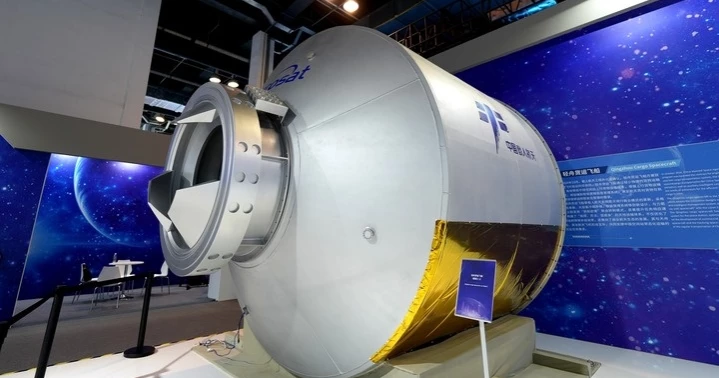
Launched in March this year, the 4.2-tonne Qingzhou test vehicle has a planned service life of three years. It features a single integrated cabin with about 27 cubic metres of sealed storage space and 40 cargo slots for astronaut supplies and scientific equipment.
After completing a series of key technology demonstrations, the first operational Qingzhou cargo spacecraft is expected to be launched in 2027 to deliver supplies to China's space station.