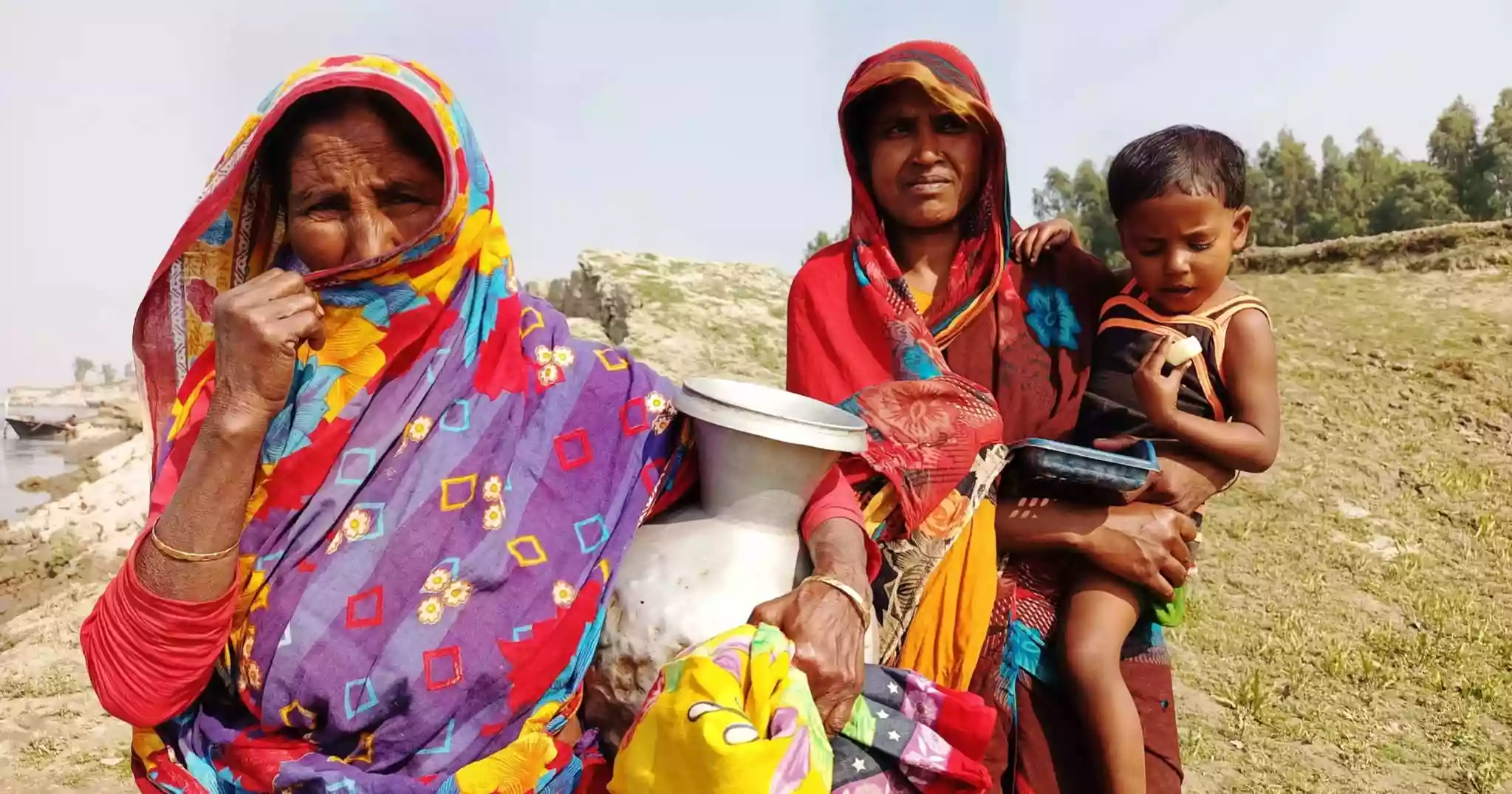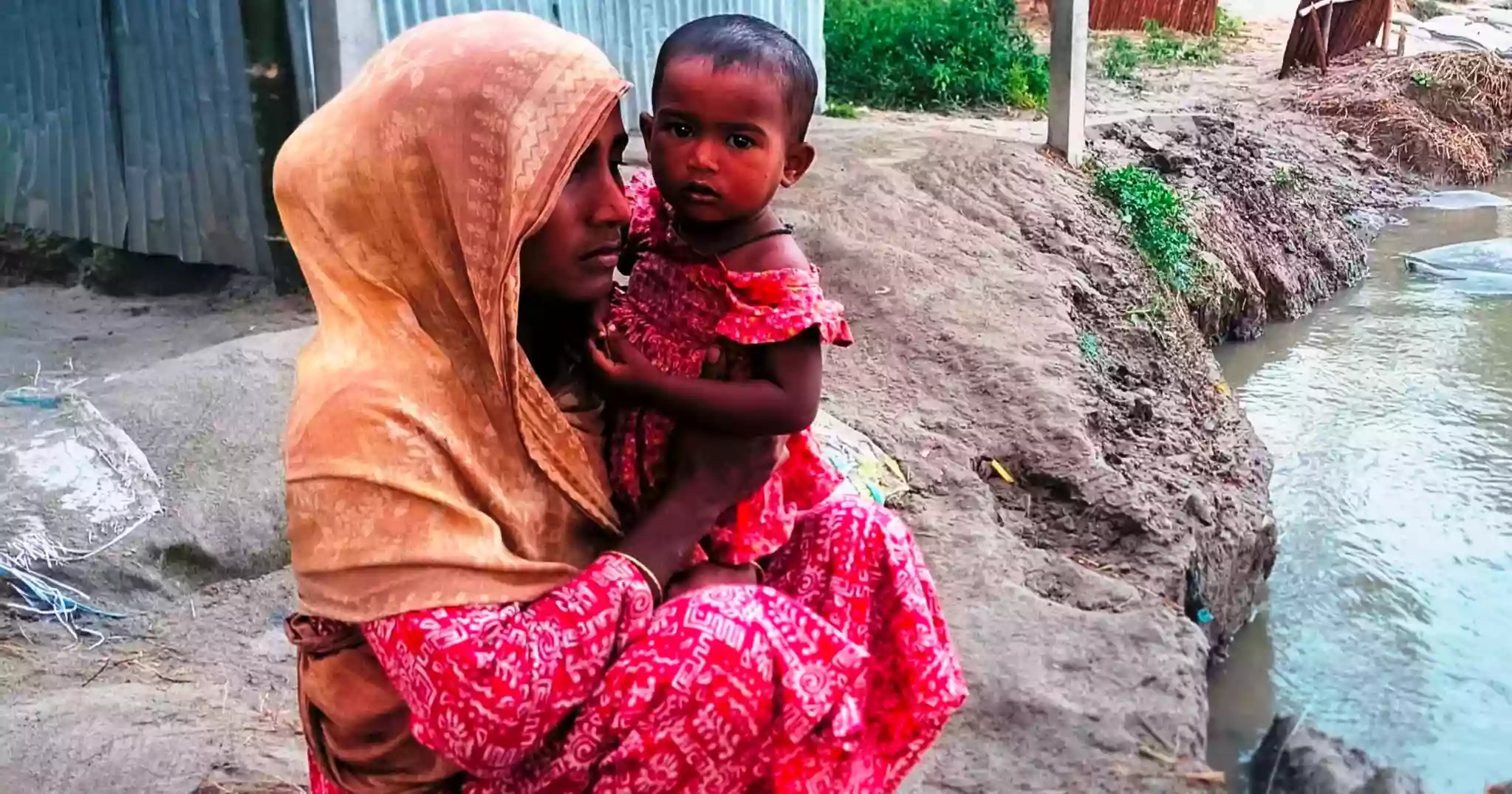
While Eid-ul-Azha is traditionally marked by sacrifice, feasting and family celebrations, for thousands of people living in the riverine chars of northern Bangladesh this year’s festival arrived with little more than anxiety, hardship and uncertainty.
Across the scattered islands formed by the Teesta, Dharla, Brahmaputra and Dudhkumar rivers, the usual sounds of Eid celebration were largely absent. In many char villages, no sacrificial animals were slaughtered and many families spent the day without meat on their tables.
For residents of the chars spread across Rangpur, Lalmonirhat, Kurigram, Nilphamari and Gaibandha districts, the festive spirit was overshadowed by mounting farm losses, debt burdens and the constant threat of river erosion.
The Rangpur region is home to around 700 chars, including nearly 450 in Kurigram alone. Each char accommodates between 150 and 500 families, most of whom depend entirely on agriculture for their livelihoods.
This year, however, poor returns from major crops such as potato, paddy and maize have left many farming households struggling to make ends meet.
For 68-year-old farmer Makbul Hossain of Gobardhan area in Mahishkhocha union of Aditmari upazila in Lalmonirhat, Eid brought little reason for celebration.
Despite spending most of his life cultivating land, he says he has rarely faced such financial distress.
After suffering losses of more than Tk 3 lakh from potato farming on 11 bighas of land, he is still burdened with loans amounting to around Tk 2.5 lakh. He had hoped that Boro paddy would help recover some of the losses, but low market prices dashed those expectations.
“It cost me nearly Tk 950 to produce a maund of paddy, but I am forced to sell it for Tk 800 to Tk 850,” Makbul said.
“There have been losses in paddy, potatoes and maize. Storms damaged vegetables as well. This year farming has brought nothing but losses. There is no peace of mind and no Eid joy.”
The situation is equally grim in Falimari, a river island settlement in Lalmonirhat Sadar upazila, where around 300 families live along the Dharla River.
For days, residents have been living under the shadow of river erosion. Even on Eid day, sections of the riverbank continued to collapse.
Last year, villagers sacrificed two cattle and three goats. This year, not a single animal was sacrificed.
Saheda Bewa, a resident of the char, said the river swallowed three bighas of her land and homestead just a week ago.
“The remaining land is also under threat. Even on Eid day the erosion continued. How can we think about celebrating Eid in such a situation?” she asked.
“Forget meat; we had to eat rice with lentils and vegetables. The 10 kilograms of rice provided by the government is our biggest support right now.”
On Char Tepamadhupur in Kaunia upazila of Rangpur, 65-year-old farmer Ali returned home from Eid prayers carrying a heavy heart.
He could not afford new clothes for any of the seven members of his family. Last year, he shared in a cow sacrifice. This year, buying meat from the market was beyond his means. “Potato cultivation ruined us. Paddy could not save us either,” he said.
“Production costs have risen sharply, but crop prices have fallen. Maize prices are low, tobacco prices are low – everything is against us.”
Ali cultivates around 25 bighas of land and is currently carrying debts of nearly Tk 3 lakh. Pressure from creditors continues to mount.
“Our family has no Eid this year,” he said quietly.
According to local community leaders, such stories are now common across much of the char belt.
Prof Shafiqul Islam Bebu, convener of the Kurigram District Char Development Committee, said most char communities were unable to perform animal sacrifices this year.