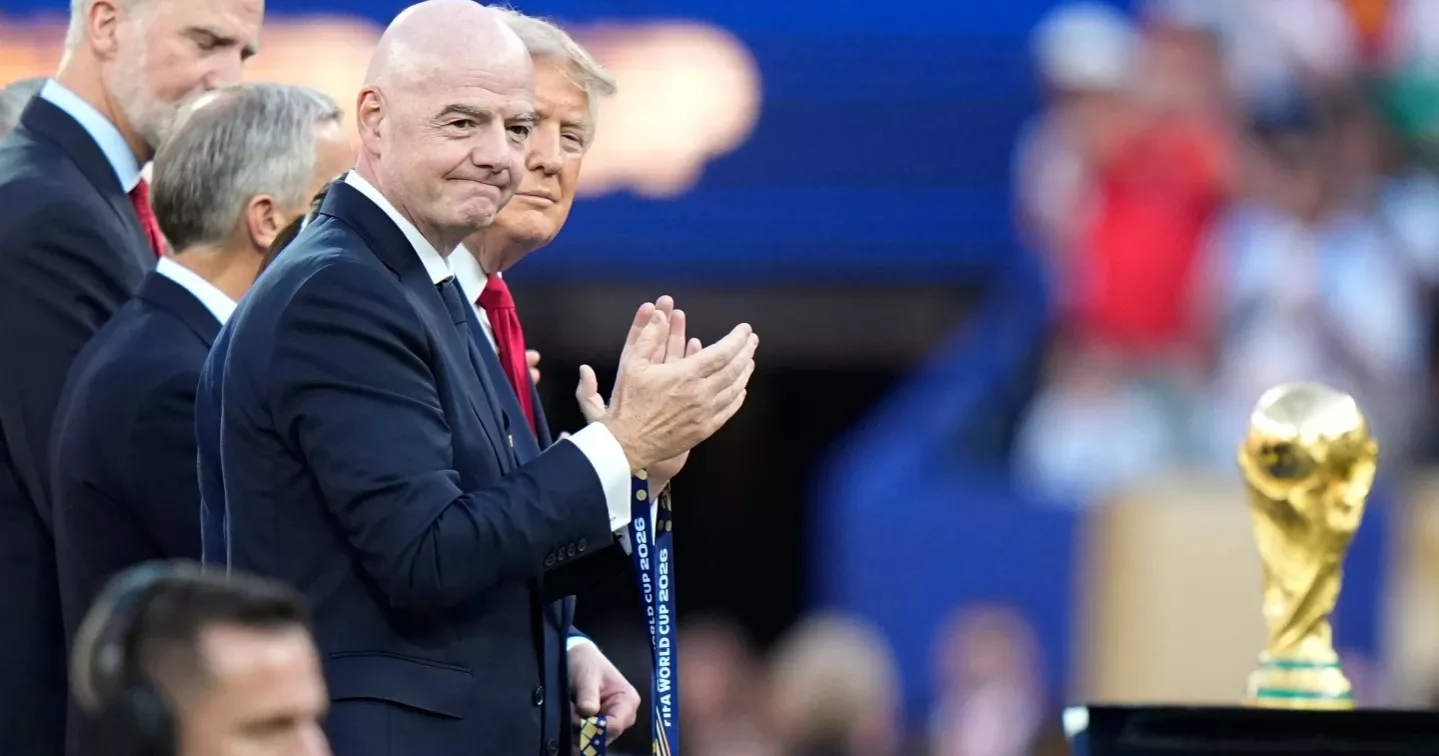
FIFA President Gianni Infantino has abandoned his controversial plan to bring private investors into the commercial side of the World Cup after facing strong opposition from football governing bodies, senior FIFA officials and national associations.
Infantino announced on Friday that he was withdrawing the proposal, saying it had created divisions that were no longer in the best interests of world football.
"After listening carefully to all views, it has become clear that the project has created divisions that outweigh its intended benefits," he said in a statement.
The decision came less than two weeks after Infantino celebrated what FIFA described as the successful conclusion of its expanded World Cup, which generated record revenue and strengthened his position ahead of next year's FIFA presidential election.
What was the proposal?
The plan would have created a new FIFA subsidiary, called FIFA Forward Enterprise (FFE), to manage the organisation's commercial business, including World Cup broadcasting rights, sponsorship, ticket sales and hospitality.
FIFA planned to raise about $4.2 billion by selling around a 20 percent stake in the new company. The lead investor was expected to be Thrive Eternal, an investment firm launched by Joshua Kushner, whose brother Jared Kushner is US President Donald Trump's son-in-law.
Under the proposal, each of FIFA's 211 member associations would have received $20 million from the investment, double the current amount they are due over the next four years. FIFA also projected higher payments in future World Cup cycles.
Why did it face opposition?
The proposal drew criticism from several FIFA vice presidents, senior FIFA executives, UEFA, football bodies in Asia and North America, national leagues and political leaders.
Many feared that private investors would push for larger tournaments and more matches to increase profits, putting further pressure on an already crowded international football calendar.
Critics also said Infantino developed the proposal without properly consulting football stakeholders.
UEFA took the strongest position, warning that European football associations could boycott FIFA competitions unless the plan was withdrawn.
Europe's teams regularly dominate FIFA tournaments, making UEFA's opposition particularly significant.
Support remained limited
Infantino's traditional supporters in Africa largely stayed neutral, while South American football body CONMEBOL said it would carefully review the proposal before taking a position.
Many smaller football associations stood to benefit financially from the increased funding, while wealthier football nations showed less interest in the offer.
Questions over Infantino's future
Although Infantino has now dropped the proposal, questions remain about whether he can fully restore confidence before FIFA's presidential election next March.
The controversy also led to the resignation of senior adviser Carlos Cordeiro, who criticised the investment plan, while FIFA Chief Operating Officer Kevin Lamour publicly defended colleagues involved in the dispute.
Infantino was re-elected unopposed in 2019 and 2023 and is eligible to seek one final four-year term.
Potential challengers mentioned by football observers include Paris Saint-Germain president Nasser Al-Khelaïfi and FIFA vice president Victor Montagliani, although no official candidates have announced plans to run.
The failed investment proposal has become one of the biggest challenges to Infantino's leadership since he became FIFA president in 2016.