FIFA World Cup 2026
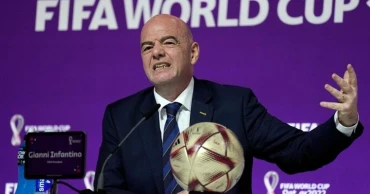
Wenger backs FIFA decision to drop Infantino's World Cup investment plan
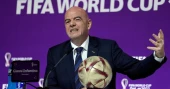
FIFA executive Arsène Wenger has backed the decision to abandon a controversial plan to sell stakes in future World Cup profits to private investors, saying dropping the proposal was “absolutely necessary.”
The former Arsenal manager's comments came after UEFA's lawyers sent a letter to FIFA President Gianni Infantino threatening legal action. The letter named Wenger and 17 other FIFA executives whose communications and data should be preserved as potential evidence.
Wenger, FIFA's Chief of Global Football Development, said he had no role in developing the plan and learned about it from media reports.
“I was not involved in this strategic plan and first became aware of the project through media reports,” Wenger said.
The French football great, who was hired by Infantino in 2019, did not mention the FIFA president by name in his statement.
He said withdrawing the plan was essential because he believed FIFA should remain independent and operate with transparency and integrity.
“The decision to withdraw the project was absolutely necessary and beyond question, because I firmly believe in an independent FIFA that serves our game with commitment, transparency, and integrity,” Wenger said.
Infantino withdrew the proposed $20 billion investment plan early Saturday following strong opposition from football officials around the world.
UEFA had warned that European football could boycott FIFA matches and events if the plan went ahead.
2 months ago
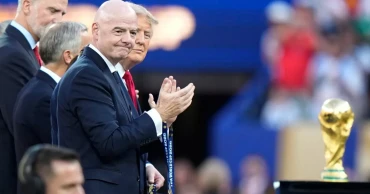
Infantino drops World Cup investment plan after strong backlash from football leaders
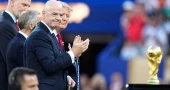
FIFA President Gianni Infantino has abandoned his controversial plan to bring private investors into the commercial side of the World Cup after facing strong opposition from football governing bodies, senior FIFA officials and national associations.
Infantino announced on Friday that he was withdrawing the proposal, saying it had created divisions that were no longer in the best interests of world football.
"After listening carefully to all views, it has become clear that the project has created divisions that outweigh its intended benefits," he said in a statement.
The decision came less than two weeks after Infantino celebrated what FIFA described as the successful conclusion of its expanded World Cup, which generated record revenue and strengthened his position ahead of next year's FIFA presidential election.
What was the proposal?
The plan would have created a new FIFA subsidiary, called FIFA Forward Enterprise (FFE), to manage the organisation's commercial business, including World Cup broadcasting rights, sponsorship, ticket sales and hospitality.
FIFA planned to raise about $4.2 billion by selling around a 20 percent stake in the new company. The lead investor was expected to be Thrive Eternal, an investment firm launched by Joshua Kushner, whose brother Jared Kushner is US President Donald Trump's son-in-law.
Under the proposal, each of FIFA's 211 member associations would have received $20 million from the investment, double the current amount they are due over the next four years. FIFA also projected higher payments in future World Cup cycles.
Why did it face opposition?
The proposal drew criticism from several FIFA vice presidents, senior FIFA executives, UEFA, football bodies in Asia and North America, national leagues and political leaders.
Many feared that private investors would push for larger tournaments and more matches to increase profits, putting further pressure on an already crowded international football calendar.
Critics also said Infantino developed the proposal without properly consulting football stakeholders.
UEFA took the strongest position, warning that European football associations could boycott FIFA competitions unless the plan was withdrawn.
Europe's teams regularly dominate FIFA tournaments, making UEFA's opposition particularly significant.
Support remained limited
Infantino's traditional supporters in Africa largely stayed neutral, while South American football body CONMEBOL said it would carefully review the proposal before taking a position.
Many smaller football associations stood to benefit financially from the increased funding, while wealthier football nations showed less interest in the offer.
Questions over Infantino's future
Although Infantino has now dropped the proposal, questions remain about whether he can fully restore confidence before FIFA's presidential election next March.
The controversy also led to the resignation of senior adviser Carlos Cordeiro, who criticised the investment plan, while FIFA Chief Operating Officer Kevin Lamour publicly defended colleagues involved in the dispute.
Infantino was re-elected unopposed in 2019 and 2023 and is eligible to seek one final four-year term.
Potential challengers mentioned by football observers include Paris Saint-Germain president Nasser Al-Khelaïfi and FIFA vice president Victor Montagliani, although no official candidates have announced plans to run.
The failed investment proposal has become one of the biggest challenges to Infantino's leadership since he became FIFA president in 2016.
2 months ago
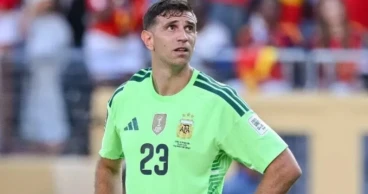
Martinez raises doubts over Argentina future after World Cup
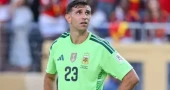
Argentina goalkeeper Emiliano Martinez has cast doubt over his international future after the team's defeat to Spain in the 2026 FIFA World Cup final.
He said he would use the aftermath of the loss to consider what comes next.
Writing on Instagram after Argentina returned to Buenos Aires on Monday, Martinez spoke of the disappointment of missing out on a second straight World Cup title and questioned whether it was time to step away from the national team.
"We dreamed of winning the World Cup again, of bringing the trophy back to Argentina and making history once more," he wrote.
"It's hard to put this pain into words. Now it's time to think about many things, about how to move forward. And maybe it's also time to ask whether my moment to step aside has come."
Martinez made no attempt to point fingers after the defeat. Instead, he apologized to Argentina supporters, saying he had given everything he could for the team.
"I'm truly sorry," he wrote. "I tried to give everything I had to help my country and my teammates."
The 33-year-old was one of Argentina's best players during the tournament. In the final, he produced 11 saves but could not keep out Ferran Torres, whose extra-time goal gave Spain a 1-0 victory.
Thousands of supporters welcomed the squad home in Buenos Aires despite cold and rainy weather, applauding the players after their run to a second consecutive World Cup final.
Martinez made his Argentina debut in a World Cup qualifier against Chile in June 2021 and quickly established himself as the team's first-choice goalkeeper. He played a central role in Argentina's Copa América and World Cup triumphs and has become one of the senior figures in Lionel Messi's squad.
Martinez stopped short of announcing his retirement, but his comments left open the possibility that the World Cup final could prove to be his last appearance for Argentina.
2 months ago
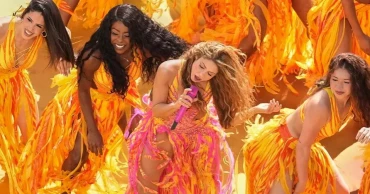
Madonna, BTS, Shakira and Justin Bieber headline star-studded World Cup halftime show
Global music stars Madonna, Justin Bieber, BTS and Shakira headlined the FIFA World Cup's first-ever halftime show on Sunday, delivering a fast-paced performance featuring several international artists, Muppets characters and Hollywood celebrities.
Held at MetLife Stadium near New York, the 11-minute show was designed to bring a Super Bowl-style halftime spectacle to football's biggest tournament. Unlike the Super Bowl's single-headliner format, the World Cup show featured several performers, each taking the stage for about two minutes.
Madonna opened the performance with her 2000 hit Music, joined by Brazilian football legends Ronaldo and Ronaldinho. After appearing in a pre-recorded roller rink sequence, she entered the stadium in a dune buggy before performing live.
Renowned Venezuelan conductor Gustavo Dudamel then led an orchestra in a performance of Seven Nation Army, the popular football anthem by The White Stripes. Members of the Muppets, including Animal on drums, also appeared during the performance.
K-pop group BTS followed with their global hit Dynamite, wearing red-and-black outfits in a colourful stage performance.
Actors Jason Sudeikis and Brendan Hunt, appearing as their popular "Ted Lasso" characters, introduced Justin Bieber, who performed Everything Hallelujah with an acoustic guitar in a more relaxed segment.
Shakira and Nigerian Afrobeats star Burna Boy then performed Dai Dai, the tournament's official World Cup anthem, which had been played before every one of the tournament's 104 matches. Shakira, dressed in a colourful feathered outfit, was joined by dancers, including children, before Burna Boy joined her on stage.
Shakira is well known for World Cup songs, including the iconic 2010 anthem Waka Waka (This Time for Africa).
The halftime show concluded with the PS22 Chorus from Staten Island performing alongside Coldplay frontman Chris Martin, who curated the event, Gustavo Dudamel, Shakira and several Muppets and Sesame Street characters, including Kermit the Frog, Miss Piggy, Cookie Monster and Count von Count.
Although Dudamel conducted about 40 musicians from the New York Philharmonic and Venezuela's Simón Bolívar Symphony Orchestra on the field, the orchestral music had been pre-recorded earlier in the week.
Following Spain's victory over Argentina in the World Cup final, Oscar-winning actor Javier Bardem celebrated enthusiastically with Spanish supporters inside the stadium.
Among other celebrities attending the final were Beyoncé, Jay-Z, Timothée Chalamet, Kylie Jenner and actor Matt Damon, who attended with his wife, Luciana Barroso Damon.
Jennifer Hudson, Post Malone and Tom Cruise feature in pre-match ceremony
Before kickoff, Jennifer Hudson, Robbie Williams, Post Malone and Tom Cruise led the World Cup closing ceremony with musical performances and speeches.
British singer Robbie Williams performed FIFA anthem Desire, joined by Nicole Scherzinger and Italian singer Laura Pausini.
Online personality IShowSpeed performed his football-themed song Champions, while Post Malone sang his new track Chrome Heartbreaker before teaming up with Swae Lee for their hit Sunflower.
Actor Tom Cruise then addressed fans, celebrating the tournament and welcoming the finalists, Spain and Argentina.
The national anthems were performed live before the match. Jennifer Hudson sang the US national anthem, while Spain's La Marcha Real was performed by Spanish Brass. Argentine singer María Becerra sang Argentina's national anthem before kickoff.
2 months ago
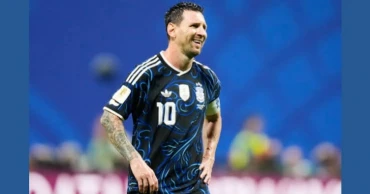
Messi eyes third Golden Ball as Mbappé moves closer to World Cup Golden Boot
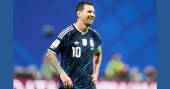
Lionel Messi faces an uphill battle to win the World Cup Golden Boot after Kylian Mbappé extended his lead in the scoring race, but the Argentine captain remains the favourite to claim a record third Golden Ball when Argentina meet Spain in Sunday's final.
Mbappé scored twice in France's 6-4 defeat to England in Saturday's third-place playoff, taking his tournament tally to 10 goals. Messi has eight goals, leaving him needing at least two goals in the final to draw level and three to move ahead.
Before the third-place match, Messi and Mbappé were tied on eight goals, with the Argentine leading on the tiebreaker thanks to one more assist.
If Messi cannot overtake Mbappé, he is still widely expected to win the Golden Ball, awarded to the tournament's best player. At 39, he has guided Argentina to a second consecutive World Cup final and is already the only player to have won the award twice, having claimed it in 2014 and 2022.
"He is history. He is a legend," Argentina coach Lionel Scaloni said.
The Golden Boot is the only major individual World Cup honour missing from Messi's long list of achievements, which includes a record eight Ballon d'Or awards.
Mbappé, who won the Golden Boot at the 2022 World Cup in Qatar despite France losing the final to Argentina, became the first player to score 10 goals in a single World Cup since Germany's Gerd Müller achieved the feat in 1970.
If Messi scores enough goals to surpass Mbappé and Argentina win the title, he would become the first Golden Boot winner to play for the World Cup champions since Brazil's Ronaldo in 2002.
Spain also have strong contenders for the tournament's other major individual awards.
Goalkeeper Unai Simón is among the favourites for the Golden Glove after conceding just one goal in seven matches, while 19-year-old forward Yamine Lamal is a leading candidate for the Best Young Player award, presented to the top performer aged 21 or under.
The Golden Ball, Golden Glove and Best Young Player awards are decided by media representatives from a shortlist prepared by FIFA's Technical Study Group.
2 months ago
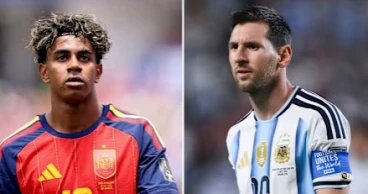
Messi’s Argentina face unbeaten Spain in blockbuster World Cup final
Lionel Messi and defending champions Argentina will take on Spain in Sunday’s World Cup final, a highly anticipated clash between one of football’s greatest individual talents and the sport’s most dominant team in recent years.
Messi, who rarely finds himself on the losing side, will lead Argentina against a Spain team that has gone unbeaten in 37 consecutive matches since early 2024. The final is expected to provide a fitting conclusion to the biggest World Cup in history.
For Spain, the match offers an opportunity to win a second World Cup title after their 2010 triumph and further establish themselves as the leading force in international football. Argentina, meanwhile, are aiming to become the first men’s team to win consecutive World Cups since Brazil achieved the feat under Pele in 1958 and 1962.
For Messi, the final could represent his last appearance in the national team’s famous blue-and-white jersey, giving him another chance to complete a remarkable international career.
“On Sunday, we will watch a great show,” Spain coach Luis de la Fuente said. “Two great national teams — two superteams, in my opinion — very similar in some aspects in terms of attitude and talent. I think it’s going to be an amazing final.”
The contest has often been described as a battle between the world’s best player and the world’s best team, but the storyline goes far beyond that.
Messi’s connection with Spain
The final carries special significance for Messi, who was born in Argentina but spent much of his youth and entire club career in Spain. He could have represented Spain internationally, and Spanish officials attempted several times to convince him to choose their national team. However, Messi remained committed to Argentina.
Sunday’s match will be his first encounter with Spain since a 2010 friendly when Argentina defeated the then-world champions.
Despite the enormous pressure, Messi said he would approach the final in the same way he has always played football — with joy and passion.
“We grew up playing soccer with passion, eager to play,” Messi said. “We played everywhere. We played on the street, at school and with teams. We didn’t think about pressure. It was just natural play.”
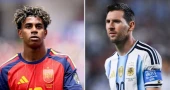
The final will also feature a unique connection between Messi and Spain’s teenage sensation Lamine Yamal. The two players were photographed together nearly two decades ago when Yamal was an infant, and they will now meet on football’s biggest stage.
Argentina coach Lionel Scaloni described Messi as “the best footballer that the world has seen,” saying the forward had become a symbol of football history.
Messi’s remarkable comeback with Argentina
A decade ago, Argentina’s current success seemed unlikely. Messi briefly retired from international football in 2016 after Argentina lost the Copa America final to Chile on penalties, with Messi missing one of the spot kicks.
His retirement lasted only a few weeks, and he returned to continue leading Argentina. Since then, the team has won the Copa America in 2021, the World Cup in 2022 and another Copa America title in 2024.
The 39-year-old forward has also continued to shine at club level, playing for Barcelona, Paris Saint-Germain and Inter Miami. He remains a key figure in Major League Soccer and is still capable of producing decisive moments.
“He is pure history. History. A legend,” Scaloni said.
Spain chasing defensive record
Spain enter the final as favourites after producing one of the strongest defensive performances in World Cup history. La Roja have conceded only one goal in their first seven matches and have never fallen behind during the tournament.
Argentina, in contrast, have spent more than 100 minutes trailing, including stoppage time.
Only three previous champions — Spain in 2010, Italy in 2006 and France in 1998 — won the World Cup after conceding just two goals throughout the tournament. Spain’s current defensive record puts them on course to match or surpass that achievement.
Spain captain Rodri warned that Argentina are much more than just Messi.
“Argentina is far more than Messi,” Rodri said. “They have proven they are a very complete team with top players. We are the best two teams playing collectively as a group. Of course, we need to be mindful of Leo, but there are many other players.”
The final will be the 104th and last match of a tournament featuring 48 teams across the United States, Canada and Mexico.
The World Cup was also marked by controversies, including political tensions surrounding Iran’s participation, criticism over FIFA’s decision to overturn the red-card suspension of US forward Folarin Balogun after intervention from President Donald Trump, and calls from the British government for an investigation into Argentina players’ actions involving the Falkland Islands after their semifinal victory over England.
However, the tournament will ultimately end with the familiar scene of one team celebrating and another suffering heartbreak.
“They have their strengths. So do we,” Argentina goalkeeper Emiliano Martinez said. “I hope it will be a final that goes down in history.”
2 months ago
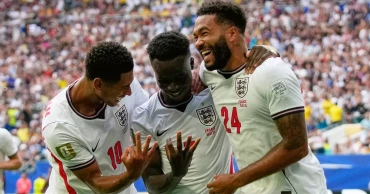
Saka hat trick powers England to 6-4 win over France in dramatic World Cup third-place playoff
Bukayo Saka struck a hat trick as England defeated France 6-4 in a thrilling FIFA World Cup third-place playoff on Sunday, capping one of the highest-scoring matches in tournament history.
Saka scored twice before halftime and completed his hat trick with a late penalty as England raced to a commanding 4-0 lead before surviving a spirited French comeback to secure third place.
Declan Rice and Ezri Konsa also found the net in the opening half, while Jude Bellingham added England's sixth goal deep into stoppage time to seal the victory.
France mounted an impressive second-half fightback through Kylian Mbappe, Bradley Barcola and Ousmane Demele. Mbappe scored twice to cut the deficit to 4-3 before England restored its cushion with Saka's penalty and Bellingham's late strike.
The 10-goal contest was the highest-scoring World Cup match since Hungary defeated El Salvador 10-1 in 1982 and featured the most goals ever scored in a World Cup third-place playoff.
England coach Thomas Tuchel described the tournament as a success despite the team's semifinal defeat to Argentina, where the Three Lions surrendered a 1-0 lead before losing 2-1.
"We are fiercely competitive, so it is difficult to celebrate finishing third because our ambition was to reach the final and win the World Cup," Tuchel said. "But this result can help us move closer to the level of teams like Argentina and France."
Bellingham's stoppage-time strike took his tournament tally to seven goals, setting a new record for the most goals scored by an England player in a single World Cup. Captain Harry Kane netted six goals in both the 2026 and 2018 tournaments, matching Gary Lineker's tally from the 1986 World Cup.
Mbappe's two goals also saw him surpass Lionel Messi's all-time World Cup scoring record, taking his career total to 22 goals. The France captain has scored 10 goals in this tournament, putting him two clear of Messi in the race for the Golden Boot.
Messi, who has 21 World Cup goals overall and eight in this tournament, will have one final opportunity to reduce the gap when defending champions Argentina face Spain in early Monday's final in East Rutherford, New Jersey.
Speaking after the match, Mbappe said he expected Messi to score in the final but admitted he would rather have been playing for the trophy than leading the scoring charts.
"I always try to help my team score. Of course, scoring so many World Cup goals is special, but I would have preferred to be playing in tomorrow's final," he said.
The match also marked the end of Didier Deschamps' 14-year tenure as France coach. After the final whistle, Deschamps embraced his players and acknowledged supporters before leaving the field.
Reflecting on the defeat, he said France had been deeply disappointed by its semifinal exit and admitted his side had struggled badly in the first half before improving after the break. However, he said he did not want his coaching career to be judged solely on the team's final two matches.
2 months ago
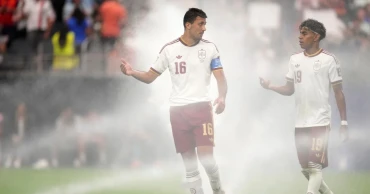
Spain's long-term rebuild leads to second World Cup final, says Rodri
Spain captain Rodri believes his team's place in the FIFA World Cup final is the result of years of steady progress rather than a sudden breakthrough, saying the squad has been building towards this moment over several tournaments.
Spain has reached the World Cup final for only the second time, and Rodri said the team's triumph in the Nations League in 2023 and the European Championship in 2024 laid the foundation for its current success.
Argentines, Spaniards divided over loyalties ahead of historic World Cup final
The 2024 Ballon d'Or winner said Spain now faces its toughest test yet against defending champion Argentina in Sunday's final, adding that his teammates should focus on winning rather than fearing defeat.
"We've been gradually growing," Rodri said on Friday. "We have to keep doing the same things we're doing because it has been a process for all five years."
Spain has conceded just one goal in seven World Cup matches, including a 2-0 semifinal victory over France. Since opening the tournament with a surprise draw against Cape Verde, La Roja has outscored its opponents 13-1.
"Our goal when we got to this World Cup was to win the trophy, and we were convinced that we could achieve this," Rodri said. "We've shown that this national team has been able to defeat great opponents."
Spain's route to the final featured decisive late goals from Mikel Merino in both the round of 16 and quarterfinals, while goalkeeper Unai Simón has made nine saves during the tournament. The team's disciplined defending has also been a key factor in its success.
Rodri rejected the idea that Spain relies on a single style of play, saying the team has shown it can adapt to different situations.
Reflecting on Spain's first World Cup title 16 years ago, Rodri said that team's determination remains an inspiration, but stressed that the current squad is focused on its own development.
"We can even do it better," he said. "Against France, we played one of our best matches as a team. But against Argentina, we have to raise our level because they are the champions. I'm really confident that we can do it."
2 months ago
10 songs to build excitement for the World Cup final
As football fans around the world prepare for Sunday's FIFA World Cup final between Argentina and Spain, music can be the perfect way to build the excitement.
Whether fans are cheering for defending champions Argentina to win back-to-back World Cups or hoping Spain's teenage star Lamine Yamal shines on the biggest stage, these 10 songs capture the spirit, energy and celebration of the tournament.
Here are AP's picks:
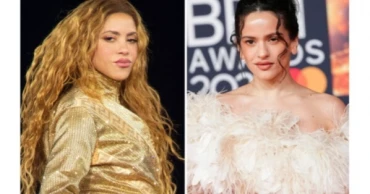
1. "Dai Dai" — Shakira and Burna Boy (2026)The official song of the 2026 World Cup combines Latin rhythms with Afrobeats in a multilingual anthem celebrating unity, passion and victory. Colombian singer Shakira said a World Cup song should reflect the emotions and excitement that football brings to people around the world.
2. "DNA (More Than A Game)" — Andrea Bocelli, David Guetta, EJAE and Megan Thee Stallion (2026)This unique collaboration blends opera, pop, electronic dance music and rap in English, Italian and Korean. The song highlights football as more than a sport, describing it as part of people's identity.
3. "La Copa de la Vida (The Cup of Life)" — Ricky Martin (1998)One of the most memorable World Cup anthems ever released, Ricky Martin's energetic hit became the soundtrack of the 1998 tournament in France and remains a fan favourite.
4. "Despechá" — Rosalía (2022)The upbeat Latin pop hit has become a celebration song for Spain's national team, often played after goals and victories. It is expected to feature again if Spain succeeds in the final.
5. "Mi Gran Noche" — Raphael (1967)Spanish music legend Raphael's classic song has become a regular feature of football celebrations across Spain, thanks to its lively melody and timeless appeal.
6. "La Roja Baila" — Sergio Ramos, Niña Pastori and RedOne (2016)Recorded as Spain's official anthem for the 2016 European Championship, the song celebrates the national team's nickname, "La Roja," and continues to be popular among Spanish supporters.
7. "La Cumbia de los Trapos" — Yerba Brava (2000)This energetic cumbia track has become closely linked with Argentina's football team. It was widely associated with the country's World Cup triumph in Qatar in 2022 and remains a favourite among Argentine fans.
8. "Matador" — Los Fabulosos Cadillacs (1993, remastered 2008)Often played after Argentina scores, the song combines ska, reggae and Latin rhythms. While known as a football anthem, it also carries a deeper message about Argentina's military dictatorship.
9. "Dumbai" — Ca7riel & Paco Amoroso (2024)The Argentine duo's modern Latin pop hit mixes trap, electronic and tropical sounds, making it a popular addition to football celebrations.
10. "Waka Waka (This Time for Africa)" — Shakira featuring Freshlyground (2010)Widely regarded as one of the greatest World Cup songs ever made, the official anthem of the 2010 tournament in South Africa remains a global favourite for football fans. Its catchy rhythm and uplifting message continue to make it a must-play during every World Cup season.
2 months ago
Messi says Argentina ready to give everything in World Cup final against Spain
Lionel Messi says Argentina will give everything they have when they take on Spain in Sunday's FIFA World Cup final, as the defending champions aim to retain the title.
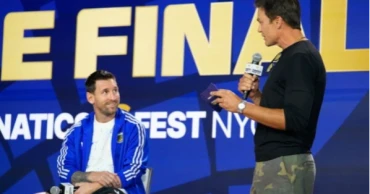
"We will give it our all," Messi said on Friday during what is expected to be his final public appearance before the title clash in East Rutherford, New Jersey.
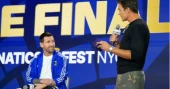
Messi spoke at Fanatics Fest in New York, where he shared the stage with some of the world's biggest sports stars, including NFL legend Tom Brady, tennis great Novak Djokovic and NBA star Kevin Durant. The event highlighted Messi's global appeal, with the sports icons also taking a group selfie with the Argentine captain.
FIFA held its pre-final media event at the four-day sports festival instead of a traditional news conference, allowing hundreds of fans to see the players and coaches up close.
Spain captain Rodri praised Messi, calling him the greatest footballer of all time.
"It goes beyond words what Messi means as a player and what he means for Argentina," Rodri said. "For me, he's the greatest of all time."
Instead of journalists asking questions, the discussion was led by sports stars. Brady asked Messi about a viral photo showing him bathing a baby who later grew up to become Spain winger Lamine Yamal.
"What a crazy picture," Messi said.
Djokovic asked Argentina coach Lionel Scaloni and Messi how they deal with pressure in major tournaments, while Durant asked goalkeeper Emiliano Martinez what winning back-to-back World Cups would mean for Argentina.
Scaloni kept the focus on the match itself.
"It's one more game," he said. "We cannot really think about the fact that it's a World Cup final."
Argentina have reached the final with a perfect 7-0-0 record and remain the tournament's only unbeaten team. Spain are 6-0-1 after drawing their opening match against Cape Verde.
Argentina's road to the final has not been easy. They came from behind to beat England in the semifinals after trailing 1-0 in the second half. They also recovered from a 2-0 second-half deficit against Egypt in the Round of 16, while both their Round of 32 match against Cape Verde and quarterfinal against Switzerland went to extra time.
"I've said many times: We never stop fighting," Messi said.
Messi received a warm welcome from fans at the event, many of whom recorded his entrance on their phones before cheering loudly as he waved.
At the end of the programme, players, coaches and celebrities, including actor Kevin Hart, rapper Travis Scott, former England defender Rio Ferdinand and Fanatics CEO Michael Rubin, gathered for a group selfie.
"Sunday is going to be a great show," Scaloni said.
Argentina are aiming to become the first team since Brazil in 1958 and 1962 to win consecutive World Cup titles.
Goalkeeper Emiliano Martinez said the team is determined to make the country proud.
"We've got a group of players and coaches working incredibly hard every day to bring happiness to our country," Martinez said. "We're going to give absolutely our best, with Leo and this team, to bring the World Cup back to our country and celebrate with our people."
2 months ago