
Team formations have become a major talking point at the World Cup, with coaches using a variety of tactical setups to get the best out of their players and counter their opponents.
While every team starts with a goalkeeper, coaches have different ways of arranging their 10 outfield players. These formations, often represented by numbers such as 4-4-2, 4-3-3 or 4-2-3-1, indicate how players are positioned across defence, midfield and attack.
According to FIFA match reports, nine different formations were used during the opening round of group-stage matches.
The traditional 4-4-2 system, featuring four defenders, four midfielders and two forwards, was the most widely used formation, adopted by 12 teams. However, it produced only two wins, with Scotland defeating Haiti and Ivory Coast beating Ecuador. Brazil, Uruguay and co-host Canada were among the teams using the setup.
The 4-2-3-1 formation, which includes two defensive midfielders, three attacking midfielders and a lone striker, was used by 10 teams. The system proved successful for the United States, England, France and Austria.
Another effective formation was the attack-minded 4-1-2-3, used by eight teams. It produced four victories, including wins for Mexico, Norway, Ghana and Colombia. Spain and the Netherlands also adopted the setup, which places greater emphasis on attacking play with three forwards.
Seven teams opted for a 3-4-3 formation, designed to balance defence and attack through a strong midfield. South Korea and Germany were the only winners using this system, with Germany recording the tournament’s biggest win so far by defeating Curacao 7-1.
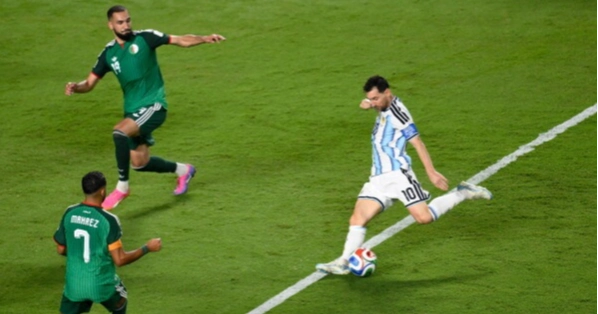
Argentina, led by Lionel Messi, used the well-known 4-3-3 formation to beat Algeria 3-0, with Messi scoring all three goals. The system, once famously used by Brazil’s 1970 World Cup-winning team, remains popular for its attacking flexibility.
The defensive 5-3-2 formation was used by South Africa, Tunisia and Congo. While South Africa and Tunisia lost, Congo managed an impressive 1-1 draw against Portugal.
The Czech Republic was the only team to use a 5-2-3 setup, but suffered defeat against South Korea.
Australia found success with a defensive 5-4-1 formation, defeating Turkey by prioritising solidity at the back.
Meanwhile, Sweden used a 3-4-1-2 formation to secure a 5-1 victory over Tunisia. The system includes an attacking midfielder positioned behind two strikers to help link defence and attack.
Football analysts note that many coaches now adjust formations depending on opponents or match situations, often changing tactics during games to protect leads or chase results.