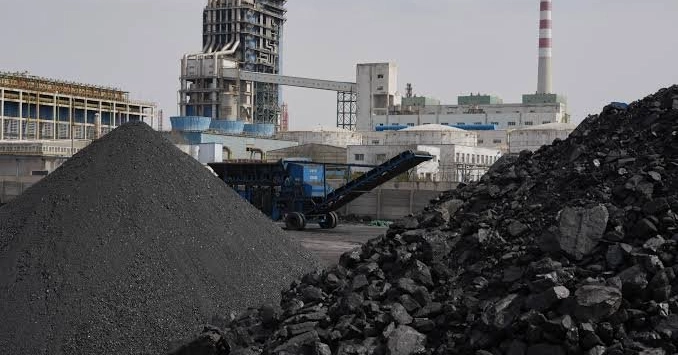
China has canceled most of the overseas coal power projects it had planned when President Xi Jinping pledged in 2021 to stop funding such projects, but loopholes are allowing Chinese companies to continue investing in coal abroad, according to a new report.
Xi made the pledge at the U.N. General Assembly in 2021 as part of efforts to tackle climate change. Five years later, global efforts to reduce coal use remain slow, while climate commitments are falling behind schedule.
The report, released this week by the Centre for Research on Energy and Clean Air (CREA) and People of Asia for Climate Solutions (PACS), found that China has canceled 67% of the coal power capacity it planned to build overseas in 2021.
The canceled projects totaled 61.5 gigawatts of capacity and are estimated to have prevented 6.4 billion tons of carbon dioxide emissions over their lifetime.
Experts, however, said China's pledge does not prevent private Chinese companies from investing in overseas coal projects.
“Coal expansion hasn't stopped because of the nature of the pledge itself, which still allows private Chinese companies to invest overseas,” said Syahdiva Moezbar, an industry analyst with CREA in Jakarta.
Southeast Asia remains heavily dependent on coal
China plays a major role in infrastructure financing across the Global South and is also the world's leading producer of electric vehicles, solar panels and wind turbines. Experts say its policies therefore have a major impact on the global shift toward renewable energy.
China was the world's largest overseas coal financier before Xi made his 2021 pledge.
“This marked the first time Beijing was willing to extend its emerging climate ambition beyond its borders,” said Li Shuo, director of the Asia Society Policy Institute's China Climate Hub.
China is also the world's largest annual emitter of carbon dioxide, although the United States remains the largest historical emitter.
While China's coal consumption is slowly declining, it continues to lead the world in developing new domestic coal infrastructure.
At the same time, China has become a global leader in clean energy. It dominates the electric vehicle market and is the world's largest producer of solar panels and wind turbines.
Li said China's rapid growth in clean energy, both domestically and overseas, should encourage Beijing to give greater priority to renewable energy in its international energy strategy.
Private projects create a loophole
Indonesia has emerged as the biggest destination for continued Chinese investment in coal power, with 17.1 gigawatts of China-backed capacity still planned, according to the report.
Vietnam and Pakistan follow, with less than 4 gigawatts each in planned projects.
In Indonesia, Chinese companies have helped finance coal plants that supply power directly to heavy industries such as nickel and aluminum smelters instead of the national electricity grid. These facilities are known as “captive coal” plants.
“When commercial interests take precedence over China's broader green development commitments and the world's climate security, the benefits of China's remarkable clean-energy leadership are undermined,” said Xiaojun Wang, executive director of PACS.
Energy security revives coal demand
The transition away from coal has become more difficult following energy shocks linked to the Russia-Ukraine war and the war in Iran.
Southeast Asia, which has traditionally relied heavily on fossil fuel imports from the Middle East, was particularly affected by the closure of the Strait of Hormuz.
The region accounts for about one-fifth of global energy demand growth and has increased coal use to cope with energy shortages.
The Philippines, Thailand, Indonesia and Vietnam all increased coal use during the Iran-related energy crisis.
At the same time, countries across the region are expanding rooftop solar, encouraging electric vehicle use and exploring nuclear power.
The International Energy Agency estimates that Southeast Asia will account for nearly 20% of global energy demand growth through 2035. It said the crisis is prompting countries to reconsider their energy policies and investments while placing greater emphasis on energy security.
“The growing desire among countries in Southeast Asia to secure reliable energy supplies could bring about another round of coal fever,” Li said, adding that this would continue to test China's commitment to its coal moratorium.
Li described the energy transition as “a two-party tango,” saying both China and the countries receiving its investments need to remain committed to reducing coal use.
Five years after Xi's pledge, he said, “this saga is far from over.”
Xi did not attend the U.N. General Assembly this week and instead met with U.S. President Donald Trump. Chinese Vice President Han Zheng represented China in New York and is scheduled to address the General Assembly on Saturday.