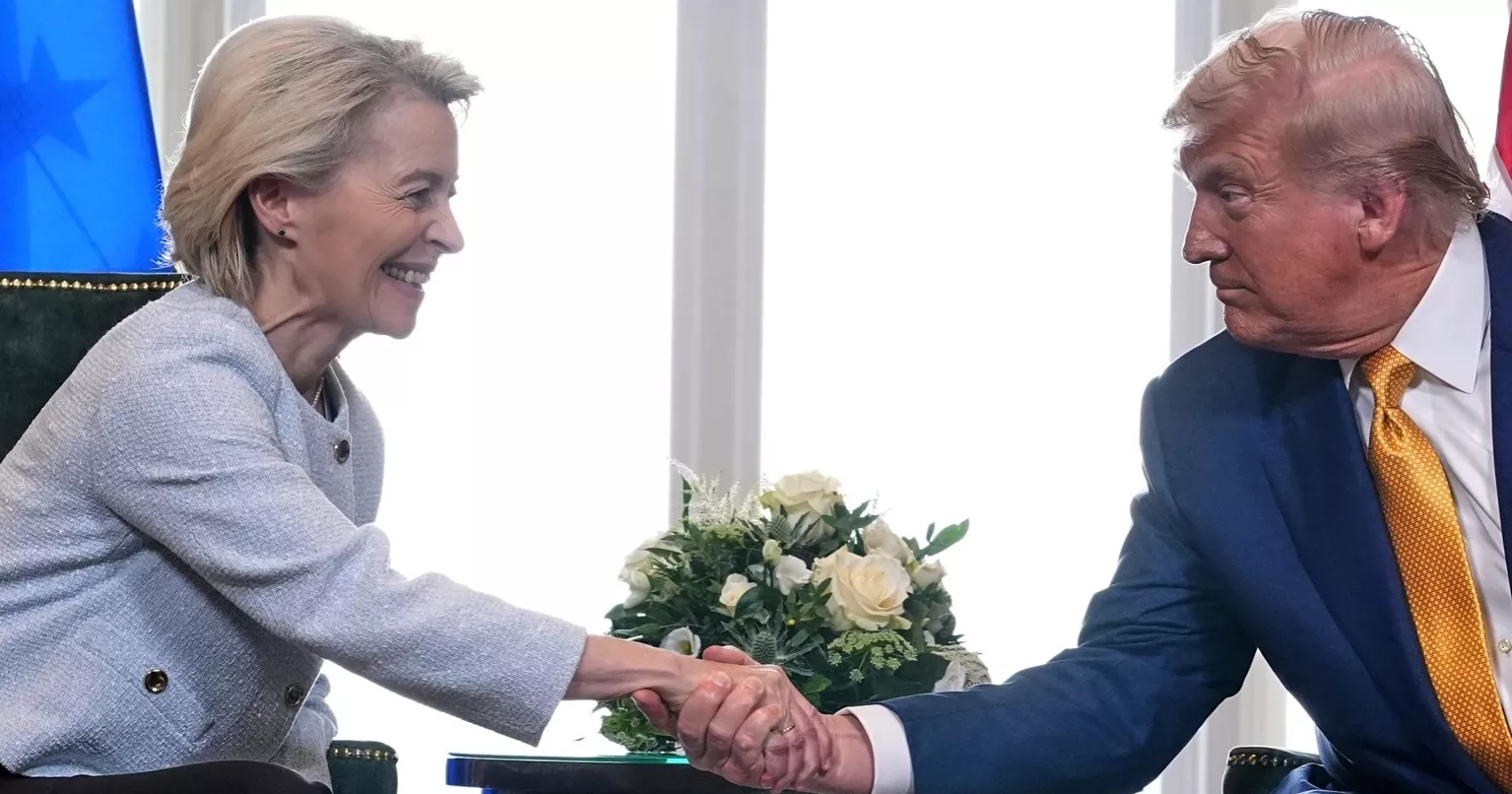
The European Union has approved a tariff agreement with the United States that sets a 15% cap on most EU exports, helping to avoid a trade confrontation with US President Donald Trump ahead of a July 4 deadline.
The decision came after heated discussions among the 27-member bloc’s leaders and lawmakers, with some warning that the deal could have been blocked in the European Parliament. The agreement governs one of the world’s largest trade relationships, covering goods and services across the Atlantic, at a time of global economic pressure linked in part to the ongoing war in Iran.
The deal was originally reached last July between European Commission President Ursula von der Leyen and President Donald Trump at his Turnberry golf course in Scotland, following months of negotiations triggered by earlier US tariff moves. Since then, further talks continued between Washington and Brussels as criticism grew within Europe, including concerns after Trump suggested taking control of Greenland, a self-governing territory of Denmark. He has since stepped back from that idea.
The European Commission welcomed the approval, saying “a deal is a deal” and stressing that the EU stands by its commitments.
EU lawmakers also pushed for safeguards in the agreement in case the United States changes its position later. Bernard Lange, head of the European Parliament’s trade committee, said the bloc would respond if problems arise.
Under the agreement, tariffs on most EU exports to the US will be capped at 15%, while EU tariffs on US industrial goods will be reduced to zero. Although the arrangement raises costs compared to the previous average tariff level of 4.8%, supporters say it provides businesses with stability and predictability, helping the bloc avoid recession risks.
Officials and business groups also argue the deal is important as global economic uncertainty rises, with ongoing tensions in the Middle East affecting energy prices and inflation across regions from Europe to the United States.
The American Chamber of Commerce in Brussels welcomed the agreement, saying it allows both sides to move beyond tariffs and focus on issues such as supply chain stability.
EU trade negotiator Maroš Šefčovič said the final approval followed an intense five-hour overnight round of talks between EU institutions, calling it a step that would strengthen stability in transatlantic trade.
However, doubts remain over whether the United States can fully implement the deal. Legal challenges in US courts have questioned the authority used by Trump to impose tariffs, with some rulings saying certain measures were not properly authorized by law.
This has raised uncertainty in Europe about whether Washington will follow through on the agreement. Bernard Lange said the situation remains unclear, noting that the EU is now waiting for a firm response from the US side.