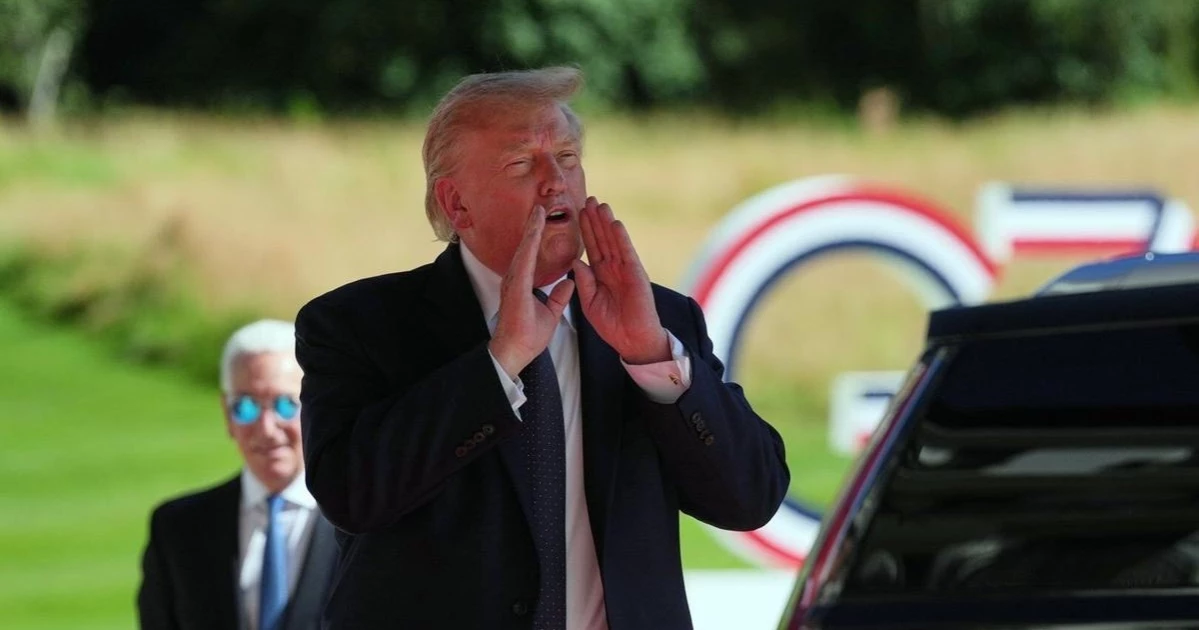
Leaders of the Group of Seven (G7) nations began their first full day of summit talks on Tuesday with major global crises at the top of the agenda, including Russia’s war in Ukraine and efforts to stabilize the Middle East.
Ukrainian President Volodymyr Zelenskyy joined the discussions at the invitation of host nation France, as world leaders looked for ways to advance peace efforts in Ukraine and maintain momentum following a recent US-Iran agreement.
The talks come after US President Donald Trump announced a deal aimed at ending the 3½-month conflict between the United States and Iran. The crisis in the Middle East has dominated international attention in recent weeks, pushing the Ukraine war lower on the global agenda.
Trump said he held productive phone conversations on Sunday with both Zelenskyy and Russian President Vladimir Putin and indicated that Washington would now focus more closely on efforts to end the Ukraine conflict.
French President Emmanuel Macron said he would urge Trump to maintain support for Ukraine and increase pressure on Russia to move toward a peace agreement.
Just hours before the summit opened, Russia launched hundreds of drones and dozens of missiles at major Ukrainian cities. The attacks killed at least 11 people and damaged several sites, including a religious landmark.
A key session on Tuesday focused on ending regional conflicts and promoting stability in the Middle East. Leaders from Egypt, Qatar and the United Arab Emirates were invited to join those discussions.
Trump has repeatedly expressed frustration over the slow progress in efforts to end the war in Ukraine. During his presidential campaign, he said he could resolve the conflict quickly, but later acknowledged that reaching a settlement has proven more difficult than expected.
Macron stressed that any lasting peace process must involve both Ukraine and Russia, with European and American participation.
Meanwhile, Ukraine officially launched negotiations on Monday to join the European Union, beginning what is expected to be a lengthy process requiring major political and institutional reforms.
Kyiv views EU membership as an important safeguard for its future after the war. Ukraine also seeks membership in NATO, but the Trump administration has ruled out that possibility while the conflict continues.
The summit is also taking place against the backdrop of recent tensions between Trump and several European leaders over US military action against Iran. Differences emerged after Washington moved ahead without consulting key allies, including France, Britain, Germany and Italy.
Despite those disagreements, leaders in Evian appeared eager to work together, particularly as they seek to reduce the economic impact of higher energy prices caused by disruptions in the Strait of Hormuz.
Trump said recent developments in the Middle East were encouraging, noting that oil prices had fallen and stock markets had responded positively.
Ahead of the summit, France, Germany, Italy and the United Kingdom, joined by Canada, issued a joint statement welcoming the US-Iran agreement and calling it a diplomatic breakthrough. The countries urged rapid implementation of the deal to allow the reopening of the Strait of Hormuz, a critical route for global oil shipments.
Macron said France and its partners stand ready to help restore safe navigation through the strait, while France and Britain continue to support plans for a maritime security mission in the region.
Trump, however, suggested that a large international military deployment may not be necessary, although he welcomed limited support from allied countries.
In addition to the Ukraine and Middle East discussions, Trump’s schedule on Tuesday includes meetings with Qatar’s emir and the president of the UAE, followed by a cultural event and a dinner with fellow G7 leaders.
The G7 comprises France, the United States, Canada, Germany, Italy, Japan and the United Kingdom. Several non-member countries, including Brazil, India, Kenya and South Korea, were also invited to participate in selected discussions as partner nations.