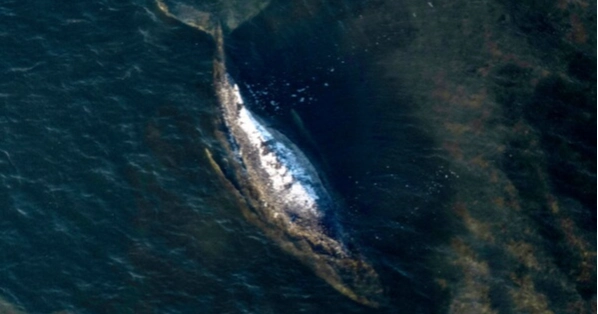
A humpback whale that had captured public attention across Germany likely survived only about five days after a controversial rescue operation failed to return it safely to the Atlantic Ocean, officials said Friday.
The whale, widely nicknamed “Timmy” and “Hope” by German media, was found dead on May 14 near the small Danish island of Anholt in the Kattegat strait between Denmark and Sweden, which links the Baltic Sea to the North Sea.
Its discovery brought an end to months of intense debate and rescue efforts. The final attempt took place on May 2, when the animal was moved on a barge in hopes of guiding it back to deeper waters. Scientists, authorities, and animal welfare advocates were divided over whether continued intervention was humane or whether the sick and weakened whale should be left alone.
Tracking data from a transmitter attached to the whale’s dorsal fin suggests it died around May 6 or 7, according to Till Backhaus.
Officials said the whale had travelled about 215 kilometres over those days but was moving in the wrong direction, back toward the Baltic Sea instead of toward the Atlantic Ocean. After that, it likely drifted or the tracking signal was lost.
The whale was first spotted off the German coast on March 3, sparking widespread media attention, live updates, and public concern over its condition.
Experts are still unsure why the whale entered the Baltic Sea, a region unsuitable for its survival. Some believe it may have become disoriented while following fish or during migration.
An autopsy has not confirmed the exact cause of death, but officials said no serious injuries, foreign objects, or signs of violence were found. Authorities also confirmed the whale was female, correcting earlier assumptions that it was male.
Some of the remains will be processed into biodiesel in Denmark, while parts of the skeleton will be preserved in a Danish museum, according to reports.