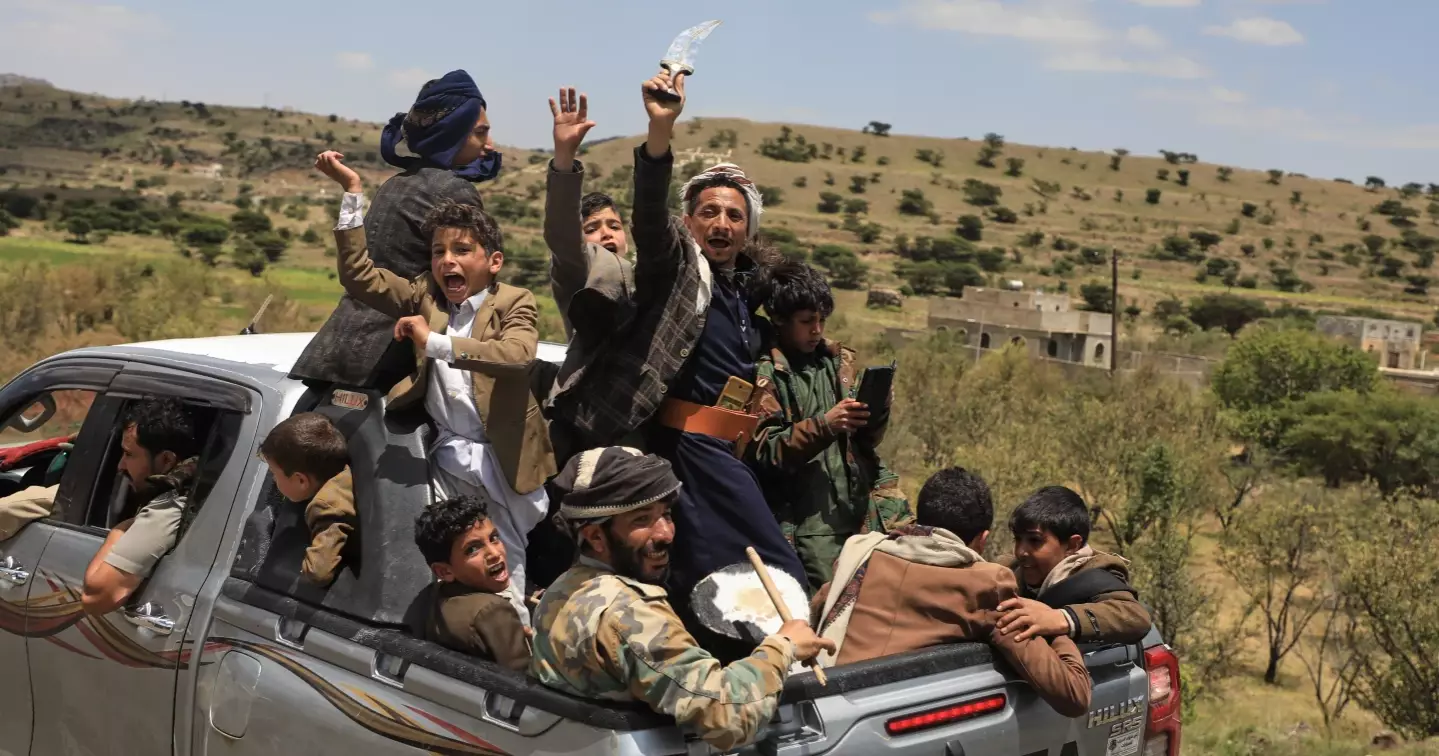
Iran-backed Houthi rebels have seized more territory in southwestern Yemen, capturing a key town and dealing a setback to Saudi-backed government forces as they advance toward Taiz, a strategically important provincial capital.
The Houthis took control of Turbah on Sunday, shortly before Yemen’s internationally recognized government announced a major military campaign against the rebels. The escalation involving Saudi Arabia and the Houthis has reignited Yemen’s civil war following a four-year ceasefire.
Turbah lies along a major route connecting Taiz with the port city of Aden, the temporary headquarters of the internationally recognized government. The town has long served as an important position for government forces defending Taiz against Houthi attacks.
The rebels had earlier captured several villages and areas around Taiz, further advancing their efforts to surround the city, Yemen’s third-largest.
The Iranian-backed group also made rapid gains along Yemen’s western Red Sea coast in early September, capturing the strategic port city of Mokha and several islands. Those advances gave the Houthis control over the Yemeni side of the Bab al-Mandab Strait, a major global shipping route through which about 12 percent of world trade passes.
In an announcement Sunday, the Saudi-backed government said it was deploying additional forces across areas under its control.
Rashad al-Alimi, chairman of the Presidential Leadership Council, said in a televised address that the military campaign was aimed at "recovering the remaining territories" held by the Houthis. He urged the international community to support the Yemeni government.
Several hours later, Saudi military spokesman Maj. Gen. Turki al-Malki pledged "full operational support" for Yemeni government forces until the Houthis were "eliminated."
Al-Malki also said Saudi Arabia had the right to take necessary steps to deter the rebels, who have continued launching missiles and drones toward Saudi territory during the nearly three-month escalation.
The latest surge in violence began in mid-July when the Houthis accused Saudi Arabia of carrying out an airstrike on Sanaa airport, which is under rebel control, to prevent an unauthorized Iranian aircraft from landing there. The Houthis subsequently launched missile and drone attacks against Saudi Arabia and Yemeni government forces.
The rebels also declared a blockade of Saudi-linked shipping in the Red Sea and attacked several vessels associated with Saudi Arabia.
In September, they expanded their offensive along the Red Sea coast in what represented their biggest territorial advance in years.
The capture of Turbah is likely to seriously hamper the ability of government-aligned forces to reinforce and supply front-line positions across Taiz province and the provincial capital, according to the Washington-based Institute for the Study of War.
The think tank said in an analysis Sunday that cutting supply routes has clear military significance, while control of roads north of Turbah could also prevent government forces from withdrawing from the area.
The latest escalation has brought back the civil war that began in 2014, when the Houthis moved south from their northern stronghold, seized Sanaa and forced the government to flee to Saudi Arabia. The conflict triggered one of the world's worst humanitarian crises and has killed more than 150,000 people.
The latest violence has killed more than 800 people and injured over 3,600, according to the United Nations. The escalation has also displaced more than 145,000 people within Yemen, while over 3,000 others have crossed the sea to Djibouti, the UN migration agency said.