The ongoing conflict between the United States and Iran, Myanmar's civil war and rising tensions in the South China Sea are expected to dominate discussions as Southeast Asian foreign ministers meet in Manila from Tuesday.
The three-day meeting is being hosted by the Philippines, which currently chairs the 11-member Association of Southeast Asian Nations (ASEAN). Senior diplomats from the United States, China, Russia, the European Union and other countries will also take part in the annual gathering.
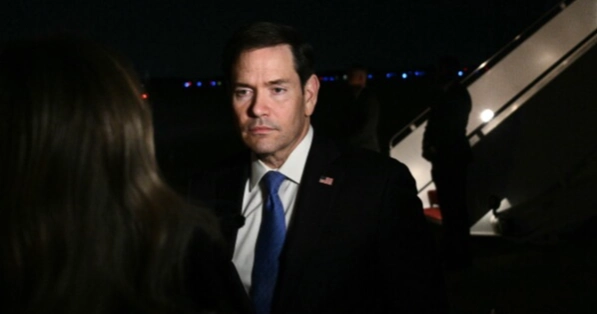
Among the key participants are US Secretary of State Marco Rubio, Chinese Foreign Minister Wang Yi and Russian Foreign Minister Sergey Lavrov. Ukraine's Foreign Minister Andrii Sybiha has been invited to attend a separate ASEAN ceremony marking a 1976 non-aggression treaty but will not participate in the main ministerial meetings.
Neither Rubio nor Lavrov has announced any plans for bilateral meetings during the event.
Iran conflict high on agenda
ASEAN foreign ministers are expected to express concern over the renewed fighting between the United States and Iran, which has spread to other parts of the Middle East and raised fears of a wider regional war.
According to two Southeast Asian diplomats, the ministers plan to issue a joint statement urging both sides to return to dialogue and avoid further escalation.
The conflict has disrupted shipping through the Strait of Hormuz, a key global oil route that normally carries about one-fifth of the world's oil supplies.
Many Southeast Asian countries depend heavily on oil and gas imports from the Middle East and have been affected by higher energy prices and supply disruptions. In the Philippines, President Ferdinand Marcos Jr. declared a national energy emergency in March to help ensure the supply of fuel, food and other essential goods.
The conflict has also raised concerns that the United States may shift more military resources to the Middle East, reducing its focus on the Indo-Pacific, including disputes involving China in the South China Sea and around Taiwan.
Rubio expected to meet Quad counterparts
The United States said Rubio's visit is intended to reaffirm Washington's commitment to a "free and open Indo-Pacific."
Before leaving for Manila, Rubio said no meeting with Chinese Foreign Minister Wang Yi had been confirmed but added that he would be willing to meet him.
He also said disagreements between the United States and China should not prevent continued dialogue.
During the ASEAN meetings, Rubio is also expected to hold talks with his counterparts from the Quad grouping—the United States, India, Japan and Australia—which Washington sees as an important partnership in the Indo-Pacific. China has repeatedly criticised the Quad, saying it is aimed at limiting Beijing's growing influence.
Myanmar crisis remains unresolved
ASEAN ministers are also expected to discuss the worsening conflict in Myanmar, where violence has continued since the military seized power in 2021.
According to the Assistance Association for Political Prisoners, more than 8,100 people have been killed and nearly 22,500 remain detained since the military takeover.
ASEAN's five-point peace plan, introduced in 2021, has failed to end the conflict, largely because Myanmar's military government has not fully implemented its commitments. As a result, ASEAN has continued to bar Myanmar's military leaders from high-level meetings.
Earlier this month, ASEAN foreign ministers, led by Philippine Foreign Secretary Theresa Lazaro, held their first meeting in five years with Myanmar's foreign minister in Bangkok. They urged all sides to reduce violence and restart dialogue.
Lazaro and Thailand's foreign minister also met representatives of Myanmar's ethnic armed groups in Pattaya as part of efforts to encourage peace talks.
However, several human rights organisations criticised the meeting with Myanmar's foreign minister, arguing that it weakened ASEAN's policy of isolating the country's military leadership.
Lazaro rejected the criticism, saying engagement with all parties was necessary to achieve lasting peace and did not represent a departure from ASEAN's five-point peace plan.
South China Sea disputes
The ministers are also scheduled to meet Chinese Foreign Minister Wang Yi to review progress on negotiations for a proposed Code of Conduct in the South China Sea, aimed at preventing disputes from escalating.
China, Taiwan and several ASEAN members—Brunei, Malaysia, the Philippines and Vietnam—have overlapping territorial claims in the strategic waterway. Tensions, particularly between Chinese and Philippine coast guard and naval vessels, have increased significantly in recent years.