Iran conflict
Iran conflict, Myanmar crisis and South China Sea tensions to dominate ASEAN
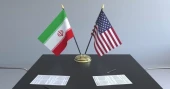
The ongoing conflict between the United States and Iran, Myanmar's civil war and rising tensions in the South China Sea are expected to dominate discussions as Southeast Asian foreign ministers meet in Manila from Tuesday.
The three-day meeting is being hosted by the Philippines, which currently chairs the 11-member Association of Southeast Asian Nations (ASEAN). Senior diplomats from the United States, China, Russia, the European Union and other countries will also take part in the annual gathering.
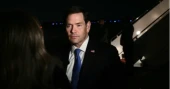
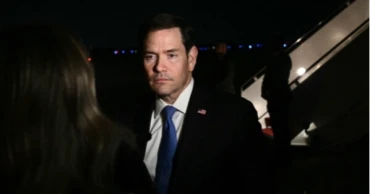
Among the key participants are US Secretary of State Marco Rubio, Chinese Foreign Minister Wang Yi and Russian Foreign Minister Sergey Lavrov. Ukraine's Foreign Minister Andrii Sybiha has been invited to attend a separate ASEAN ceremony marking a 1976 non-aggression treaty but will not participate in the main ministerial meetings.
Neither Rubio nor Lavrov has announced any plans for bilateral meetings during the event.
Iran conflict high on agendaASEAN foreign ministers are expected to express concern over the renewed fighting between the United States and Iran, which has spread to other parts of the Middle East and raised fears of a wider regional war.
According to two Southeast Asian diplomats, the ministers plan to issue a joint statement urging both sides to return to dialogue and avoid further escalation.
The conflict has disrupted shipping through the Strait of Hormuz, a key global oil route that normally carries about one-fifth of the world's oil supplies.
Many Southeast Asian countries depend heavily on oil and gas imports from the Middle East and have been affected by higher energy prices and supply disruptions. In the Philippines, President Ferdinand Marcos Jr. declared a national energy emergency in March to help ensure the supply of fuel, food and other essential goods.
The conflict has also raised concerns that the United States may shift more military resources to the Middle East, reducing its focus on the Indo-Pacific, including disputes involving China in the South China Sea and around Taiwan.
Rubio expected to meet Quad counterpartsThe United States said Rubio's visit is intended to reaffirm Washington's commitment to a "free and open Indo-Pacific."
Before leaving for Manila, Rubio said no meeting with Chinese Foreign Minister Wang Yi had been confirmed but added that he would be willing to meet him.
He also said disagreements between the United States and China should not prevent continued dialogue.
During the ASEAN meetings, Rubio is also expected to hold talks with his counterparts from the Quad grouping—the United States, India, Japan and Australia—which Washington sees as an important partnership in the Indo-Pacific. China has repeatedly criticised the Quad, saying it is aimed at limiting Beijing's growing influence.
Myanmar crisis remains unresolvedASEAN ministers are also expected to discuss the worsening conflict in Myanmar, where violence has continued since the military seized power in 2021.
According to the Assistance Association for Political Prisoners, more than 8,100 people have been killed and nearly 22,500 remain detained since the military takeover.
ASEAN's five-point peace plan, introduced in 2021, has failed to end the conflict, largely because Myanmar's military government has not fully implemented its commitments. As a result, ASEAN has continued to bar Myanmar's military leaders from high-level meetings.
Earlier this month, ASEAN foreign ministers, led by Philippine Foreign Secretary Theresa Lazaro, held their first meeting in five years with Myanmar's foreign minister in Bangkok. They urged all sides to reduce violence and restart dialogue.
Lazaro and Thailand's foreign minister also met representatives of Myanmar's ethnic armed groups in Pattaya as part of efforts to encourage peace talks.
However, several human rights organisations criticised the meeting with Myanmar's foreign minister, arguing that it weakened ASEAN's policy of isolating the country's military leadership.
Lazaro rejected the criticism, saying engagement with all parties was necessary to achieve lasting peace and did not represent a departure from ASEAN's five-point peace plan.
South China Sea disputesThe ministers are also scheduled to meet Chinese Foreign Minister Wang Yi to review progress on negotiations for a proposed Code of Conduct in the South China Sea, aimed at preventing disputes from escalating.
China, Taiwan and several ASEAN members—Brunei, Malaysia, the Philippines and Vietnam—have overlapping territorial claims in the strategic waterway. Tensions, particularly between Chinese and Philippine coast guard and naval vessels, have increased significantly in recent years.
2 months ago
A timeline of the Iran conflict and negotiations
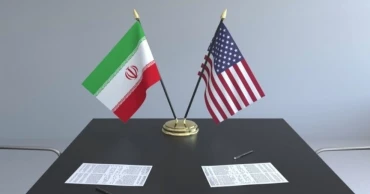
The United States and Iran have again traded strikes after a week in which U.S. President Donald Trump mused that fragile negotiations between them might be “over.”
The countries are now nearly halfway through the 60-day period that began with their signing of an interim deal aimed at permanently ending the war.
At stake are the lives of Iranians and others throughout the region, including Israel and Lebanon, along with foreign residents of Gulf nations, U.S. military personnel stationed in multiple countries and thousands of mariners on ships still hoping to exit the Strait of Hormuz.
The strait between Iran and Oman, considered an international waterway before the war, has become one of Tehran’s strongest pressure points in talks. Iran insists it alone now controls the strait.
Here’s a brief timeline of the war and efforts to end it:
Feb. 28
Israel and the U.S. attack Iran, killing Supreme Leader Ayatollah Ali Khamenei and other top officials, sparking the war. Iran quickly responds with strikes against Israel and across the Gulf region and asserts control over the Strait of Hormuz, a key waterway for global oil and natural gas supplies from the Gulf.
March 2
The Iranian-backed Hezbollah militant group in Lebanon enters the war by firing rockets at Israel.
Israel retaliates, leading to an invasion that will occupy large swaths of southern Lebanon.
March 8
Iran names one of Khamenei’s sons, Mojtaba, as the new supreme leader. He still has not been seen in public and is believed to be in hiding after reportedly being hurt in the war’s opening strikes.
2 months ago
Asian shares mixed as Wall Street hits record highs amid Iran conflict concerns
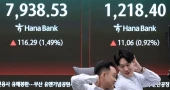
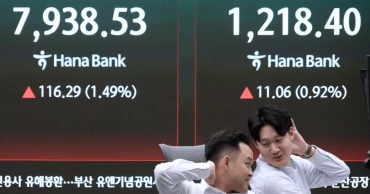
Asian stock markets traded mixed on Tuesday as record gains on Wall Street lifted investor sentiment, but concerns over rising oil prices and the ongoing Iran conflict kept markets cautious.
Japan’s Nikkei 225 advanced 0.7 percent to 62,881.03.
South Korea’s Kospi fell 1.2 percent to 7,726.30, with analysts saying the decline reflected concerns over heavy dependence on artificial intelligence-related stocks.
“Global markets are relying too much on a small group of AI companies, making the current rally appear strong but potentially vulnerable,” said Stephen Innes of SPI Asset Management.
Australia’s S&P/ASX 200 slipped 0.3 percent to 8,676.60.
Hong Kong’s Hang Seng edged up 0.2 percent to 26,467.50, while China’s Shanghai Composite lost 0.4 percent to 4,208.00.
Oil prices continued to rise as fears grew that the conflict with Iran could drag on.
US benchmark crude gained 91 cents to $98.98 a barrel, while Brent crude, the global benchmark, rose 90 cents to $105.11 a barrel.
Investor concerns increased after President Donald Trump said the US-Iran ceasefire was on “life support” following Washington’s rejection of Iran’s latest proposal to end the conflict.
The war has pushed Brent crude prices sharply higher from around $70 a barrel before the conflict began, increasing inflation concerns worldwide. Disruptions in the Strait of Hormuz have also delayed oil shipments from the Persian Gulf to global markets.
Despite these worries, stronger-than-expected corporate earnings have supported confidence that the US economy remains resilient, even as consumers face higher fuel costs and tariffs.
On Monday, the S&P 500 rose 0.2 percent to close at a new record high of 7,412.84.
The Dow Jones Industrial Average added 95.31 points, or 0.2 percent, to 49,704.47, while the Nasdaq Composite gained 27.05 points, or 0.1 percent, to a record 26,274.13.
In the bond market, the yield on the 10-year US Treasury note increased to 4.40 percent from 4.38 percent late Friday.
In currency trading, the US dollar rose to 157.57 Japanese yen from 157.12 yen, while the euro slipped to $1.1761 from $1.1787.
4 months ago
Over 40 container ships remain stranded in Gulf amid Iran conflict
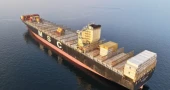
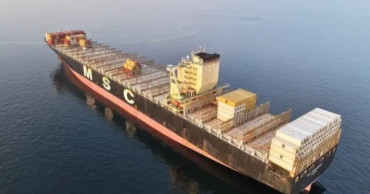
More than 40 container ships are still stranded in the Middle East Gulf as major shipping companies continue to suspend operations due to the ongoing conflict involving Iran, according to a shipping industry report.
Shipping journal Lloyd’s List said at least 43 vessels from the world’s 10 largest container carriers remain stuck in the region reported AL Jazeera
Top global operators, including CMA CGM, COSCO, Hapag-Lloyd and MSC, have halted services in the area since the conflict began in late February.
The disruption has caused major delays and increased costs for global trade, the report said.
Some vessels from these companies managed to leave the region safely, but two ships belonging to MSC were seized by Iranian authorities, according to Lloyd’s List.
5 months ago