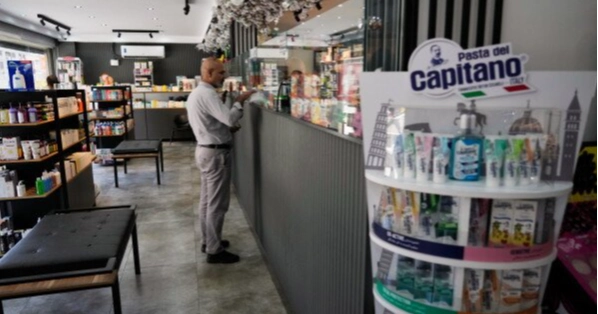
Medicine prices are rising sharply in Iran and some drugs have become difficult to find as a US blockade and tougher sanctions put pressure on the country’s pharmaceutical industry.
Some medicines have more than tripled in price, adding to the financial pressure on Iranians seven months into the country’s war with the United States and Israel. Food and other basic goods have also become much more expensive, while unemployment has increased and Iran’s currency, which hit a record low this week, has lost about half its value.
The conflict has put Iran’s economy under severe pressure. Iran has sought to push up global energy prices by attacking oil shipping routes in the region, while the United States has tried to put further pressure on the Iranian economy by blockading its ports since June and imposing tougher sanctions.
Iran’s pharmaceutical sector is particularly vulnerable because it depends heavily on imports. Although major medicine shortages have not yet been widely reported at hospitals, problems are increasingly being felt at pharmacies.
Gholamreza Rahmani, a Tehran welder, and his wife recently spent two days visiting several pharmacies to find four medicines prescribed for their 12-year-old daughter, who was suffering from stomach problems.
“Each one would have one or two items, not all of them,” Rahmani said. They could not find one of the medicines anywhere. The search also cost him two days of wages because he was unable to go to work.
“My daughter’s illness and the loss of income are like scissors, cutting from two sides,” he said.
Pharmaceutical industry depends on imports
Iran produces more than 80% of its medicines domestically, according to official figures, but many of those medicines require imported raw materials.
Before the war, most medicines and pharmaceutical ingredients were transported by sea. But the US naval blockade has disrupted shipping, Bahman Sabour, a member of the Tehran Pharmacies Association, told local media.
Importers have turned to more expensive air freight. However, that option has also become more difficult after new US sanctions were imposed on several Iranian airlines, leading to the suspension of some international flights.
US sanctions do not directly target medicines. However, long-standing financial sanctions have made it harder for pharmaceutical companies to obtain supplies because international banks and businesses often avoid transactions involving Iran over concerns about violating sanctions, said Reza Majdzadeh, a professor at the School of Health and Social Care at the University of Essex in England.
“A medicine may be perfectly legal to sell to Iran, but a bank may refuse to process the payment,” he said. Companies may also decide that doing business with Iran carries too much risk.
The Iranian government has not disclosed how much medicine production has declined. Officials, however, say the sector has been affected after airstrikes damaged more than 40 pharmaceutical factories, including facilities producing cancer treatments.
Pharmacies are also struggling financially. Insurance companies have delayed payments to pharmacies for drug coverage by as much as nine months because of the “current situation,” said Mohammad Jamalian, a member of parliament’s health committee.
Sabour said insurance companies owe pharmacies about $270 million.
Medicine supplies are also being affected by smuggling to neighbouring Afghanistan, Pakistan and Iraq, where drugs can be sold at higher prices, state media reported.
Pharmacy prices rise sharply
“The price of almost everything has gone up, in some cases doubling, quadrupling, or even increasing sixfold,” said Mina Mohammadian, a pharmacy salesperson in Tehran.
Mehdi Pirsalehi, head of the government agency responsible for setting medicine prices, said last week that prices of 2,000 types of medicines had been “amended” over the past six months because of inflation and currency problems.
Ali Fallah, a Tehran resident, said the ointment he uses for inflammation had increased more than fourfold in three months, from 750,000 rials, or about 35 cents, to 3.25 million rials, or roughly $1.46.
The minimum daily wage for an unskilled worker in Iran is about 7.5 million rials, or $3.50.
“I honestly don’t know where this situation is heading,” Fallah said.
Prices of tablets needed by kidney dialysis patients have risen by nearly 350% in recent months. Common painkillers such as acetaminophen have also become much more expensive, when available.
Hospitals largely remain supplied
An employee at a public hospital said supplies of some specialised psychiatric medicines for bipolar disorder and acute psychosis are running short. Some commonly used medicines for anxiety and panic disorders are also difficult to obtain.
Doctors have had to use electroconvulsive therapy more frequently because some medicines were unavailable or were considered to be of lower quality, she said.
“The side effects for patients are really a lot,” she told The Associated Press by phone from a major Iranian city. She spoke on condition of anonymity for security reasons.
Azita Hassanpour, a part-time teacher, said her mother, who has cancer, has continued receiving chemotherapy, although some treatments have been delayed because the medicines are less available than before the war.
Hassanpour is also worried because her mother has not received her annual flu vaccine, as authorities search for alternative sources of vaccines.
“I am worried that I may lose her because of flu. I weep out of her sight every night,” she said.
Hadi Ahmadi, a spokesman for the Iranian Pharmacists Association, told local media Saturday that about 700,000 flu vaccine doses had been imported from China, with another 500,000 expected soon.
A flu shot currently costs about 22 million rials, or roughly $9, nearly twice last year’s price. Authorities have promised to provide the vaccine free of charge to people at high risk.