Iran’s president on Saturday rejected the United States’ call for unconditional surrender, saying such a demand is unrealistic. In a prerecorded speech broadcast on state television, President Masoud Pezeshkian said Washington’s expectation of Iran surrendering is merely a “dream.”
At the same time, he apologized for Iranian attacks on neighboring countries, saying Tehran would stop such strikes. He suggested the attacks were partly due to miscommunication within the military ranks following the killing of Iran’s top leadership, including Supreme Leader Ali Khamenei, which he said disrupted command and control.
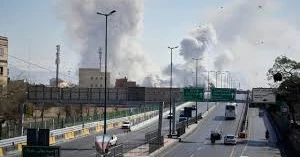
His remarks came as Iran launched intense attacks early Saturday targeting Gulf Arab states, while airstrikes by Israel and the United States against the Islamic Republic continued. Bahrain, Saudi Arabia and the United Arab Emirates reported repeated attacks during the morning.
The conflict shows no sign of easing. The administration of U.S. President Donald Trump approved a new $151 million arms sale to Israel and reiterated that negotiations with Iran would only occur if Tehran agreed to unconditional surrender. U.S. officials also warned that an even more intense bombing campaign could take place in the coming days.
According to officials, the ongoing fighting has already killed at least 1,230 people in Iran, more than 200 in Lebanon and around a dozen in Israel, while six American troops have also died.
The widening conflict has affected several Gulf states. Sirens sounded in Bahrain as Iranian strikes targeted the island nation. Saudi Arabia reported intercepting drones heading toward its Shaybah oil field and destroying a ballistic missile aimed at Prince Sultan Air Base, which hosts U.S. forces.
Explosions were also heard in Dubai, prompting authorities to activate air defenses. Passengers at Dubai International Airport were directed to train tunnels for shelter after alerts were issued.
Meanwhile, Qatar’s energy minister Saad al-Kaabi warned that the conflict could have severe global economic consequences, including a potential shutdown of Gulf energy exports that could push oil prices to $150 per barrel. Benchmark U.S. crude oil prices have already climbed above $90 per barrel for the first time in more than two years.
Regional analysts also warned that Iran’s attacks on Gulf countries risk widening the conflict further by turning it into a broader confrontation between Iran and its Arab neighbors rather than remaining limited to the Iran–Israel front.
Meanwhile, fighting has also intensified in Lebanon, where the Iran-backed militant group Hezbollah said its fighters clashed with Israeli forces in eastern Lebanon. Lebanese authorities reported at least 16 people killed and dozens wounded in subsequent Israeli strikes.