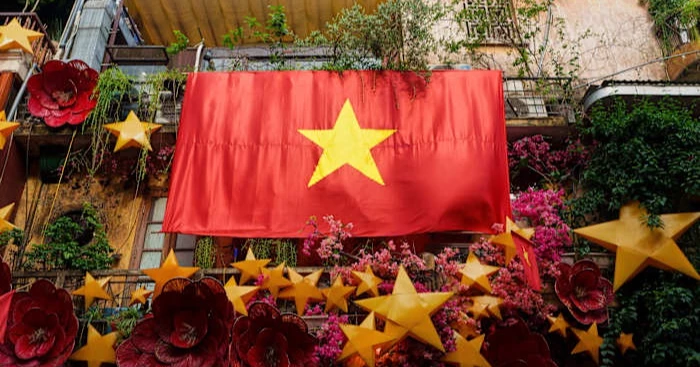
Vietnam is increasingly using broadly worded laws to arrest activists, critics and ordinary citizens seen as challenging the ruling Communist Party, according to a new report released Monday by human rights organization The 88 Project.
The report says the government arrested at least 56 people on politically related charges in 2025, marking the third straight year of rising arrests. That figure is twice the number recorded in 2022. The group noted that the actual number is likely much higher because it only counted cases where those arrested were publicly identified and their cases could be tracked.
According to the report, the government under Communist Party General Secretary To Lam has stepped up its use of criminal laws to silence dissent. To Lam, the country's former top security official, became party chief in 2024 and was also elected president earlier this year.
The report says many of the arrests are linked to growing concerns within Vietnam's leadership over the possibility of a so-called "color revolution," referring to mass protest movements that brought political change in countries such as Ukraine and the Philippines.
It also points to similarities with neighboring China, where authorities have long faced criticism for suppressing dissent through broad legal powers. Despite occasional tensions over territorial disputes in the South China Sea, China and Vietnam agreed earlier this year to strengthen cooperation on political security and preventing so-called color revolutions.
Ben Swanton, co-director of The 88 Project, said Vietnam has become far less tolerant of criticism under To Lam's leadership.
"The country has become a police state that allows no dissent," Swanton said, adding that the current situation marks a sharp decline from the relatively more open environment of the 2010s, when civil society groups had greater space to engage in public policy discussions.
Vietnam's Foreign Ministry did not respond to requests for comment on the report.
A key concern highlighted in the report is the growing use of Article 331 of Vietnam's penal code, which allows authorities to sentence people to up to seven years in prison for "abusing democratic freedoms" in ways deemed harmful to the state.
Human Rights Watch previously said the government has expanded the use of Article 331 beyond political activists to include ordinary people who publicly criticize government officials or raise concerns over issues such as land rights, religious freedom, Indigenous rights and corruption.
The report notes that among those charged under Article 331 last year were three men behind the YouTube channel "Nguoi Da Tin" accused of posting videos containing what authorities described as distorted information.
The 88 Project also documented several politically related arrests in 2025, including a Montagnard activist who was arrested in Thailand and sent back to Vietnam, a writer accused of spreading anti-state propaganda, and a man who helped residents in Ha Tinh province seek compensation after losing land to a highway project.
The report concludes that Vietnamese authorities are imposing increasingly harsh punishments not only on journalists and human rights defenders but also on political exiles and citizens using legal means to challenge government decisions.