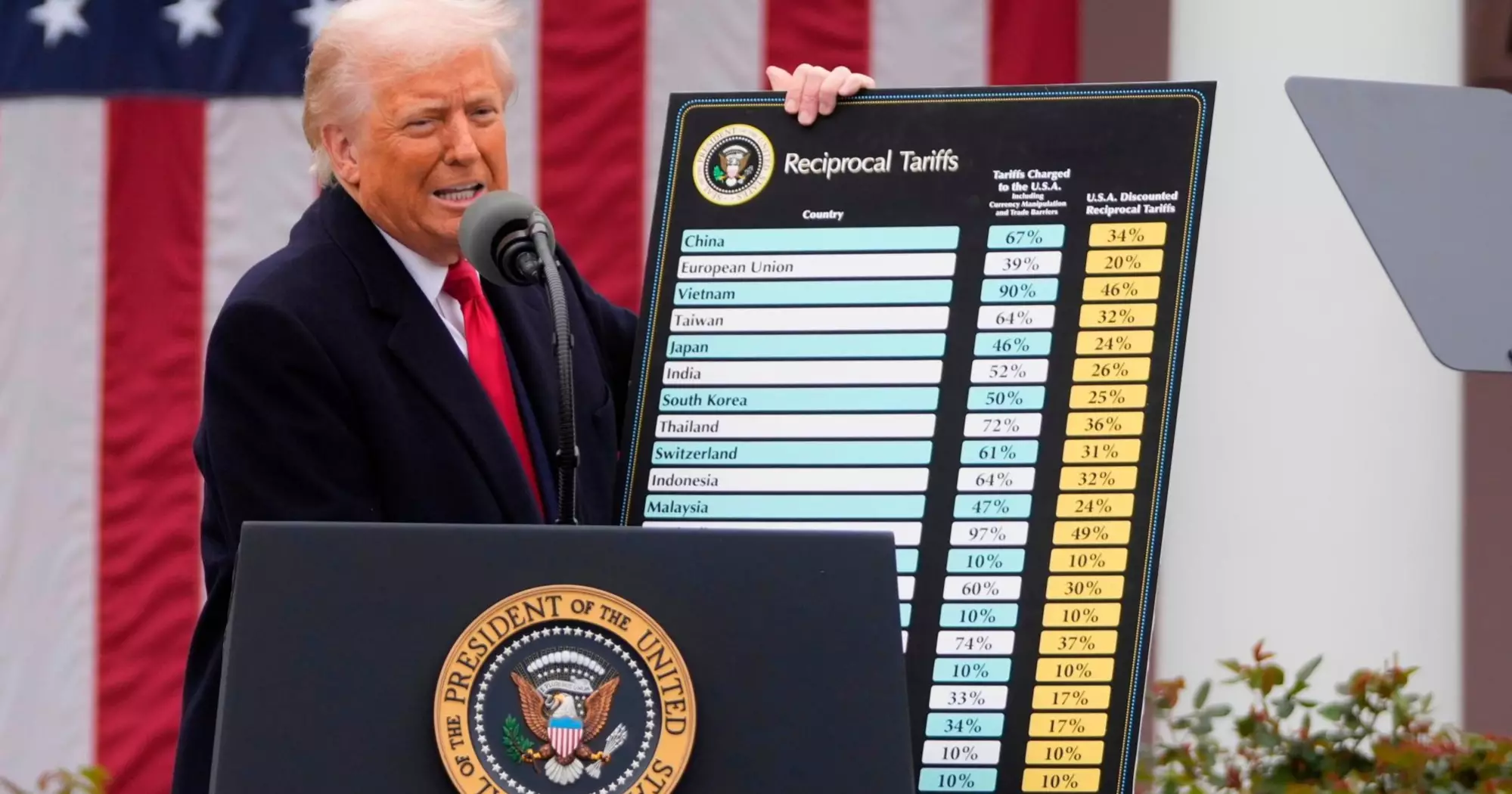
President Donald Trump has announced new double-digit tariffs on imports from dozens of US trading partners as temporary worldwide tariffs introduced earlier this year expired on Friday.
The new tariffs, ranging from 10% to 12.5%, will apply to imports from 60 trading partners that account for about 99% of US imports. The Trump administration said the countries had failed to adequately enforce bans on goods produced through forced labour.
"The United States has had a forced labour import ban for nearly a century and enforces it strictly. It is time for our trading partners to do the same," US Trade Representative Jamieson Greer said.
The tariffs replace the temporary 10% global import duties that expired at 12:01 a.m. Friday. Those temporary tariffs had been introduced after the US Supreme Court ruled in February that Trump did not have the authority to impose his earlier broad tariffs under emergency powers.
To introduce the new measures, the administration is using Section 301 of the Trade Act of 1974, which allows the president to impose tariffs on countries found to have unfair or unreasonable trade practices. Trump also relied on the same law during his first term to impose tariffs on Chinese goods.
The administration is also investigating whether 16 countries have overproduced goods in ways that hurt US manufacturers. Those countries account for about 70% of US imports, and additional tariffs could follow once the investigation is completed.
Trump argues that higher tariffs will help revive US manufacturing. Last year, he reversed decades of US policy supporting lower tariffs and freer trade by imposing import duties on goods from nearly every country, citing the country's long-running trade deficit as a national emergency.
However, the Supreme Court later ruled that the emergency law used for those tariffs did not authorize such measures, forcing the government to refund importers that had already paid the duties.
The administration first proposed the new forced labour-related tariffs last month. Since then, some countries have strengthened enforcement measures and qualified for lower tariff rates, according to a senior administration official.
For example, India's tariff rate was initially set at 12.5% but has been reduced to 10% after it improved enforcement against forced labour imports, the official said.
Some products, including oil, natural gas and fertilizer, are exempt from the new tariffs. Goods that qualify for duty-free treatment under the US-Mexico-Canada Agreement (USMCA) are also excluded.
The move drew criticism from some lawmakers and trading partners.
Representative Richard Neal, the top Democrat on the House Ways and Means Committee, accused the administration of using forced labour as an excuse for its tariff policy.
"Forced labour is a serious issue that deserves strong enforcement, not to be used as a justification for questionable tariff policies," he said.
Brazil, which faces a 12.5% tariff, called the decision "arbitrary and unjustified" and said it would invoke its reciprocity law, which could lead to retaliatory tariffs on US goods. The Brazilian government also plans to file a complaint with the World Trade Organization.
Chile, which also faces a 12.5% tariff, said it has strong labour protections and argued that the US decision was not supported by the evidence presented during the investigation.
Under US law, tariffs are paid by American companies importing foreign goods. Those businesses often pass the extra costs on to consumers through higher prices, raising concerns that the new measures could increase living costs ahead of the November midterm elections.
Human rights groups said they remain cautious about the administration's motives but acknowledged that import restrictions could help combat forced labour.
The International Labour Organization estimates that around 27.6 million people worldwide were trapped in forced labour in 2021.
Martina Vandenberg, founder of The Human Trafficking Legal Center, said import bans can be an effective tool against forced labour but warned they should be introduced gradually to give countries time to strengthen enforcement.
"Our concern is that import bans may exist only on paper without proper enforcement," she said.
Canada said the latest US action was expected.
Canada-US Trade Minister Dominic LeBlanc said Canada shares Washington's goal of preventing goods made through forced labour from entering supply chains and would continue discussions with the United States on the issue.
Experts also noted that the threat of new tariffs has already prompted some countries, including India, to strengthen their policies against forced labour, while new European Union rules due next year are expected to increase pressure on global supply chains.