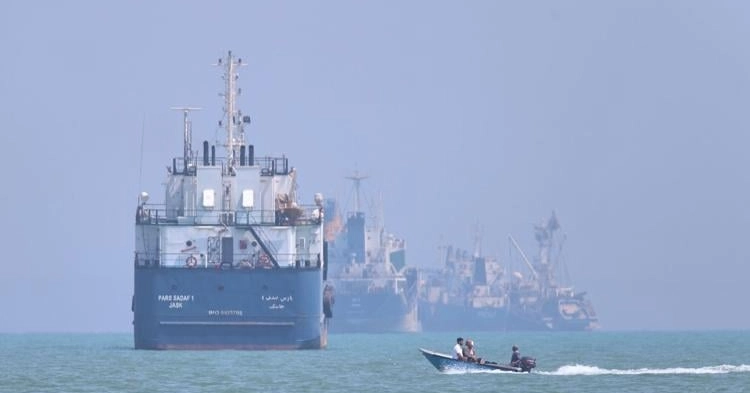
Several US allies are pushing for a naval security mission in the Strait of Hormuz to support the recently announced Iran ceasefire framework, aiming to restore confidence among shipping companies and insurers and ensure the safe movement of global oil and gas supplies.
The proposed mission, led by France and the United Kingdom, would focus on clearing sea mines and could include military escorts for commercial vessels passing through the strategic waterway, one of the world's most important energy shipping routes.
The idea was first raised by Emmanuel Macron in March when fighting between the United States and Iran was still ongoing. He suggested that naval forces could escort oil tankers and cargo ships once hostilities eased.
At the Group of Seven summit on Monday, US President Donald Trump said he did not believe extensive international assistance would be necessary because the Strait of Hormuz is expected to reopen under the tentative agreement with Iran. However, he said having a small number of ships from allied countries in the area could still be useful.
In a joint statement, France, the United Kingdom, Germany, Japan, Italy and later Canada welcomed the ceasefire framework and expressed support for reopening the waterway with unrestricted freedom of navigation.
The countries proposed what they described as a strictly defensive mission aimed at reassuring commercial shipping and carrying out mine-clearing operations.
France already has significant military assets in the region, including the aircraft carrier Charles de Gaulle. Macron said French fighter jets could begin surveillance missions over the strait almost immediately, followed by frigates and the carrier group within days if requested.
Mine-clearing vessels would search for and remove underwater explosives that could threaten commercial ships. Trump said some mines had already been found and removed, while efforts were continuing to locate others. He added that the strait had already been partially reopened.
European allies have experience protecting commercial shipping in conflict zones. French, British and American naval forces have previously escorted merchant vessels through the Red Sea during attacks by Yemen's Iran-backed Houthi rebels.
French warships successfully intercepted several missile and drone threats during those operations. One French frigate, the Alsace, shot down three ballistic missiles while escorting a container ship in 2024.
Security experts say a naval presence could help discourage renewed conflict and reassure shipping firms and insurers. However, analysts caution that the mission's role would be more limited if the ceasefire remains in place.
According to Max Bergmann of the Center for Strategic and International Studies, a French-British naval deployment could strengthen regional security and demonstrate support for Gulf nations, though its overall impact should not be overstated.
Planning for the mission has involved a broad coalition of countries, including Australia, South Korea, Japan, Bahrain, Qatar, Canada and more than a dozen European nations.
A meeting organized by France and Britain last month brought together representatives from 38 countries to discuss the proposal and possible contributions to the operation.