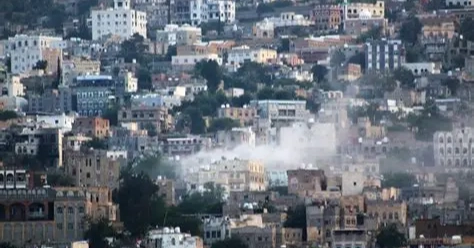
Drinking water shortages in Taiz, Yemen’s third-largest city, have reached crisis levels in recent weeks as Iran-backed Houthi rebels tighten their siege amid escalating fighting with government forces.
Water has been scarce in the city for more than a decade, but humanitarian groups say supplies are now barely meeting the needs of more than 1 million residents. Access to wells has been restricted, desalination plants are running short of fuel and water delivery trucks are largely unable to enter the city.
Families are rationing every drop. Before the siege, Hadil al-Shahid and her two young children used about 10 litres (2.6 gallons) of bottled water daily for drinking and cooking. They now make the same amount last around four days.
“We stopped drinking coffee and tea, which we used to drink daily,” al-Shahid said in a phone interview.
Families like hers are paying as much as 75% more for bottled water than they did just weeks ago, while some have started buying water on credit.
The siege of Taiz, a strategic gateway to southern Yemen, has also disrupted food supplies, driving up grocery prices. Fuel shortages are making it difficult to maintain essential services, including hospitals and sanitation, increasing public health risks.
Amnesty International has urged the Houthis to immediately reopen roads into the city, warning that Taiz is being pushed to “the brink of a severe humanitarian disaster.”
Houthis cut off access to wells
Yemen descended into civil war in 2014 when the Houthis seized much of the country's north, including the capital, Sanaa, forcing the internationally recognised government into exile. Taiz has remained a major battleground since then.
Damage to the city's ageing water infrastructure caused by years of war has compounded the effects of population growth and frequent droughts, which have reduced groundwater supplies. Residents turned to truck-delivered water as a mostly dependable alternative, but that option has also become increasingly difficult.
By August, Yemen had become an expanding front in the war with Iran. The Houthis intensified their advance on Taiz last month after rapidly capturing the port city of Mokha, about 130 kilometres (80 miles) away, a strategically important area for controlling shipping through the Red Sea.
As Houthi forces seized more territory and roads around Taiz, residents lost access to nearby wells, while water deliveries from outside the city declined.
Truckers who have managed to bring water into Taiz have, in some cases, tripled their rates to compensate for the dangers of the journey.
With fuel supplies dwindling, the city's water utility is struggling to maintain its limited operations, while desalination plants are operating well below capacity.
Fuel and food shortages worsen hardship
Since August, Taiz province, which includes the city and surrounding areas, has received roughly half of the people displaced from other parts of Yemen by the fighting — an estimated 124,000 people, according to United Nations migration experts. Their arrival has further strained the area's already limited supplies of water and other essentials.
Some displaced families are living in makeshift shelters or tents and surviving on one meal a day, said Jens Laerke, a spokesperson for a United Nations division focused on emergency aid.
Fuel for cooking and transportation has also become scarce and more expensive. The price of cooking gas has risen more than fourfold, according to Hani Bafaqih, a water, sanitation and hygiene expert with the aid organisation CARE in Yemen. Some families have resorted to cooking over fires fuelled by wood, charcoal or cardboard.
The shortages have also hampered community kitchens that provide free hot meals and forced waste-collection services to shut down.
“The shortages feed into each other. Without fuel, water pumps, hospital generators and solid-waste collection stop. With less clean water and waste piling up, the risk of disease, including cholera, rises,” Laerke said.
The risks are further heightened as thirsty families turn to unprotected wells that may be contaminated with waterborne diseases, he said.
Food prices have surged as well. Flour and rice cost about 50% more than they did over the summer, aid groups say, while fruits and vegetables have become difficult to find.
Ahmed Abdel Gaber, who was displaced from his home by the fighting, is living with nine other family members in the ruins of another building. He previously earned money transporting construction materials, but his income has become unreliable, leaving the family struggling to survive.
“We heavily rely on assistance and donations from people to get food,” he said in a phone interview.
Al-Shahid, who owns a hair salon, said her income also dried up several weeks ago. She was forced to close the business as former customers redirected their spending towards food and water. Her 10-year-old daughter and 5-year-old son now eat mostly rice, bread and cheese, she said.
Why Taiz matters to the Houthis
The Yemeni government continues to control central Taiz, but the siege has made it difficult to deliver supplies to its forces stationed there. Government troops are trying to repel Houthi fighters in the hills surrounding the city, facing particularly strong resistance to the east.
Analysts say capturing Taiz would be crucial for the Houthis if they want to advance south towards Aden and Lahj, although taking the city would be difficult.
“Any Houthi attempt to seize parts of the city, let alone take it entirely, would likely require a prolonged and costly battle, with significant casualties among Houthi fighters,” said Ahmed Nagi, a senior analyst at the International Crisis Group.
Three Houthi officials said the group controls roughly 80% of the countryside surrounding Taiz and several key neighbourhoods within the city. The Associated Press could not independently verify their claims. The officials spoke anonymously because they were not authorised to brief the media.
Yemen's foreign minister, Afrah al-Zouba, has acknowledged that the Houthis are tightening their grip on the city.
The officials said the large civilian population in Taiz significantly complicates the group's efforts to capture it.
Earlier this week, Houthi-fired missiles struck a residential area in Taiz, killing two teenage girls and highlighting the dangers faced by civilians.
Abdel Gaber said he hears loud explosions every day from fighting taking place about five kilometres (three miles) away. His family is unwilling to return to its home in a mountain village because of safety concerns.
For al-Shahid, leaving Taiz is not a viable option because the cost of travelling and renting a home in another province is beyond her means.
“Staying in our home is inevitable whether it be a matter of life or death,” she said.