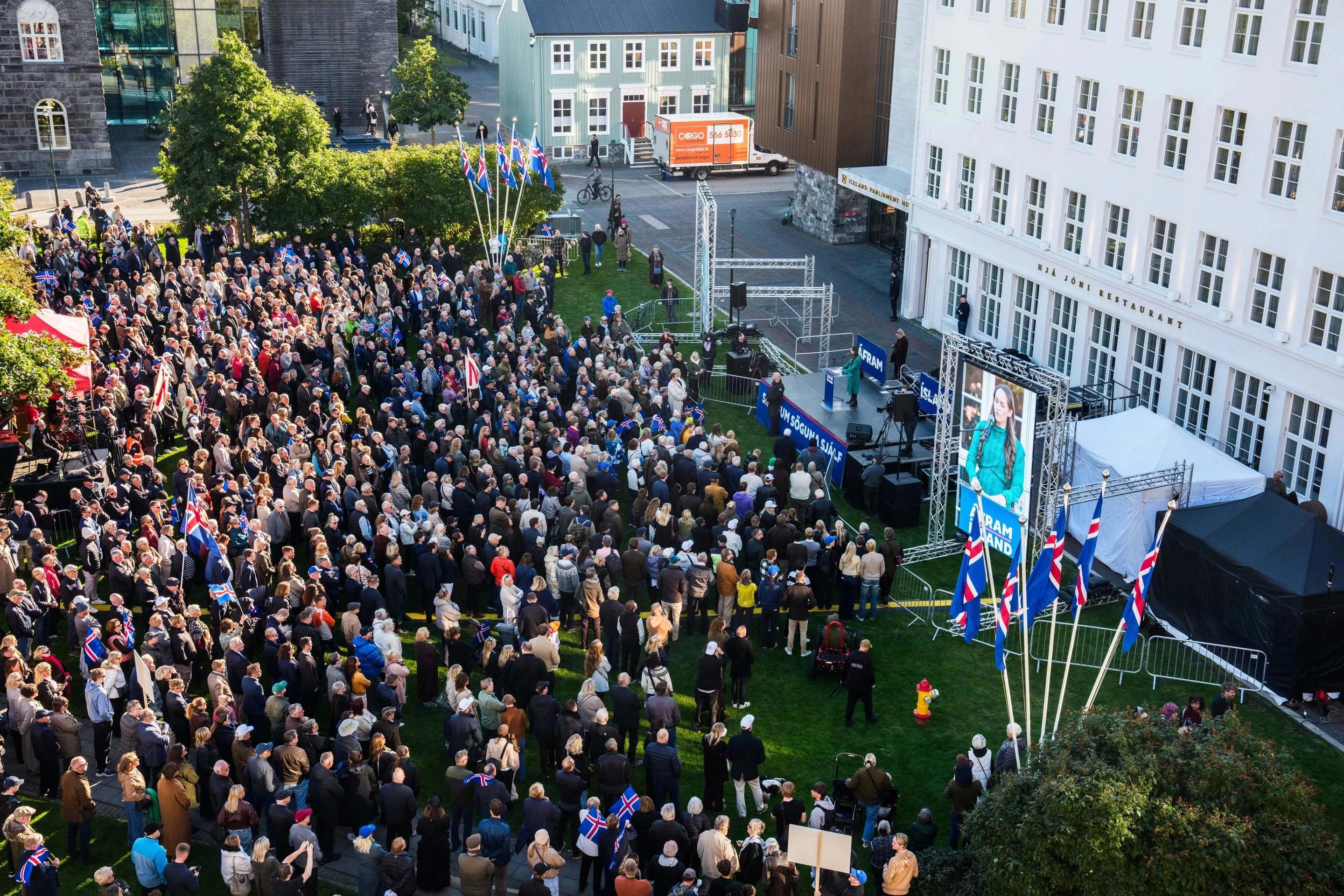
Icelanders will vote Saturday on whether the country should restart negotiations to join the European Union, more than a decade after its previous membership talks were suspended.
The referendum comes as Iceland reassesses its ties with Europe amid economic pressures at home and rising geopolitical uncertainty across the North Atlantic.
The result is expected to be close.
What are Icelanders voting on?
The nationwide referendum on Aug. 29 will ask voters a straightforward question: Should Iceland reopen negotiations on EU membership?
The Althingi, Iceland’s parliament, approved the referendum in May by 34 votes to eight, with 14 lawmakers abstaining.
It is the first time Icelanders have been directly asked to decide through a referendum whether the country should resume EU accession talks.
A “Yes” vote would not automatically make Iceland an EU member. It would instead authorize the government to restart negotiations and determine what conditions could be secured for Iceland.
If an accession agreement is eventually reached, voters would have another chance to decide whether to approve it. Prime Minister Kristrun Frostadottir has said Iceland would only join the EU if the public approves membership in a second referendum.
Iceland already maintains close economic and travel links with the EU. It has been part of the European Economic Area since 1994 and is also a member of the Schengen Area and the European Free Trade Association.
Through the EEA, Iceland has access to the EU single market and follows a large portion of EU legislation, although it does not have a vote in many of the decisions behind those rules.
Why has EU membership returned to the agenda?
Iceland submitted its EU membership application in 2009, after the global financial crisis severely damaged its banking sector and weakened the Icelandic krona. Formal negotiations began the following year.
The process effectively stalled after the 2013 election, when the EU-skeptic Independence Party and Progressive Party formed a government. The new administration halted the talks, with fisheries and agriculture among the major unresolved issues.
In 2015, Iceland notified Brussels that it no longer wanted to be treated as an EU candidate country.
The issue resurfaced after another political change. A coalition government formed in December 2024 by the Social Democratic Alliance, Reform Party and People’s Party promised to hold a referendum on whether to continue the accession process by 2027. Parliament subsequently set the vote for Aug. 29.
Economic considerations are again playing an important role. The coalition agreement linked the referendum commitment to an examination of Iceland’s currency options. Inflation, elevated interest rates and the economic vulnerabilities of a small, open economy have also contributed to the renewed debate over EU membership.
Lassi Heininen, a Finnish scholar specializing in Arctic geopolitics, told Xinhua that domestic political and economic considerations are the main forces behind the referendum, similar to the factors that prompted Iceland’s original membership application.
But geopolitical developments have also added urgency to the discussion.
Tobias Etzold, a senior adviser at the European Policy Centre in Brussels, said increasing competition among major powers in the strategically important North Atlantic has created greater uncertainty for smaller countries.
He cited concerns over the reliability of the United States, Washington’s interest in Greenland and questions about the future strength of NATO.
Iceland is a NATO member but has no standing army. Etzold said uncertainty surrounding US President Donald Trump’s commitment to regional security has encouraged Iceland to take a closer look at its relationship with Europe.
Foreign Minister Thorgerdur Katrin Gunnarsdottir has also highlighted rising protectionism, unexpected US tariffs and the increasing use of trade measures as instruments of foreign policy.
How close is the vote and what happens afterward?
The referendum remains too close to predict.
A Gallup poll published Thursday showed 51.6% of decided voters opposed reopening negotiations, compared with 48.4% in favor. The margin was within the poll’s statistical uncertainty.
A Maskina survey released Tuesday produced the reverse result, with 51.3% supporting renewed talks and 48.7% opposing them.
Fisheries and agriculture are expected to remain among the most contentious issues. Marine products made up 38.9% of Iceland’s merchandise exports in 2025, and voters remain concerned about national control over natural resources, food security and the possible impact of EU policies on Iceland’s fisheries and protected agricultural sector.
The EU has indicated that there could be scope for compromise. EU Commissioner for Fisheries and Oceans Costas Kadis said in April that there was “definitely room for flexibility” on fisheries. EU enlargement chief Marta Kos has also suggested that innovative arrangements could be considered for Icelandic farming and fishing.
If voters approve reopening negotiations, the Icelandic government plans to formally notify the EU, appoint a negotiating team and seek to restart the process.
Icelandic officials estimate that negotiations could take roughly 18 months to two years. Kos has said they might be completed within one to two years because Iceland already follows much of the EU’s regulatory framework through the EEA.
However, the negotiations would not simply pick up from where they ended in 2013. An Icelandic parliamentary committee said in May that Iceland’s negotiating positions would have to be reassessed across all areas after more than a decade of political and regulatory changes.
The referendum could also have wider regional consequences.
Steven Blockmans, deputy director of the International Centre for Defence and Security, said a “Yes” vote could maintain momentum for EU enlargement and bolster the bloc’s geopolitical standing, while a rejection could strengthen doubts about further expansion.
Heininen said an affirmative vote could also influence political debates in Norway and potentially Greenland. If Iceland eventually became an EU member, he said, Nordic politics and aspects of regional security could become more closely linked to Europe, while the EU would gain additional influence in Arctic affairs.
If voters reject reopening the negotiations, the Icelandic government has said it will not restart the accession process. Iceland’s relationship with the EU would then continue primarily through existing arrangements such as the EEA and Schengen.