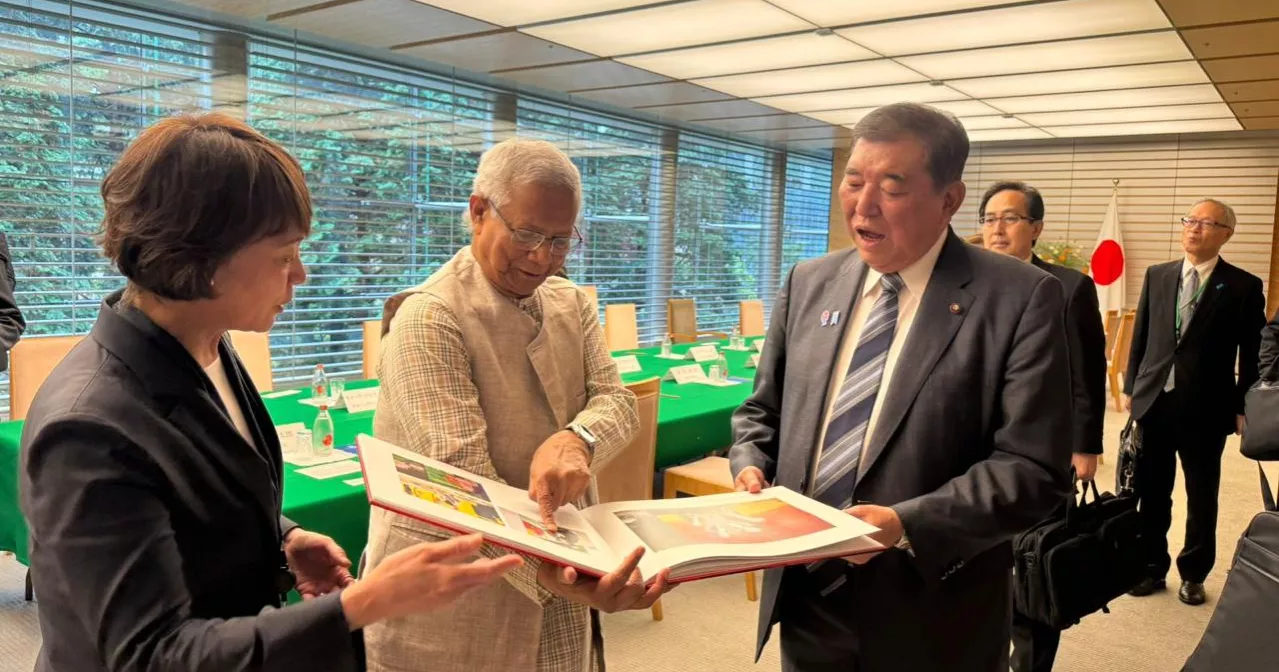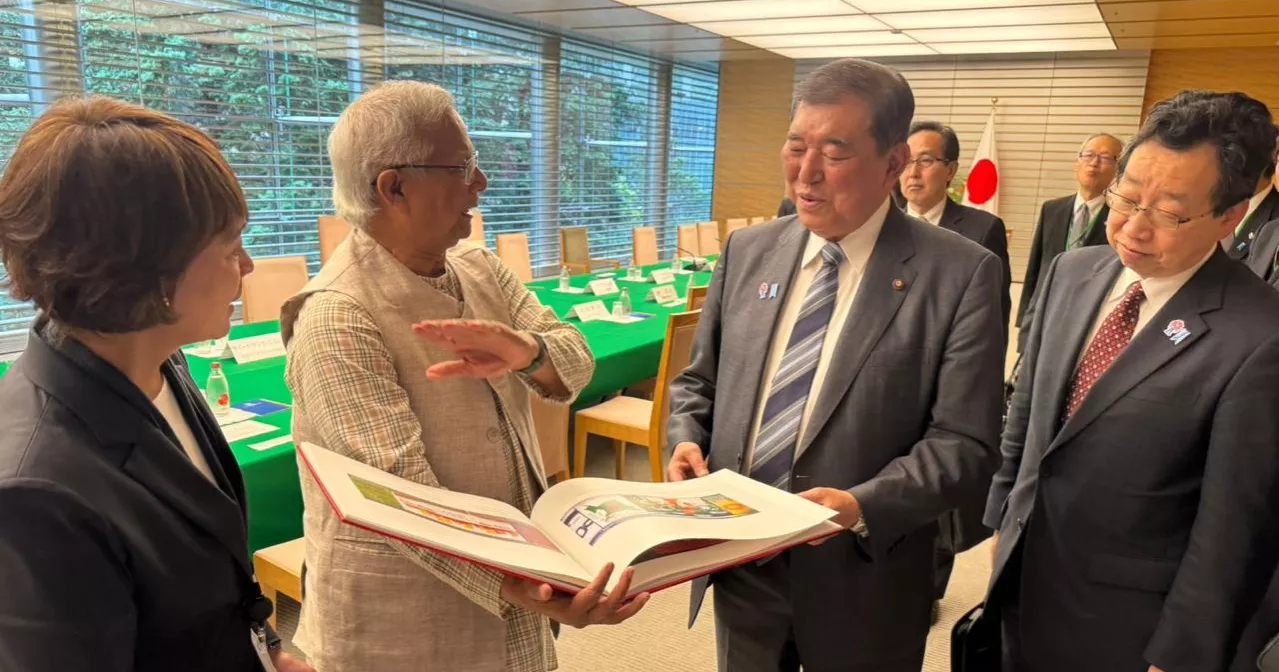
Bangladesh Chief Adviser Professor Muhammad Yunus and Japanese Prime Minister Shigeru Ishiba on Friday announced that the two nations will conclude an Economic Partnership Agreement in the coming months to deepen economic and trade relations between the two friendly nations.
They made the commitment during an official bilateral meeting between two leaders at the office of the Japanese Prime Minister in Tokyo.
Their talks encompassed the entire gamut of the relationships between the two friendly countries, with both leaders reaffirming their abiding commitment to strategic partnership, said a statement issued by the Chief Adviser’s press wing.
Japanese Prime Minister Ishiba described Bangladesh as a long-standing friend and said Japan would stand by Bangladesh in its endeavour for a democratic transition.
Shigeru Ishiba also paid tribute to Professor Yunus, saying Bangladesh will usher in a new era under his leadership.
He also highlighted Bangladesh's importance for ensuring peace and stability in the Indo-Pacific region. "Bangladesh plays a critical role in regional stability ," the Japanese Prime Minister said.
He said the two countries would conclude an Economic Partnership Agreement by the end of this year in an effort to boost trade and investment between the two nations.
Prof Yunus hails expatriates' role in rebuilding post-uprising Bangladesh
Bangladesh Chief Adviser thanked Prime Minister Ishiba for Japan's unwavering support of Bangladesh in the last 10 months after the previous regime left a shattered economy, an empty coffer and destroyed institutions.
"We thank Japan for supporting the Interim Government and its reform initiatives. We seek Japan's active support and cooperation in our endeavour," he said.
Professor Yunus reiterated Bangladesh's firm commitment to a vision of a free, open and inclusive Indo-Pacific for the shared prosperity of all.
"Bangladesh is ready to forge partnership and cooperation with Japan to ensure maritime safety and security, freedom of navigation, sustainable use and management of marine resources, promote enhanced connectivity, and combat transnational organised crimes in the Indo-Pacific," the Chief Adviser said.