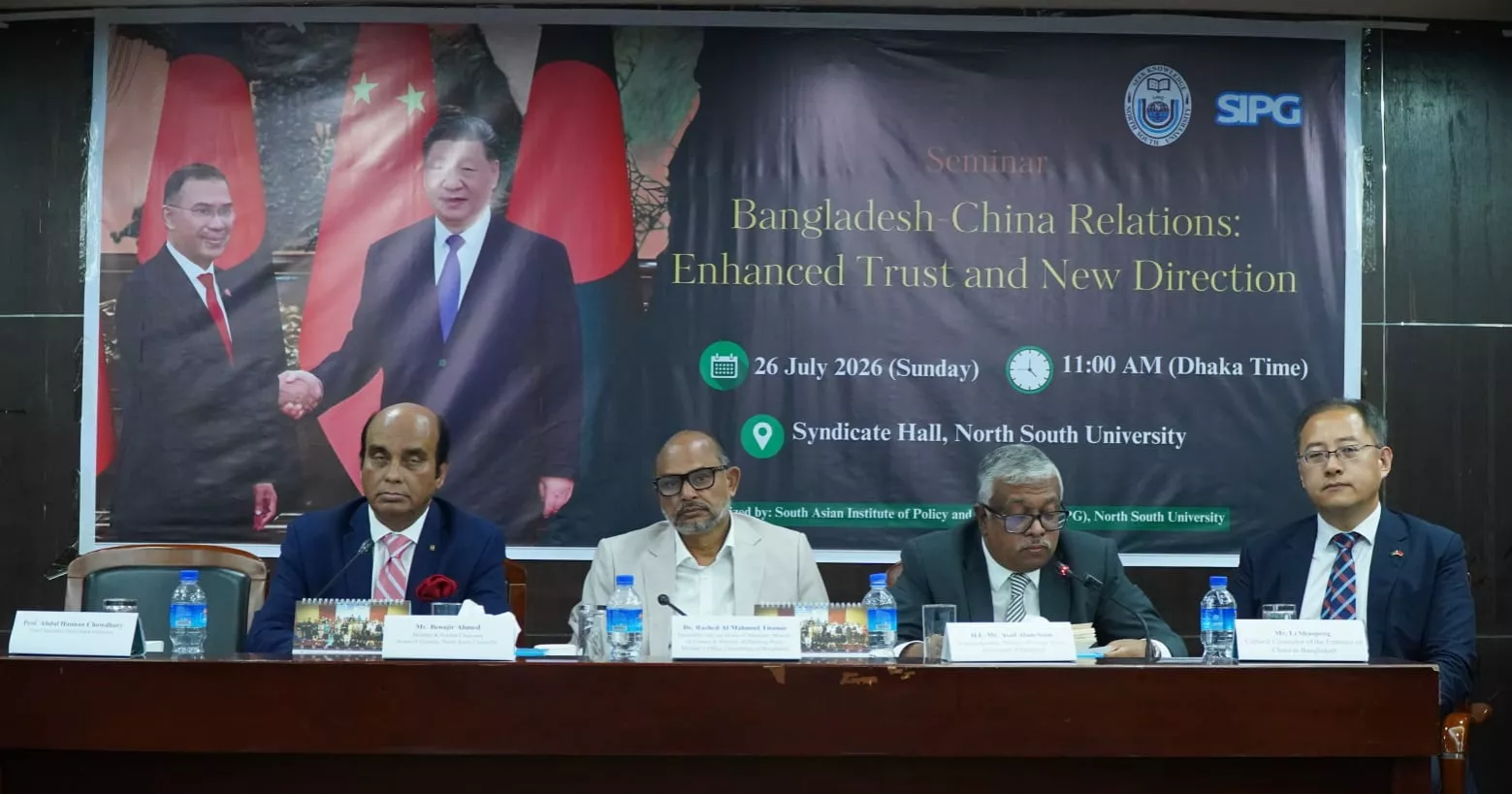
Prime Minister’s Finance and Planning Adviser Dr Rashed Al Mahmud Titumir on Sunday said partnerships are most meaningful when they reinforce national priorities, placing Bangladesh's development and people's welfare at the centre of every collaboration.
Referring to the principle of “Bangladesh First”, he emphasised that Bangladesh must pursue its own self-reliant development journey while engaging with China on the basis of mutual respect, national interest, and economic sovereignty.
He was speaking as the chief guest at a seminar organised by the South Asian Institute of Policy and Governance (SIPG) at North South University (NSU).
The seminar, titled “Bangladesh-China Relations: Enhanced Trust and New Direction”, brought together policymakers, diplomats, scholars, China experts, media representatives, faculty members, and students to discuss how Bangladesh could transform the renewed momentum from Prime Minister Tarique Rahman’s recent Beijing visit into concrete gains in diplomacy, trade, connectivity, education, technology, and regional cooperation.
Dr Titumir welcomed Chinese partnerships in multimodal transportation, the Chinese Economic Zone in Chattogram, Mongla Port expansion, and the proposed Kunming-Chattogram connection, while calling for deeper society-to-society cultural exchanges.
Foreign Secretary Asad Alam Siam reflected on the positive trajectory of Bangladesh-China relations and highlighted recent milestones, including agreements, protocols, media cooperation, and collaboration in agriculture, water security, supply chains, technology, and multilateral forums.
He stressed that the real task ahead was to convert commitments and investments into high-impact projects backed by strong institutional accountability and aligned with Bangladesh’s national interest.
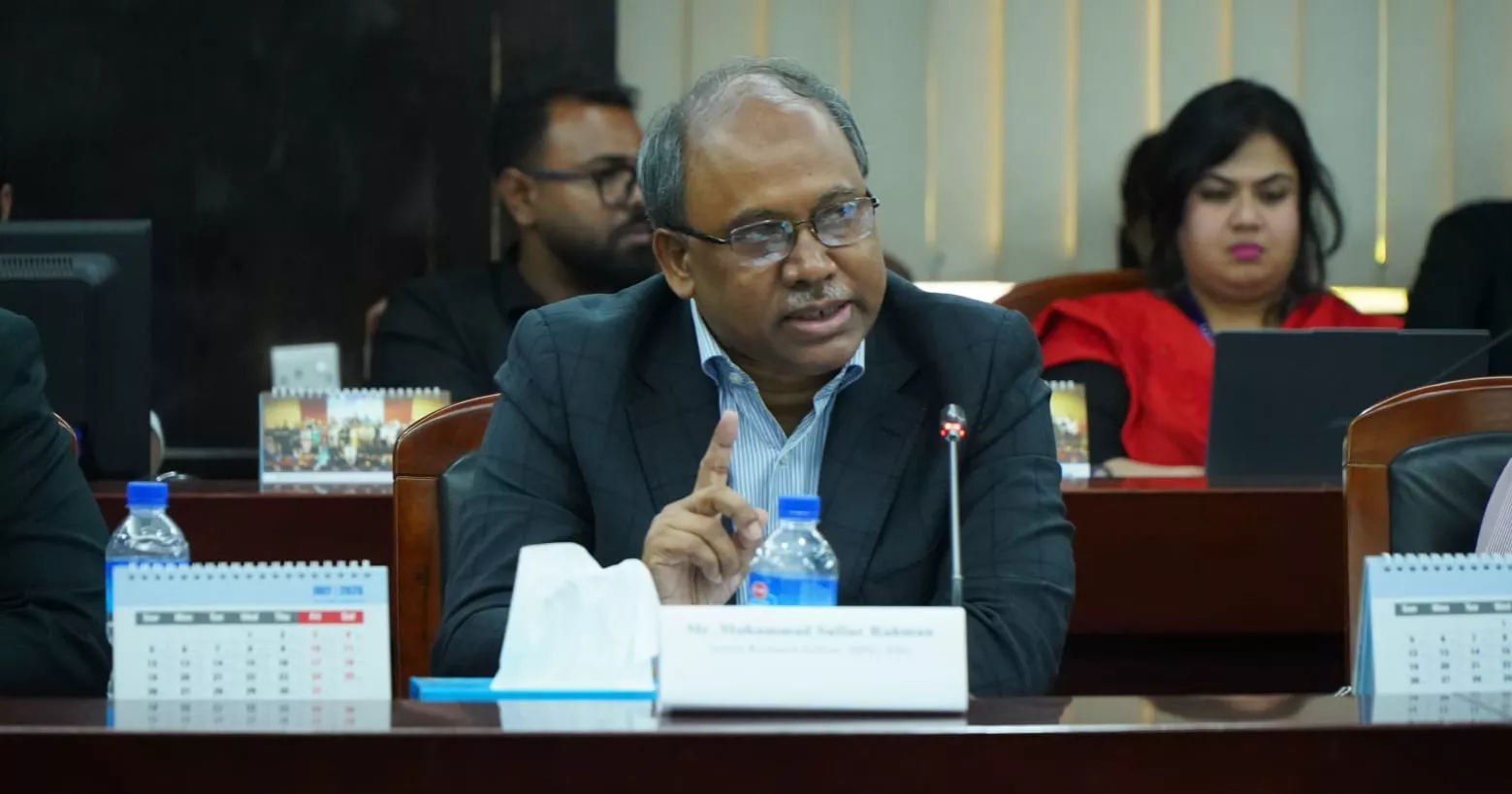
The seminar also discussed the proposed Bangladesh-China-Myanmar connectivity framework, BCM+I, the Teesta and northern river management issues, the Rohingya crisis, Myanmar’s instability, Bay of Bengal geopolitics, Indo-Pacific competition, and Bangladesh’s need to avoid overdependence on any single partner.