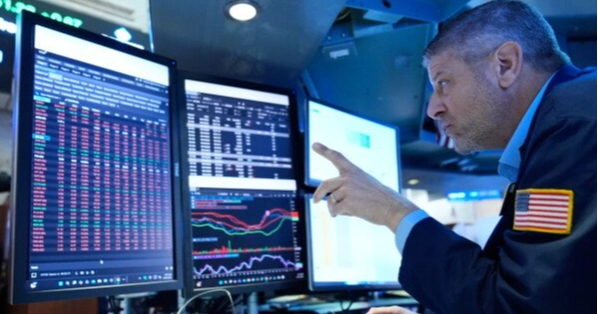
Asian stocks mostly declined Tuesday after major U.S. indexes ended lower in the previous session, while U.S. Treasury yields paused after reaching their highest levels in about two decades.
U.S. stock futures edged down, while oil prices increased amid uncertainty over talks between the United States and Iran and the possibility of reopening the Strait of Hormuz, a key route for global oil shipments.
On Monday, the S&P 500 fell 0.8%, the Dow Jones Industrial Average dropped 0.7% and the Nasdaq composite declined 0.9%.
Rising U.S. Treasury yields have put pressure on stocks as investors seek better returns amid concerns about inflation and growing U.S. government debt.
The yield on the 10-year U.S. Treasury note reached 5.27% Monday, its highest level since 2007. It stood at about 5.25% early Tuesday, compared with 5.17% last Friday.
Oil prices, already elevated and contributing to inflation, rose further Tuesday as mediators continued efforts to reach an agreement between Washington and Tehran. U.S. President Donald Trump rejected an Iranian offer over the weekend to reopen the Strait of Hormuz.
Brent crude, the international benchmark, rose 1.8% to $99.63 a barrel, well above about $72 a barrel in late February before the Iran war.
Japan’s Nikkei 225 fell 1.2% to 65,114.64, while South Korea’s Kospi declined 0.6% to 6,847.56. Hong Kong’s Hang Seng Index dropped 0.5% to 24,516.46.
Shares of online fast-fashion retailer Shein traded in Hong Kong fell 11.7% after the company reported a 67% year-on-year decline in adjusted net profit for its latest quarter.
China’s Shanghai Composite edged up 0.1% to 3,826.51 after state-run Xinhua News Agency reported Monday that the State Council discussed ways to improve the effectiveness of macroeconomic policies and support economic growth.
Australia’s S&P/ASX 200 rose 0.1% to 8,686.20.
Taiwan’s Taiex fell 0.6%, while India’s Sensex declined 0.7%.
The U.S. dollar rose slightly to 157.42 Japanese yen from 157.39 yen. The euro fell to $1.1362 from $1.1371.