As the 2026 FIFA World Cup unfolds across North America, several smaller American cities are enjoying a rare moment on the global stage after being selected as training bases for some of the tournament’s biggest teams.
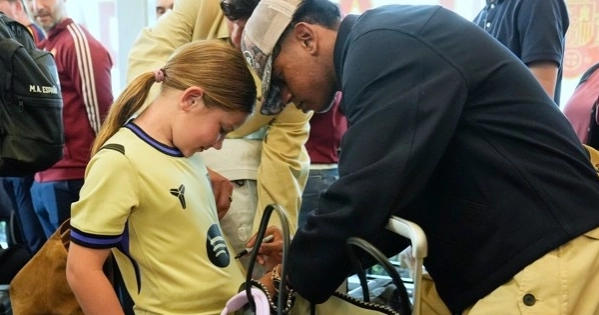
In Chattanooga, Tennessee, eight-year-old Beckham McClure waited for hours with a handwritten note hoping to catch a glimpse of Spain’s star players. When he finally saw them take the field, he turned to his father and whispered: “They’re real.”
The moment reflected the excitement spreading through communities that are hosting national teams between World Cup matches.
Defending European champion Spain has set up its training camp at Baylor School in Chattanooga, while Iraq is based at the historic Greenbrier resort in West Virginia. Germany has chosen Winston-Salem, North Carolina, as its World Cup headquarters.
The arrival of these teams has transformed local communities, bringing international attention and creating a festive atmosphere for football fans.
In Chattanooga, Spanish flags decorate hotels and public spaces, while banners welcoming the team have appeared across the city. Thousands of fans applied for a limited number of tickets to watch Spain’s training sessions at Baylor School.
Local resident Skip Schwartz said Spanish jerseys have become a common sight around the city.
“You can’t always tell whether the person wearing one is from Spain or a local supporter,” he said.
In Winston-Salem, tickets to watch Germany train sold out within minutes. Local businesses have embraced the opportunity, with restaurants and sports bars organizing viewing parties and offering German-themed menus.
Savannah Lahey, manager of a local football bar, said the event has encouraged many people to take an interest in the sport.
“It’s exciting to see people getting involved in something they may not have followed before,” she said.
Teams selected their training bases from a list of FIFA-approved facilities across North America. Higher-ranked teams received priority in choosing locations.
Despite having the option of larger cities such as Chicago and Los Angeles, Spain chose Chattanooga because of Baylor School’s facilities, convenient location and easy access to match venues.
The school upgraded and maintained its football pitches to meet FIFA standards, including strict requirements for field quality, drainage and irrigation systems.
Two grass training fields now serve as the centre of Spain’s daily preparations, while players are staying at a nearby downtown hotel.
For Baylor School officials and former students, Spain’s decision to use the campus is a source of pride.
“It’s hard to imagine that one of the world’s biggest football nations would choose this campus as its World Cup base,” said Schwartz, a member of the school’s board.
The presence of Spain has also created new supporters among local fans.
Tina Ankar, who attended one of the team’s open training sessions, said the experience made her eager to follow Spain throughout the tournament.
“Now we have another team to support besides the United States,” she said.
Students at Baylor School have also enjoyed unprecedented access to world-class football stars. Many were excited to see locker rooms temporarily assigned to players such as Pedri, Gavi and Lamine Yamal.
For 17-year-old student Heath Techasiriwan, the experience has changed his World Cup loyalties.
“Without a doubt, I’m supporting Spain,” he said.
Young goalkeeper Mathew Ramirez was thrilled when Yamal signed his Barcelona jersey after training.
Back in Chattanooga, Beckham McClure returned home with player autographs and selfies, still amazed that the football stars he usually watched on television were standing just a few feet away.
His father, Jaxon McClure, who now coaches hundreds of local children, said the city’s football culture has grown dramatically over the years.
“They could have chosen anywhere in the country,” he said. “And they chose us.”