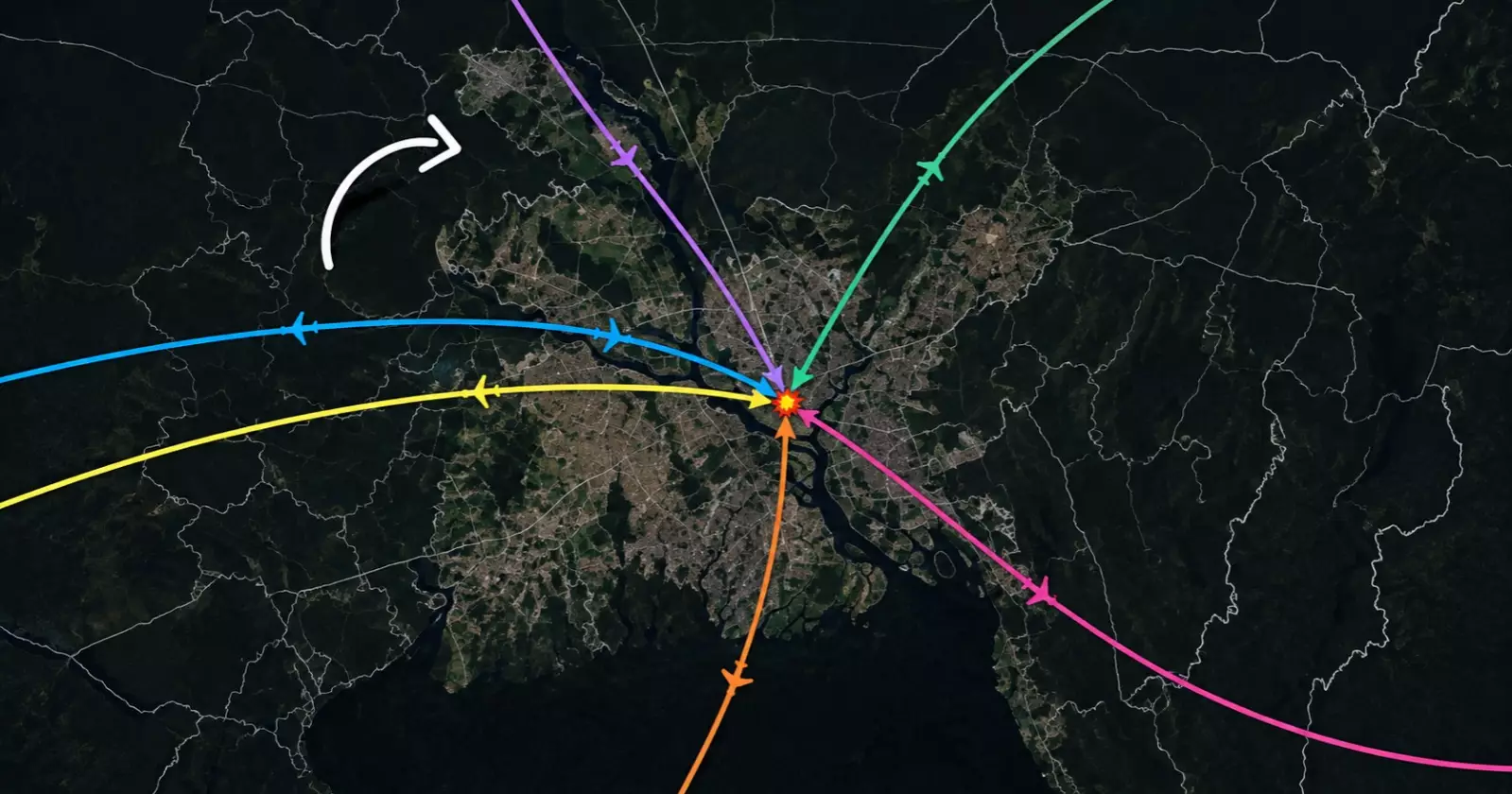
Bangladesh is embarking on an ambitious overhaul of its aviation sector, with the government planning to establish a national air connectivity grid, develop four regional airports as international gateways and transform Dhaka, Chattogram and Sylhet into integrated passenger and logistics hubs.
The initiatives, outlined in the FY2026-27 budget, are part of a broader strategy to turn Bangladesh into one of South and Southeast Asia’s leading aviation hubs by 2034, while using improved air connectivity to facilitate trade, tourism, cargo movement and investment.
Under the plan, Rajshahi, Cox’s Bazar, Jashore and Saidpur airports will be developed as international gateways, creating a wider network of entry points beyond Dhaka. The government also plans to introduce an integrated digital logistics platform to improve cargo handling and coordination across the aviation system.
Airport network at the centre
Several infrastructure projects are already underway or being prepared to support the plan.
Terminal facilities at Jashore and Saidpur airports are being expanded, while development work at Cox’s Bazar Airport is being completed. The government is also working to enhance runway capacity at Sylhet and Chattogram airports and prepare the Third Terminal of Hazrat Shahjalal International Airport (HSIA) for full-scale operation.
The Third Terminal is expected to significantly expand passenger-handling capacity at the country’s principal international gateway and reduce pressure on the existing facilities.
At HSIA, the government has already introduced a major digital passenger-service upgrade. Free high-speed Wi-Fi now covers about 94,000 square metres of the airport.
The government’s airport strategy also includes modernising passenger services, strengthening cargo-management systems, improving aviation safety and expanding digital services.
Four new international gateways
The proposed development of Rajshahi, Cox’s Bazar, Jashore and Saidpur as international gateways could redistribute international air traffic and provide direct connectivity to regional destinations from different parts of the country.
The four airports already feature in Civil Aviation Authority of Bangladesh (CAAB) development plans, including terminal expansion, runway improvements and other infrastructure works.
Earlier CAAB project plans included upgrading Saidpur Airport and expanding facilities at Rajshahi, Jashore and Cox’s Bazar.
Cox’s Bazar could have particular significance for tourism, while Saidpur and Rajshahi could strengthen connectivity for northern Bangladesh. Jashore, meanwhile, could serve as a gateway for the southwestern region.
Biman expansion to support new routes
The government’s airport expansion plan is being accompanied by a fleet-expansion programme at Biman Bangladesh Airlines, aimed at increasing international passenger and cargo capacity.
Biman signed a US$3.7 billion agreement for 14 Boeing aircraft in April. The order consists of eight 787-10 Dreamliners, two 787-9s and four 737-8s.
On Wednesday (September 23), Biman signed another agreement with Boeing in New York for 11 additional aircraft, comprising five 787-10s and six 737-8s. The latest agreement brings Biman’s Boeing order book for this year to 25 aircraft.
The latest Boeing deal was signed on the sidelines of the 81st session of the United Nations General Assembly in New York.
Biman is also considering a separate acquisition of 10 Airbus aircraft — four A350-900s and six A321neos.
If that proposed Airbus purchase is finalised, the national carrier’s planned acquisitions would reach 35 aircraft, compared with its current fleet of 19.
The fleet expansion is intended to support the opening of new international routes and increase capacity on existing routes serving major destinations in the Middle East, South and Southeast Asia and Europe.
Boeing said the new aircraft would support Biman’s fleet-modernisation and international-growth strategy, with the 737-8 providing additional range for single-aisle operations and the 787-10 adding capacity to the carrier’s Dreamliner fleet.
The aviation development plan also focuses on creating a sustainable and inclusive aviation system by ensuring hassle-free passenger services, improving facilities for expatriate workers, promoting renewable energy and developing skilled human resources.
As part of the broader tourism development strategy, the government is formulating an investment roadmap to attract more tourists and create employment in the tourism sector.
The government expects the aviation and tourism initiatives to attract private investment, create jobs and support economic growth, while raising the tourism sector’s contribution to GDP to 6–7 percent.