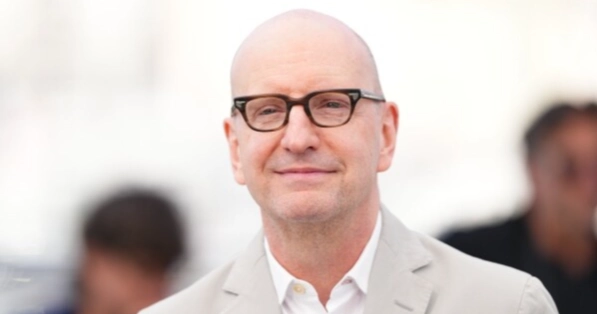
Oscar-winning director Steven Soderbergh has defended his decision to use artificial intelligence in his new documentary John Lennon: The Last Interview, saying he believes filmmakers should be fully transparent about how they use the technology.
The film, which premiered Saturday at the Cannes Film Festival, is built around a two-hour interview that John Lennon and Yoko Ono gave to a San Francisco radio crew on Dec. 8, 1980, the day Lennon was shot and killed in New York.
During the interview, the couple spoke openly about their relationship, love, creativity, life after The Beatles, raising their young son and songwriting. Soderbergh said he was deeply moved by their honesty and warmth.
The documentary uses AI-generated visuals in about 10% of the film, mainly during more philosophical parts of the conversation where there was little archival material available.
The decision sparked criticism after Soderbergh revealed it earlier this year, with some in the film industry expressing concern about the growing use of generative AI.
However, Soderbergh said he wanted to be open about the process.
"Transparency is very important," he said in an interview with The Associated Press. "People should know exactly how this technology is being used."
The director said he understands why many people are worried about AI, but does not believe the technology will replace most essential jobs in filmmaking.
He said his personal rule is that AI should only be used when it is truly necessary and when there is no better way to achieve a creative goal.
"I think a lot of people will use AI in ways that fail those tests," he said.
Soderbergh added that each part of the filmmaking process — from writing and acting to costume and sound design will have a different relationship with AI, making it difficult to set one universal standard for its use.
Despite the controversy, he hopes younger viewers will focus on Lennon's message.
Soderbergh said the documentary highlights Lennon's lifelong commitment to honesty and his desire to challenge the traditional image of the male rock star.
"He wanted to tell the truth and ask how we could become better human beings," Soderbergh said.