An oil tanker was hit by a projectile and disabled near Oman's coast in the Strait of Hormuz, highlighting the risks facing ships using the key waterway as tensions remain high between Iran and the United States.
The incident happened Monday night, according to the British military's United Kingdom Maritime Trade Operations (UKMsTO). The projectile struck the ship's engine several miles off Oman's eastern coast, leaving it unable to move.
All crew members were reported safe. There were no immediate reports of an oil spill or other environmental damage.
The attack came as a senior Pakistani delegation was completing talks in Tehran aimed at helping find a negotiated end to the nearly six-month-old conflict between Iran and the United States.
Tanker attack raises shipping concerns
Before the war began, about one-fifth of the world's traded oil passed through the Strait of Hormuz. Since the US and Israel launched attacks on Iran on Feb 28, shipping through the strategic waterway has faced major disruptions.
Iran has tightened control over traffic through the strait and has occasionally fired at vessels trying to pass through, although no group immediately claimed responsibility for Monday's attack.
The United States is also enforcing a blockade of Iranian ports and has attacked vessels.
Pakistan says Iran talks were positive
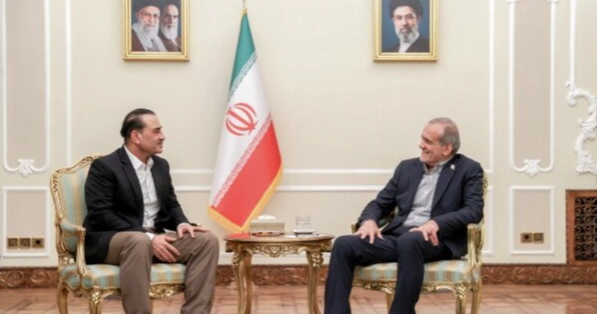
A Pakistani delegation led by army chief Field Marshal Asim Munir left Tehran on Tuesday after meeting Iranian President Masoud Pezeshkian and other senior officials.
The talks focused on reopening the Strait of Hormuz and restarting negotiations aimed at ending the conflict, according to Pakistan's military.
Pakistan has been trying to mediate between Iran and the US and has maintained contacts with both sides.
Pakistan's Interior Minister Mohsin Naqvi, who accompanied Munir, described the meeting with Pezeshkian as “very positive and productive.”
He said the talks made “significant progress” and expressed hope that they could lead to further negotiations and lasting peace in the region.
The discussions also covered the reopening of the Strait of Hormuz.
Iran and Oman are working on a proposal for managing the waterway, but it remains unclear whether the plan would be acceptable to Washington. Oman's foreign minister was scheduled to meet Iranian officials Tuesday.
No accountability a year after Gaza hospital killings
Tuesday also marked one year since Israeli soldiers killed 22 Palestinians, including journalists and rescue workers, in a double strike at a hospital in Gaza.
The attack on Nasser Hospital drew international condemnation, but no one has been held accountable.
Israeli officials said the target was a suspected Hamas camera on the hospital's roof. Among those killed were Reuters cameraman Hussam al-Masri and Mariam Dagga, a visual journalist who worked for The Associated Press and other media organisations.
The Israeli military has not provided details about its investigation or said when it might be completed despite repeated requests from AP.
Human rights groups say Israeli soldiers are rarely prosecuted over the deaths of Palestinians and that investigations often take a long time without leading to charges.
China objects to possible Iran-related sanctions
China said Tuesday that it was closely monitoring plans by the US to expand sanctions against people and organisations linked to Iran, including some in China.
Chinese Foreign Ministry spokesperson Lin Jian said cooperation between China and Iran should not be disrupted and was being carried out in line with international law.
China is one of Iran's biggest trading partners and buys most of Iran's oil exports.
The US Treasury Department said Monday it was imposing sanctions on nearly 60 Iran-linked entities, including several based in China.
However, Treasury Secretary Scott Bessent stopped short of imposing secondary sanctions on countries doing business with Iran. He said countries should first have an opportunity to reduce their ties with Iran.
Bessent did not identify any countries that could face future penalties, saying they “know who they are.”
Lin criticised unilateral sanctions, saying they have no basis in international law and that economic pressure would only increase tensions