The Trump administration has announced new travel restrictions on South African officials it accuses of supporting discrimination against white people and other minority groups.
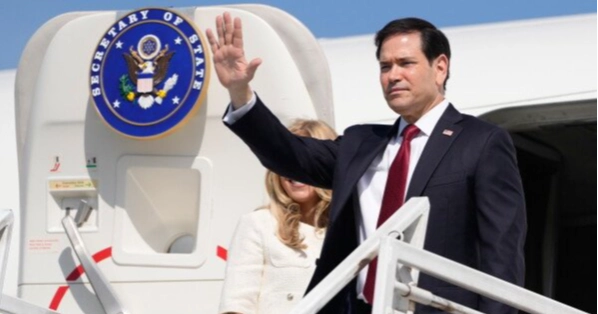
US Secretary of State Marco Rubio said Tuesday that the United States would revoke visas or reject visa applications from foreign nationals found responsible for or involved in enforcing laws and policies that permit uncompensated land seizures, racial discrimination or incitement of violence against minority ethnic and racial groups in South Africa.
"The United States will not allow such behavior to go unchecked," Rubio said in a statement, adding that such actions undermine peace, economic stability and the rule of law and conflict with the principles of US foreign policy.
The South African government has strongly rejected the US allegations, describing claims of discrimination against whites as baseless and saying they have resulted from misinformation since US President Donald Trump returned to office last year.
Rubio did not name any officials who could face the restrictions. However, a South African lobby group representing white minorities has previously urged the US to sanction officials from the African National Congress (ANC), the party of President Cyril Ramaphosa and the largest party in Parliament.
The announcement is the latest step by the Trump administration against South Africa over its claims that white South Africans, particularly Afrikaners, face discrimination under the country's Black-led government.
Afrikaners are largely descended from Dutch and French settlers who arrived in South Africa in the 17th century. They were central to the country's former apartheid system of racial segregation.
South Africa has a population of about 62 million, including roughly 4.5 million white people of Afrikaner, British and other backgrounds.
The United States has pointed to a controversial South African law allowing the government, under certain conditions, to expropriate unused private land without compensation. Washington has also cited affirmative action policies aimed at expanding opportunities for Black South Africans and others, as well as a small number of violent crimes against white farmers, as evidence of what it describes as broader anti-white discrimination.
The Trump administration has also criticized South Africa's decision to accuse Israel of genocide against Palestinians in Gaza before the International Court of Justice, the UN's highest court. Israel strongly denies the allegation.
During Trump's second term, the United States has imposed several other measures against South Africa over what it describes as anti-white and anti-American policies. These include excluding South African officials from meetings of the Group of 20 major economies held in the United States this year and reducing aid to the country's HIV treatment program.
The United States has also introduced a refugee program for Afrikaners and other white South Africans, claiming they face a humanitarian emergency in the country. South Africa has rejected that characterization.
Washington says the latest measures are necessary because South Africa has not changed its policies.
"This visa restriction policy is only the first step in a series of escalatory measures that will show America's firm resolve in this matter," the official US ambassador to South Africa account said on X on Wednesday, referring to Rubio's announcement.