Science
NASA to test SpaceX, Blue Origin Moon landers ahead of planned 2028 lunar landing
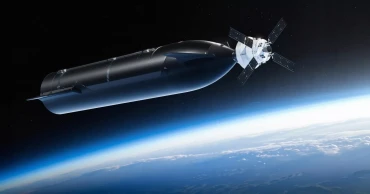
NASA is preparing for its next astronaut mission to the Moon by planning a major orbital rehearsal in 2027, when it will test commercial lunar landers built by SpaceX and Blue Origin before astronauts attempt a lunar landing in 2028.
The tests will take place during the Artemis III demonstration mission, where astronauts aboard NASA's Orion spacecraft will carry out rendezvous and docking exercises with prototype Moon landers in Earth orbit.
NASA says the mission, along with future uncrewed tests near the Moon, will provide valuable data to improve astronaut safety and reduce mission risks before humans return to the lunar surface.
SpaceX and Blue Origin to test prototype landersNASA has selected SpaceX and Blue Origin to develop Human Landing Systems (HLS) that will transport astronauts from lunar orbit to the Moon and back.
For Artemis III, both companies will launch prototype versions of their future Moon landers using commercial rockets.
Meanwhile, the Artemis III crew will travel separately aboard the Orion spacecraft, launched by NASA's Space Launch System (SLS) rocket.
The mission will allow NASA to assess how the different spacecraft perform before they are used for future crewed Moon missions.
Different approaches for the demonstrationSpaceX plans to use its latest Starship Version 3 spacecraft, which forms the basis of its future Moon lander. Blue Origin will test the crew cabin planned for its Blue Moon lander.
Steve Creech, manager of NASA's Human Landing System Programme, said both companies have proposed ambitious test plans that will support later uncrewed and crewed missions.
"The prototype landers will provide valuable information for future development while giving us greater confidence in the spacecraft before astronauts land on the Moon," he said.
Blue Origin astronauts will enter test cabinDuring the mission, up to two Artemis III astronauts wearing Orion survival suits will enter Blue Origin's test lander to evaluate its systems.
The spacecraft will also carry a specially designed instrument that will collect information on cabin conditions, similar to the "Moonikin" mannequin used during NASA's uncrewed Artemis I mission.
Starship to perform docking testsSpaceX's Starship prototype will carry a docking system at the front of the spacecraft, allowing Orion to dock directly with it.
Unlike the Blue Origin test, Artemis III astronauts will remain inside Orion during the Starship docking exercise.
NASA and SpaceX will study how the connected spacecraft perform together and evaluate communications, navigation and spacecraft control systems.
Three powerful rockets to launch within daysThe Artemis III demonstration will involve launching three powerful rockets over a relatively short period.
Blue Origin's test lander is expected to launch first, followed by Orion aboard NASA's SLS rocket and then SpaceX's Starship prototype.
NASA says the demanding schedule will test launch operations, mission control teams, communication systems and coordination among multiple launch facilities across the United States.
After completing docking tests with both landers, the Artemis III astronauts will return safely to Earth aboard Orion.
Jeremy Parsons, NASA's Artemis programme manager, described Artemis III as one of the agency's most complex missions.
He said the demonstration would help prepare NASA for future Moon missions by testing launch operations, spacecraft integration and mission planning.
Preparing for future Moon missionsNASA plans to use a "dual-launch" strategy for future lunar missions, with the Moon lander launched first and placed in orbit before astronauts arrive aboard Orion.
The Artemis III mission will allow NASA and its commercial partners to rehearse that process for the first time.
Blue Origin's lander is designed to remain in orbit for up to 30 days, giving engineers time to inspect and test its systems before Orion launches.
Once Blue Origin completes its docking exercises, SpaceX will launch Starship for the second phase of the mission.
Safety remains the priorityBefore the mission begins, NASA will certify that both lander prototypes meet all safety requirements before allowing the crewed Orion spacecraft to approach them.
The agency will review hardware, software and safety systems to ensure astronauts remain protected throughout the docking operations.
Both SpaceX and Blue Origin have already completed extensive ground testing of their docking systems.
NASA says the Artemis III mission will also evaluate how Orion and the commercial landers communicate, operate together and maintain stable flight while docked.
The Artemis programme is part of NASA's long-term plan to return astronauts to the Moon, support scientific research, establish a sustained human presence there and develop the technologies needed for future crewed missions to Mars.
Source: Science Daily
1 day ago

Private mission launches to extend life of aging communication satellites
A private space mission was launched Tuesday to help extend the working life of aging communication satellites by attaching small propulsion units to spacecraft that are running low on fuel.
The mission, launched aboard a SpaceX rocket, is part of a growing effort to reduce costs by keeping satellites operating for longer instead of replacing them.
Northrop Grumman's Mission Robotic Vehicle (MRV), equipped with two robotic arms, will spend about a year travelling to geosynchronous orbit, around 36,000 kilometres above Earth. Satellites in this orbit move at the same speed as Earth's rotation, allowing them to remain fixed over the same location and provide continuous communications coverage.
By mid-2027, the robot is expected to attach a jet-powered propulsion unit to an aging communications satellite before moving on to service two more satellites.
The mission also carried three electric-powered propulsion units, each about the size of a washing machine. After separating from the launch vehicle, they will travel independently to the target orbit using xenon-powered thrusters. Once there, the robotic spacecraft will collect and install them on selected satellites.
These propulsion units are designed to give fuel-depleted satellites enough power to continue operating for several more years, potentially saving satellite operators millions of dollars by delaying the need for costly replacements.
The first customers for the service are Luxembourg-based satellite operator SES and Australia's Optus.
This is Northrop Grumman's latest satellite-servicing mission. In 2019 and 2020, the company successfully launched two servicing spacecraft that docked with aging communications satellites and extended their operational lives.
The company plans to expand the technology in the future so robotic spacecraft can repair, reposition and even remove inactive satellites from crowded orbital paths. The project is being developed in partnership with the US Naval Research Laboratory and the Defense Advanced Research Projects Agency (DARPA).
Meanwhile, another private company, Katalyst Space Technologies, is continuing to test its Link servicing spacecraft before attempting to raise NASA's Swift Observatory into a higher orbit.
Engineers have resolved early communication and navigation issues by sending software updates to the spacecraft.
Launched in 2004, NASA's Swift space telescope has been losing altitude faster than expected because of increased solar activity. If the planned orbit-raising mission succeeds in the coming weeks, the nearly $400 million observatory could continue studying powerful cosmic explosions for several more years.
NASA is paying Katalyst Space Technologies $30 million for the mission to return Swift to its original orbit of about 600 kilometres above Earth. Link was launched earlier this month aboard a Pegasus rocket provided by Northrop Grumman.
2 days ago
Scientists discover previously unknown bacteria in elusive pygmy sperm whales
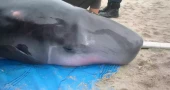
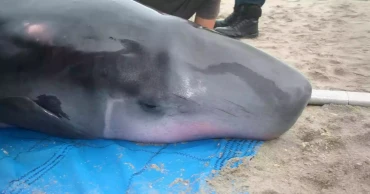
Scientists have discovered three previously unknown types of Helicobacter bacteria in pygmy sperm whales, offering new clues about the health of one of the ocean's most mysterious marine mammals.
Pygmy sperm whales (Kogia breviceps) are among the least studied whale species because they spend most of their lives far offshore, travel in small groups and dive deep to hunt squid and fish. As they are rarely seen in the wild, much of what scientists know about them comes from whales that wash ashore.
Researchers from Florida Atlantic University's Harbor Branch Oceanographic Institute and partner institutions reviewed more than two decades of whale stranding records and preserved tissue samples. Their findings, published in the Journal of Wildlife Diseases, identified three previously undocumented Helicobacter genotypes, named Kogia Helicobacter 1, 2 and 3.
The discovery is the first confirmed evidence of these bacteria in pygmy sperm whales and could help scientists better understand the role bacterial infections play in the health of marine mammals.
"Helicobacter bacteria are known to cause stomach-related illnesses in humans and other animals, including chronic inflammation, ulcers and even stomach cancer," said lead researcher Annie Page. "Finding new strains in a deep-diving whale species is an important scientific discovery."
New bacteria identified
Between 1999 and 2020, researchers examined 59 stranded pygmy sperm whales, conducting post-mortem examinations on about 80% of them.
Four whales were found to have spiral-shaped bacteria in their stomach tissue. Further laboratory testing and DNA analysis confirmed that the bacteria belonged to three previously unknown Helicobacter genotypes.
According to researcher Wendy Marks, two of the newly identified bacteria are genetically similar to Helicobacter species previously found in dolphins, porpoises and humans. The third belongs to a more distinct genetic group, suggesting that many unknown bacteria may still exist in the ocean.
Signs of stomach disease
All four whales carrying the bacteria also showed signs of digestive system disease, including stomach inflammation, ulcers, tissue scarring and parasitic worm infections. One whale also had inflammation in its intestine.
Although researchers did not conclude that the bacteria caused the whales' deaths, they said the repeated presence of stomach damage suggests the infection may contribute to long-term health problems.
Helicobacter bacteria were first identified in marine mammals in 2000 and have since been found in several whale and dolphin species. Infections have been linked to stomach ulcers, inflammation, reduced appetite and other digestive disorders.
More research needed
Scientists say it remains unclear how common these newly discovered bacteria are among pygmy sperm whales or how much they affect the animals' health.
Because the species is rarely observed in the wild, further studies will be needed to determine whether the bacteria contribute to illness, strandings or broader population declines.
Researchers said the discovery also highlights the importance of long-term marine mammal stranding programmes, which provide valuable opportunities to study species that are otherwise difficult to observe.
The study involved scientists from Florida Atlantic University, the University of Florida, Colorado State University and Marine Mammal Pathology Services.
Source: Science Daily
3 days ago

China's Shenzhou-23 crew undergoes emergency, mental health tests during long-term space mission
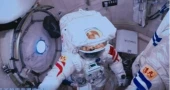
China's Shenzhou-23 astronauts have completed a series of emergency decision-making and psychological assessments as part of a study examining how long-term space missions affect astronauts' physical and mental performance, the China Manned Space Agency (CMSA) said on Monday.
The three-member crew, including a woman astronaut from the Hong Kong Special Administrative Region, has been living aboard China's Tiangong space station for nearly two months.
One of the astronauts is scheduled to remain in orbit for a full year as part of China's first long-duration human spaceflight research programme, which aims to collect data on the effects of extended stays in space.
A weekly video released by the space agency on Sunday showed the astronauts wearing sensors and virtual reality (VR) headsets to monitor brain activity during the tests.
The behavioural assessments are part of more than 100 scientific experiments and technology demonstration projects currently being carried out aboard the Tiangong space station.
In addition to space medicine research, the crew has installed a radiation biology exposure device and an external camera on one of the station's laboratory modules. They have also completed testing of cargo measurement equipment.
The agency said a new type of energy storage battery will also be tested in orbit, with the findings expected to support future upgrades to the Tiangong space station.
China launched the Shenzhou-23 crewed spacecraft on May 24. A key objective of the mission is the one-year stay by one astronaut, making it China's longest planned human space mission to date.
Previous crewed missions to the Tiangong space station typically lasted about six months. As China prepares for future deep-space exploration, the country expects longer missions to become more common, increasing the need to better understand the physical and psychological challenges faced by astronauts.
4 days ago
Rare meteorite identified as the asteroid that wiped out dinosaurs, study finds
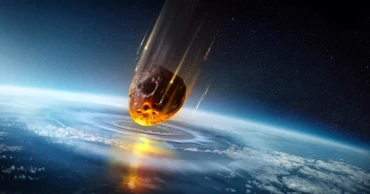
Scientists have identified the rare type of meteorite that is believed to have struck Earth 66 million years ago, triggering the mass extinction that wiped out about 75 percent of all species, including all non-avian dinosaurs.
According to a new study published in Science Advances, the impactor was most likely a rare carbon-rich meteorite known as a CO chondrite, based on an analysis of nickel isotopes preserved in material left behind after the Cretaceous-Paleogene impact.
The international research team included scientists from the University of British Columbia (UBC), as well as research institutions in Paris, Brussels and Vienna.
Researchers said CO chondrites differ significantly from the meteorites commonly found on Earth because they contain much lower amounts of volatile elements such as carbon, zinc, water and especially sulfur.
"CO chondrites are very different from the meteorites typically displayed in museums," said Dr. Philippe Claeys, a visiting professor at UBC and one of the study's researchers.
The findings suggest that sulfur carried by the meteorite itself was probably not the main cause of the global environmental disaster that followed the impact. Instead, scientists believe vast amounts of fine dust and debris blasted into the atmosphere played the biggest role by blocking sunlight and disrupting Earth's climate.
To identify the impactor, researchers conducted highly precise measurements of nickel isotopes in samples collected from a thin layer of clay found around the world. This layer was formed after the asteroid struck Earth and marks the boundary between the Cretaceous and Paleogene periods.
Scientists said the work was particularly challenging because nearly the entire meteorite vaporized upon impact, leaving behind only tiny traces of its original material.
Despite the limited evidence, the unique nickel isotope signature allowed researchers to identify the impactor as a rare CO chondrite.
The meteorite's exact origin remains uncertain. Researchers believe it may have come either from the outer regions of the solar system or from the outer part of the asteroid belt near Jupiter.
Carbonaceous chondrites make up only about five percent of meteorites recovered on Earth, while CO chondrites represent only a small fraction of that already rare group. They are considered among the oldest and most primitive materials formed during the early history of the solar system.
"Being struck by such a rare object highlights just how unfortunate the dinosaurs were," Claeys said.
Scientists estimate the asteroid measured between 10 and 15 kilometres in diameter and hit Earth at a speed of around 64,000 kilometres per hour.
The impact created the massive Chicxulub crater, which is now buried beneath Mexico's Yucatán Peninsula. Researchers say the collision triggered global environmental changes that led to one of the most devastating mass extinctions in Earth's history.
Source: Science Daily
5 days ago
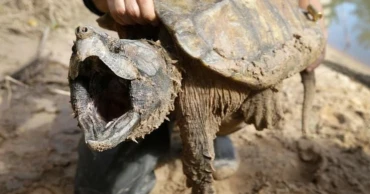
Trump administration ends automatic protections for threatened species
The Trump administration has withdrawn a long-standing rule that automatically protected plants and animals listed as threatened under the US Endangered Species Act, a move critics say could make it more difficult to prevent species from becoming extinct.
The decision, announced Friday by the US Interior Department, means newly listed threatened species will no longer receive immediate federal protections. Instead, authorities will have to prepare separate protection plans for each species—a process that could take time and allow industries to seek exemptions for activities such as oil and gas drilling, mining and construction in affected areas.
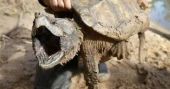
Environmental groups warned that the change could delay protection for vulnerable species, including monarch butterflies and alligator snapping turtles, leaving them at greater risk.
Interior Secretary Doug Burgum defended the decision, saying the Endangered Species Act had been used for too long to block development projects across the country.
He said success should be measured by how many species recover and are removed from the endangered list, rather than by how many are added.
The administration also finalized another rule requiring officials to consider the economic impact when deciding whether an area should be designated as critical habitat for a threatened species.
Conservationists argue the new requirement could give businesses greater influence over decisions involving environmentally sensitive areas.
Noah Greenwald of the Center for Biological Diversity said allowing exemptions for industries responsible for habitat destruction would weaken efforts to protect wildlife.
Similar policy changes were introduced during Trump's first term but were later reversed by former President Joe Biden.
The automatic protection rule was first introduced for wildlife in 1975 and expanded to plants in 1977.
Supporters of the latest changes, including the Rocky Mountain Elk Foundation and the Property and Environment Research Center, argue that automatic protections discourage private landowners from helping recover species because restrictions remain even after a species improves from endangered to threatened.
Jonathan Wood, vice president of the Montana-based research center, said the revised approach would encourage more proactive conservation efforts.
No new species have been added to the endangered or threatened lists during Trump's second term so far. More than 20 species were listed during his first term, while around 60 were added during Biden's presidency.
About 30 species are currently under consideration for threatened status, including monarch butterflies, alligator snapping turtles, California spotted owls and several species of snakes, fish, clams and insects.
The administration has introduced several changes to wildlife protection policies in recent months.
In March, it exempted oil and gas drilling in the Gulf of Mexico from parts of the Endangered Species Act, citing national energy security concerns.
Last week, officials narrowed the legal definition of what constitutes "harm" to a protected species, allowing development in critical habitats as long as the animals are not directly injured or killed.
This week, the Interior Department also reduced the amount of protected habitat designated for Canada lynx in the Rocky Mountains and announced plans to give states greater authority over grizzly bear management.
The Endangered Species Act has been credited with helping species such as the bald eagle and the American alligator recover from the brink of extinction.
Burgum noted that about 97% of species listed under the law remain protected, saying many Republican lawmakers believe recovered species should be removed from the list more quickly.
6 days ago
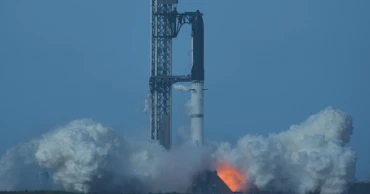
Starship remains grounded after engine failure during countdown
SpaceX aborted the launch of its giant Starship rocket just moments before liftoff on Thursday after several engines failed to ignite during the countdown, marking the first last-second launch cancellation for the full-scale spacecraft.
Engine ignition began about three seconds before the scheduled launch, but four of the rocket’s 33 engines did not start, prompting the automatic launch system to shut down the remaining engines and keep the 407-foot (124-metre) rocket on the pad. Fuel was immediately drained following the abort.
Shenzhou-23 crew successfully tests upgraded in-orbit measuring device
SpaceX founder and CEO Elon Musk said two engines would be replaced before the next launch attempt to ensure a successful flight, adding that the mission could be rescheduled for early next week.
The planned 13th test flight was to carry 20 of SpaceX’s latest Starlink satellites on a space-skimming journey from Starbase in Texas. The satellites were expected to communicate with others already in orbit while capturing images of Starship’s heat shield. Neither the booster nor the spacecraft was intended for recovery.
NASA is relying on Starship as a lunar lander for its Artemis programme. SpaceX and Blue Origin are developing lunar landing systems for future moon missions, with Artemis III expected to conduct docking tests before Artemis IV aims to land astronauts near the moon’s south pole no earlier than 2028.
7 days ago
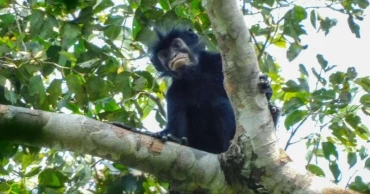
New monkey species with orange lips discovered in DR Congo rainforest
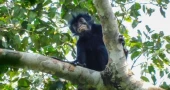
A monkey with striking pinkish-orange lips, a black face and dark fur has been officially identified as a new species living in the forests of the Democratic Republic of Congo (DRC).
The newly identified primate was photographed high in the tree canopy of the dense tropical forests of Lomami National Park in the country's central eastern region.
Conservationists first spotted the unusual monkey in 2008 but managed to capture only a blurry photograph. A second sighting a decade later prompted an international team of researchers to launch a detailed study, which confirmed the animal as a previously unknown species.
It is only the fifth new African monkey species to be formally identified in the past 75 years.
Junior Amboko, a PhD student at Florida Atlantic University, led much of the research, which included field observations, audio recordings, photography and genetic analysis. The findings have been published in the journal PLoS One.
Amboko told BBC News it was an "amazing feeling" to see an animal that so few people knew existed.
A secretive forest primate
Although local communities have long known about the monkey and call it Likweli, scientists only recently confirmed it as a separate species based on its genetic differences.
Amboko said the monkeys are shy and usually remain hidden high in the forest canopy.
As part of the research, scientists interviewed people in 52 villages near the monkeys' habitat, but only residents of eight villages had ever seen them.
The research team, made up of scientists from the DRC, the United States and Germany, named the species Colobus congoensis, recognising the country's rich biodiversity.
The monkey belongs to the colobus group, a type of African monkey that lacks thumbs.
Professor Kate Detwiler of Florida Atlantic University said colobus monkeys are important plant-eating animals that play a key role in forest ecosystems by helping process and spread seeds.
Researchers believe the monkey's bright facial markings may help individuals recognise each other or attract mates.
The species also produces a distinctive deep roaring call.
"You often hear them, but don't see them," Amboko said.
Scientists believe the monkeys are rare and found only in a limited part of the forest that provides the food and habitat they need.
Because the animals are hunted for bushmeat, researchers hope that official recognition of Colobus congoensis as a distinct species will help strengthen conservation efforts.
The team says many questions remain about the newly identified monkey and plans further studies to estimate its population and better understand its behaviour.
Source: BBC
8 days ago
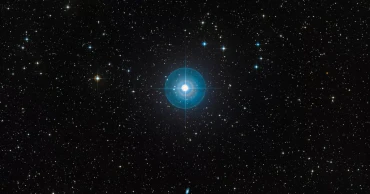
Astronomers discover faint exoplanet after it remained hidden for more than a decade
Astronomers have identified a faint giant exoplanet orbiting the young star Beta Pictoris after it remained undetected for more than a decade, marking the dimmest planet ever directly imaged from Earth.
The discovery was made independently by two research teams within days of each other late last year using different telescopes, according to findings published Wednesday in The Astrophysical Journal Letters.
One team, led by scientists from Scotland and Germany, detected the planet using the European Southern Observatory’s Very Large Telescope in Chile. Researchers later examined archival observations and confirmed that the planet had been hidden in earlier data, obscured by the brightness of its host star and two previously known companion planets.
“It was very much playing hide-and-seek for 11 years,” said Markus Bonse of the European Southern Observatory, who co-led the research.
A separate team led by researchers from the University of California, San Diego, made the same discovery using NASA’s James Webb Space Telescope. Scientists said only two observations with the space telescope were needed to identify the elusive world.
Both teams had been studying one of Beta Pictoris’ already known planets when they independently spotted the much fainter object, estimated to be around 100 times dimmer and located farther from the star. Researchers intentionally kept their work separate to avoid influencing each other's findings.
The newly discovered planet is slightly larger than Jupiter and takes about 91 years to complete one orbit around its star, comparable to Uranus’ orbital period around the Sun.
Scientists believe the planet resembles a much younger version of Jupiter because it formed in a planetary system that is only about 20 million years old, compared with the Sun’s age of roughly 4.5 billion years.
According to researcher Aidan Gibbs, the system offers a rare opportunity to study the early stages of planetary evolution, when giant planets have already formed but smaller rocky planets may still be developing.
Beta Pictoris is located about 63 light-years from Earth in the southern constellation Pictor.
NASA says fewer than 100 of the more than 6,000 confirmed exoplanets have been detected through direct imaging, with most discovered using indirect methods such as observing the slight dimming of a star when a planet passes in front of it.
Researchers hope the newly identified planet will provide fresh insights into how young planetary systems evolve over time.
9 days ago
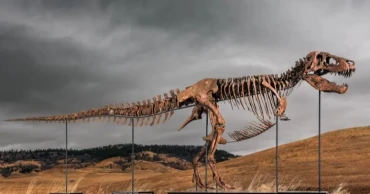
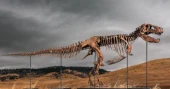
67-million-year-old T. rex fossil sells for record $50.1 million at auction
A 67-million-year-old Tyrannosaurus rex fossil has been sold for £37.4 million (about $50.1 million) at a Sotheby's auction in New York, setting a new record as the most expensive dinosaur fossil ever sold.
The fossil, affectionately named Gus, stands more than 12 feet (4 metres) tall. Sotheby's said more than 60% of its bones were recovered, making it one of the most complete T. rex specimens ever discovered.
The identity of the winning bidder at Tuesday's auction has not been revealed.
Gus was discovered in 2021 on a remote ranch in the US state of South Dakota.
"This result has been years in the making," said Cassandra Hatton, Sotheby's worldwide head of science and natural history.
"Gus is not only an exceptional discovery but also a specimen that has been carefully excavated, documented, prepared and preserved," she said.
The sale broke the previous record set by the stegosaurus fossil Apex, which was sold in 2024. Gus is also the first dinosaur fossil to sell for more than $50 million.
Some scientists told the BBC that the record-breaking sale could signal a new era of fossil collecting by ultra-wealthy buyers.
Hatton said the high price reflects the years of work and resources needed to recover and prepare the fossil.
The excavation took place over three summers between 2021 and 2023, when the frozen ground had thawed enough for digging. It then took another three years in the laboratory to clean, study and assemble the skeleton.
Researchers found bite marks on the skull and signs that several broken ribs had healed while the dinosaur was still alive, suggesting it may have been injured while scavenging or fighting with other dinosaurs.
Although the buyer has not yet been identified, Gus may still be displayed for the public in the future. The previous record-holder, Apex, was loaned to the American Museum of Natural History for four years by its billionaire owner, Kenneth Griffin.
As a result, despite its record-breaking sale, Gus could eventually be exhibited in a museum.
9 days ago