World-Business

Oil tops $100 on Middle East tensions as Tesla, Alphabet weigh on Wall Street
Global oil prices climbed above $100 a barrel on Thursday as escalating tensions in the Middle East raised concerns over disruptions to crude supplies, while sharp losses in technology giants Tesla and Alphabet pushed US stocks lower.
Brent crude, the international benchmark, surged 7.2 percent to $100.88 per barrel after attacks on two Saudi oil tankers in the Red Sea heightened fears over the security of key shipping routes for global energy supplies.
The latest attacks added to concerns surrounding the Strait of Hormuz, a critical passage for oil exports from the Middle East. In response, US President Donald Trump warned of "major military punishment" against Iran-backed Houthi rebels if attacks on commercial shipping continue.
Rising oil prices weighed heavily on financial markets as investors worried that higher energy costs could fuel inflation, increase business expenses and reduce consumer spending.
The benchmark S&P 500 fell 1.2 percent in late morning trading, while the Dow Jones Industrial Average dropped 477 points, or 0.9 percent. The technology-heavy Nasdaq Composite declined 2.4 percent.
Market analysts said the sharp increase in crude prices has renewed concerns that central banks may delay interest rate cuts or even tighten monetary policy further if inflation accelerates.
The European Central Bank left its key interest rates unchanged on Thursday. However, traders significantly increased expectations that the US Federal Reserve could raise interest rates at its meeting next week, reflecting growing concerns over inflationary pressure from higher energy prices.
The yield on the benchmark 10-year US Treasury note rose to 4.70 percent, continuing an upward trend that has already pushed long-term mortgage rates to their highest level in nearly a year.
Airline stocks came under pressure as investors anticipated higher fuel costs. American Airlines fell 7.4 percent despite reporting quarterly earnings that exceeded analysts' expectations, while Southwest Airlines lost 3.9 percent even after posting stronger-than-expected profit and revenue.
Technology shares also weighed heavily on Wall Street.
Tesla tumbled 13.6 percent after reporting quarterly earnings that missed market expectations, making it one of the biggest drags on the S&P 500.
Alphabet, Google's parent company, declined 7.3 percent despite posting better-than-expected revenue and profit. Investors instead focused on the company's plans to significantly increase spending on artificial intelligence infrastructure after capital investment nearly doubled from a year earlier.
Chief Executive Sundar Pichai said AI-driven demand helped accelerate Google Cloud's revenue growth during the latest quarter, but investors remained cautious about whether the company's massive AI investments would generate sufficient long-term returns.
European markets also ended lower as oil prices surged, with France's CAC 40 among the major indexes posting notable declines. In contrast, Asian markets closed mostly higher earlier in the day, led by South Korea's Kospi, which gained 4.4 percent.
23 hours ago

Asian markets mixed as oil prices rise despite Wall Street rally
Asian stock markets ended mixed on Wednesday after a strong performance on Wall Street, as investors weighed gains in technology shares against concerns over rising oil prices and inflation.
Japan's Nikkei 225 slipped 0.2% to close at 66,115.60. Government data showed both imports and exports increased compared with a year earlier, helped by the weaker yen, which boosted the value of trade when converted from US dollars.
Australia's S&P/ASX 200 rose 0.3% to 8,823.00, while South Korea's Kospi gained 0.7% to 6,797.70. Hong Kong's Hang Seng Index fell 1.1% to 24,866.67, and China's Shanghai Composite edged down by less than 0.1% to 3,861.82.
Wall Street closed higher overnight, driven by renewed buying of technology stocks linked to artificial intelligence (AI). The S&P 500 gained 0.9%, the Dow Jones Industrial Average rose 385 points, or 0.7%, and the Nasdaq Composite advanced 1.3%.
AI-related shares rebounded for a second straight session after suffering heavy losses last week amid concerns that their prices had risen too quickly.
Micron Technology jumped 12.2%, building on the previous day's gains after a sharp decline last week. Nvidia also rose 2%, with both companies among the biggest contributors to the S&P 500's advance.
However, higher oil prices continued to worry investors as tensions between the United States and Iran persisted.
In early Wednesday trading, US benchmark crude oil rose $1.67 to $86.01 a barrel, while Brent crude, the international benchmark, climbed $1.84 to $92.85 a barrel.
Stephen Innes, a market analyst and former trader, said higher oil prices pose a particular challenge for Japan, which relies heavily on imported energy.
"A weaker yen and rising crude oil prices are putting extra pressure on the Japanese economy at the same time," he said.
In currency trading, the US dollar was little changed at 163.13 Japanese yen, while the euro strengthened slightly to $1.1409.
Analysts say rising oil prices could push inflation higher again after recent signs of easing. That may prompt the US Federal Reserve and other central banks to keep interest rates higher for longer or raise them further, a move that could slow economic growth and weigh on global stock markets.
2 days ago
Asian markets rebound as South Korea and Japan recover after AI stock sell-off
Asian stock markets mostly closed higher on Tuesday, with South Korea and Japan recovering some of the losses suffered in recent sessions due to heavy selling of artificial intelligence (AI)-related shares.
U.S. stock futures moved slightly higher, while oil prices fell.
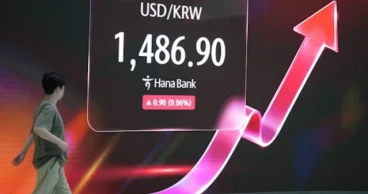
South Korea's Kospi index rose 4.7% to 6,821.41 after dropping 4.5% a day earlier. Technology stocks led the recovery, with Samsung Electronics climbing 7.4% and memory chip maker SK Hynix gaining 6.4%.
Despite a decline of more than 20% over the past month as investors locked in profits amid concerns over a possible AI investment bubble, the Kospi remains up more than 50% so far this year.
Japan's Nikkei 225 gained 2.8% to 65,926.41 after reopening following Monday's public holiday, recovering part of last week's losses.
Among major gainers, Kioxia Holdings surged 15.9%, chip testing equipment maker Advantest rose 6.9%, SoftBank Group advanced 6.1%, and Tokyo Electron added 1.3%.
Taiwan's Taiex index climbed 3.6%, supported by a 2.8% rise in Taiwan Semiconductor Manufacturing Co. (TSMC), the world's largest contract chipmaker.
Elsewhere, Hong Kong's Hang Seng Index edged up less than 0.1% to 25,150.75, while China's Shanghai Composite Index rose 0.6% to 3,819.66. Australia's S&P/ASX 200 added 0.1%, while India's Sensex slipped 0.1%.
Oil prices eased after Monday's gains. Brent crude, the global benchmark, fell 0.7% to $88.63 a barrel, while U.S. benchmark crude dropped 0.3% to $82.24 a barrel.
Investors continued to watch developments in the Middle East after Iran reportedly attacked another tanker in the Strait of Hormuz, a vital route for global oil and gas shipments. The United States also launched fresh strikes on Iran for a tenth consecutive night, while Tehran continued retaliatory attacks targeting U.S. allies in the region.
Iran's interior minister visited Pakistan, which has been acting as a mediator, for talks aimed at easing tensions, although no breakthrough has been announced.
Analysts at ING said there were some signs of possible de-escalation between the United States and Iran, but warned that major differences remain. They also said attacks by Yemen's Iran-backed Houthi rebels on shipping linked to Saudi Arabia have increased concerns over global oil supplies.
On Wall Street, the S&P 500 fell 0.2% on Monday, while the Dow Jones Industrial Average dropped 0.6%. The Nasdaq Composite slipped by less than 0.1%.
Several major AI and semiconductor companies still posted gains. Nvidia rose 0.2%, Micron Technology gained 1.9%, Broadcom climbed 2%, and Advanced Micro Devices (AMD) advanced 1.6% after expanding its AI partnership with Microsoft.
In currency trading, the U.S. dollar was little changed at 162.48 Japanese yen, while the euro remained steady at $1.1414.
3 days ago

Asian markets mostly rise, South Korea's Kospi tumbles nearly 5% amid AI stock selloff
Most Asian stock markets ended higher on Monday, but South Korea's benchmark Kospi index plunged nearly 5% as investors sold off artificial intelligence (AI)-related stocks.
Japanese markets remained closed for a public holiday, while US stock futures showed mixed trends.
Oil prices continued to rise, gaining more than 2%, as tensions between the United States and Iran intensified, raising fears of supply disruptions. Brent crude climbed 2.6% to $90.40 a barrel, while US benchmark crude rose 2.2% to $83.58 a barrel.
The latest gains came after the US carried out attacks for a ninth consecutive night, with Iran continuing retaliatory strikes against US allies across the Middle East.
Analysts at ING said the ongoing exchange of attacks could lead to wider conflict across the Persian Gulf if the situation continues to escalate. They also noted that tanker traffic through the Strait of Hormuz, a key route for global oil shipments, has slowed sharply, adding pressure to oil supplies.
In stock markets, South Korea's Kospi fell 4.9% to 6,490.97, dragged down by losses in major technology shares. Samsung Electronics dropped 4.4%, while memory chipmaker SK Hynix declined 3.3%.
Taiwan's Taiex index slipped less than 0.1%. However, Taiwan Semiconductor Manufacturing Co. (TSMC), the island's largest chipmaker, rose 2% after tumbling 7.3% on Friday. Investors had reacted negatively to the company's announcement that it would invest an additional $100 billion to expand chip production in the United States.
Elsewhere in the region, Hong Kong's Hang Seng Index advanced 2.1% to 25,105.78, the Shanghai Composite Index gained 1.2% to 3,808.39, and Australia's S&P/ASX 200 edged up 0.2% to 8,815.30. India's Sensex, however, fell 0.9%.
AI-related technology shares remained under pressure after heavy losses on Friday, reflecting growing concerns that the sector may be overvalued following months of strong gains. Many investors chose to book profits by selling their holdings.
Market sentiment was also affected by the launch of a new open-source AI model, Kimi K3, developed by Beijing-based Moonshot AI. The release drew comparisons with the "DeepSeek moment" in early 2025, when a Chinese AI model unsettled global markets by demonstrating that lower-cost Chinese AI systems could compete with leading products from companies such as Anthropic and OpenAI.
On Wall Street on Friday, the S&P 500 fell 1% to 7,457.69, the Dow Jones Industrial Average lost 0.8% to 52,146.42, and the Nasdaq Composite dropped 1.4% to 25,520.24.
Chipmakers also posted losses, with Nvidia falling 2.2%, while Broadcom and Advanced Micro Devices (AMD) each declined about 1%.
SpaceX shares dropped 5.4%, falling below their initial public offering price of $135 and hitting their lowest level since the company's Nasdaq debut last month.
In currency trading, the US dollar slipped to 162.37 Japanese yen from 162.43 yen, while the euro rose slightly to $1.1446 from $1.1438.
4 days ago
Asian markets mostly fall as South Korea's Kospi slides 6.6%; oil prices ease despite US-Iran conflict
Most Asian stock markets ended lower on Thursday, while oil prices edged down despite continued military exchanges between the United States and Iran. U.S. stock futures, however, moved slightly higher.
Technology and artificial intelligence (AI)-related shares came under pressure, dragging down markets in South Korea and Japan.
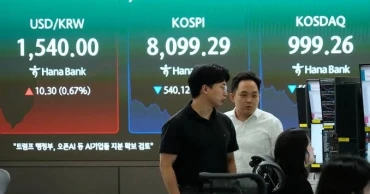
South Korea's Kospi dropped 6.6% to 6,816.70 after the Bank of Korea raised interest rates for the first time since 2023. The move was aimed at easing inflationary pressure linked to the Iran conflict.
Among major South Korean stocks, memory chipmaker SK Hynix fell 11.2%, while Samsung Electronics lost 8.2%.
Taiwan's Taiex slipped 0.3% ahead of the quarterly earnings report of Taiwan Semiconductor Manufacturing Co. (TSMC), whose results are widely viewed as an indicator of the global semiconductor industry and AI demand.
Japan's Nikkei 225 declined 2.9% to 66,767.64. Memory chip producer Kioxia plunged 13.5%, while chip equipment maker Tokyo Electron fell 5.2% and testing equipment manufacturer Advantest dropped 5.6%. SoftBank Group also lost 6.4%.
Hong Kong's Hang Seng Index stood out among regional markets, rising 1.7% to 25,111.22. Alibaba's Hong Kong-listed shares jumped 4.4% after China's cyberspace regulator approved Apple's Apple Intelligence AI service for use in China. Alibaba said its Qwen AI model will be integrated into the Apple Intelligence platform.
China's Shanghai Composite Index fell 0.9% to 3,921.20, while Australia's S&P/ASX 200 slipped 0.2% to 8,820.50. India's Sensex gained 0.3%.
Oil prices eased slightly but remained well above levels seen before the outbreak of the US-Iran conflict.
Brent crude, the international benchmark, fell 0.4% to $84.55 a barrel, compared with about $72 a barrel in late February before the conflict began. U.S. benchmark crude slipped 0.2% to $79.34 a barrel.
Analysts at ING said oil prices recorded a third straight day of gains before Thursday's slight decline, as there were still few signs of easing tensions between Washington and Tehran.
They also said the conflict was continuing to disrupt tanker traffic through the Strait of Hormuz, a key route for global oil shipments, affecting vessel movements from the Persian Gulf.
On Wall Street Wednesday, the S&P 500 gained 0.4% to close at 7,572.40. The Dow Jones Industrial Average rose 0.3% to 52,658.64, while the Nasdaq Composite advanced 0.6% to 26,269.23.
SpaceX shares briefly fell below their initial public offering (IPO) price of $135 before recovering part of the losses.
Investor sentiment was also supported by data showing U.S. inflation slowed in June and stronger-than-expected quarterly earnings from BlackRock. Shares of the investment firm climbed 6.6% after it reported better-than-expected revenue and profit.
In early currency trading Thursday, the U.S. dollar slipped to 162.09 Japanese yen from 162.19 yen, while the euro traded at $1.1467, little changed from $1.1464.
8 days ago

Saudi Arabia keen to expand investment in Bangladesh’s transport, logistics and Maritime sectors
Saudi Arabia has expressed a strong interest in expanding its investment footprint in Bangladesh, with a particular focus on strengthening cooperation in the transport, logistics, and maritime sectors.
The interest was conveyed during a meeting between a Saudi delegation, led by Deputy Minister of Transport and Logistics Dr. Rumaih Mohammed Al-Rumaih, and Bangladeshi officials at Biniyog Bhaban in the capital on Wednesday.
Saudi envoy meets PM, hands over Crown Prince's letter
Ashik Chowdhury, Executive Chairman of the Bangladesh Investment Development Authority (BIDA) and CEO of the Public Private Partnership (PPP) Authority, led the Bangladesh side during the focused discussion on transport, logistics, and infrastructure cooperation. Officials from the PPPA, BIDA, and the Bangladesh Economic Zones Authority (BEZA) also joined the meeting.
During the meeting, the Saudi minister lauded Bangladesh’s focus on privatisation and business facilitation, noting that it closely aligns with Saudi Arabia’s own strategic goals.
9 days ago
Oil rises on escalating Middle East tensions as Asian markets trade mixed
Oil prices extended gains early Tuesday as renewed fighting in the Middle East heightened concerns over global energy supplies, while Asian stock markets posted mixed performances with Tokyo and Seoul recovering from initial declines.
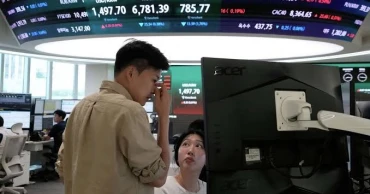
Brent crude advanced more than 2.3% to $85.18 a barrel after surging nearly 10% in the previous session. U.S. benchmark West Texas Intermediate crude also gained 2.5% to $80.15 a barrel.
Although crude prices remain well below their wartime high of almost $120 per barrel, concerns over supply disruptions have intensified amid competing claims by the United States and Iran over control of the Strait of Hormuz.
U.S. stock futures were mixed after Washington carried out additional strikes on Iran, following President Donald Trump's announcement that the United States was "reinstating" a blockade on Iran in the strategic waterway.
The ongoing conflict has disrupted the movement of oil tankers through the Strait of Hormuz, a key shipping route for crude exports from the Persian Gulf, pushing fuel prices higher worldwide.
In regional trading, Japan's Nikkei 225 gained 0.7% to 67,743.50, while South Korea's Kospi also rose 0.7% to 6,856.83.
Shares of SoftBank Group climbed 2.3% after Chairman Masayoshi Son dismissed concerns about an investment bubble in artificial intelligence infrastructure during a company event in Tokyo.
China's Shanghai Composite Index added 1.1% to 3,958.54 after official data showed exports surged 27% year-on-year in June, driven by robust global demand for semiconductors and other technology products linked to AI. Investors are now awaiting China's quarterly economic data, due Wednesday.
Hong Kong's Hang Seng Index edged up 0.3% to 24,301.71, while Australia's S&P/ASX 200 slipped marginally by less than 0.1% to 8,804.70.
On Wall Street, U.S. stocks closed lower Monday. The S&P 500 fell 0.8%, the Dow Jones Industrial Average lost 0.3%, and the Nasdaq Composite dropped 1.6%.
Technology shares, particularly chipmakers, led the declines. Micron Technology fell 4.4%, trimming part of its strong gains this year, while Nvidia lost 3.5%, weighing heavily on the broader market due to its large market value.
Investors remain concerned that enthusiasm surrounding artificial intelligence may have driven stock valuations too high, especially if AI-related investments fail to generate the expected profits and productivity gains.
Market attention is also focused on the latest corporate earnings reports, with Bank of America, Citigroup, JPMorgan Chase, Goldman Sachs and Wells Fargo scheduled to release quarterly results on Tuesday.
According to FactSet, analysts expect companies in the S&P 500 to post average earnings growth of 23.6% compared with a year earlier, marking a second consecutive quarter of growth exceeding 20% if forecasts prove accurate.
Analysts say strong corporate earnings will be crucial to supporting elevated stock valuations, particularly as major indexes continue to hover near record highs despite increased volatility linked to AI-related stocks.
Higher oil prices could add to inflationary pressures, potentially prompting the U.S. Federal Reserve and other central banks to keep interest rates elevated or raise them further. While higher rates help contain inflation, they can also slow economic growth and weigh on financial markets.
In early currency trading, the U.S. dollar slipped to 162.35 Japanese yen from 162.46 yen, while the euro strengthened slightly to $1.1387 from $1.1382.
10 days ago
Oil rises, Asian stocks retreat as US-Iran conflict intensifies
Oil prices jumped and Asian shares were mostly lower Monday after the U.S. carried out airstrikes and Iran retaliated.
The price of Brent crude, the international standard, gained 3.6% to $78.76 per barrel, while U.S. benchmark crude added 3.5% to $73.97 per barrel.
Prices for both types of crude oil recently had slipped back to around the levels they were at before the war with Iran began after the two sides set an interim agreement on ending the conflict and ships resumed transporting oil through the Strait of Hormuz.
However, the United States launched several waves of strikes on Iran into Monday morning over an Iranian attack on a container ship in the strait that set it ablaze and left a crew member missing over the weekend. Iran retaliated by targeting countries across the Middle East.
U.S. stock futures fell, with the contract for the S&P 500 down 0.4% and that for the Dow nearly unchanged. The Nasdaq composite future lost 1.2%.
In Asian trading, Tokyo's Nikkei 225 index lost 1.9% to 67,242.73, while in Seoul, the Kospi declined 9% to 6,806.93. It's now at its lowest level since April.
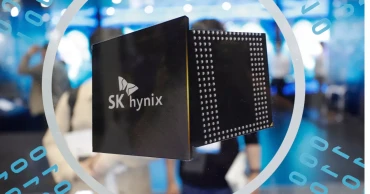
Shares in South Korean memory chipmaker SK Hynix, which soared 13% in their debut Friday on Wall Street, slumped 15.4% in Seoul. Its bigger rival Samsung Electronics sank 10.7%.
Elsewhere in Asia, Hong Kong's Hang Seng edged 0.2% higher, to 24,212.36, and the Shanghai Composite index shed 2.1% to 3,913.79.
In Australia, the S&P/ASX 200 was nearly unchanged at 8,808.50.
U.S. stocks ticked higher Friday after investors showed sustained appetite for winners of the artificial-intelligence boom. The S&P 500 rose 0.4% and the Dow Jones Industrial Average added 0.3%. The Nasdaq composite climbed 0.3%.
SK Hynix's shares jumped immediately after trading began in the midday hours after it raised roughly $26.5 billion by selling American depositary shares at a price of $149 each.
SK Hynix’s stock in Seoul had already surged more than 600% over the last year thanks to euphoria around AI. The boom has created real profits due to surging demand for computer memory. But it has also raised worries that AI stock prices have shot have too high and that all the world’s spending on chips and data centers won’t be able to produce enough productivity and profit growth to make it worth it.
“The reason why this stock, along with other memory chipmakers, has gone parabolic is that AI demand has somehow created the perception that a sector historically defined by boom-and-bust cycles could remain permanently in the boom phase,” Ipek Ozkardeskaya of Swissquote said in a commentary.
SK Hynix plans to double its production capacity, or possibly more, to keep up with demand. However, “Technological breakthroughs, more efficient AI models or simply a slowdown in AI infrastructure investment could quickly turn the market into one of oversupply,” she said.
Similar concerns apply to many AI stocks as they've grown into some of Wall Street’s most influential because of their huge valuations. Nvidia was the strongest single force lifting the S&P 500 Friday after rising 4%.
Beyond the uncertainty about AI, the focus on Wall Street is shifting to the upcoming reporting season for companies’ profits during the spring.
Companies across industries will need to produce big growth in profits to justify the big moves for their stock prices, which are broadly near records. Next week will feature earnings reports from many of the biggest U.S. banks, including Bank of America, Citigroup, JPMorgan Chase, Goldman Sachs and Wells Fargo on Tuesday alone.
Worries about how continued fighting with Iran will affect the global flow of crude are clouding the outlook both for energy costs and overall inflation.
High bond yields have been weighing on financial markets worldwide since more expensive oil and high inflation could push the Federal Reserve and other central banks to raise interest rates.
Higher rates can keep a lid on inflation, but they also slow the economy and hurt prices for all kinds of investments.
In other dealings early Monday, the U.S. dollar rose to 162.15 Japanese yen from 161.72 yen. The euro rose to $1.1409 from $1.1408.
11 days ago

Asian stocks rise as tech shares gain, oil prices fall amid Iran war concerns
Most Asian stock markets closed higher on Friday, supported by gains in technology shares, while oil prices declined as investors kept a close watch on the latest developments in the Iran war.
U.S. stock futures were mixed.
Market sentiment remained cautious after tensions between Iran and the United States intensified this week. President Donald Trump declared that the Iran war ceasefire agreement was "over," while both countries continued exchanging attacks.
South Korea's Kospi index climbed 2.5% to 7,475.94, recovering part of the losses recorded earlier this week. However, shares of memory chipmaker SK Hynix slipped 0.3% in Seoul ahead of its Nasdaq debut in New York later on Friday.
Japan's Nikkei 225 gained 1.2% to close at 68,557.73. SoftBank Group, a major investor in OpenAI, surged 10.7%, while chip equipment manufacturer Tokyo Electron rose 2.7%.
Hong Kong's Hang Seng Index added 0.5% to 24,156.29. In mainland China, the Shanghai Composite Index erased early gains and ended 1% lower at 3,996.16.
Australia's S&P/ASX 200 advanced 0.5% to 8,806.00, while India's Sensex rose 1%.
Oil prices moved lower after fluctuating sharply, as concerns persisted over global oil supplies due to the limited number of vessels able to pass through the Strait of Hormuz, one of the world's most important energy shipping routes.
Brent crude, the international benchmark, fell 0.8% to $75.66 a barrel, compared with around $72 before the war began in late February. U.S. benchmark crude dropped 0.9% to $71.47 a barrel.
On Wall Street, the S&P 500 gained 0.8% on Thursday, while the Dow Jones Industrial Average rose 0.3%. The tech-heavy Nasdaq Composite climbed 1.3% to 26,206.89.
Technology stocks, especially semiconductor companies, led the gains. Micron Technology jumped 4.5% after announcing plans to expand its U.S. investments, citing strong demand for memory chips driven by artificial intelligence.
Advanced Micro Devices (AMD) rose 5.7%, while Marvell Technology gained 5% and ON Semiconductor added 4.4%.
In currency trading early Friday, the U.S. dollar fell to 161.70 Japanese yen from 162.37 yen, while the euro edged up to $1.1439 from $1.1430.
The Japanese yen strengthened after Finance Minister Satsuki Katayama said the government would encourage major pension funds to invest more in domestic assets denominated in yen.
14 days ago
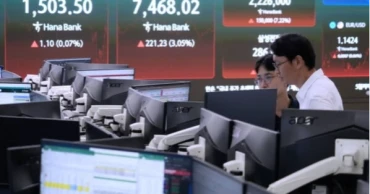
Asian stocks mixed, oil prices fall as Iran-US tensions intensify
Asian stock markets showed mixed performance on Thursday, while oil prices fell as tensions in the Middle East deepened following fresh military strikes by Iran and the United States.
US stock futures moved higher.
The US carried out additional airstrikes on Iran, while Iran responded by launching attacks targeting Bahrain, Kuwait and Qatar. The latest escalation came a day after US President Donald Trump declared that the temporary ceasefire between the two sides was "over."
Despite the renewed fighting, efforts to revive an interim agreement aimed at ending the conflict were continuing through high-level diplomatic talks, according to a regional intelligence official involved in the mediation process who spoke anonymously because of the sensitive nature of the negotiations.
Japan's Nikkei 225 index rebounded, rising 1.4 percent to 67,743.85 after earlier losses this week, supported mainly by technology stocks. Chip equipment maker Tokyo Electron jumped 5.5 percent, while AI-focused investment firm SoftBank Group slipped 0.1 percent.
South Korea's Kospi index gained 0.6 percent to 7,291.91 after fluctuating during the session. The index had dropped 5.4 percent on Wednesday. Samsung Electronics added 0.2 percent, while memory chip manufacturer SK Hynix surged 5.3 percent.
In China, the Shanghai Composite Index climbed 1.7 percent to 4,036.59, even after data showed producer prices rose 4.1 percent in June from a year earlier, compared with a 3.9 percent increase in May. Some economists linked the faster inflation to higher costs resulting from the Iran conflict.
Hong Kong's Hang Seng Index fell 0.7 percent to 24,027.97. Apple supplier Luxshare lost 2.5 percent during its Hong Kong market debut, while Chinese artificial intelligence company Zhipu, also known as Z.ai, jumped 9.3 percent after announcing plans to raise about $4 billion through a share sale.
Australia's S&P/ASX 200 slipped 0.3 percent to 8,762.50. Taiwan's Taiex fell 0.8 percent, while India's Sensex advanced 0.7 percent.
Oil prices eased after rising sharply the previous day. Brent crude, the international benchmark, fell $1 to $77 a barrel after briefly climbing above $80 on Wednesday. Before the Iran conflict began, Brent crude had been trading near $72 a barrel. Earlier hopes for an interim peace deal had briefly pushed prices back to pre-war levels.
US benchmark crude oil also declined, falling 83 cents to $72.69 a barrel.
On Wall Street, the S&P 500 closed 0.3 percent lower at 7,482.71 on Wednesday after dropping as much as 1.1 percent following Trump's remarks on the ceasefire.
The Dow Jones Industrial Average fell 1.1 percent to 52,348.39, while the technology-heavy Nasdaq Composite edged up 0.2 percent to 25,870.65 after recovering from earlier losses.
Broadcom shares rose 4.8 percent after Apple announced a multi-year partnership with the US chipmaker.
In currency trading, the US dollar slipped to 162.37 Japanese yen from 162.59 yen, while the euro strengthened to $1.1438 from $1.1417.
15 days ago