Europe
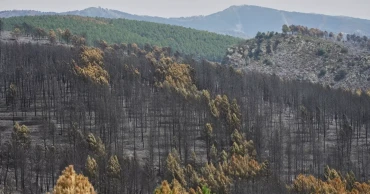
Spain battles one of its largest wildfires as heat wave grips Mediterranean
Firefighters continued battling one of Spain's largest wildfires on Wednesday as an intense heat wave spread across the Mediterranean, raising fears of more devastating blazes.
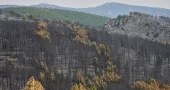
The wildfire in the rural province of Guadalajara has burned more than 32,000 hectares (79,000 acres), making it the second-largest wildfire in Spain's history after last year's 37,000-hectare blaze in the country's northwest. Authorities have evacuated 34 villages, though no deaths or serious injuries have been reported.
Prime Minister Pedro Sánchez visited the affected area and called for political unity to address climate change, saying rising temperatures and extreme weather are causing increasing destruction. He noted that Spain has already recorded 22 major forest fires this year, with more than 100,000 hectares scorched in the first half of 2026- matching the country's annual average over the past decade.
Ecological Transition Minister Sara Aagesen described the Guadalajara wildfire as the largest ever in Castilla-La Mancha and one of the country's biggest in recent history.
Regional authorities said firefighters, supported by water-dropping aircraft, have protected homes in all 40 villages within the affected area, most of which lies inside a national park. Officials hope to bring the nearly week-old blaze under control by Friday.
The fire comes less than two weeks after another deadly wildfire in southern Spain killed 13 people, including several foreigners.
Spain's weather agency warned that the current heat wave could worsen firefighting efforts, with temperatures expected to reach 40°C across much of the country and exceed 42°C in parts of Andalusia.
2 days ago

Ukraine reshuffles military leadership amid war with Russia
Ukraine pressed ahead with its war effort against Russia on Wednesday under a new military leadership after President Volodymyr Zelenskyy overhauled the country’s top defence command following days of political turmoil.
The changes came after Zelenskyy dismissed Commander-in-Chief Gen Oleksandr Syrskyi, responding to mounting public pressure and criticism over the military leadership. The reshuffle also saw Defence Minister Mykhailo Fedorov leave office, marking a significant overhaul of Ukraine’s defence establishment.
The leadership changes, announced late Tuesday, followed a week of political tensions that drew attention both at home and abroad, with Russian officials publicly welcoming the developments.
Maj Gen Mykhailo Drapatyi, 43, was appointed as the new commander-in-chief. Considered part of a younger generation of Ukrainian military leaders, Drapatyi first gained prominence in 2014 during Russia’s annexation of Crimea and has since built a reputation for his leadership on the battlefield.
Zelenskyy said the new military leadership has been tasked with presenting an updated defence strategy that includes continued reform of the army’s corps structure, faster delivery of weapons and drones, stronger air defence capabilities, and a clearer mobilisation plan.
The future role of former defence minister Fedorov remains uncertain.
The 35-year-old, widely credited with advancing Ukraine’s drone technology, had reportedly been at odds with Syrskyi over military reforms. His dismissal prompted protests in Kyiv and several other cities, where demonstrators demanded his reinstatement and called for Syrskyi’s removal.
Following the reshuffle, Zelenskyy said he had offered Fedorov a senior government position aimed at strengthening Ukraine’s technology sector, though it remains unclear whether the former minister has accepted the proposal.
Fedorov had earlier indicated that he had received job offers from several international defence technology companies after leaving office.
He welcomed Drapatyi’s appointment, describing it as a symbol of change and expressing hope that the new commander would strengthen Ukraine’s fight against Russian aggression.
Before his dismissal, Fedorov had publicly criticised Syrskyi, accusing him of obstructing military reforms and arguing that changes in the army’s leadership were necessary to sustain Ukraine’s resistance against Russia.
2 days ago
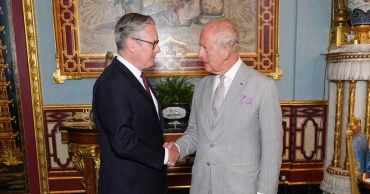
Andy Burnham becomes the UK's seventh prime minister
Andy Burnham officially became the United Kingdom's prime minister on Monday after King Charles III invited him to form a new government, succeeding Keir Starmer following the latter's resignation as Labour leader.
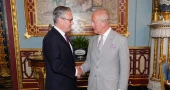
Burnham, the seventh UK prime minister since 2016, met the King at Buckingham Palace, where the traditional "kissing hands" ceremony marked the transfer of power. Buckingham Palace said the King requested Burnham to form a new administration, which he accepted.
Burnham set to replace Starmer but faces challenge of delivering change
In his first speech outside 10 Downing Street, Burnham acknowledged the country's frequent leadership changes over the past decade and said politicians "need to be better." He pledged to deliver a "circuit breaker" for a political system he believes has taken the wrong direction since the 1980s, restore stability, make politics "less toxic," improve living standards and revive public hope.
4 days ago
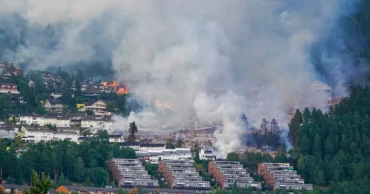
Massive fire destroys over 100 homes in Norway, hundreds evacuated
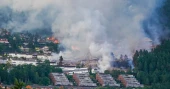
A massive fire swept through a residential area in southern Norway, destroying more than 100 homes and forcing hundreds of people to evacuate, police and the country's public broadcaster said.
The fire broke out in a townhouse in the city of Drammen at around 3:30 pm on Friday, police said. It quickly spread to nearby homes before reaching surrounding forested areas. Firefighters were still working on Saturday morning to contain the blaze.
Norway's public broadcaster NRK reported that hundreds of evacuees were taken to an emergency evacuation center.
Police said no residents have been reported missing. The cause of the fire was not immediately known.
Drammen is located about 34 kilometers (21 miles) southwest of the Norwegian capital, Oslo.
6 days ago
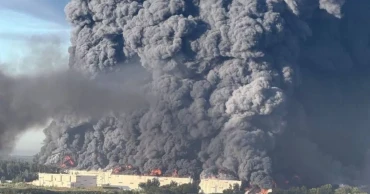
Ukrainian drone attacks kill 7, injure over 50 across Russian regions
At least seven people were killed and 51 others injured in overnight Ukrainian drone attacks on multiple Russian regions, Russian officials said on Saturday, as Kyiv intensified strikes on logistics and energy facilities deep inside Russia.
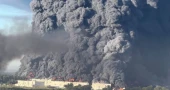
The attacks hit two large warehouses operated by Russia's leading online retailer Wildberries—one in Kotovsk in the Tambov region, around 360 kilometres from the Ukrainian border, and another in Elektrostal, about 50 kilometres east of Moscow.
Ukrainian President Volodymyr Zelenskyy said the long-range strikes targeted two major logistics facilities in the Moscow and Tambov regions that were allegedly used to supply sanctioned components for drone production and navigation systems. He also said an oil facility was struck, while Ukrainian special operations carried out attacks in the Sea of Azov and Russian-occupied territory.
Tambov Governor Yevgeny Pervyshov said seven workers on the night shift were killed and 25 others injured when the warehouse in Kotovsk was hit.
In the Moscow region, Governor Andrei Vorobyov said 24 people were wounded in Elektrostal. Two more people were injured in the nearby city of Noginsk, where a drone strike sparked a fire at an oil depot.
Authorities evacuated a nearby maternity hospital and a residential building in Noginsk as a precaution, Vorobyov added.
In Vladimir, about 180 kilometres east of Moscow, a Ukrainian drone struck a residential building, causing a brief fire but no casualties, according to regional Governor Alexander Avdeyev.
Russia's Defence Ministry said its air defence systems intercepted and destroyed 379 Ukrainian drones overnight over 19 Russian regions, as well as over the illegally annexed Crimean Peninsula, the Sea of Azov and the Black Sea.
Ukraine has increasingly targeted military, logistics and energy infrastructure inside Russia in an effort to disrupt Moscow's war effort as the conflict, now in its fifth year, continues.
6 days ago
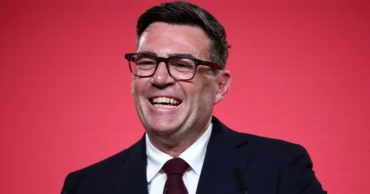
Andy Burnham named Labour leader, pledges to restore hope
Andy Burnham was officially declared leader of Britain's governing Labour Party on Friday, promising to bring hope to the British people and purpose to the floundering government as he cleared his final hurdle to take office as prime minister next week.
The former mayor of Greater Manchester was the only contender in the center-left party's leadership contest to replace departing Prime Minister Keir Starmer, who was forced out by a rebellion within his party. Friday's announcement was a foregone conclusion after Burnham secured nominations from 379 of the 403 Labour lawmakers in the House of Commons.
Burnham pledged to serve “people and places who have been waiting too long for politics to let them hope again.”
“We’re going to give them hope back,” he told an audience of lawmakers, party activists and trade union leaders in his first speech as leader. “I am ready.”
“I have a plan,” he added, in a bid to reassure a party that has seen its popularity nosedive since winning a landslide election victory two years ago. He pledged to end Labour's factional disputes, saying “we won’t beat Britain’s new right if we are consumed by infighting and pulling in different directions.”
The prime minister in waiting is about to take office
Burnham has been prime minister-in-waiting for weeks, since winning a special election for a seat in Parliament a month ago, but he has revealed little detail about his policy priorities. He will arrive in Number 10 Downing Street largely unknown to voters outside Manchester.
He sketched out some priorities in Friday's speech, promising to deliver “hope in every heart” and “good growth in every post code,” in part by transferring power from central government in London to local leaders in cities and regions.
“We will take power back from Westminster and Whitehall and give it to the place you live,” he told the audience. “More power over life’s essentials so you can make them work better.”
Starmer announced last month that he would resign after two years in office marred by missteps and judgment errors that eroded his standing with his party and the public.
Labour regularly trails behind anti-immigration party Reform UK in opinion polls, and the governing party had catastrophic results in local elections in May, triggering pressure on Starmer to step down that he couldn’t resist.
Burnham deemed a better communicator than Starmer
Burnham brings a more relaxed style of leadership than the rather stern Starmer, and is regarded as one of the Labour Party’s best communicators. But he faces many of the same problems as his predecessor, including a sluggish economy, a cost-of-living squeeze fueled by wars in Ukraine and the Middle East and overstretched public services.
And his promises of a new, less divisive politics are not too different to what Starmer pledged when he took office in 2024.
“I will work to build a new politics. The country is crying out for it,” Burnham said. “How can politicians point fingers when living standards are falling and politics as a whole isn’t working for them? It infuriates them and makes them switch off.”
He said he would have the “courage to fix the big things that politics has neglected,” such as tackling the patchy access to social care for those who need it because of age, illness or disability. It’s a pressing issue in a country with an aging population, and one that has foxed previous Labour and Conservative governments.
Burnham says he'll reverse 40 years of bad decisions
He highlighted plans to focus on economic renewal, more public control of key sectors and creating new modern industrial jobs, arguing that Britain took “a series of wrong turns in the 1980s” when “political power was centralized and economic power privatized.”
That’s the decade when Conservative Prime Minister Margaret Thatcher oversaw policies of privatization, deindustrialization and political centralization that transformed the U.K. economy.
“Slowly, at times imperceptibly, over four decades, political and economic power drained away out of our communities in every region and nation of the U.K.,” Burnham said, calling Britain's change of prime ministers — for the sixth time in a decade — “the most significant change moment in our politics for 40 years.”
Starmer will remain prime minister until Monday, when he formally tenders his resignation to King Charles III. The king will then ask Burnham to form a government.
Britain’s parliamentary democracy allows governing parties to change leaders, and thus prime ministers, without the need for a general election. The next national election doesn’t have to be held until 2029.
New prime ministers have come with increasing frequency in recent years. Burnham will be the U.K.'s seventh leader since 2016.
He faces strong and sometimes conflicting pressures.
Unions welcomed his focus on living standards but said the test would be whether he can deliver. Business group the Confederation of British Industry praised his emphasis on economic growth, but also aid that “the challenge is execution.”
6 days ago
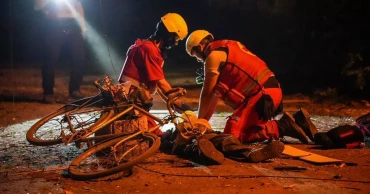
Russian strikes kill four in Ukraine as Zelenskyy's defence reshuffle triggers backlash
Overnight Russian attacks across Ukraine killed at least four civilians and injured 20 others, Ukrainian President Volodymyr Zelenskyy said Friday, as his government's surprise defence leadership shake-up sparked political controversy and public protests.
The attacks came a day after Zelenskyy announced a major Cabinet reshuffle, including the appointment of a new prime minister and the dismissal of Defence Minister Mykhailo Fedorov, a move that has drawn criticism from military circles and the public despite recent battlefield gains against Russian forces.
Thousands of demonstrators gathered in several Ukrainian cities on Thursday to protest Fedorov's removal, with more rallies expected on Friday.
Fedorov, 35, had served as defence minister for only six months but gained widespread recognition for accelerating Ukraine's military technological capabilities and pushing reforms aimed at tackling corruption in the defence sector.
According to Zelenskyy, deteriorating relations between Fedorov and Commander-in-Chief Gen. Oleksandr Syrskyi had made the minister's position untenable.
The president has nominated Maj. Gen. Yevhen Khmara, the acting head of Ukraine's Security Service (SBU), to replace Fedorov. Parliament must approve the appointment, although legal and procedural hurdles could delay the process. Under Ukrainian law, the defence minister must be a civilian, meaning Khmara would first have to leave active service. Parliament is also in summer recess until mid-August.
Khmara has led the SBU since January and previously commanded its elite Alpha special forces unit. He is widely credited as one of the architects of Operation Spiderweb, a high-profile Ukrainian operation that targeted Russian air bases last year.
Meanwhile, Russian missile and drone attacks continued across Ukraine.
In the southern port city of Odesa, two civilians were killed and 10 others, including children, were injured in a missile strike, according to regional governor Oleh Kiper. One of those killed was a woman who had been walking in a park with her children, who survived the attack.
In the southeastern Zaporizhzhia region, two more people were killed and five injured, Zelenskyy said. Russian shelling also wounded three people in the northeastern Kharkiv region, while officials reported additional casualties in five other regions.
Ukraine has increasingly targeted Russian military and energy infrastructure in recent months, including oil facilities that have contributed to fuel shortages in parts of Russia.
Russia's Defence Ministry said its air defence systems intercepted and destroyed 243 Ukrainian drones overnight.
In Russian-controlled areas of Ukraine's Kherson region, Moscow-installed official Vladimir Saldo claimed that Ukrainian drone attacks over the previous 24 hours killed three civilians and injured seven others. His claims could not be independently verified.
7 days ago

Europe's early heat wave linked to more than 10,000 excess deaths
An unusually intense and early summer heat wave across Europe is believed to have caused more than 10,000 excess deaths, with health experts warning that the true toll may be even higher as heat-related fatalities are often not officially recorded.
Preliminary figures from mortality monitoring agencies across Europe show a sharp rise in excess mortality — the number of deaths above what would normally be expected — during the final week of June, when record-breaking temperatures swept across much of the continent.
Researchers say many heat-related deaths are never directly attributed to extreme temperatures because victims often die from conditions such as heart attacks or respiratory illnesses that are worsened by prolonged heat exposure.
The findings point to one of Europe's deadliest early-summer heat events in recent years, although the devastating 2003 heat wave, which claimed an estimated 70,000 lives, remains the continent's worst on record.
According to EuroMOMO, a European mortality monitoring network covering two dozen countries, an estimated 14,260 excess deaths were recorded during the week ending June 28. More than 12,000 of those deaths involved people aged 65 or older. The network reported that France, Belgium and Germany experienced the highest levels of excess mortality during the period.
Lasse Vestergaard of Denmark's Statens Serum Institut, which coordinates EuroMOMO, said the heat wave was the most likely explanation for the unusually high number of deaths, noting there was no other significant event that could account for the spike.
Several countries have also released their own estimates of heat-related deaths.
Germany recorded the highest national toll, with the Robert Koch Institute attributing 6,830 deaths to extreme heat through early July, including 6,470 among people aged 65 and above. The country experienced record temperatures of 41.7 degrees Celsius on June 28.
In the United Kingdom, the Met Office estimated that around 2,700 people died from heat-related causes during heat waves in May and June across England and Wales, including approximately 2,200 deaths during the late-June heat wave.
France's public health authority reported at least 2,000 more deaths during the week of June 22-28 compared with the previous week, as much of the country endured temperatures above 40 degrees Celsius.
Spain's Carlos III Health Institute estimated that 937 deaths in June were linked to excessive heat after the country experienced its second-hottest June on record.
Belgium reported 1,747 excess deaths during the heat wave that lasted from June 18 to July 1, with health authorities describing the event as exceptionally widespread.
In the Netherlands, public health officials estimated 480 more deaths than expected during the June heat wave, particularly in the eastern and southern parts of the country, where temperatures were highest.
Scientists say climate change, driven largely by the continued use of fossil fuels, is increasing both the frequency and intensity of heat waves, making such deadly events more common across Europe. They also warn that older adults and people with underlying health conditions remain especially vulnerable during prolonged periods of extreme heat.
7 days ago

France's lower house gives final approval to assisted-dying bill after years of debate
France's National Assembly on Wednesday gave final approval to a bill that would allow adults with incurable illnesses to receive lethal medication under strict conditions, marking the culmination of years of debate over end-of-life care.
The bill was approved by a 291-241 vote in the lower house of parliament. However, it will not become law immediately, as it must first undergo a constitutional review to determine whether it complies with the French Constitution.
The National Assembly approved the legislation after supporting it in three previous readings. French President Emmanuel Macron, who first announced the proposal more than three years ago, welcomed the vote.
"In 2022, I committed to opening this path with the French people," Macron wrote on X. "With seriousness, with humility, and with full respect for our democracy, that commitment has been fulfilled."
According to various estimates, around 300 million people worldwide have access to some form of assisted dying. Euthanasia is legal under certain conditions in several countries, while medically assisted suicide is permitted in others, including some US states.
France, which has a growing elderly population and increasing numbers of people living with chronic illnesses, has long debated the legal, ethical, medical and religious issues surrounding end-of-life care. Existing French law allows doctors to place terminally ill patients under deep sedation before death but does not permit assisted suicide or euthanasia.
"The national representation has risen to the occasion during these debates. This has been the longest debate since the 1980s," National Assembly President Yael Braun-Pivet said.
Many French patients have previously traveled to neighboring countries where assisted suicide or euthanasia is legal. Medically assisted suicide involves patients taking prescribed lethal medication themselves, while euthanasia involves a healthcare professional administering a lethal injection at the patient's request.
The issue is also under discussion in the United Kingdom, where a bill to legalize assisted dying in England and Wales is due to return to Parliament on Sept. 11 after failing to complete the legislative process during the previous parliamentary session.
Strict eligibility criteria
The proposed French law mainly allows medically assisted suicide by enabling eligible patients to receive and self-administer lethal medication under strict conditions. Patients who are physically unable to administer the medication themselves could receive assistance from a doctor or nurse.
Applicants would have to be at least 18 years old and either French citizens or legal residents.
Before approval, a doctor would be required to consult a team of healthcare professionals and confirm that the patient has a serious, incurable and life-threatening illness, is in an advanced or terminal stage, is experiencing unbearable pain that cannot be relieved, and is making the request voluntarily.
Lawmakers also specified that psychological suffering alone would not qualify someone for medically assisted dying. People with severe psychiatric disorders or neurodegenerative diseases, including Alzheimer's, would not be eligible.
Patients would initiate the request, which healthcare professionals would review within 15 days. After a mandatory reflection period of at least two days, eligible patients could choose when and where to take the medication, including at home or in a healthcare facility, with loved ones present if they wish.
On the chosen day, the attending doctor or nurse would confirm that the patient still wishes to proceed and remain nearby in case complications arise.
All related costs would be covered by France's national health insurance system.
Public support and opposition
A 2023 report found that most French people support legalizing assisted dying, with opinion polls showing growing public backing over the past two decades.
The Association for the Right to Die With Dignity welcomed the legislation, saying it would allow people "to choose to end unbearable suffering, freely and with full awareness."
Its president, Jonathan Denis, said the law would create a new right without forcing anyone to use it, while ensuring that patients remain central to decisions about their own medical care.
Opponents, however, argue that the measure could place pressure on elderly people and those living with serious illnesses or disabilities.
The anti-euthanasia group Alliance Vita, in an open letter to Macron, said priority should instead be given to ensuring immediate access to palliative care and support.
"Presenting death as a desirable solution can never be an acceptable response to suffering and is contrary to human dignity," the group said.
Constitutional review before becoming law
The French Senate, where conservatives hold a majority, rejected the bill. However, under France's legislative system, the National Assembly has the final say when the two chambers disagree.
Senate President Gérard Larcher and Prime Minister Sebastien Lecornu said they would refer the legislation to the Constitutional Council, which has up to one month to decide whether it complies with the Constitution. The law will only take effect after that review is completed.
Lecornu said that although the National Assembly held extensive debates on the bill, discussions in the Senate did not allow for the same level of detailed examination needed to address both supporters' expectations and opponents' concerns.
Meanwhile, debate over assisted dying continues elsewhere in Europe. In the UK, legislation to legalize assisted dying in England and Wales was delayed after opponents in the House of Lords filed more than 1,200 amendments, citing concerns including possible coercion of vulnerable people and insufficient safeguards for people with disabilities.
The bill, expected to return in September, would allow terminally ill adults in England and Wales with fewer than six months to live to apply for an assisted death, subject to approval by two doctors and an expert panel.
In Germany, the Bundestag considered two separate proposals to regulate assisted dying in 2023 but rejected both.
8 days ago
1,000 evacuated as wildfire spreads near Paris; Spain identifies victims of deadly blaze
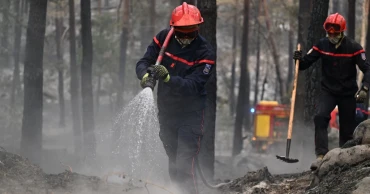
Hundreds of firefighters continued battling two wildfires in the Fontainebleau forest south of Paris on Tuesday after the blazes burned nearly 2,000 hectares (about 4,900 acres) and forced around 1,000 people to evacuate, local authorities said.
Although larger wildfires have been affecting southern France, the Fontainebleau blaze is unusual because of its proximity to the densely populated region surrounding the French capital.
Water-bombing aircraft repeatedly scooped water from the Seine River to fight the flames, marking the first time such planes have been deployed for firefighting operations in the Paris region, according to the regional fire chief.
Smoke covered the treetops and lingered across the area as emergency crews worked to bring the fires under control.
Authorities said no deaths or injuries had been reported.
Four days after a devastating wildfire swept through a remote expatriate community in southern Spain, judicial authorities said they had identified 10 of the 13 victims through biological samples.
Most of the victims were foreign nationals. They included five British citizens — among them a woman who later died in hospital — three Belgian nationals, one French woman and one Spanish citizen, according to a statement issued late Monday.
Ten people are still missing.
The Los Gallardos wildfire scorched about 70 square kilometres (27 square miles) of forest and farmland, covering an area larger than Manhattan.
Spain is facing extreme heat, and combined with strong winds and limited rainfall, conditions have allowed small wildfires to spread rapidly.
According to the European Union's Copernicus Climate Change Service, Europe is the world's fastest-warming continent, with temperatures rising at twice the global average rate since the 1980s.
10 days ago