iPhone

Apple unveils $599 devices targeting budget buyers
Apple has introduced a range of new products, including two devices priced at $599, as part of what CEO Tim Cook described as a “big week” of announcements aimed partly at budget-conscious buyers.
The new lineup was presented during hands-on media events in New York, London and Shanghai on Wednesday. The announcements include the new iPhone 17e, an entry-level laptop called MacBook Neo, updated iPad Air M4 tablets, refreshed monitors and upgraded chips for the company’s high-end laptops. Preorders for the devices began Wednesday.
The announcements come after the company reported record quarterly earnings driven by strong sales of the iPhone 17 series, although Apple has yet to roll out its previously promised artificial intelligence upgrades for Siri.
iPhone 17e
The iPhone 17e is designed for budget buyers and starts at $599 about $200 cheaper than the base iPhone 17. It uses the same A19 chip as the standard model and offers 256GB of storage, double the capacity of the previous 16e version.
The phone features a 48-megapixel camera and a C1X modem that supports faster cellular speeds. It also includes Apple’s Super Retina display, Ceramic Shield 2 protection and MagSafe charging with Qi2 support.
The device will be available in black, white and light pink.
iPad Air update
Apple also introduced an updated iPad Air powered by the M4 chip. While the higher-end iPad Pro uses the newer M5 chip, the Air still provides strong performance for everyday tasks such as streaming, browsing, email and video editing.
The company increased the tablet’s memory from 8GB to 12GB without raising the price. The 11-inch model starts at $599, while the 13-inch version starts at $799, both with 128GB of storage.
MacBook and chip upgrades
Apple upgraded its MacBook Pro laptops with new M5 Pro and M5 Max chips aimed at improving performance and battery efficiency.
The 14-inch MacBook Pro with the M5 Pro chip starts at $2,199, while the 16-inch model starts at $2,699. Both offer 24GB of RAM and 1TB of storage, along with support for Wi-Fi 7 and Bluetooth 6.
The new MacBook Neo, Apple’s most affordable laptop yet, features a 13-inch display, an A18 Pro chip, 256GB storage and two USB-C ports. The base model costs $599, while a 512GB version with Touch ID is priced at $699. Students and educators can get a $100 discount.
Apple also refreshed the MacBook Air with the base M5 chip and doubled storage to 512GB. The 13-inch model starts at $1,099 and the 15-inch version at $1,299.
New monitors
The company also launched two 27-inch 5K monitors the Studio Display and the higher-end Studio Display XDR. Both feature 5,120×2,880 resolution, 12-megapixel Center Stage cameras, six-speaker systems, two Thunderbolt 5 ports and two USB-C ports.
The Studio Display costs $1,599, while the advanced XDR version which includes mini-LED backlighting and a 120Hz refresh rate starts at $3,299.
7 months ago
iPhone 17 Pro and Pro Max Review : Apple’s Bold Leap into the Future
The iPhone 17 series was announced on September 9, 2025, and expected to be available from September 19, 2025. Through this, Apple once again redefined what a flagship phone should feel like. With cutting-edge performance, cameras designed for creators, and a display that feels like a mini cinema, the iPhone 17 Pro and Pro Max raise the bar for premium smartphones.
Key Features of iPhone 17 Pro and Pro Max
.
Design and Build Quality
One of the biggest improvements in the iPhone 17 Pro and Pro Max is the new aluminium alloy body. Apple has updated the titanium frame to a new heat-forged aluminium alloy unibody. Though some users may miss the premium touch of titanium, this is far better in heat management, keeping the phone cooler during heavy use.
Coupled with a laser-welded vapour chamber inside, the aluminium frame effectively draws heat away from the processor. This is a big deal for sustained performance. Both the front and back of the phone are protected by Ceramic Shield 2, which Apple claims is three times more scratch-resistant and four times more crack-resistant than its predecessor.
Read more: realme 15T Review with Price in Bangladesh
The most striking visual change is the new horizontal camera plateau that spans the entire width of the phone's back, a dramatic departure from the familiar square camera bump. This will provide more space for the advanced camera system and a larger battery.
Weighing 206 g, the Pro version’s dimensions are 150 x 71.9 x 8.8 mm, while the Pro Max version appears with a bigger (163.4 x 78 x 8.8 mm) and heavier (233 g) body .
Display
The displays on the iPhone 17 Pro and Pro Max are a feast for the eyes. Both feature a Super Retina XDR OLED with a 120Hz ProMotion adaptive refresh rate, ensuring buttery-smooth scrolling and a highly responsive feel. What really sets them apart is the insane brightness. With a peak outdoor brightness of 3000 nits, the screen is incredibly easy to read even in direct sunlight, and the anti-reflective coating on the Ceramic Shield 2 further reduces glare.
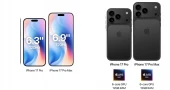
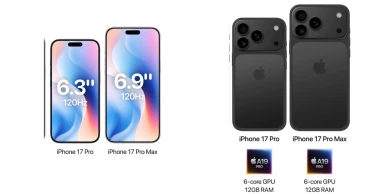
The iPhone 17 Pro has a 6.3-inch display, while the Pro Max goes bigger with a 6.9-inch screen, both offering stunning clarity and vibrant colours. The displays of both devices are protected by Ceramic Shield 2, Mohs level 5 with an anti-reflective coating. The new Liquid Glass design in iOS 26 also takes full advantage of these displays, making the user interface feel more expressive and fluid.
Read more: Samsung Galaxy S25 FE Review: Perfect Balance of Power, Performance
Camera Performance
The almost identical camera system on the iPhone 17 Pro and Pro Max is arguably the biggest leap forward. For the first time, all three rear cameras—the wide (f/1.6), ultrawide (f/2.2), and telephoto (f/2.8)—are 48 MP Fusion sensors. This means more detailed, sharper images across the board.
The new telephoto lens is a standout feature, offering 4x optical zoom with a next-generation tetraprism design and an incredible 8x optical-quality zoom at 200 mm, the longest on any iPhone to date. This gives you a remarkable ability to get close to your subject without losing quality.
In both the Pro and Pro Max versions, the 18 MP (f/1.9) front cameras sit at the centre near the display's top edge. It has a multi-aspect square sensor that automatically adjusts its field of view to include everyone in a group shot, and you can even take landscape selfies while holding the phone vertically.
For video, the Pro models now support ProRes RAW, Apple Log 2, and a maximum of 4K footage recording capacity at 120 fps, making them an incredible tool for professional content creators.
Read more: Oppo A6 Max Review with Price in Bangladesh
Processor Performance
Apple powers the latest iPhone 17 Pro and Pro Max devices with the brand-new Apple A19 Pro chipset, a 3nm processor that delivers an unprecedented level of performance. Apple claims up to a 40% improvement in sustained performance compared to the previous generation, a direct result of the new vapour chamber cooling system and the aluminium frame.
This means you can push the phone to its limits for extended periods without experiencing thermal throttling. The A19 Pro’s GPU, with integrated neural accelerators in each core, is a beast for graphics-intensive tasks.
Gaming Performance
This is where the A19 Pro truly shines. The combination of the powerful GPU and the new vapour chamber cooling system ensures that the iPhone 17 Pro and Pro Max can handle the most demanding AAA gaming titles with ease.
Games with hardware-accelerated ray tracing and high frame rates run incredibly smoothly, with no noticeable lag or overheating issues even during long gaming sessions. The phones feel like a portable gaming console, delivering a console-like experience with stunning visuals and fluid gameplay.
Read more: 10 Best Smartphones Releasing in September 2025
Battery Life
Apple has made significant strides in battery life, thanks to the new internal design that accommodates larger batteries. The iPhone 17 Pro has a battery capacity of 3,988 mAh in its Nano-SIM model and 4,252 mAh in its eSIM-only model. On the other hand, the Pro Max sports a 4,832 mAh battery in its Nano-SIM model and a whopping 5,088 mAh in its eSIM-only model, offering the best battery life on an iPhone to date. Both the Pro and Pro Max models are blessed with 25-watt wireless and 4.5-watt reverse wired charging facilities.
The iPhone 17 Pro is rated for up to 33 hours of video playback, while the Pro Max model is a true marathon runner, lasting up to 39 hours. This means you can comfortably get through a full day of heavy use, from gaming and video streaming to capturing content, without needing to reach for a charger. And when you do need a top-up, the wired PD2.0 charging gets you to 50% in just 20 minutes.
Software and User Interface
The iPhone 17 Pro series comes with iOS 26 out of the box. This new version of the OS introduces a redesigned user interface with a "Liquid Glass" theme, making the entire experience feel more polished and dynamic. A major new feature is Apple Intelligence, which brings a suite of on-device AI capabilities.
These features are designed to be effortlessly helpful, from live text and audio translation to smarter photo organisation and more. The integration of Apple Intelligence makes the iPhone feel more personal and intuitive than ever before, with most of the AI processing happening on the device for enhanced privacy and speed.
Read more: Xiaomi Redmi Note 15 Pro 5G Review: What’s New?
Storage Options
Apple has listened to user feedback and upped the base storage for the Pro models. The iPhone 17 Pro now starts at 256GB, with options for 512GB and 1TB. The iPhone 17 Pro Max goes even further, offering a 2TB option for those who need massive storage for high-resolution photos, 4K videos, and large app libraries. The internal storage is based on NVMe technology, ensuring lightning-fast read and write speeds for a smooth user experience.
Both the Pro and Pro Max models are equipped with 12 GB RAM for all storage variants.
Pros and Cons of iPhone 17 Pro and Pro Max
.
Pros
- Premium aluminum frame with Ceramic Shield 2- Stunning LTPO OLED display with 120 Hz, HDR10, and Dolby Vision- Super-powerful Apple A19 Pro chipset with 12GB RAM- Triple 48MP rear cameras for versatile photography- 18 MP selfie camera with OIS and HDR support- Large battery capacity (up to 5088 mAh) with fast charging- Wireless and reverse wired charging options- Excellent gaming and multitasking performance- iOS 26 with advanced security and satellite features.
Read more: Xiaomi Redmi Note 15 Pro Plus Review: Robust processor with massive battery
Cons
- Large and heavy, especially the Pro Max- No 3.5mm headphone jack- Very expensive compared to rivals- No expandable storage option- Pro model lacks 2TB storage option (Pro Max only).
Price of iPhone 17 Pro and Pro Max
The price of the iPhone 17 Pro is expected to start at around BDT 135,000. On the other hand, the iPhone 17 Pro Max’s price range will start from approximately BDT 230,000 in Bangladesh.
Verdict
The iPhone 17 Pro and Pro Max shine with top-tier performance, stunning cameras, and long-lasting batteries, making them perfect for power users, gamers, and creators. However, their hefty size and premium price tag may not suit casual users or those on a budget. If you are looking for iPhone 17 models with more affordable price tags, check out the iPhone 17 and iPhone Air.
Read more: Apple iPhone Air: The Ultra-Thin Revolution – A Complete Review
You may also like: Apple iPhone 17 Review – “More Than Just a Better Camera?”
1 year ago
Apple iPhone Air: The Ultra-Thin Revolution – A Complete Review
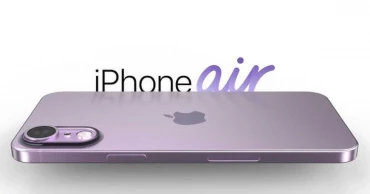
The iPhone Air was announced on September 9 and will be available from September 19. It is a totally new product of Apple. Sporting a bold design in a thin body, it feels more like a piece of the future you can buy today. Let's take a look at the main features, specifications, merits, demerits and expected pricing of the iPhone Air in Bangladesh.
Key Features of iPhone Air
.
Design and Build Quality
The iPhone Air makes an instant impression the moment you pick it up. It is unbelievably thin at just 5.6 mm and so light at 165 g that you almost forget you are holding a flagship phone. Yet, it does not feel flimsy at all. Apple has combined Ceramic Shield 2 glass on the front and back with a Grade 5 titanium frame, giving it both elegance and durability in equal measure.
The IP68 rating is reassuring too – knowing it can handle a 6-metre underwater adventure for half an hour gives you that peace of mind for real-world accidents. Those curved edges and matte back finish make it surprisingly comfortable to hold despite the larger screen, and honestly, the anti-reflective coating and precision titanium work show Apple's obsessive attention to detail. It genuinely feels like holding something luxurious that is also ready for whatever life throws at it.
Read more: Apple iPhone 17 Review – “More Than Just a Better Camera?”
Display Quality
The iPhone Air features a 6.5-inch LTPO Super Retina XDR OLED display, and it is nothing short of stunning. With a 120 Hz refresh rate, HDR10, Dolby Vision, and up to 3000 nits peak brightness, this screen is designed to impress you anywhere, indoors or outdoors. Colours look punchy yet natural, blacks are deep, and contrast is excellent.
For streaming, the higher peak brightness makes HDR content stand out beautifully, giving movies and shows a cinematic feel. The 1260 by 2736 pixels resolution, 19.5:9 ratio and slim bezels also make it highly immersive, while the 460 ppi density ensures crisp text and sharp images. Apple’s use of Ceramic Shield 2 with Mohs level 5 hardness and an anti-reflective layer further improves usability, reducing glare during outdoor use. The display feels like one of the biggest selling points of this phone.
Camera Performance
On the camera front, the iPhone Air takes a slightly different approach compared to its Pro siblings. Instead of multiple lenses, it uses a 48 MP wide sensor as its main camera. While it may sound limiting, Apple’s software magic ensures you still get incredible results. The sensor-shift optical image stabilisation and dual-pixel PDAF help capture detailed shots in almost any lighting condition. The primary sensor features an f/1.6 aperture, 26 mm lens width, 1/1.56 lens size, and 1.0 µm sensor size.
Read more: realme 15T Review with Price in Bangladesh
Low-light photography is noticeably better thanks to improved Night Mode and HDR. Video recording is equally impressive, with support for 4K at up to 60 fps, Dolby Vision HDR, and even 240 fps slow motion at 1080p. Content creators will find this phone reliable for both casual and semi-professional use.
The 18 MP front camera featuring f/1.9 aperture deserves mention as well. With OIS, PDAF, and support for Dolby Vision HDR, selfies and video calls look sharp and smooth. Apple has also added spatial audio and stereo sound recording, making video calls and vlogs feel more immersive.
Processor Performance
Under the hood, the iPhone Air is powered by the Apple A19 Pro chip built on a 3nm process. This chipset is not just powerful—it is efficient. The hexa-core CPU and 5-core Apple GPU work seamlessly to deliver blazing-fast performance across all tasks.
From opening apps instantly to handling intensive video editing, everything feels buttery smooth. Apple has also baked in AI-driven performance optimisations, making tasks like voice recognition, photo processing, and predictive text smarter and faster. Paired with iOS 26, the user experience feels fluid and polished, with minimal lag or slowdowns.
Read more: Samsung Galaxy S25 FE Review: Perfect Balance of Power, Performance
Gaming Performance
Gamers are going to absolutely love what the iPhone Air brings to the table. You can play Call of Duty Mobile and Genshin Impact, and the performance is incredible. That A19 Pro GPU paired with the 120 Hz OLED makes everything look buttery smooth – no stutters or frame drops even during intense battles.
What will really surprise you though is how cool it stays during those marathon gaming sessions. Previous iPhones would get uncomfortably hot, but this one just keeps chugging along without any throttling. The spatial audio and haptic feedback make it feel almost like you are playing on a console – it is that immersive.
Battery Life
At 3149 mAh, the iPhone Air’s battery might sound modest compared to some Android rivals, but Apple’s efficiency magic comes into play. Thanks to the A19 Pro’s power management and iOS 26’s optimisations, the phone delivers all-day battery life with ease. You can expect up to 22 hours of video playback or a full day of heavy social media, gaming, and streaming without constantly reaching for the charger.
Read more: Oppo A6 Max Review with Price in Bangladesh
Charging is also fast and convenient. The device supports PD2.0 fast charging, which gets you 50% in just 30 minutes. Wireless charging via MagSafe 3.0 and Qi2 is supported as well, offering 15W speeds in China and 20W elsewhere. For added flexibility, Apple even included reverse wired charging at 4.5 W, allowing you to juice up accessories like AirPods.
Software and User Interface
Running on iOS 26, the iPhone Air feels intuitive and packed with smart features. Apple has introduced subtle UI refinements, making multitasking smoother and gestures more responsive. The integration of satellite connectivity for SOS, Messages, and Find My gives peace of mind during emergencies.
Face ID continues to be the primary biometric option, now faster and more accurate. The system-level integration of the UWB Gen2 chip also means better connectivity with AirTags and Apple’s expanding ecosystem of devices. It is not just about speed—it is about how seamlessly everything works together.
Storage Options
Apple provides generous storage choices this time around, starting at 256GB with 12GB RAM and going all the way up to 1TB. All models use NVMe storage, ensuring ultra-fast read and write speeds, which is especially helpful when transferring large files or editing videos directly on the device.
Read more: 10 Best Smartphones Releasing in September 2025
The lack of expandable storage is not new, but with these configurations, most users will not feel the pinch. The inclusion of 12GB RAM across all variants also ensures better multitasking, future-proofing the phone for years to come.
Pros and Cons of the Apple iPhone Air
.
Pros
- Ultra-thin and lightweight design.- Durable Ceramic Shield 2 glass with a titanium frame.- Stunning 6.5-inch LTPO XDR OLED with HDR10 and Dolby Vision.- Powered by the Apple A19 Pro chipset.- Large storage options: 256GB, 512GB, and 1TB.- Stereo speakers with immersive sound.- Fast Face ID unlocking.- 25W MagSafe wireless charging support.
Read more: Xiaomi Redmi Note 15 Pro 5G Review: What’s New?
Cons
- Only a single rear camera.- No option for expandable storage.- Smaller 3149 mAh battery compared to rivals.
Price of Apple iPhone Air
The price of the iPhone Air in Bangladesh is expected to start from BDT 150,000.
In a Nutshell
The Apple iPhone Air shines with its slim design, sharp OLED display, and powerful A19 Pro chip but compromises with a single camera and modest battery. It can be a good pick for users who value portability, premium design, and smooth performance. However, heavy photographers or power users seeking bigger batteries may check out other options.
Read more: realme P4 Pro Review: Mid-ranger gaming phone with huge battery and robust processor
1 year ago
Apple iPhone 17 Review – “More Than Just a Better Camera?”
The iPhone 17 series is Apple’s latest flagship lineup, announced September 9, 2025, and is expected to be released on September 19. It brings upgrades across camera, display, chip, and battery — but is it enough to make you switch? Here is a human look at what the iPhone 17 really delivers.
Key Features of the Apple iPhone 17
Design and Build Quality
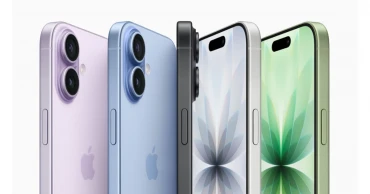
The iPhone 17 feels like a refined version of what came before, and that is perfectly fine. At 177 grams and measuring 149.6 mm by 71.5 mm by 8 mm, it strikes that sweet spot between premium feel and everyday comfort. The build quality is genuinely impressive. The Ceramic Shield 2 glass front boasts Mohs level 5 hardness, which means it laughs off encounters with keys and coins that would scratch other phones.
The aluminium frame might not be as fancy as the Pro's titanium, but it works brilliantly here, keeping weight down while maintaining that solid iPhone feel. The IP68 rating can protect the device 6 metres underwater for 30 minutes. That is not just accidental drop protection; that is genuine peace of mind. Connectivity covers everything from GSM to 5G, so you will stay connected.
Read more: realme 15T Review with Price in Bangladesh
Display Quality
The display is, without a doubt, one of the most significant upgrades on the iPhone 17. Apple has finally brought its LTPO Super Retina XDR OLED screen with a 120 Hz ProMotion refresh rate to the base model. This change is instantly noticeable, making everything from scrolling through web pages to swiping between apps incredibly fluid and responsive.
With a resolution of 1206 by 2622 pixels on a 6.3-inch screen, the pixel density is a sharp 460 ppi, making text and images look exceptionally crisp. The display also boasts impressive brightness, reaching 1000 nits typical, 1600 nits in high brightness mode (HBM), and a stunning 3000 nits peak. These make the device effortlessly viewable even in the brightest sunlight. HDR10 support ensures that movies and photos pop with vivid colours and deep blacks.
Camera Performance
The camera system on the iPhone 17 is a huge step up. The rear is equipped with a new dual-camera setup featuring a 48 MP wide-angle sensor and a 48 MP ultrawide sensor. The main camera has a fast f/1.6 aperture, 26 mm lens width, 1/1.56-inch lens size, and 1.0 µm pixel size. It features sensor-shift OIS, resulting in excellent low-light performance and incredibly stable shots.
The ultrawide lens has a 120-degree field of view, f/2.2 aperture, 13 mm lens width, 1/2.55-inch lens size, and 0.7 µm pixel size, which is great for capturing expansive landscapes or group photos.
Read more: Samsung Galaxy S25 FE Review: Perfect Balance of Power, Performance
The selfie camera also gets a big upgrade to an 18 MP (f/1.9) multi-aspect lens, which includes PDAF and OIS for the first time on a front camera. This ensures your selfies are not only high-resolution but also shake-free.
For video on both rear and front sensors, the phone can record stunning 4K footage at up to 60 fps, with support for Dolby Vision HDR, which makes it a powerful tool for content creators.
Processor Performance
At the heart of the iPhone 17 is Apple's new A19 chipset, built on a highly efficient 3nm process. The hexa-core CPU, with its two high-performance cores, delivers a significant boost in speed and efficiency, handling everything from multitasking to demanding apps with ease.
The new 5-core Apple GPU is an absolute powerhouse, offering improved graphics rendering and performance for the most graphically intensive games. The A19 is also designed with an upgraded neural engine, which speeds up on-device AI and machine learning tasks, powering new features in iOS 26 like Apple Intelligence and enhanced photographic styles.
Read more: Oppo A6 Max Review with Price in Bangladesh
Gaming Performance
The combination of the A19 chip and the 120Hz ProMotion display makes the iPhone 17 an incredible gaming machine. The faster GPU ensures smooth frame rates even in the most demanding titles, while the high refresh rate provides a competitive edge in fast-paced action games.
The improved thermal performance, thanks to a more efficient chipset and better internal design, means you can game for longer without the phone getting uncomfortably hot. Titles with high-end graphics look absolutely stunning, with sharp details, vibrant colours, and fluid motion that truly immerses you in the game.
Battery Life
Battery life on the iPhone 17 is a major improvement. It comes with a 3692 mAh Li-Ion battery that, combined with the power efficiency of the A19 chip and the adaptive refresh rate of the LTPO display, gives you all-day usage. When it is time to charge, the phone supports fast wired charging, getting you to 50% in just 20 minutes with a compatible adapter.
Read more: 10 Best Smartphones Releasing in September 2025
It also supports 25W wireless charging via MagSafe or Qi2 (15W in the China version), reaching 50% in about 30 minutes, which is super convenient. There is even a new 4.5W reverse wired charging feature, letting you top up another device in a pinch.
Software and User Interface
The iPhone 17 runs on the latest iOS 26, which introduces a host of new features and refinements. The user interface feels even more intuitive, with deeper customisation options and seamless integration of Apple Intelligence.
The software is optimised to take full advantage of the A19 chip, making every interaction feel snappy and responsive. From smart notifications to enhanced privacy features, iOS 26 works perfectly in sync with the hardware to deliver a smooth and secure user experience that just makes sense.
Read more: Xiaomi Redmi Note 15 Pro 5G Review: What’s New?
Storage Options
Apple has also upgraded the storage options for the base model, starting with 256GB of internal storage paired with 8GB of RAM. This is a welcome change from the 128GB of previous generations. There is also a 512GB option with 8GB of RAM for those who need more space for their photos, videos, and apps. The phone continues to use NVMe storage, which provides incredibly fast read and write speeds, ensuring apps launch quickly and files transfer in a flash.
Pros and Cons of iPhone 17
Pros
- Premium aluminium frame with glass back.- 6.3-inch LTPO OLED display, 120 Hz, Dolby Vision.- Powerful Apple A19 chip with 256GB/512GB storage.- Dual 48MP rear cameras and upgraded 18MP selfie camera.- Supports satellite connectivity, Wi-Fi 7, and Bluetooth 6.0.
Cons
- USB-C port limited to 2.0 speeds.- No telephoto lens option.- Smaller 3692 mAh battery compared to rivals.
Read more: realme P4 Pro Review: Mid-ranger gaming phone with huge battery and robust processor
Price of iPhone 17
In Bangladesh, the iPhone 17 is expected to be priced at around BDT 100,000 to BDT 110,000 for the 8GB RAM + 128GB storage variant.
Final Words
The iPhone 17 is an impressive leap forward, especially for its display and camera. If you are using an older iPhone and want a major upgrade with all the latest features, this is a fantastic choice. However, if you are on a tighter budget or already have a recent model, you might want to hold on a little longer.
Read more: Xiaomi Redmi Note 15 Pro Plus Review: Robust processor with massive battery
1 year ago

Apple iPhone 17 Series: Leaks, Rumours and Probable Release Date
The Apple iPhone 17 series is generating massive buzz ahead of its expected early September 2025 launch. Packed with exciting upgrades like a thinner design, advanced cameras, and next-gen chips, Apple fans are eager to see how this flagship lineup will redefine innovation legacy once again.
Apple iPhone 17 Series Rumored and Leaked New Features
.
A Major Redesign
One of the most anticipated updates in the Apple iPhone 17 series is the introduction of the iPhone 17 Air. Apple is reportedly dropping the underwhelming "Plus" variant in favour of a sleeker, thinner, and more premium device that redefines design expectations for iPhones.
According to notable analysts such as Mark Gurman and Ming-Chi Kuo, the iPhone 17 Air will be Apple’s thinnest iPhone ever, with a remarkable thickness of between 5.5mm and 6mm. To put that in perspective, the iPhone 16 Pro has an 8.25mm body, making the Air a significant leap in engineering and design.
This model is expected to sit in a perfect spot—positioned between the standard iPhone 17 and the Pro models, both in terms of size and price. It will likely feature a 6.6-inch LTPO OLED display, giving it a comfortable middle ground compared to the 6.3-inch iPhone 17 and the 6.9-inch Pro Max.
Read more: Vivo X200 FE Review: The Compact Champion Featuring Zeiss Cameras and a Massive Battery
What truly sets the Air apart is its rumoured centred, horizontal camera bump, a departure from the vertical stack seen on current non-Pro models. It adds a futuristic look while accommodating the internal adjustments needed for such a thin chassis.
In terms of aesthetics, the Apple iPhone 17 Air could come in a set of refined and minimalist colours, including silver, black, gold, and light blue—mirroring Apple’s Air lineup across other product categories like MacBooks and iPads.
Camera Upgrades
Apple appears poised to elevate camera performance across all iPhone 17 models. The front-facing selfie camera on every model is expected to get a huge upgrade, from 12 MP to 24 MP, providing sharper images, better video call quality, and more detail in selfies. On the back, things get even more exciting.
The standard iPhone 17 is expected to continue with a dual-lens setup, offering a wide and ultra-wide combination. The iPhone 17 Air, however, will go with a single 48 MP wide camera, which marks a notable upgrade for a non-Pro model and aligns with Apple’s strategy to make high-quality photography more accessible.
Read more: Tecno Spark 40 Pro Review: Budget Brilliance or Just Another Buzz?
On the Pro and Pro Max, Apple is reportedly going all-in with three 48 MP sensors: wide, ultra-wide, and telephoto. This would be the first time an Apple iPhone features this level of parity across all three lenses, and the leap from a 12MP telephoto lens to a 48MP one is especially significant. Additionally, the introduction of a mechanical aperture system on Pro models may allow photographers to manually adjust depth of field, mimicking DSLR-style photography.
Another standout feature in the pipeline is dual-video recording, which lets users capture footage simultaneously from both the front and rear cameras. Ideal for content creators and vloggers, this feature brings professional-level storytelling tools into the hands of everyday users.
A19 Chips and More RAM
Apple is expected to standardise high performance across the entire iPhone 17 range with its next-gen A19 chip, with the Pro and Pro Max getting the A19 Pro variant. These chips are said to be based on TSMC’s 3NP architecture, offering increased speed, reduced power consumption, and enhanced AI capabilities.
To handle more resource-intensive apps and Apple’s latest AI features, all Apple iPhone 17 models will reportedly come equipped with 12GB of RAM. The increase will allow smoother multitasking, faster app launches, and better performance in high-demand tasks like gaming, video editing, and machine learning.
Read more: Best Smartphones Releasing in July 2025
ProMotion for All Models
One of the most exciting leaks is that Apple will finally bring ProMotion displays to every model in the iPhone 17 lineup. Previously exclusive to the Pro models, this 120 Hz adaptive refresh rate technology enables ultra-smooth scrolling, fluid animations, and better responsiveness.
Apple’s move to LTPO OLED panels across the board makes this possible, as these panels are more energy-efficient and capable of variable refresh rates from 1Hz to 120Hz. While always-on display functionality might still remain a Pro-only perk, standard and Air users will still enjoy the benefits of a faster, more visually engaging interface.
Design
Design is getting a refresh as well. The Pro and Pro Max models are rumoured to abandon their titanium frames for a more durable and lighter half-glass, half-aluminium body. This not only improves drop protection but also maintains MagSafe compatibility. The most striking change is the horizontal camera bar, which now spans the width of the device—similar to the Pixel design language.
Colour-wise, Apple is stepping out of its comfort zone. Along with the usual silver, black, and dark blue, a bold orange variant may join the lineup. A liquid glass-inspired white option could also debut, featuring a finish that subtly changes colour based on lighting conditions. These aesthetic choices indicate Apple’s willingness to experiment with more expressive designs.
Read more: vivo T4 Ultra Review: A Game-Changing Mid-range Flagship
Improved Audio and Display Protection
The audio experience is rumoured to get an upgrade too. Longer earpiece cutouts and possibly enhanced speaker tuning should improve call clarity and media playback. Coupled with new software optimisations in AirPods, Apple is aiming to deliver a superior audio ecosystem.
Display durability is also a key area of improvement. Apple might debut scratch-resistant, antireflective glass on the Pro models—significantly tougher than the current Ceramic Shield. This would not only enhance durability but also reduce glare, making screen content easier to view in bright environments.
Vapor Chamber Cooling and Battery Upgrades
To keep everything running smoothly, especially under high-performance loads, vapour chamber cooling systems could be introduced in the Apple iPhone 17 Pro and Pro Max. These systems efficiently dissipate heat, preventing thermal throttling during demanding tasks like gaming or extended video recording.
Battery life is getting better, too. The iPhone 17 Pro Max may house the largest battery ever in an iPhone, while the Pro variant will also benefit from increased capacity due to its slightly thicker frame, rumoured to be 8.725 mm. Charging speeds will reportedly stay at 35W wired and 25W wireless, but improvements in thermal management and battery chemistry could extend real-world usage time considerably.
Read more: Infinix GT 30 Pro Review: Best Budget Gaming Phone with Flagship Features in 2025
In a Nutshell
The iPhone 17 series is shaping up to be Apple’s most exciting release in years. With a completely new Air model, universal ProMotion displays, camera and performance upgrades, and a striking design refresh, Apple is signalling a bold step forward. Whether you are a casual user or a power-hungry pro, the Apple iPhone 17 lineup will likely offer something worth waiting for.
1 year ago

EU outlines how Apple must open tech to competitors
The European Union outlined the actions Apple must take to improve the compatibility of its iPhone and iPad operating systems with competing technologies.
This marks the first time the EU has enforced compliance with its Digital Markets Act (DMA), a digital rulebook introduced last year.
Nvidia partners with Disney to propel generalist robotics forward
The European Commission initiated two “specification proceedings” last year to detail the steps Apple needs to follow to meet the DMA requirements. The commission's decision outlined measures to enhance access to Apple’s iOS operating system for third-party devices, such as smartwatches. It also included steps to improve the transparency and efficiency of the process for software developers to request access to iPhone features.
Teresa Ribera, Executive Vice President of the European Commission, stated in a press release that the measures provide “regulatory certainty” for both Apple and developers. She added that "effective interoperability" for third-party devices will offer consumers better choices in the rapidly expanding market for connected devices.
Apple, however, expressed dissatisfaction with the decision, claiming it would harm the company's products and European users. The company argued that the new rules would create unnecessary bureaucracy, slowing innovation in Europe and forcing Apple to give away new features for free to companies not bound by the same regulations. Apple affirmed that it would continue to engage with the European Commission to address its concerns on behalf of users.
The Commission also announced that Google had not done enough to comply with the DMA. Despite some changes, such as removing flight listings, Google continued to prioritize its own services in search results. Additionally, Google failed to allow app developers to direct users to cheaper alternatives outside its Google Play Store, according to preliminary findings.
Google acquires cybersecurity firm Wiz for $32 billion in its largest-ever deal
In response, Google stated that the EU's findings would require it to make further changes to how search results are displayed, which the company believes would hinder users from finding what they need and reduce traffic to European businesses. Google described this approach as "misguided."
1 year ago
iPhone 16e Review: Budget-Friendly Apple Experience with Premium Features
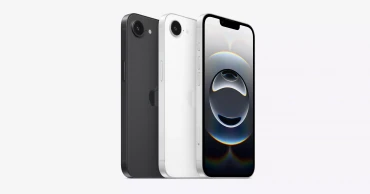
Apple’s highly anticipated iPhone 16 series has arrived, featuring the iPhone 16, iPhone 16 Pro, and a brand-new budget option, the iPhone 16e. Set to launch on February 28, 2025, the iPhone 16e is designed to offer a premium Apple experience at a more affordable price, positioning it as a strong competitor to its predecessors and rivals like Google’s Pixel 9a.
Key Features of iPhone 16e
.
Design and Build Quality
The iPhone 16e maintains Apple’s signature premium build with a glass front and back and an aluminum frame, ensuring durability while keeping it lightweight at 167g. It retains the IP68 water and dust resistance rating, matching the iPhone 16, Samsung Galaxy S25, and Google Pixel 9a.
However, compared to the OnePlus 13, which boasts a sturdier ceramic guard glass and a high-pressure water resistance rating, the iPhone 16e falls slightly behind in durability. While the iPhone 16 comes in more color options, the iPhone 16e is limited to Black and White, making it less appealing for those who prefer vibrant choices.
Read more: realme 14 Pro+ Review: Know the Pros and Cons
Display Quality
Apple equips the iPhone 16e with a 6.1-inch Super Retina XDR OLED panel, which offers excellent color accuracy, deep blacks, and HDR10 support. The display boasts an 1170 by 2532-pixel resolution with a 60Hz refresh rate like the iPhone 16 and older iPhones which falls behind the 120Hz seen on the iPhone 16 Pro, Samsung Galaxy S25, and OnePlus 13.
Google's Pixel 9a features a slightly larger 6.3-inch OLED display with a 120Hz refresh rate, making it more fluid for scrolling and gaming.
Meanwhile, OnePlus 13 stands out with a 6.82-inch LTPO AMOLED panel at 1440p resolution and 120Hz, providing the sharpest and smoothest visual experience among competitors.
While the iPhone 16e’s display is crisp and bright, peaking at 1200 nits, it does not reach the extreme 2600-nit brightness of the Galaxy S25, making it slightly harder to view under direct sunlight.
Read more: Samsung Galaxy S25 Ultra Review: A Game-Changer or Overpriced Flagship?
Camera Performance
Apple has equipped the iPhone 16e with a 48MP primary sensor, similar to the iPhone 16 but without the ultrawide secondary lens. Despite lacking a second camera, the iPhone 16e still delivers impressive image quality with optical image stabilization (OIS) and Apple’s Smart HDR technology. It excels in low-light photography, producing sharp details and accurate colors.
1 year ago
iPhone SE 4 (2025): Latest Leaks, Rumors, and Features of Apple’s Most Affordable Powerhouse
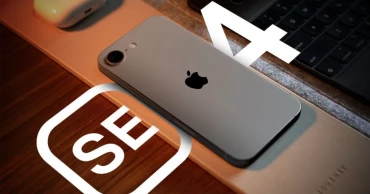
Apple is reportedly set to unveil the iPhone SE 4, the latest addition to its budget-friendly SE lineup, as early as next week. The upcoming iPhone SE 4 (2025) promises to blend premium features with affordability, making it an appealing option for those seeking high performance without a premium price tag. With significant upgrades expected, this release could mark a major shift in Apple’s entry-level offerings. Here’s a deep dive into all the leaks, rumors, and anticipated features surrounding the iPhone SE 4 (2025).
iPhone SE 4 (2025) Rumours and Leaks
The market is abuzz with rumours about the upcoming iPhone SE 4 as the phone's unannounced release date approaches. To trigger more anticipation, frequent leaks are teasing fans over social media. Here are the major rumours and leaks:
Name
The new iPhone SE 4 will be a major overhaul, drastically changing almost every aspect of the entire SE line-up. Reports from several sources claim that the phone won’t be an SE phone; instead, it will be called the iPhone 16E. Experts justify the claim by highlighting Apple’s departure from the affordability tag.
Read more: OPPO Reno13 Pro 5G Review: Is It Worth the Hype?
Design
Rumours say the iPhone SE 4 will resemble the iPhone 14 in design and the primary camera module. This would mark a phenomenal shift for the series, making it leave the iPhone 8 chassis and start a new aesthetic formation. Fans are expecting an aluminium and glass combined frame protected with Apple’s Ceramic Shield glass.
Instead of the iPhone 14’s multi-camera layout, the SE 4 will have a single circular lens holder. If the rumour comes true, it will end the SE series’ far-celebrated home button and bring a larger screen size. Instead of the home button, users will find a cutting-edge Face detection system.
Display
The iPhone SE 4 will make a major leap by replacing the previous model’s 4.7-inch LCD panel with a 6.1-inch Super Retina XDR OLED display. Compatible arrangements for the display indicate a resolution of 1170 by 2532 pixels, an approximately 457 ppi colour density, and a peak brightness level of 1200 nits. To room the larger display, bezels, and chins will become narrower, increasing the screen-to-body ratio.
Read more: Lenovo Yoga Slim 7i Aura Edition Review: A True MacBook Competitor or Just Hype?
Cameras
The new wallet-friendly iPhone's camera will surpass the previous model’s in several aspects: first, it will have a more powerful lens, expectedly of a 48MP capacity, and second, the lens is Apple’s latest invention called “Fusion,” which features 2X optical quality zoom without a telephoto lens.
Processor and GPU
Though a lower-budget phone, the iPhone SE always boasts the same processor as its contemporary flagship iPhone model. So, people are anticipating a 3nm Apple A18 chipset in the SE 4. As for a graphical processor, anticipations suggest a 5-core Apple GPU chipset to keep pace with the A18 processor. There is also a strong chance that the phone will support Apple Intelligence, which is only available in the iPhone 16 series and last year’s Pro models.
Battery
Many reputed sources predict a more powerful battery in the iPhone SE 4. Like many other features, the battery may also resemble the iPhone 14’s to support the larger display and more potent chipsets.
Read more: Best Flagship Smartphones of 2024: Top Premium Picks You Shouldn’t Miss
Price of the iPhone SE 4
The iPhone SE 4 will cost more than its previous models. According to experts, the phone may cost around $500 or BDT 60,000 (at a conversion rate of USD 1 = BDT 121.13).
Conclusion
According to all these rumours and leaks, a new iPhone SE 4 (2025) version is coming to lift the SE lineup to elite status. With a potent 3nm A18 chipset, a modified 48MP primary lens, a larger and better display, and a more durable battery, the iPhone SE 4 (2025) can appear as the ruler of the higher-mid budget segment.
Read more: Honor 300 Review: New Contender in Midrange Smartphone Segment
1 year ago

Apple iPhone 16 Pro Max Review: The Biggest and The Best of 2024
Apple has officially introduced the iPhone 16 series, and the iPhone 16 Pro Max is the show's biggest star. With a release set for September 20, 2024, the Pro Max model brings a blend of subtle but impactful updates, particularly in terms of display, battery life, and camera performance. Let's dive into what this phone has to offer and see if bigger truly means better.
Key Features and Specs of the iPhone 16 Pro Max
Design
The iPhone 16 Pro Max follows a similar design approach to its predecessor but with minor tweaks. It measures 163 mm by 77.6 mm by 8.3 mm and weighs a hefty 227 grams, making it a larger and slightly heavier device compared to the iPhone 16 Pro. It retains the premium titanium frame, offering increased durability without the bulk, and features Corning-made glass on both the front and back.
Like the other iPhone 16 models, the Pro Max is IP68-rated, meaning it’s resistant to dust and water (up to 6 meters for 30 minutes). It comes in four colors: Black Titanium, White Titanium, Natural Titanium, and Desert Titanium. Moreover, the inclusion of a USB-C port with USB 3 speeds, makes it more versatile for connectivity.
Display
One of the major highlights of the iPhone 16 Pro Max is its expansive 6.9-inch LTPO Super Retina XDR OLED display. The screen-to-body ratio is an impressive 91.4%, ensuring an immersive experience with its thinner bezels. The display is protected by 2024 gen Ceramic Shield glass.
Read more: Apple iPhone 16 Review: Can It Set New Standards for the Brand?
With a resolution of 1320 by 2868 pixels (~460 ppi), everything looks sharp, vibrant, and fluid thanks to the 120Hz refresh rate.
Brightness reaches up to 2000 nits in high-brightness mode, ensuring readability in outdoor conditions. Additionally, the Always-On display feature and Dynamic Island return, keep the phone’s design familiar while enhancing user interaction.
Cameras
The iPhone 16 Pro Max features a versatile triple-camera system. The 48 MP wide camera, with an f/1.8 aperture, dual pixel PDAF, and sensor-shift OIS, ensures sharp, stable images even in low light.
It also includes a 48 MP (f/2.2) ultra-wide lens for capturing broad scenes and a new 12 MP (f/2.8) periscope telephoto lens offering 5x optical zoom with enhanced stabilization, perfect for distant shots.
Read more: Apple iPhone 16 Pro Review: Does a Bigger Phone Come with Better Features?
The device excels in video with 4K recording at various frame rates, including 120 fps for smooth slow motion. Dolby Vision HDR and stereo sound recording further enhance the cinematic quality.
The front camera offers 12 MP (f/1.9) with PDAF and OIS, making it ideal for selfies and video calls. The TOF 3D LiDAR scanner adds advanced depth-sensing for photography and AR. It can capture a maximum of 4K footage with gyro-EIS support.
Overall, the iPhone 16 Pro Max camera system is designed for professional-level photography and videography.
2 years ago
Apple iPhone 16 Series: Everything We Know So Far
Apple has been consistent with its mid-September launch schedule over the years. Last year, the iPhone 15 series was announced on 12th September with pre-orders beginning just three days later. With less than a month to go for this year’s speculated release, here are some exciting and almost-confirmed changes we’ll see on the new iPhone 16 series.
Major Leaks and Rumors Regarding iPhone 16 series
An Upgraded Display
The iPhone 16 series is set to feature a larger and brighter display with even more reduced bezels than the 15 series. The new models are tipped to be 6.3 inches in the standard iPhone 16 and 16 Pro whereas the 16 Plus and 16 Pro Max will be bumped up to 6.9 inches. It’s a good 0.2-inch upgrade over the current variants.
It’s also tipped that the 16 series will feature new displays developed by Samsung. The new models are set to be even brighter thanks to the M14 OLED material on the micro-LED panel.
There was a rumor regarding the inclusion of an ultrasonic fingerprint sensor. However, the plan is reported to have been scrapped in favor of an overhauled Face ID system.
Read more: Best Free Personal Safety Android, iOS Apps for Women in 2024
New Camera System
There will be several changes to the camera system of the 16 series. The first and most obvious change comes in the base 16 and 16 Plus as they will now feature vertical camera lenses. The change isn’t just aesthetic as the vertical setup will allow the devices to shoot spatial videos compatible with the Vision Pro headset.
The 16 Pro will get the 5X telephoto zoom lens this time around which was reserved for the Pro Max variant last year. The ultrawide sensor will also be updated to a 48 MP sensor across the models. This is a highly anticipated upgrade as the iPhones had the same 12 MP ultrawide shooter since the 11.
There’s also an unreliable rumor about a larger main sensor and a super-telephoto lens for the Pro Max. But you’ll be better off taking that with a grain of salt.
Read more: Oppo Reno 12 Pro 5G Review: Midrange Phone with AI Features
New Buttons
Last year we saw the Action Button on the Pro models which replaced the long-standing and much-loved mute toggle. This year, Apple is making the Action Button a standard in all the models. And with that, the mute toggle is truly gone from the Apple design system.
But for those who like customization, the Action Button is set to include all the features from the 15 Pro series with a possible inclusion of a few more with the new iOS update.
Apple is also planning to include a Capture Button this year. It will be placed below the power button where your index finger generally would be while taking a landscape shot. The haptic-based mechanism will function as a focus, zooming, and capturing button depending on press strength. It's Apple’s way of mimicking traditional photography and bringing a sense of nostalgia into mobile photography.
Read more: Honor 200 Pro Review: A Flagship Camera Experience
A New Chip for Better AI and ML
The new 16 series will feature the updated Apple’s Bionic A18 chip. However, the chipset could be differentiated into A18 and A18 Pro for the standard and Pro variants. The souped-up version is expected to have more GPU cores than the standard one. The A18 Pro is also slated to have the next-gen neural engine for upgraded AI and ML capabilities. This will make way for future Apple Intelligence integration.
The new models will also feature a better thermal management system across all the options. The current iPhone models feature a copper-based heat dissipation solution. The new models, as tipped, will come with a graphene-based solution for better efficiency.
This is a much-needed upgrade considering how powerful the Apple chips are. Last year we noticed certain thermal throttling issues on the iPhone 15 series. Given the processor upgrade, the thermal management system upgrade also seems the logical solution.
Read more: vivo iQOO Z9x 5G Review: Budget Meets Substance
RAM Upgradation
iPhone has been stuck on 6 GB RAM for several iterations. That’s hopefully going to change with the iPhone 16 series as all the models are slated to come with a standard 8 GB RAM.
Latest Battery Technology
The iPhone 16 series will see the introduction of the stacked battery technology for the first time. Battery stacking is usually seen in EVs and medical equipment. It's still an emerging tech in smartphones which helps to save a lot of internal space.
The 16 series may also see the use of a stainless steel casing for the battery. It’ll increase the overall battery density by 10% which in turn means longer-lasting battery health. However, it is highly likely to be featured on one of the Pro variants.
Read more: Motorola Razr 50 Ultra Flip Phone Review: A Trip to Nostalgia
Reports coming out of China hint at a 2.5% to 6% increase in battery on the standard 16, 16 Pro, and Pro Max. The Plus however might see a battery decrement.
Unconfirmed reports also suggest the charging speed be bumped up to 40W wired and 27W MagSafe charging. The significant jump in charge speed makes us question its authenticity even more. But if it does happen, we’re all here for it.
New 5G Modem
Apple is reportedly going with Qualcomm's Snapdragon X75 modem for their Pro models this year. The X75 brings upgraded and advanced 5G capabilities with AI and ML integration. It is also reported to use 20% less circuit than the existing X70 modems making it more power efficient.
Read more: OPPO Reno 12 5G Review: Upholding the Legacy?
However, the standard 16 and 16 Plus will feature the X70 modem seen on the 15 series. Apple analyst Ming-Chi Kuo forecasts that this is the last year of Apple using third-party modems. We might see in-house 5G modems coming out with the 2025 iPhones.
Increased Price
An unfortunate report coming out of China is that the 16 series might see a price increment for all the models. Last year the production cost of the 15 series was already at an all-time high with a 16% increment over the 14 series. While Apple resorted to absorbing the cost, the same might not hold for the 16 series. As a result, there’s strong speculation of “The most expensive iPhones yet”.
Final Words
To be honest, the iPhone 16 series might not be the next big thing in Apple's innovation list. It's going to be just another incremental update over the 15 with minor spec bumps and new colorways. The Apple Intelligence is expected to show up sometime in Q4 this year, well after the launch of the 16 series. For now, all eyes are on a mid-September release date and the speculated release of the iPhone SE 4 and iPhone 17 Air next year.
Read more: Top 8 Smartphones Launching in August 2024: Features, Specs, and Release Dates
2 years ago