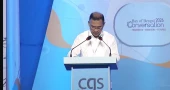
Centre for Governance Studies
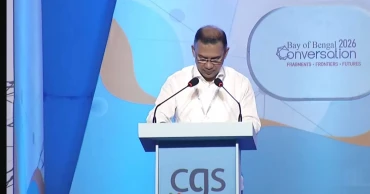
PM Tarique inaugurates fifth Bay of Bengal Conversation
Prime Minister Tarique Rahman on Saturday inaugurated the fifth edition of the international forum ‘Bay of Bengal Conversation 2026’, bringing together policymakers, diplomats, researchers and experts from over 100 countries.
The three-day conference, organised by the Centre for Governance Studies (CGS), is being held at the Pan Pacific Sonargaon Dhaka from October 3 to 5.
The Prime Minister formally opened the three-day event around 10am with his address to the opening session.
More than 200 speakers, over 300 delegates and more than 1,000 participants are expected to attend the forum, including former and current heads of state and government, ministers, diplomats, military experts, academics, researchers, journalists, business and investment leaders, human rights defenders, technology specialists and representatives of international development organisations.
Former Serbian President Boris Tadić and former Malian Prime Minister Moussa Mara are among the notable participants.
The theme of this year’s conference is “Fragments, Frontiers and Futures”, with the tagline “Navigating Power, Technology and Trust in a World Rewritten.”
The discussions will focus on major regional and global issues, including geopolitics and security, technology, trade and connectivity, climate change, human security, democracy, governance, trust, spirituality and humanity.
CGS President Zillur Rahman and Executive Director Parvez Karim Abbasi delivered the welcome remarks at the opening of the conference.
Zillur Rahman said the Bay of Bengal is becoming increasingly important in the context of maritime security and regional geopolitics.
“As a vital link between South Asia and Southeast Asia, one of the key objectives of this initiative is to explore effective solutions to the challenges and opportunities rooted in the Bay,” he said.
He said this year’s discussions would focus on geopolitics, security, trust, climate change, spirituality and humanity.
The programme includes public sessions such as plenaries, leadership forums and spotlight talks, as well as smaller invitation-only roundtables for in-depth discussions, according to the organisers.
10 days ago
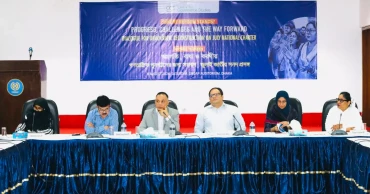
CGS launches ‘Reform Watch’ initiative; speakers warn against slacking
Democratic reform, institutional accountability, political tolerance and meaningful inclusion must remain at the centre of Bangladesh’s post-July political transition, speakers said at a dialogue on Saturday, warning that failure to implement agreed reforms could deepen public frustration and allow old political practices to return.
The remarks came at a dialogue titled “Where Does Reform Stand? Progress, Challenges and the Way Forward”, organised by the Centre for Governance Studies (CGS) under its Reform Watch initiative at the CIRDAP Auditorium in Dhaka.
The discussion presented findings from a mid-term report on implementation of the July National Charter and brought together representatives of major political parties, civil society, academia, law and the media.
The speakers stressed that the credibility of the reform process would increasingly be judged not by the number of proposals discussed, but by how effectively agreed reforms are translated into functioning institutions and political practice.
In the event, BNP MPs Shahadat Hossain Selim and Jahrat Adib Chowdhury; 11-party Party Alliance’s MPs Tasmia Prodhan, Subikunnahar Munni; Bangladesher Samajtantrik Dal’s (BSD) Joint General Secretary Razekuzzaman Ratan, Jatiya Party’s (Japa) Secretary General Barrister Shameem Haider Patwary, Jatiya Samajtantrik Dal’s (JSD) General Secretary Nazmul Haque Prodhan, AB Party’s Joint General Secretary and Head of International Affairs Barrister Nasreen Sultana Mily, Communist Party of Bangladesh’s (CPB) Presidium Member Joly Talukder, Rashtro Songskar Andolon’s Member Lamia Islam, Khelafat Majlis’s Organising Secretary Prof Kazi Minhazul Alam, journalist Sohrab Hassan, Bangladesh Indigenous Peoples Forum’s General Secretary, Sanjeeb Drong, former Chief Prosecutor of the International Crimes Tribunal Advocate Muhammad Tajul Islam, Centre for Governance Studies’ Executive Director, Parvez Karim Abbasi, senior jurist and former member of Constitutional Reform Commission Dr Sharif Bhuiyan, North South University’s Prof of Political Science and Sociology Dr Bulbul Siddiqi and NCP’s Joint Convener Sarwar Tusher spoke.
CGS President Zillur Rahman said that reform is an ongoing process. However, people often assume that everything can be achieved at once.
He said democratic reconstruction and democracy are fundamentally matters of broader political culture and continuous practice.
He noted that a good election had undoubtedly been held, although after such a long period, some may still not consider it fully acceptable.
Shahadat Hossain Selim said that there were “notes of dissent” on 16 out of 84 issues, but not all of them came from the BNP.
He argued that the proposals of various commissions had been framed in a way that left the BNP “trying to swim with its hands and feet tied.”
He added that constitutional amendments should be undertaken through a special committee based on broad discussion and consultation, as there is no realistic alternative.
Jahrat Adib Chowdhury said that corruption, violence against women, unemployment, and inequality have increased and must be addressed effectively. Greater political maturity had been expected after 5 August.
She stressed the need to continue dialogue between the government and the opposition, ensure transparency and accountability in the bureaucracy, and promote tolerance among young people so that a new Bangladesh can be built collectively.
Advocate Muhammad Tajul Islam said that fundamental and structural reforms are necessary to fulfil the aspirations that emerged after July.
Barrister Shameem Haider Patwary said that although the July movement created a major opportunity for reform, political interests later weakened that consensus.
While significant parts of the July Charter were positive, he argued that its initial process was legally questionable.
He said existing parliamentary committees could consult all political parties and pass key elements of the July Charter as legislation.
He noted that expected progress had not been achieved in judicial independence, the Human Rights Commission, judicial appointments, and other major reforms.
Parvez Karim Abbasi said that public opinion must be given priority and that bureaucratic reform, checks and balances, and accountability must be ensured.
2 months ago
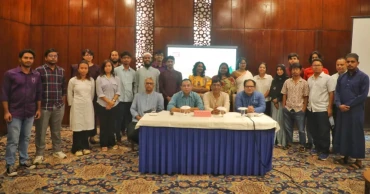
Fair elections essential for entering genuine democratic process: Workshop
Speakers at a workshop on Saturday stressed the need for focusing on accountability and holding fair elections to ensure a genuine democratic process in the country.
Centre for Governance Studies (CGS), in collaboration with Friedrich Ebert Stiftung (FES), organised the workshop titled ‘Free and Fair Election’, as part of its ongoing initiative to encourage ideological dialogue and democratic practices among young politicians.
The workshop was arranged to promote ideological dialogue among young political activists in the country and strengthen democratic coexistence and pluralism.
DSE holds workshop on pledged shares and ethics in capital market
Executive Director of CGS Parvez Karim Abbasi and Programme Adviser of FES Bangladesh Sadhan Kumar Das also spoke at the event.
Turning to DUCSU, CGS President Zillur Rahman said DUCSU is a glorious chapter in Bangladesh history as students have always played an anti-establishment role, which is why the nation has always relied on it.
"But the government has never spontaneously held DUCSU elections. The main reason is partisan politics. The last DUCSU election was the weakest and most shameful one," he said.
1 year ago

Int'l geopolitical conference begins Saturday with inaugural address by Prof Yunus
The Centre for Governance Studies (CGS) will host the 3rd edition of the Bay of Bengal Conversation (BOBC) 2024, an international geopolitical conference, which begins in Dhaka on Saturday.
"We are honored to have Dr Muhammad Yunus, Chief Advisor of Bangladesh, and a well known person as our inaugural speaker," said Executive Director of CGS, Zillur Rahman on Friday.
He said Dr Yunus’s perspective will set the tone for three days of meaningful and impactful discussions.
The announcement was made during a press briefing by the Executive Director of CGS, Zillur Rahman.
Zillur said the third rendition of the Bay of Bengal Conference is the biggest event to date hosted by CGS.
“This year’s conference, “A Fractured World,” brings together over 200 speakers, 300 delegates, and an audience of 800 participants hailing from more than 80 countries around the world, he said.
Zillur also mentioned that Bangladesh stands at a unique moment in its history. Recent developments have opened up profound opportunities for our nation to redefine itself on democratic principles with a new openness to dialogue and collaboration.
The Bay of Bengal Conversation will reflect this spirit by serving as a global platform to explore challenges that resonate across borders, from human rights and climate change to economic development, security, and technological transformation.
He said, “This is more than a conference; it’s a call to action. Together, we aim to address the fractures dividing nations and communities, fostering new dialogues and solutions.”
He also mentioned that the last two years of experience of this event was bitter. But CGS made it a successful event. "Hopefully this year won’t be different."
Munira Khan, Chair of CGS said the Bay of Bengal Conversation has some agendas.
"We want to discuss these issues. This is not for any political party but for the people.”
She also said this conference is not a governmental event rather a non-governmental one and its result will be enjoyed by all the people around the world.
1 year ago