Oppo Reno 13 Series
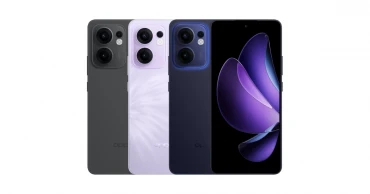
OPPO Reno 13F 5G Review: A Stylish Powerhouse or Just Another Mid-Range Phone?
OPPO has long been a leader in stylish, feature-packed smartphones, catering to casual users and tech enthusiasts. Releasing in January 2025, the OPPO Reno 13F 5G continues this tradition, bringing 5G connectivity, upgraded cameras, and a sleek design. But does it stand out in the crowded mid-range market? Let’s find out.
Key Features of OPPO Reno 13F 5G
.
Design and Build Quality
The OPPO Reno 13F 5G maintains the sleek, premium look that the Reno series is known for. With a thin 7.8mm profile and 192g weight, it is slightly heavier than the Reno 12F (187g) but feels solid in hand.
The biggest improvement is the IP68/IP69 rating, offering better dust and water resistance than the rival vivo Y300 and ancestor Reno 12F’s IP64 rating. This means the Reno 13F can survive high-pressure water jets and immersion up to 2 meters for 30 minutes, making it a more durable option than its predecessor. Another rival realme P3 Pro is equally dust and water-resilient like Reno 13F.
Read more: iPhone SE 4 (2025): Latest Leaks, Rumors, and Features of Apple’s Most Affordable Powerhouse
In terms of aesthetics, the Plume Purple, Graphite Grey, and Luminous Blue color options make it visually appealing, competing well with Realme’s Nebula Glow and Saturn Brown finishes.
Display Quality
The Reno 13F sports a 6.67-inch AMOLED display featuring 1080 by 2400 resolutions with a 120Hz refresh rate, delivering smooth scrolling and fluid animations. It retains the 2100-nit peak brightness from the Reno 12F, ensuring excellent outdoor visibility. The Asahi Glass AGC DT-Star2 protection is the same as its predecessor, offering decent scratch resistance.
Turning to the competitors, realme P3 Pro boasts a slightly larger (6.83”) display, lower peak brightness (1500 nits) with a higher (1272 by 2800) resolution. On the other hand, the vivo Y300 features a similar-sized display and the same resolution with a lower (1800-nit) brightness and lacks HDR support.
Read more: OPPO Reno13 Pro 5G Review: Is It Worth the Hype?
Camera Performance
The 50MP main sensor on the Reno 13F remains the same as the Reno 12F but now supports 4K video recording at 30fps and gyro-EIS for smoother footage. The 8MP ultra-wide and 2MP macro cameras are unchanged, providing versatility for landscape and close-up shots. Daylight photography sees improvements in color accuracy and sharpness, but low-light images still struggle with noise, similar to the Reno 12F.
Against the realme P3 Pro, which also uses a 50MP main camera with OIS, the Reno 13F performs comparably. However, Realme’s larger sensor size (1/1.56”) gives it an edge in night photography. The vivo Y300, featuring only a dual-camera setup with a 50MP main and 2MP depth sensor, offers decent results but lacks an ultra-wide lens, making the Reno 13F the better choice for camera versatility.
In the latest OPPO Reno 12F, the 32MP selfie camera remains unchanged from its ancestor Reno 12F, capturing detailed, well-lit selfies. It outperforms the realme P3 Pro’s 16MP front camera, delivering sharper images. The vivo Y300, also featuring a 32MP sensor, competes closely but slightly lacks in dynamic range.
Read more: Lenovo Yoga Slim 7i Aura Edition Review: A True MacBook Competitor or Just Hype?
Processor Performance
The Reno 13F takes a big leap in performance by upgrading to the Snapdragon 6 Gen 1 (4nm) chipset, replacing the Dimensity 6300 (6nm) in the Reno 12F. This results in better efficiency and faster app launches. The Adreno 710 GPU also brings improved graphics performance, making the device more capable of handling demanding applications.
Compared to competitors, the realme P3 Pro outshines the Reno 13F with its Snapdragon 7s Gen 3, offering higher CPU and GPU clock speeds, making it a better performer for intensive tasks. The vivo Y300, running on Snapdragon 4 Gen 2, falls behind in raw power, making the Reno 13F the better choice for smooth everyday usage.
Gaming Performance
With the Adreno 710 GPU and 120Hz refresh rate, gaming on the Reno 13F is smoother than the Reno 12F. Titles like Call of Duty: Mobile and PUBG Mobile run on high settings with minimal frame drops. Compared to the realme P3 Pro, which has the Adreno 710 GPU clocked at 940MHz, OPPO’s version is slightly underpowered for extended gaming sessions. The vivo Y300 struggles the most, with occasional lags in graphically demanding games due to its weaker Adreno 613 GPU.
Read more: Best Flagship Smartphones of 2024: Top Premium Picks You Shouldn’t Miss
Heat management is better than the Reno 12F, thanks to the more efficient 4nm processor, but it still warms up under prolonged gaming, unlike realme P3 Pro, which features better thermal optimization.
Battery Life
OPPO has significantly improved Reno 12F’s 5000mAh battery to 5800mAh in 13F. This provides longer endurance, lasting nearly two full days on moderate usage. Fast charging remains 45W, allowing it to charge 44% in 30 minutes, which is decent but slower than the realme P3 Pro’s 80W charging.
The vivo Y300 also features an 80W charger, giving it an advantage in charging speed, but its 5000mAh battery means it won’t last as long as the Reno 13F. The increased battery capacity makes the OPPO Reno 13F one of the best choices for users prioritizing battery life.
Read more: Honor 300 Review: New Contender in Midrange Smartphone Segment
Software and User Interface
Running on Android 15 with ColorOS 15, the Reno 13F delivers a cleaner, more polished UI with better customization options. The bloatware situation has improved slightly, but some pre-installed apps remain. Compared to realme UI 6.0 on the P3 Pro, ColorOS offers more visual customization but slightly slower updates.
The vivo Y300 runs on Funtouch OS 14, which is closer to stock Android but lacks feature richness. Of the three, ColorOS remains one of the more optimized and smooth experiences, making the Reno 13F a great daily driver.
Storage Options
The Reno 13F offers four storage configurations: 128GB/8GB, 256GB/8GB, 256GB/12GB, and 512GB/12GB, all using UFS 3.1 for faster read/write speeds. This is a step up from the Reno 12F’s UFS 2.2, providing faster app loading times and better multitasking.
Read more: itel A80 Review: Smartphone under Tk 10k with Standard Features
When compared to competitors, realme P3 Pro lacks a microSD slot, limiting expandability. The vivo Y300, despite having a microSD slot, still uses UFS 2.2, making OPPO the better choice for fast storage performance.
Pros and Cons of OPPO Reno 13F 5G
Pros
- IP68/IP69 dust and water resistance for durability.- 6.67-inch AMOLED display- 120Hz refresh rate- 2100 nits peak high brightness.- 50MP triple rear camera with OIS and 32MP selfie camera.- Snapdragon 6 Gen 1 chipset for smooth performance.- Android 15 with ColorOS 15 for a user-friendly experience.- 5800mAh battery with 45W fast charging.- Stereo speakers for better audio quality.- In-display fingerprint sensor for secure unlocking.- 5G connectivity for faster internet speeds.
Read more: Colmi P78 Smartwatch Review: A Feature-Packed Budget Wearable Worth Considering
Cons
- No 3.5mm headphone jack for wired audio.- No FM Radio support for radio listeners.- Slower 45W charging compared to some competitors with 80W.- Pre-installed bloatware in ColorOS.- Gaming performance is decent but not the best in its price range.
Price of OPPO Reno 13F 5G
The OPPO Reno 13F 5G is priced at around BDT 34,990. However, the price may vary depending on the sellers.
Verdict
The OPPO Reno 13F 5G can be a good pick for users who want a stylish, durable phone with a bright display, solid cameras, and long battery life. It is ideal for casual users, photographers, and multimedia lovers. However, gamers and those needing ultra-fast charging or a 3.5mm jack may prefer other options.
Read more: realme 14 Pro+ Review: Know the Pros and Cons
1 year ago

Top Smartphones Launching in January 2025: What to Expect
The first month of 2025 sets the stage for an exciting year in smartphone innovation. Major brands are gearing up to unveil their latest creations, offering something for everyone—from budget-friendly options to feature-packed mid-range models and cutting-edge premium flagships. Whether you're looking for affordability or top-tier performance, January's smartphone lineup promises to impress.
All the Exciting Smartphones Launching This January
Xiaomi Turbo 4
The Xiaomi Turbo 4 is the first smartphone from Xiaomi to launch in 2025. The official date for the launch is January 2, 2025. The phone will feature 50MP primary and 8MP ultrawide secondary lenses. A few leaks show the phone will have a 6.67-inch LTPS OLED display.
On the performance side, the Xiaomi Turbo 4 will feature a new MediaTek Dimensity 8400 4nm processor and a large 6,550 mAh battery with a 90W fast-charging capacity.
Read more: ZTE Nubia Z70 Ultra Review: Is It Really a Flagship Killer?
iQOO Z9 Turbo (Refreshed)
Vivo is launching a refreshed version of iQOO Z9 Turbo on January 3, 2025, in China. The phone will feature the same 6.78-inch AMOLED display, a Snapdragon 8s 3rd Gen 4nm chipset, and a 50MP primary camera setup.
The refreshed version (2025) will use a 6,400 mAh battery, which is a clear upgrade from the previous version’s 6,000 mAh cell. The new phone will use OriginOS 5 instead of Android 14 and will have a more accurate geopositioning system.
Poco X7 Series
The latest iteration of Poco’s X lineup, the Poco X7 series, is awaiting a global launch on January 9, 2025. The series features two fresh smartphones–the Poco X7 and Poco X7 Pro–both of which are rebranded Redmi devices. Users will get a Redmi Note 14 Pro in the name of the Poco X7. The Poco X7 Pro will be a rebranded Redmi Turbo 4.
Read more: 12 Most In-Demand Tech Skills for 2025: Stay Ahead in the Job Market
Even though they feature two distinct designs, both X7 phones have a common yellow and black theme. The Poco X7 has a faux leather back panel with a triple camera setup, whereas the Poco X7 Pro’s flat back sports two cameras. Both phones will have a 50MP primary lens with OIS. The series will be powered by a Dimensity 7300 chipset, HyperOS 2 operating system, LPDDR5X RAM, and a 90W charging system.
Redmi 14C 5G
Redmi is upgrading the Redmi 14C to Redmi 14C 5G and launching it in January. The phone will still run on HyperOS, which is a modified Android 14 operating system and a 5160 mAh battery with an 18W charging capacity.
Among the major changes, the installation of Qualcomm SM4635 Snapdragon 4s Gen 2 processor instead of Mediatek Helio G81 Ultra is notable. However, the latest model degrades by lowering the capacity of the secondary camera from 13MP to 5MP.
Read more: Best Projectors to Create Home Theaters in Bangladesh in 2025
realme 14 Pro and Pro+
realme is about to launch a realme 14 Pro 5G series in January featuring two smartphones: the 14 Pro and 14 Pro Plus. The series will introduce a winter-inspired design and be available in pearl blue color. Both Pro and Pro Plus will run on a 4nm Qualcomm SM7635 Snapdragon 7s Gen 3 processor powered by a 940MHz Adreno 710 graphics unit.
The only major variation between the realme 14 siblings will be their cameras. Both will have a 50MP primary camera setup: a double-lensed one for the Pro version and a triple-lensed one for the Pro Plus version. Both phones will use a 6000mAh battery with a 66W charging system.
OnePlus 13
OnePlus has confirmed the arrival of its latest flagship phone, the OnePlus 13, in January 2025. It will be a global launch, and users will get three colour variations to choose from. The phone will feature a 6.82-inch LTPO AMOLED display protected by a Crystal Shield super-ceramic glass.
Read more: Vivo X200 Pro Mini Review: A Compact Flagship Smartphone with Powerful Features
For hardware, the OnePlus 13 will use a 3nm Qualcomm SM8750-AB Snapdragon 8 Elite processor supported by an Adreno 830 GPU. A triple 50MP primary camera module, along with a 32MP secondary lens, will offer strong photography support. Running on a 6000 mAh battery, the phone will feature multi-system charging, including wireless, reverse wire-less, and reverse wired.
Oppo Reno 13 Series
The Oppo Reno 13 and the Oppo Reno 13 Pro are set to arrive in January, featuring an aluminum middle frame and a sculpted glass back panel. There will be key differences between the two variations. The Reno 13 will be a 6.59-inch phone with a 50MP dual rear camera and a 5,600mAh battery.
On the other hand, the Reno 13 Pro will be a 6.83-inch device with an added 50MP tele-shooter and a 5,800mAh battery. Both phones will run on a MediaTek Dimensity 8350 SoCs processor and feature a 50MP secondary lens on the front. For charging, they will use an 80W wired and a 50W wireless system.
Read more: Vivo iQOO Z9 Turbo Plus Review: A Game-Changer Among Mid-Range Gaming Smartphones
Samsung Galaxy S25 Series
The Samsung Galaxy S25 flagship series is awaiting its debut in January. The series may include three variants: the Galaxy S25, Galaxy S25 Plus, and Galaxy S25 Pro. There is also a rumor about an extra version, the Samsung Galaxy S25 Slim, which may appear later in the year.
Samsung hasn’t revealed much about the specifications of the series. Several sources have indicated major upgrades on RAM and Cameras.
Conclusion
January is all set to present a few of the major smartphone releases of 2025. Early-year releases play well for flagship makers, making January one of the best times to launch premium devices. Several flagship series will launch this month. Besides these, a handful of mid-rangers and budget-friendly options will arrive to cater to the needs of diverse users.
Read more: realme C75 Review: What Does This Budget Smartphone Offer?
1 year ago