Consumers struggle
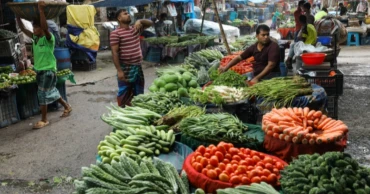
Consumers struggle in Bangladesh with soaring commodity prices ahead of Ramadan
Despite large-scale imports, the prices of essential commodities in Bangladesh continue to fluctuate, causing serious concerns among consumers.
Many people find a stark contrast between the government’s assurances and the reality of the market, as they struggle to afford basic necessities.
Retailers and wholesalers have blamed each other for the rising prices, while consumers suspect that a strong syndicate is manipulating the market amid weak monitoring by the authorities.
Fixed-Income Households Under Pressure
Qamruzzaman Khan, a retired government official from Shahinbag, Tejgaon, expressed his frustration over the soaring prices, particularly with the approach of Ramadan.
He said he would have to cut back on purchasing fruits and meat due to their high cost.
“I am even considering skipping dates for Iftar this year, as they are overpriced despite being of lower quality,” he said in an annoyed tone.
He blamed the authorities for failing to regulate the market, allowing a strong syndicate to dictate prices.
“People like us, who depend on a fixed pension, are finding it increasingly difficult to manage household expenses,” he added.
Rabeya Akter, a private school teacher from Rampura, shared a similar struggle. With her husband jobless for the past year, the family has been relying on their savings to cover monthly expenses.
“My salary is just over Tk 40,000, but it barely covers one-third of our household costs, including the education of our two school-going children and food expenses,” she explained.
Drives conducted in Dhaka’s kitchen markets to monitor prices of essentials
She said she plans to avoid fruits and meat during Ramadan due to their excessive prices, opting instead for vegetables, which remain relatively affordable.
Rabeya also expressed frustration over the rising cost of essential goods, including edible oil.
“The government keeps saying that increased imports will bring prices down, but when will that actually happen?” she asked.
She lamented that lower-middle-income families like hers are struggling silently, unable to queue for subsidised food under the Open Market Sale (OMS) programme or seek financial aid, yet burdened with ever-increasing expenses.
Syndicates and Market Manipulation
SM Nazer Hossain, Vice President of the Consumers Association of Bangladesh (CAB), said that despite recent political changes, the market remains controlled by syndicates operating in different supply chains.
“These syndicates have merely changed faces, but the system remains the same,” he said.
CAB has proposed a system to regulate prices at every stage—from importers to dealers and retailers—to ensure a fair price structure. “Without such a system, the blame will continue to shift between millers, dealers, and retailers, while consumers suffer the consequences,” he added.
Hossain also pointed out that inadequate market monitoring has allowed traders to hoard essential commodities, leading to price hikes. “Unlike perishable goods such as vegetables, most essentials can be stockpiled. As a result, prices continue to rise, often exceeding double the actual demand,” he explained.
Soaring Prices of Essential Commodities
Recent prices in Dhaka’s markets stood as follows:
Dates: Tk 350–1,700 per kg
Chickpeas: Tk 110 per kg
Sugar (packet): Tk 170 per kg
Sugar (loose): Tk 145 per kg
Lentils and other pulses: Tk 120–170 per kg
Garlic: Tk 180–240 per kg
1 year ago