Bangladesh’s population
Unmet healthcare needs persist in Bangladesh as OOP spending soars to 79%: BIDS study
A significant portion of Bangladesh’s population continues to face unmet healthcare needs, driven largely by rising out-of-pocket (OOP) expenditures, according to a study of Bangladesh Institute of Development Studies (BIDS).
Although unmet healthcare needs persist across all segments of society, the financial burden falls disproportionately on the poor, it showed.
The research by Dr Abdur Razzaque Sarker of BIDS underscored that OOP spending remains the dominant mode of healthcare financing in the country, with its share reaching an alarming 79 percent in 2024.
The study titled “Re-thinking unmet healthcare needs and dynamics of out-of-pocket (OOP) expenditure in Bangladesh,” was conducted under BIDS’ Population Studies Division.
The study utilised data from the latest Household Income and Expenditure Survey (HIES) 2022, comprising 14,400 households and 62,387 individuals where descriptive statistics were employed to analyses and summaries the percentage of unmet need, service utilisation across providers.
The distribution of benefits from public spending and progressivity/regressivity is assessed using Benefit and Financing Incidence Analysis.
The findings revealed that around 22 percent of the population reported a need for healthcare services on a monthly basis. Among them, 15 percent experienced unmet healthcare needs, accounting for 65 percent of the total need.
Unmet needs were found to be significantly higher in rural areas compared to urban centres—68 percent versus 59 percent. Regionally, the highest levels of unmet need were recorded in Narail (81 percent) and Habiganj (80 percent), while the lowest was observed in Feni (18 percent).
Healthcare spending and inequality
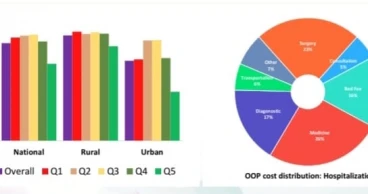
On average, Bangladeshi households spend TK 3,454 per month on healthcare, representing about 11 percent of total household expenditure. Medicines and diagnostic services were identified as the primary cost drivers.
The study noted that while public healthcare services are relatively equitably utilised, private healthcare services remain disproportionately concentrated among wealthier groups.
Despite higher absolute spending among the rich, poorer households bear a significantly heavier financial burden.
Healthcare expenses account for about 35 percent of total income for the poorest households, compared to just 5 percent for the wealthiest, indicating a regressive healthcare financing system.
The heavy reliance on OOP payments often leads to catastrophic health expenditures, limiting access to necessary care and pushing vulnerable households further into poverty.
The study concluded that although unmet healthcare needs persist across all segments of society, the financial burden falls disproportionately on the poor.
To address these challenges, the researcher recommended urgent reforms in healthcare financing, particularly the development and implementation of risk-pooling mechanisms such as social health insurance.
Such measures, the study suggested, are essential for reducing inequality in healthcare access and achieving Universal Health Coverage (UHC) in Bangladesh.
5 months ago
Bangladesh’s population hits 175.7 million, majority in working-age group
Bangladesh's population is estimated at 175.7 million of which half are women, two-thirds (115 million) in the working-age group (aged 15-64), presenting a window of opportunity to harness the demographic dividend.
The estimation was made in the annual flagship publication, the State of World Population (SWOP) 2025, of the United Nations Population Fund (UNFPA).
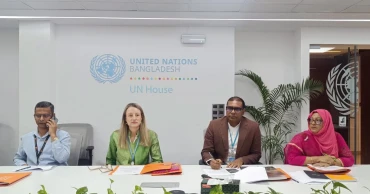
UNFPA Representative in Bangladesh Catherine Breen Kamkong officially launched the annual report at a press event held at the UN Building in the city’s Gulshan area on Monday.
“As of 2025, the global population stands at 8.2 billion. Bangladesh's population is estimated at 175.7 million of which half are women, two-thirds (115 million) are in the working-age group. It is an opportunity to harness the demographic dividend,” said Catherine Kamkong.
At the same time, 7 percent (12 million) of the population is aged 65 and above, signalling the onset of population ageing, she said.
Adolescents make up 19% of Bangladesh's population-approximately 33 million-while the broader youth cohort aged 10-24 accounts for 28%, nearing 50 million, Catherine Kamkong added.
Talking about this year’s theme of the publication, "The Real Fertility Crisis – The Pursuit of Reproductive Agency in a Changing World," she said it challenges the dominant narrative of "too many" or "too few" births. The real crisis is not about numbers-it is a crisis of reproductive agency.
“Around the world, and here in Bangladesh, people especially women and young people are unable to realize their reproductive intentions due to systemic, economic and social barriers,” said the UNFPA representative.
Bird strikes threaten aircraft safety in Bangladesh; monitoring system lies inoperative
The report is based on a global survey conducted by UNFPA, complemented by academic research and the lived experiences of communities, offering a rich and diverse perspective on fertility and reproductive agencies.
In high-income countries like the Republic of Korea, fertility has dropped to just 0.8 children per woman-the lowest globally.
In contrast, some African countries continue to experience high fertility rates, with Niger recording the highest Total Fertility Rate (TFR) at 5.8 children per woman, as per the report.
The report shows that Bangladesh falls in between, with a total fertility rate (TFR) of 2.1. In parts of Bangladesh, adolescent birth rates remain high, fueled by early marriage, limited access to contraception, and a lack of sexuality education.
The report sheds light on unfulfilled fertility aspirations, backed by evidence from 14 countries.
While most people desire two children, many have fewer than they wish, especially older adults-while others anticipate having more than planned and lack the knowledge or the means to access family planning services.
In Bangladesh, Catherine Kamkong said, there is very high out of pocket expenditure for health which means that people that do not have the financial means might not be able to access the care they need.
“In Bangladesh the government currently invests only 0.7% of GDP and 2% of the common budget for health. We hope that will be increased to 5% of GDP and 15% of the common budget as the health and wellbeing of Bangladesh is crucial for harnessing the future potential of the country,” she said adding that this will enable the recruitment, deployment and retention of skilled health workforce including midwives across the country.
It will also enable uninterrupted supply of life saving medicines and a variety of contraceptives which give women choice, she added.
1 year ago