BNP government
Speakers raise concerns over governance, economy, justice system
Speakers at an event have expressed concern over what they described as persistent governance, economic, and institutional shortcomings, warning that key reform initiatives in Bangladesh remain stalled or inadequately addressed.
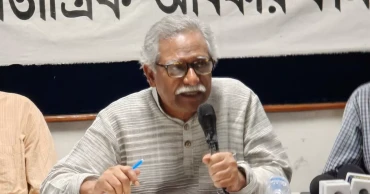
They expressed the concern at a programme titled "Two and a Half Months of the BNP Government: Review, Concerns and Demands," organised by the Democratic Rights Committee at the Sagar-Runi Auditorium of the Dhaka Reporters Unity in the capital.
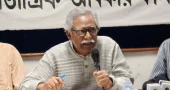
The event was chaired by economist Anu Muhammad.
At the programme reviewing the current political situation and reform agenda, they pointed to issues spanning public policy, education, energy, justice, and international relations, urging stronger accountability, structural change, and long-term planning to address mounting national challenges.
Anu Muhammad called for fair prices for agricultural products based on production costs, a new wage structure, reasonable electricity tariffs for the agriculture and fisheries sectors.
He renewed calls for justice in several unresolved high-profile cases including the killings of Toki, Tonu and journalist couple Sagar-Runi as well as the shooting of Limon.
He said the government must thoroughly review the actions of the interim administration and publish a white paper examining agreements signed during that period, along with allegations of terrorism, corruption and abuse of power.
Anu Muhammad said the current government appears reluctant to undertake such a review, possibly out of concern that it could expose its own past involvement in similar activities.
He also expressed concern over the state of the judiciary, particularly judicial independence and accountability, citing a recent incident in which a judge allegedly intimidated a teacher as an example of troubling judicial overreach.
Writer and researcher Altaf Parvez said around 1.9 million people in Assam and four million in West Bengal have been labelled as 'Bangladeshi' and stripped of their voting rights, creating what he described as a "time bomb" for Bangladesh.
He also expressed disappointment over the government's handling of international relations, particularly with India, saying that despite improved bilateral ties, key issues such as border killings and renewal of the Ganges Water Treaty remain unresolved.
Other speakers included Dhaka University professor Samina Luthfa, lawyer Jyotirmoy Barua, lawyer Manjur Al Matin and Dhaka University Assistant Professor Moshahida Sultana Ritu.
Altaf Parvez said the BNP government's two-and-a-half-month tenure should be assessed alongside the preceding 18 months, making it effectively a 21-month review.
He argued that the current government is neither colonial nor a conventional elected administration, but one born out of a "people's uprising" following the events of August 8, 2024.
According to him, the public has every right to regularly review the government's performance, especially at the grassroots level, given the long history of movements by workers, indigenous communities, minorities and students over the past 15 years demanding fair elections and political reforms.
He alleged that although the BNP had pledged to implement the July Charter in its manifesto, it later declined to join the constitutional reform council, effectively stalling the reform process.
Raising concerns over recent economic decisions, Altaf criticised an ordinance allowing banks to return to their original shareholders, including individuals accused of corruption and money laundering.
He also questioned the decision to purchase ten Boeing aircraft for $4 billion at a time when Bangladesh was seeking a $1 billion IMF loan tranche amid a foreign debt burden of $114 billion.
Such a move, he warned, could destabilise the country's macroeconomy and national budget.
Professor Samina Luthfa said campuses have increasingly become centres of political control rather than academic excellence.
Even when one student organisation's influence declined, another quickly replaced it, perpetuating the cycle of political occupation.
This environment, she said, fostered organised violence that later became popularly known as "mob rule."
Over the past 21 months, no education reform commission has been formed, despite repeated calls, she said.
She noted that Bangladesh allocates only about 1.7 percent of its GDP to education, based on 2023-24 figures, far below UNESCO recommendations.
She called for gradually increasing the allocation to 7 percent over the next four years.
Moshahida Sultana Ritu called for a comprehensive overhaul of Bangladesh's energy policy, including renegotiation of costly power deals, reduction in diesel prices and accelerated development of locally driven solar initiatives.
She sharply criticised existing Independent Power Producer (IPP) agreements, particularly capacity charges, saying they have imposed an enormous financial burden on the public.
She also recommended allowing capacity charge payments in local currency rather than US dollars to reduce pressure on foreign exchange reserves.
Moshahida warned that rising diesel prices have triggered widespread inflation by increasing transportation, food and agricultural production costs."A reduction in diesel prices is essential to protect farmers, ensure food security and prevent further economic hardship," she said.
Highlighting the importance of a sustainable energy transition, she urged the government to prioritise solar power and formulate a realistic, locally tailored renewable energy roadmap.
Her recommendations included expanding solar-powered irrigation pumps, facilitating affordable financing for rooftop solar and solar pump projects, and expediting solar installations on land already acquired for Special Economic Zones.
She emphasised that Bangladesh must move away from short-term, reactive energy policies and instead pursue long-term planning rooted in local expertise and public participation.
Advocate Manjur Al Matin said Megh, the son of slain journalist couple Sagar and Runi, lost his parents 14 years ago, yet justice remains elusive.
Referring to the Tonu murder case, he noted that an arrest was made a decade after the killing, offering at least a glimmer of hope.
He criticised repeated delays in legal proceedings, mentioning a recent six-month extension granted for investigation in the Sagar-Runi murder case.
Justice, he said, is one of the fundamental pillars of any civilised society, and its absence inevitably leads to social decay.
Manjur also underscored the importance of judicial independence, particularly the establishment of a separate secretariat for the judiciary.
On the appointment of High Court judges, Manjur rejected the government's argument that constitutional constraints prevent reform.
He noted that a government with a two-thirds parliamentary majority has ample power to amend the constitution if it genuinely seeks change.
He criticised the government's failure to enact stronger laws to address these issues and expressed concern that the repeal of certain legal protections had only worsened the situation.
5 months ago
PM asks officials to be ‘servants, friends of people’
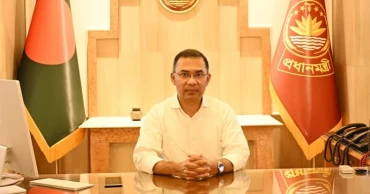
Prime Minister Tarique Rahman on Saturday urged public administration officials to move beyond a bureaucratic mindset and serve as ‘servants and friends of people,’ saying their integrity, efficiency and accountability are key to the government’s success.
“You are the link between making policies and putting them into action. Your honesty, competence and accountability form one of the key foundations of the government’s success,” he said while addressing officials after the inauguration of the new Training-cum-Dormitory Building of BIAM Foundation at its auditorium in Dhaka.
Highlighting the need to modernise governance, he said the world has already entered the era of artificial intelligence and the Fourth Industrial Revolution, making it essential for public administration officials to keep pace with technological changes.
“The use of AI, automation and digital technologies can make our administration more efficient, transparent and accountable,” Tarique said, adding that the government aims to deliver public services at citizens’ doorsteps through information technology.
He also assured continued support to strengthen the Bangladesh Institute of Administration and Management (BIAM) Foundation to build a skilled and future-ready civil service.
Focusing on economic competitiveness, the prime minister stressed the importance of simplifying business processes through initiatives like single-window clearance, one-stop services and fully digital workflows.
“Our development vision must be inclusive, sustainable and humane. We want to build a Bangladesh where the benefits of development gradually reach every level of society, inequality declines, and eventually disappears,” he said.
The prime minister underscored the role of women and youth as key drivers of growth and said environmental protection and climate resilience must be integral to all policies.
Tarique Rahman first laid the foundation stone for the third building of BIAM Foundation in Eskaton and later addressed officials at the BIAM Foundation auditorium.
Emphasising the importance of training, he said there is no alternative to building a transparent, efficient and people-friendly administration to achieve the country’s desired goals.
“Modern administrative competence is not just about knowing rules—it also requires the use of technology, data analysis, quick decision-making and a creative approach to public service,” Tarique said.
Govt to hold talks with opposition on energy crisis, open to pragmatic proposals: PM
The prime minister said the government is working to modernise training systems, expand advanced courses, and increase opportunities for research and policy-oriented education.
Referring to the government’s electoral pledges, he said those commitments are not merely political promises but a contract with the people.
“The government is determined to implement every commitment of its manifesto and the July Charter in letter and spirit,” he said urging officials to contribute with their merit and professionalism.
He also stressed the need to uphold transparency, accountability and ethical practices to maintain public trust, noting that civil servants play a key role in ensuring the effectiveness, continuity and stability of the state machinery.
Tarique also asked the civil servants to work with integrity, professionalism and a deep sense of responsibility, saying a strong and accountable administration is essential to building a modern Bangladesh.
"The current government is committed to developing merit-based, confident, creative and responsible human resources. There is no alternative to building a merit-driven, transparent, efficient and people-friendly public administration,” he said.
After more than one and a half decades, he said the country's freedom-loving and democracy-loving people directly elected a democratic government through their votes.
Tarique said the current government reflects the aspirations of ordinary people who have long yearned for an accountable, just and welfare-oriented system of governance.
He said the mass uprising of July-August 2024 once again made it clear that the people are the true owners of this state.
"So, as public servants, your foremost responsibility is to protect the interests and ensure the welfare of people, who are the rightful owners of the state…Your decisions can affect a family, a region, or even the entire nation. That is why your responsibilities are not only administrative but also deeply moral and constitutional,” the prime minister said.
He said the government has already taken steps to fill vacant posts swiftly, strengthen the Public Service Commission and implement key administrative reforms.
Tarique expressed hope that BIAM’s curriculum and training environment would further enhance officials’ professional skills, problem-solving abilities and innovative thinking.
Founded on December 29, 1991, BIAM was later transformed into the BIAM Foundation in November 2002.
BIAM officials said the newly inaugurated building is expected to significantly enhance its training capacity and residential facilities.
5 months ago
Govt undertakes various development initiatives, but opposition's role uncooperative: Mahdi Amin
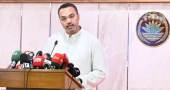
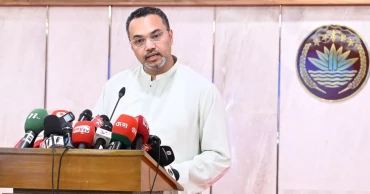
Prime Minister’s Office spokesperson Dr Mahdi Amin on Saturday said the opposition is creating obstacles to the country’s development initiatives instead of cooperating with the government’s ongoing reform and development activities.
“We thought that in this short period, (the opposition) would extend overall cooperation with the positive steps taken by the government under the leadership and guidance of the Prime Minister,” Mahdi said, at a press conference held at the PMO to mark the completion of the first two months of the BNP government. “But we have seen that instead of doing that, they chose alternative paths, including creating ruckus in Parliament, threatening protests on the streets, and spreading rumors and propaganda, which are obstacles to the country's progress."
Mahdi, also an adviser to the Prime Minister, said such activities were undermining the government’s efforts to implement its development agenda.
He also highlighted the government’s initiatives, including various welfare programmes, economic measures, and administrative reforms, taken over the last two months.
Mahdi said it was a matter of “great pride” that the Prime Minister and "people’s leader" Tarique Rahman has been included in TIME magazine’s list of the 100 most influential people in the world this year.
He said the recognition reflects the prime minister's “visionary leadership, courage, and contribution towards restoring democracy,” and brings international recognition to his role.
He said the government has begun implementing its election manifesto within two months of assuming office, outlining a wide range of policy actions aimed at economic stability, social protection and administrative reform.
Mahdi also presented a list of 60 key initiatives taken over the last two months under what he described as the government’s 180-day action plan.
He said the government, led by the Prime Minister, had moved at “fast pace” to begin delivering on electoral commitments across multiple sectors.
Among the major measures highlighted were the rollout of a pilot “family card” programme aimed at women’s financial support, under which 37,567 families have already received monthly cash assistance of Tk 2,500. He said the initiative is intended to strengthen household-level economic security.
The adviser also mentioned the introduction of a “farmer card” scheme, which has started in 10 districts covering over 22,000 small and marginal farmers, including those involved in fisheries and livestock. He added that interest on loans for around 12 lakh small farmers up to Tk 10,000 has been waived.
In the agriculture and water sector, he said the government has taken up a plan to dredge and re-excavate around 20,000 kilometres of rivers, canals and water bodies, with work already started in 54 districts.
The adviser also said the government has continued to keep fuel prices stable despite global energy pressures, while increasing subsidies and strengthening international procurement efforts.
In the energy sector, he noted that 35 megawatts of electricity have been added to the national grid through rooftop solar and net metering initiatives, with a target of producing 10,000 megawatts of renewable energy by 2030. A pilot fuel card system has also been launched.
On food and market stability, the adviser said inflation and commodity prices have been kept relatively stable through imports and supply management during Ramadan and beyond.
Mahdi Amin said the overall goal of the government is to build a more stable, inclusive and growth-oriented economy, with a long-term target of transforming Bangladesh into a trillion-dollar economy by 2034.
5 months ago
Delhi to consider Dhaka’s request for increased diesel, fertiliser supply ‘favourably’
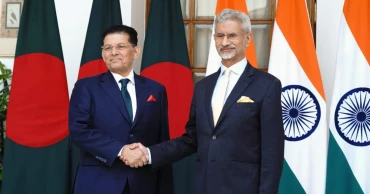
Bangladesh on Wednesday thanked the Indian government for the recent supply of diesel and requested an increased volume of diesel and fertiliser supply to Bangladesh while the Indian side indicated that it would consider the request “readily and favourably.”
Dhaka also reiterated its request for the extradition of former Prime Minister Sheikh Hasina and her Home Minister Asaduzzaman Khan Kamal. They have been awarded the death penalty by the International Crimes Tribunal in Bangladesh.
Bangladesh thanked the Indian authorities for apprehending the suspected killers of Shaheed Osman Hadi.
Both sides agreed that the arrested individuals would be returned to Bangladesh in accordance with the procedures laid out in the extradition treaty between the two countries.
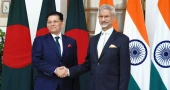
Foreign Minister Dr Khalilur Rahman raised these issues during his meetings in New Delhi. He met Indian External Affairs Minister Dr S. Jaishankar and Oil and Natural Gas Minister Hardeep Singh Puri.
Prime Minister’s Foreign Affairs Adviser Humaiun Kobir and Bangladesh High Commissioner to India Riaz Hamidullah were present at the meetings.
The Bangladesh side also held a meeting with India’s National Security Adviser Ajit Doval on Tuesday evening after arriving in New Delhi.
Although a future visit by Prime Minister Tarique Rahman to India is under discussion, neither Bangladesh nor India mentioned any specific date in their separate readouts issued on Wednesday.
Indian Prime Minister Narendra Modi has already invited Prime Minister Tarique, his wife Dr Zubaida Rahman, their daughter Barrister Zaima Rahman to pay a visit to India at a convenient time.
“A warm welcome awaits you in India,” Modi said in his recent letter handed over to PM Tarique by Speaker of the Indian Lok Sabha Om Birla who represented the government of India at the swearing-in ceremony of the newly elected government of Bangladesh.
6 months ago
Politicisation of cricket looks set to continue under new government
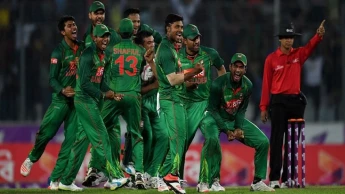
In Bangladesh, cricket is far more than a national obsession. Combined with its enormous commercial appeal, the game has been converted into the ultimate political currency.
The recent dissolution of the Bangladesh Cricket Board (BCB) and the lightning-fast installation of a politically connected ad-hoc committee exposes a harsh reality: governments may change, but the state or ruling dispensation's suffocating grip on the country's most popular sport remains completely unbroken.
For decades, ruling regimes have understood that controlling cricket is a way to control the masses. During Sheikh Hasina's long period of rule, which is often called an authoritarian regime by political analysts, the BCB functioned as little more than a direct wing of the state machinery.
The partisan dominance was absolute. It spread into every level of the administration, from the high-level boardroom decisions down to the stadium gates. It reached a point where the national team was actually led by sitting members of parliament. This wasn't a coincidence; it was a strategy to use the sport as a populist tool, designed to unify a fractured public under the ruling party's banner while masking the government’s deeper failures.
When the Awami League government collapsed in August 2024, the BCB naturally fell into chaos.
The power vacuum led to the emergence of a new board headed by Aminul Islam Bulbul, formed under the watch of the interim government. It was sold to the public as a necessary transition to keep the sport stable. However, in the tough landscape of Bangladeshi sports politics, this board quickly became a target for the next political force waiting in the wings.
This week, the National Sports Council (NSC)—now operating under the newly elected BNP-led government—dissolved Aminul’s board. They cited severe electoral fraud and manipulation as the reason. While the allegations of rigged e-voting and administrative coercion are serious, the underlying motive feels far too familiar to anyone watching.
Govt dissolves BCB board over election fraud; Tamim appointed as interim head
This ouster doesn't look like a crusade for transparency; it looks like a calculated purge. It is a move to erase the interim government's footprint and allow a new regime to capture the board's massive resources and public influence.
The makeup of the new 11-member ad-hoc committee, led by former national captain Tamim Iqbal, shows this political reality clearly. While they are tasked with holding a fair election within three months, the committee is heavily stacked with the immediate family members of senior BNP figures—including the sons of both the Home Minister and the Finance Minister, alongside a BNP-affiliated lawyer.
The faces in the boardroom have changed, but the structural strategy is identical: a new political net has simply been cast over the BCB.
This cyclical power grab shows a deep hypocrisy within the nation's sports administration. The very same political factions that spent years condemning the Awami League for weaponizing the cricket board are now eagerly sharing the rewards of winning using the exact same government tools.
Ousted BCB chief Aminul denounces board dissolution as ‘constitutional coup,’ appeals to ICC
The NSC's intervention is a blunt instrument of control, one that flagrantly ignores the International Cricket Council's (ICC) strict rules against government interference.
Yet, the usual threat of an ICC suspension for state interference might be empty this time around. The sport's global governing body is currently chaired by the powerful Indian administrator Jay Shah, and his leadership operates against a very sensitive geopolitical backdrop.
During the interim government’s time, Aminul’s board drew New Delhi's ire by refusing to play in India during the last T20 World Cup, citing legitimate security concerns amid growing tensions between the two countries. The diplomatic standoff erupted shortly after Indian authorities forced the Kolkata Knightriders to terminate Mustafizur Rahman's contract to play for them in this year's IPL, cricket's biggest money-spinner, claiming unspecified security risks.
Hanging heavily over these athletic disputes was a glaring political reality: ousted Prime Minister Sheikh Hasina—accused of planning the deaths of over 1,400 citizens during the July mass uprising—was actively being sheltered in Delhi. Because Aminul’s public defiance directly challenged the Indian cricket establishment, the current ICC leadership may be perfectly willing to turn a blind eye to the NSC’s action, which was called a “bureaucratic coup” by Aminul. It is a situation where geopolitical retribution might be allowed to quietly override the ICC’s own governance statutes.
While politicians, ex-players, and their proxies battle for control of the lucrative BCB chair, the actual development of the sport is being pushed to the side. In Bangladesh, regimes rise and fall, but the cricket board remains a captured prize, trapped in a vicious cycle of political patronage that it cannot seem to escape.
Ultimately, this endless political tug-of-war leaves the sport itself as the biggest casualty.
6 months ago
Bangladesh braces for hike in commodity prices, warns Khosru
Finance and Planning Minister Amir Khosru Mahmud Chowdhury on Sunday warned that prices of essential commodities are set to rise in Bangladesh in the coming days due to ongoing global supply chain disruptions triggered by the Middle East conflict.
“Due to the supply chain crisis, not only fuel but other commodities will also get pricier in Bangladesh,” he told reporters after a National Multi-Stakeholder Consultation Workshop on LDC graduation preparedness at the Planning Ministry in Sher-e-Bangla Nagar.
Noting that this is not a problem affecting only Bangladesh but a global challenge, the minister said the ongoing energy crisis is already casting an adverse shadow over the national economy. “The prices of food items will go up as a consequence of this crisis.”
He also acknowledged the growing fiscal pressure on the government, pointing out that while other countries have significantly raised fuel prices, Bangladesh has refrained from doing so – a decision, which is straining state funds.
"How long we can keep fuel prices unchanged is difficult to say with certainty. We are purchasing fuel using state treasury funds, which will ultimately be a loss for the people," the minister said, adding that any decision on fuel pricing will be taken with public welfare as the foremost consideration.
On the question of LDC graduation, he ruled out any immediate move in that direction, stating that the BNP government has been working in line with its electoral manifesto to strengthen the economy.
Bangladesh, Khosru emphasised, will consider LDC graduation only after achieving adequate economic preparedness.
6 months ago

Dhaka-Delhi high-level talks could bring fresh momentum to strained ties
Amid increased engagement from both sides to retune bilateral relations, Foreign Minister Dr Khalilur Rahman and his Indian counterpart Dr S. Jaishankar are set to meet in New Delhi next week, a move that could usher in a new phase of cooperation on a range of issues important to both Dhaka and Delhi and lend genuine momentum to the relationship, officials said.
This will mark the first high-level visit to India since the BNP government, led by Prime Minister Tarique Rahman, assumed office, following a period of significant strain in bilateral relations.
However, the Ministry of Foreign Affairs is yet to make any official announcement regarding the planned brief visit.
“The meeting between the two foreign ministers will be held in New Delhi on April 8,” a senior official told UNB, without elaborating further on his arrival and departure information.
The Indian side usually does not announce incoming visits but officially announces outgoing visits.
Bangladesh and India share deep-rooted bonds of history, language, culture, and multitude of other commonalities, said an official, noting that in any bilateral meeting all issues of mutual interest come up for discussion.
The two Foreign Ministers are likely to discuss cooperation in the areas of energy, water sharing, border management, visa, people-to-people ties, he said adding that a future visit of Prime Minister Tarique Rahman to India may also come up for discussion at the meeting.
Indian Prime Minister Narendra Modi has already invited Prime Minister Tarique, his wife Dr Zubaida Rahman, their daughter Barrister Zaima Rahman to pay a visit to India at a convenient time.
“I take this opportunity to invite you, along with Dr Zubaida Rahman and your daughter Zaima, on a visit to India at a mutually convenient time. A warm welcome awaits you in India,” Modi said in his letter handed over to PM Tarique by Speaker of the Indian Lok Sabha Om Birla who represented the government of India at the swearing-in ceremony of the newly elected government of Bangladesh.
Bangladesh-US relationship matters more than ever: Paul Kapur
Prime Minister Modi said he looks forward to working closely with Prime Minister Tarique to strengthen their multifaceted bilateral relations, enhance regional cooperation, and advance their common goals in wide-ranging areas of connectivity, trade, technology, education, skill development, energy, healthcare, as well as cultural and people-to-people exchanges.
Asked whether the Prime Minister would consider India for his first bilateral visit, a diplomatic source told UNB that Bangladesh would take a decision “creatively” on the matter.
Water Sharing Issues
The subject of water is widely seen as a sensitive issue and Bangladesh always keeps talking about its long pending request for concluding the agreement on the sharing of the waters of the Teesta River, the draft of which was finalised in 2011.
The two countries share 54 common rivers, including the Teesta.
In India’s federal scheme of things, nothing is done without consultations with the State Government and any agreement that they conclude will have to be acceptable to the State Government of India; at the same time, it would also have to be acceptable to Bangladesh, officials said.
The Bangladesh-India Ganga/Ganges Water Treaty was signed on December 12, 1996 and is expiring in December this year.
Dhaka, Delhi discuss defence cooperation
As discussions for its renewal are yet to commence between the two countries, officials said this might be one of the issues to be discussed this time.
In July 2024, the governments of Bangladesh and India had decided to begin discussions on renewal of the Ganga Water Treaty.
The discussions are yet to commence in this regard and no fresh agreement has been ratified between the two countries.
The Indian side had offered to renew it in 2024 but the interim government did not pursue it at that time, a diplomatic source in New Delhi told UNB.
Inputs on drinking water and industrial water requirements have also been received from all stakeholders including from the government of West Bengal, which have been taken into account while formulating the Indian government’s views.
Visa Issues
Indian High Commissioner to Bangladesh Pranay Verma, in his recent meetings with the Ministers in Dhaka, explored new areas for future collaboration in people-centric domains aligned with the respective developmental priorities of the two countries based on mutual interest and mutual benefit.
Bangladesh intensifies energy diplomacy with US, Russia amid diversification push
The two sides also discussed various aspects of Bangladesh-India economic cooperation, including ways to strengthen transport, energy and digital connectivity between the two countries.
At the foreign minister–level meeting, the Bangladesh side is expected to raise the visa issue as tourist visas for Bangladeshis have remained suspended since July 2024 on security grounds.
Indian visa centres in Bangladesh are still understaffed, suggesting that a full resumption of services may take time, a diplomatic source said, adding that the restart will be announced once finalised.
India thinks the two countries can truly become catalysts for each other's sustainable growth, work for each other's security and enable mutual prosperity as two fast-growing economies and aspiring societies.
Bangladesh and India on Thursday discussed ways to enhance bilateral defence cooperation, including joint training initiatives.
The issues were discussed when Bangladesh High Commissioner to India M Riaz Hamidullah met Indian Chief of Army Staff General Upendra Dwivedi at the South Block.
They also explored opportunities for deeper collaboration aimed at promoting regional peace and security.
The envoy said he was pleased to meet General Upendra Dwivedi and reflect on Bangladesh-India ties, including defence cooperation.
6 months ago