hantavirus

Cruise operator awaits decision on future sailings after hantavirus outbreak
The operator of the hantavirus-hit cruise ship MV Hondius said it is awaiting further information before deciding whether the vessel will continue its scheduled cruises later this summer.
Oceanwide Expeditions said on Wednesday it expects clarity by the end of the week on whether the Dutch-flagged ship will proceed with its planned voyages, including an Arctic cruise scheduled for later in May.
The development comes after an outbreak on board the vessel, which has so far resulted in 11 reported cases, including nine confirmed infections, and three deaths. Health officials believe a Dutch couple among the victims were initially exposed to the virus during a visit to South America.
More than 120 passengers and some crew members disembarked in Spain’s Canary Islands earlier this week and have since been placed in quarantine across several countries.
Following the evacuation, the vessel departed for Rotterdam in the Netherlands, where it is expected to arrive around May 17 or 18.
According to the company, 25 crew members, two health workers and the body of one deceased passenger remain on board, with no one currently showing symptoms of the virus.
Earlier, Oceanwide had indicated that it did not expect any disruption to its operations, including a cruise set to begin on May 29. However, it has now said a final decision will depend on further assessments in the coming days.
Hantavirus is typically transmitted through contact with infected rodent droppings and is not easily spread between humans, though the Andes strain linked to the outbreak may allow limited person-to-person transmission. Symptoms usually appear between one and eight weeks after exposure.
4 months ago
What is hantavirus and how does it spread?
A cruise ship linked to a hantavirus outbreak has reached the Canary Islands after several passengers and crew members were connected to confirmed and suspected infections.
The outbreak aboard the MV Hondius has so far been tied to three confirmed cases and five suspected ones.
Among the confirmed cases are a Dutch woman who died, a British passenger receiving intensive care treatment in South Africa and a Swiss passenger being treated in Zurich, reports BBC.
Suspected cases include a British national, a Dutch crew member and a German passenger. Two of them have been transferred to the Netherlands for treatment, while another remains in stable condition aboard a delayed evacuation flight.
Although none of the suspected cases have tested positive yet, two individuals have shown symptoms associated with the virus.
Two British passengers who left the ship earlier during its Atlantic voyage from Argentina to Cape Verde are currently isolating at home in the UK after possible exposure. According to the UK Health Security Agency, neither has developed symptoms.
Meanwhile, health officials in the US states of Arizona and Georgia said they are monitoring three American passengers who disembarked before the vessel arrived in Cape Verde. None have shown signs of illness.
Passengers remaining on board are undergoing medical assessments and are leaving the ship in stages based on nationality. Several Spanish and French travellers have already returned home, while countries including the UK have arranged special flights for their citizens.
What is the Andes strain of hantavirus?Hantavirus refers to a group of viruses rather than a single disease. The virus family takes its name from a river in South Korea.
The World Health Organisation (WHO) says there are more than 20 hantavirus species, most of which are transmitted to humans through exposure to infected rodents such as rats and mice, especially via dried urine and droppings.
One particular variant — the Andes strain — is believed capable of spreading between humans, though such transmission is considered rare.
South African health authorities confirmed that the British passenger being treated in Johannesburg and the Dutch woman who died were infected with the Andes strain.
The Andes virus is commonly found in Argentina and Chile. A major outbreak in Argentina in 2018 was linked to a social gathering where one infected individual is believed to have transmitted the virus to 34 people, resulting in 11 deaths.
How does this affect response measures?The confirmation of the Andes strain has increased concerns that transmission may have occurred through close human contact on the ship in addition to possible exposure to rodents.
As a precaution, passengers remaining aboard the vessel are being confined to their cabins to reduce contact. British nationals returning home are also expected to self-isolate.
A WHO physician on board reported that no additional passengers had developed symptoms as of Saturday.
Health experts say containing the outbreak will depend on strict measures including isolating infected individuals, monitoring close contacts, maintaining hand hygiene and following infection-control procedures.
The exact source of the outbreak remains unclear. Earlier WHO findings suggested the first infected passengers had travelled through Argentina, Chile and Uruguay during a bird-watching tour that included areas inhabited by rodents known to carry the virus.
Despite the outbreak, specialists say the overall risk to the global population remains very low, with no evidence so far of spread beyond the cruise ship.
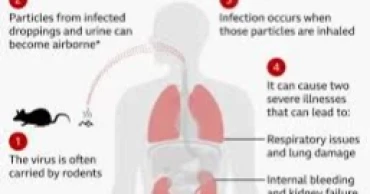
How does hantavirus spread?Hantavirus is usually transmitted through contact with rodent saliva, urine or droppings.
People often become infected after inhaling virus particles that become airborne when contaminated rodent waste is disturbed.
Infections can also occur through rodent bites.
The Andes strain is currently the only known hantavirus capable of spreading between humans, and even then transmission is uncommon.
Experts say person-to-person spread generally requires prolonged and close interaction with someone showing symptoms.
WHO officials note that the virus does not spread in the same way as influenza or Covid-19, which are transmitted more easily through coughing or sneezing.
What are the symptoms and how dangerous is it?Hantavirus can lead to two serious illnesses.
The first is Hantavirus Pulmonary Syndrome (HPS), which initially causes symptoms such as fever, fatigue and muscle pain. Patients may later experience headaches, chills, dizziness and abdominal problems.
In severe cases, breathing difficulties can develop rapidly, requiring urgent medical care. The Andes strain is commonly associated with HPS, which carries a fatality rate of between 20 and 40 percent.
The incubation period can range from one to eight weeks, making early detection more difficult.
The second illness is Haemorrhagic Fever with Renal Syndrome (HFRS), which begins with flu-like symptoms but can progress to kidney damage, internal bleeding, low blood pressure and acute kidney failure.
Is there a vaccine or treatment?There is currently no specific cure for hantavirus infections, although prompt medical treatment can improve survival chances.
Supportive care may include oxygen therapy, ventilator support and dialysis for patients with kidney complications.
Severely ill patients often require treatment in intensive care units.
Researchers are also testing potential new treatments.
No widely available vaccine exists yet, although some vaccines targeting local hantavirus strains are being used in China and South Korea.
5 months ago
WHO chief seeks to reassure Tenerife residents over hantavirus cruise ship arrival
The head of the World Health Organization (WHO) has moved to reassure residents of Spain’s Canary Island of Tenerife ahead of the expected arrival of a cruise ship carrying passengers exposed to hantavirus, saying the public health risk remains low.
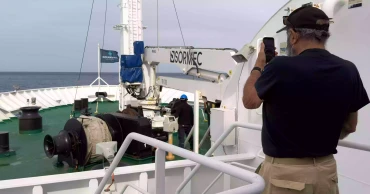
The Dutch-flagged MV Hondius, carrying more than 140 passengers and crew, is en route to the Spanish island and is expected to arrive early Sunday. The vessel is believed to have been affected by a hantavirus outbreak during its voyage.
WHO Director-General Tedros Adhanom Ghebreyesus, along with Spain’s Health Minister Monica Garcia and Interior Minister Fernando Grande-Marlaska, is scheduled to travel to Tenerife on Saturday to oversee coordination of disembarkation procedures.
Concerns have been raised among some local residents who fear possible transmission of the virus, while some passengers have also expressed anxiety about their reception upon arrival.
“I know you are worried. I know that when you hear the word “outbreak” and watch a ship sail toward your shores, memories surface that none of us have fully put to rest. The pain of 2020 is still real, and I do not dismiss it for a single moment.,” Tedros said in a message to Tenerife residents.
“But I need you to hear me clearly: This is not another COVID. The current public health risk from hantavirus remains low. My colleagues and I have said this unequivocally, and I will say it again to you now,” he added.
According to health officials, three people have died and five passengers who left the ship have tested positive for hantavirus infection. The virus is typically transmitted through contact with contaminated rodent droppings and is not easily spread between humans, although rare person-to-person transmission has been linked to the Andes strain.
The WHO, Spanish authorities and the cruise operator Oceanwide stated that no one currently on board the vessel is showing symptoms. Tedros also said the WHO continues to monitor the situation and coordinate response measures, adding that the risk to both the Canary Islands and the wider world remains low.
5 months ago
What to know about hantavirus as cruise ship outbreak raises concern
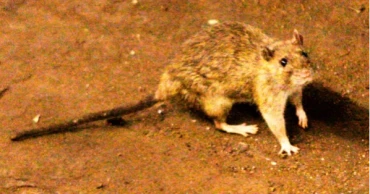
Health experts suspect a disease carried by rodents, known as hantavirus, is behind an outbreak on a cruise ship that has killed three people and left several others ill.
Research shows hantaviruses have existed for centuries, with past outbreaks reported in Asia and Europe. In those regions, the virus has been linked to hemorrhagic fever and kidney failure. In the early 1990s, a new group of hantaviruses was identified in the southwestern United States, causing a serious lung condition now called hantavirus pulmonary syndrome.
The disease drew wider attention last year after Gene Hackman’s wife, Betsy Arakawa, died from a hantavirus infection in New Mexico.
The World Health Organization said Sunday that investigations into the cruise ship outbreak are ongoing. These include lab testing, epidemiological studies and genetic sequencing of the virus.
Hantavirus mainly spreads through contact with rodents or their urine, saliva and droppings. The risk increases when these materials are disturbed and become airborne, making it easier to inhale the virus. People are often exposed while cleaning enclosed spaces such as homes, cabins or sheds, especially where rodent droppings are present.
Although rare, the WHO says the virus can also spread directly from person to person.
The Centers for Disease Control and Prevention began monitoring the disease after a 1993 outbreak in the Four Corners region of the United States. Most cases in the country are reported in western states, particularly New Mexico and Arizona, where human contact with rodents is more common in rural areas.
The illness usually begins with flu-like symptoms such as fever, chills, muscle pain and headaches. Experts say it can be difficult to distinguish from the flu in the early stages. Symptoms typically appear one to eight weeks after exposure.
As the disease worsens, patients may develop chest tightness as fluid builds up in the lungs. Another form of the disease, which affects the kidneys, can develop within one to two weeks after exposure.
Fatality rates vary depending on the type of hantavirus. The lung-related form has a death rate of about 35%, while the kidney-related form ranges from 1% to 15%, according to the CDC.
There is no specific cure or treatment, but early medical care can improve survival chances. Researchers say many aspects of the disease remain unclear, including why symptoms can be mild in some people but severe in others.
Health experts advise reducing contact with rodents and their droppings to lower the risk. When cleaning contaminated areas, they recommend using gloves and disinfectants such as bleach, and avoiding sweeping or vacuuming, which can spread the virus into the air.
5 months ago