Padma Byarrage project
Govt approves Tk 33,474 crore Padma Barrage project to revive rivers, curb salinity
The government on Wednesday approved a Tk 33,474.45 crore project to build the first phase of the Padma Barrage, aiming to revive drying river systems, reduce salinity intrusion and improve irrigation and water management in vast Padma-dependent regions.
The Executive Committee of the National Economic Council (ECNEC) on Wednesday approved the project titled “Padma Barrage (1st Phase)”following endorsement by the Planning Commission.
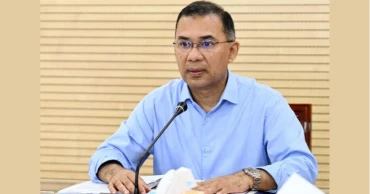
Prime Minister Tarique Rahman presided over the meeting held at Secretariat.
The project will be implemented by the Bangladesh Water Development Board under the Ministry of Water Resources at an estimated cost of Tk 33,474.45 crore entirely from government funding.
According to project documents, the implementation period has been set from July 2026 to June 2033.
PM chairs ECNEC meeting at secretariat
The project area will cover 19 districts across Khulna, Dhaka, Rajshahi and Barishal divisions, targeting restoration of several major river systems including the Hisna-Mathabhanga, Gorai-Madhumati, Chandana-Barashia, Baral and Ichamati rivers.
Officials concerned said the proposed barrage is expected to play a critical role in addressing long-standing water management challenges in the country’s southwest and northwest regions, where reduced dry-season flow of the Padma River has severely affected agriculture, fisheries, navigation, forestry and biodiversity.
The project is also aimed at reducing salinity intrusion in Satkhira, Khulna and Bagerhat districts, ensuring freshwater supply for the Sundarbans ecosystem and mitigating waterlogging in areas including Bhobodah in Jashore through dredging and drainage improvement works.
According to the proposal, the key objectives of the project include reviving five river systems, restoring ecological balance in the Sundarbans, enhancing groundwater recharge, reducing arsenic contamination, improving irrigation facilities and creating employment opportunities through planned land development activities.
The proposed infrastructure package includes construction of a 2.1-kilometre main Padma Barrage along with associated structures such as 78 sluice gates, 18 undersluices, fish passes, navigation locks, guide embankments and approach embankments.
The project also includes construction of off-take structures at Gorai, Chandana and Hisna rivers, along with spillways, navigation and fish passage facilities.
In addition, two hydropower plants with a combined generation capacity of 113 megawatts are planned under the scheme. Of these, a 76.4MW hydropower plant will be constructed alongside the main barrage, while another 36.6MW plant will be installed at the Gorai off-take point.
Major river restoration works under the project include dredging of 135.60 kilometres of the Gorai-Madhumati river system and re-excavation of 246.46 kilometres within the Hisna river system.
An additional 180 kilometres of afflux embankments are also proposed to support water regulation and flood management.
According to project documents thePadma-dependent area covers nearly 37 percent of Bangladesh and accommodates roughly one-third of the country’s population.
The government linked the region’s deteriorating river flow situation to the diversion of dry-season water upstream through the Farakka Barrage, constructed in India during the 1970s to maintain navigability of the Kolkata port through the Bhagirathi-Hooghly river system.
Officials said reduced flow in the Padma over the decades has caused many distributary rivers in southwest and northwest Bangladesh to dry up during the lean season, leading to declining agricultural productivity, fisheries depletion, ecological stress and increased salinity in coastal districts.
The project proposal stated that freshwater scarcity has also adversely affected the Sundarbans, threatening biodiversity and forest resources in the world’s largest mangrove ecosystem.
The Planning Commission observed that implementation of the project would increase dry-season flow in the Padma River by conserving water through the barrage system, thereby helping revive major river networks and improving irrigation, drainage and flood resilience in the affected regions.
The proposal was reviewed at a Project Evaluation Committee (PEC) meeting held on Jan 15, 2026 under the Agriculture, Water Resources and Rural Institutions Division of the Planning Commission.
Following the review, the commission recommended the project for ECNEC approval with full government financing.
4 months ago