ADP reflects
FY27 ADP reflects govt’s election promises: Finance Minister
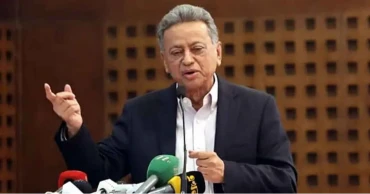
Finance Minister Amir Khosru Mahmud Chowdhury on Monday said the FY 27 ADP reflected the electoral commitments and long-term reform agenda of the newly elected government.
“It is a reform-oriented and ambitious investment plan aimed at steering Bangladesh from a fragile economy towards prosperity, he said briefing reporters after the National Economic Council (NEC) meeting chaired by Prime Minister Tarique Rahman.
The NEC meeting approved an Annual Development Programme (ADP) worth Tk 3 lakh crore for the 2026-27 fiscal year.
This is a very important NEC meeting from many perspectives, he said. “After a long time, an elected government in Bangladesh is going to present a budget and a development plan. The proposed framework reflects our election manifesto and overall development vision.”
He said the government’s strategy was centred on recovery, transition and reconstruction from what he termed a fragile economic condition inherited from the past.
As part of that effort, the government has prepared a five-year roadmap titled “Five-Year Strategic Framework for Reform and Development,” which outlines priorities for economic recovery, institutional reform and sustainable development.
The Finance Minister said the first pillar of the framework focuses on reforming state institutions, expanding judicial and legal services, administrative digitalisation, strengthening law enforcement agencies and modernising public investment management.
He also announced plans to introduce a multi-year public programme management system.
Khosru said the proposed ADP for FY2026-27 was not limited to infrastructure development but also aimed at establishing a non-discriminatory society, a sustainable economy and balanced regional development.
According to the proposal, the total size of the ADP has been set at Tk 3 lakh crore, of which Tk 1.90 lakh crore will come from the government’s own resources, while Tk 1.1.10 lakh crore will be financed through project loans and grants.
He said the larger ADP size compared to the current fiscal year reflected the government’s confidence in improving implementation efficiency under an elected administration.
“We believe an elected government will have greater implementation capacity and efficiency,” he said.
The minister also announced stricter criteria for appointing Project Directors (PDs), saying the government wanted to eliminate politically influenced or incompetent appointments that had contributed to corruption and delays in project implementation in the past.
“There will now be clear criteria for appointing Project Directors. Only those who fulfil the criteria will be eligible,” he said.
He said the government would closely monitor all development projects through ministry-based dashboards tracking real-time progress.
Ministries would be required to monitor delays and take immediate corrective measures where implementation lagged behind schedule.
Khosru said around 1,300 ongoing projects inherited from previous governments including Awami League(now facing ban on its activities) and Professor Yunus-led interim government are currently under review.
He alleged that many of those projects were driven by corruption, inefficiency or political considerations rather than public interest.
“Projects that are not viable or no longer necessary will be dropped,” he said. “For projects that have progressed significantly, further reviews will determine whether completing them would benefit the country and its people.”
The Finance Minister stressed that all future projects must be completed within the stipulated timeframe and warned that there would be no scope for repeated deadline extensions.
He added that the Implementation Monitoring and Evaluation Division (IMED) would investigate projects affected by corruption or serious mismanagement and recommend action against those responsible.
Responding to questions over the large allocation under block grants and social protection schemes, Khosru said the government had kept substantial allocations aside because many existing projects were likely to be cancelled after review.
The funds would later be redirected to new and priority projects based on necessity and public benefit, he said.
He defended separate welfare cards for different groups, including farmers and families, saying targeted benefits required separate identification systems.
“The beneficiaries of farmer cards and family cards are not necessarily the same. These are targeted support mechanisms and must remain separate,” he said.
The Finance Minister said all future projects would be evaluated on the basis of “value for money,” return on investment and employment generation.
“We do not want jobless growth,” he said. “Every project must contribute to employment and economic productivity.”
He also emphasised climate considerations in development planning.
Replying to a question about the government’s ability to implement such a large ADP amid weak revenue collection, Khosru acknowledged that Bangladesh’s tax-GDP ratio remained among the lowest in the world.
He said the government is preparing a major reform programme for the National Board of Revenue (NBR) to expand the tax network and bring more people into the formal tax system.
“For years, the same taxpayers have carried the burden while the tax net remained narrow,” he said. “We are going to expand the network significantly.”
The minister expressed optimism that improved governance, leadership and investor confidence would support economic recovery and higher investment flows.
He claimed that several international investors and fund managers had recently shown interest in Bangladesh because of the government’s reform agenda and leadership commitment.
Referring to implementation concerns in the health and education sectors, Khosru said the government planned to significantly expand technical and vocational education institutions with internationally recognised accreditation and certification systems.
He said investments in healthcare, education and skills development were essential to achieving universal healthcare, boosting employment and strengthening export competitiveness.
When asked whether the ambitious ADP posed a financial risk given the country’s economic constraints, Khosru defended the decision by comparing the economy to a tube well that requires water to be poured in before it starts flowing again.
“This fragile economy cannot recover without investment,” he said. “That is why we are going for a large development budget.”
4 months ago