China’s ‘artificial sun’ project
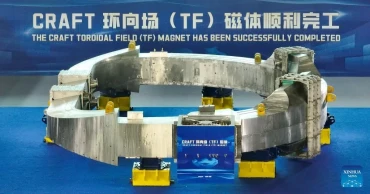
China’s ‘artificial sun’ project reaches major engineering milestone
China's "artificial sun" project has achieved a major engineering breakthrough with the successful development and testing of two key superconducting magnet systems for future fusion reactors.
The Institute of Plasma Physics under the Chinese Academy of Sciences announced on Saturday that it had completed the development, acceptance and full-performance testing of a toroidal-field superconducting magnet and a high-temperature superconducting central solenoid coil.
Scientists said all of the project's core technologies were developed in China, marking a significant step forward in the country's fusion energy research.
According to the institute, the newly developed systems rank among the world's most advanced in terms of overall performance and are expected to play a vital role in future fusion reactors.
The achievement is part of China's Experimental Advanced Superconducting Tokamak (EAST), widely known as the country's "artificial sun" project.
Fusion energy aims to replicate the process that powers the sun by producing clean, safe and nearly limitless energy. Superconducting magnets are among the most important components of fusion reactors, as they generate the powerful magnetic fields needed to confine extremely hot plasma during the fusion process.
Researchers said the successful testing of the two magnet systems represents an important milestone in advancing China's long-term goal of developing practical fusion power.
3 months ago